A Historic Call from Orbit
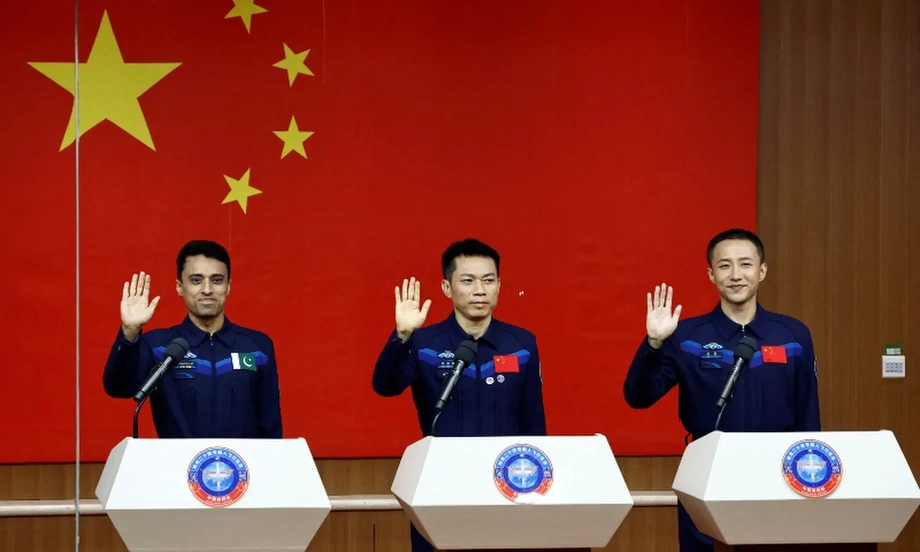
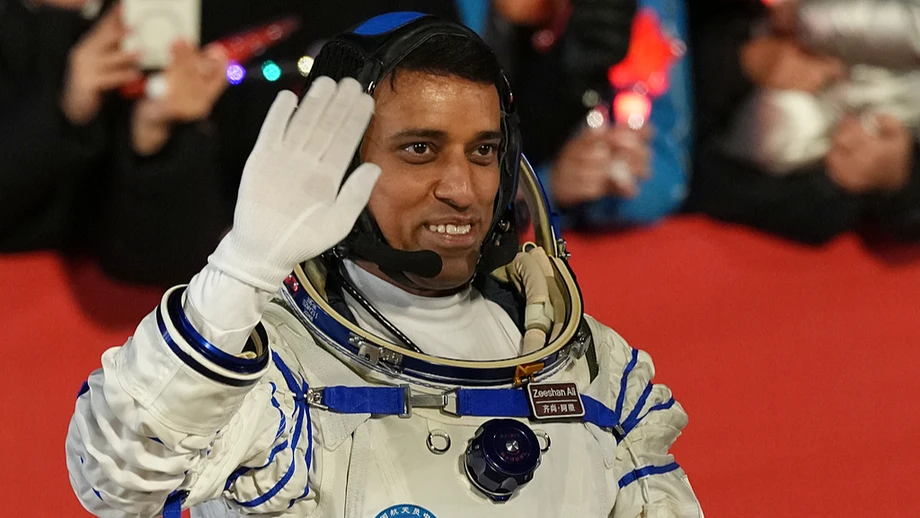
Islamabad, November 28 2026 -- Pakistan celebrated a defining moment on Saturday as Prime Minister Shehbaz Sharif and Field Marshal Asim Munir established a video link with Muhammad Zeeshan Ali, the nation's first astronaut, who is orbiting the Earth aboard the Tiangong space station. The call, held at the headquarters of the Pakistan Space and Upper Atmosphere Research Commission, Suparco, marked the 75th anniversary of diplomatic relations between Pakistan and China and highlighted the deepening strategic partnership between the two nations. Ali, a 40-year-old Pakistan Air Force pilot, became the first foreign national to visit the Chinese orbital laboratory, carrying out scientific research alongside Chinese astronauts Tang Hongbo and Wu Yi. The prime minister hailed the achievement as a great day for all 240 million people of Pakistan and a testament to the country's growing capabilities in science and technology.
Contents
The video link captured a moment of national pride as Ali, standing with a Pakistani flag pinned to his chest, listened to the leaders' congratulations. He reported that his scientific work aboard the station was progressing smoothly according to plan. The mission, launched on Shenzhou-24 atop a Long March-2F carrier rocket from the Jiuquan Satellite Launch Center on November 25, is designed to last approximately 10 days. This brief but significant stay in orbit allows Ali to conduct experiments that will benefit both Pakistan and the broader international scientific community.
Strengthening the China-Pakistan Alliance
Prime Minister Sharif used the occasion to underscore the strength of the relationship with Beijing, calling it an unparalleled gesture that has brought Pakistan to the forefront of the Chinese space program. He thanked Chinese President Xi Jinping for his commitment to the bilateral partnership and noted that the mission demonstrated Pakistan's belief that outer space should be used for peaceful purposes for the benefit of humanity. The prime minister stated that the success of the mission had ignited a renewed spirit of ambition in a generation eager to explore new frontiers.
Field Marshal Munir, the Chief of Defence Forces, also congratulated the astronaut, expressing pride in the armed forces for sending one of their own into space. He described the friendship with China as being higher than the Himalayas, deeper than the oceans, and now boundless as the universe. The presence of Deputy Prime Minister Ishaq Dar and Chinese Ambassador Jiang Zaidong at the call site further emphasized the diplomatic weight of the event. Ambassador Jiang observed the excitement and pride in the room, noting that the interaction carried the friendship of the two countries into the vast cosmos.
Truly, our friendship with China is beyond compare. And we always say higher than the Himalayas, deeper than the oceans, sweeter than the honey, and now boundless as the universe. Field Marshal Asim Munir
Ambassador Jiang Zaidong described the space ground call as a historic moment charged with excitement. He reported that Pakistani personnel could see the space station and hear the astronaut's voice clearly. The warm exchanges were met with thunderous applause, and the attendees remained at the site long after the event concluded. The leaders expressed gratitude to China for welcoming Ali as its first international visitor and for arranging the special communication link.
Scientific Contributions and Long-Term Experiments
The mission includes more than 90 scientific experiments and technology tests, with a specific focus on areas critical to Pakistan's future, such as food security and climate change. While Ali will return to Earth in the coming days, three of the four selected experiments will remain attached to the Tiangong space station for approximately one year. These long-duration experiments include a graphene radiation-shield composite, a self-healing carbon-fiber composite, and 32 quinoa seed samples provided by the University of Agriculture Faisalabad.
The graphene hybrid composites sit outside the station for one year beside an aluminum control sample, with detectors recording particle tracks. The self-healing carbon-fiber samples are designed to repair microcracks using solar heating, allowing scientists to compare pre-cracked and intact samples. The quinoa experiment, led by the University of Agriculture Faisalabad, places seed samples outside for about a year to study their growth in microgravity. In contrast, the indoor cyanobacteria experiment, proposed by Suparco, focuses on providing a biological basis for oxygen regeneration and biomanufacturing.
Analyst Andrew Jones, drawing on airspace closure notices, estimated that the Shenzhou-23 return capsule will land between 21:06 and 21:36 UTC on November 29. The return will see Ali join commanders Zhang Zhiyuan and Lai Ka-ying, while Zhu Yangzhu, Tang Hongbo, and Wu Yi remain aboard the station to complete their own long-duration missions. This handover marks the ninth in-orbit Shenzhou crew rotation.
Preparing for Return and Future Missions
Ali's return journey will see him travel aboard the Shenzhou-23 capsule, which will dock at the Dongfeng landing site in northern China. The crew of Zhang Zhiyuan, Ali, and Lai Ka-ying has completed its assigned tasks and is prepared for descent. The decision to return on Shenzhou-23 rather than the Shenzhou-24 capsule that brought him to orbit is part of the coordinated crew rotation plan. This arrangement allows for the efficient use of resources and ensures that the station remains staffed with experienced Chinese commanders.
The mission also highlights the logistical preparations made for the international visitor. The China Astronaut Research and Training Center prepared over 100 halal food varieties for Ali, including familiar dishes such as butter chicken, lamb korma, and beef nihari. The research team conducted extensive taste tests to ensure the food was light and easily digestible. The menu also incorporated Chinese staples like black tea, with bilingual labels and chili icons to indicate spice levels, making the dining experience intuitive for all crew members.
Ali's successful flight opens new opportunities for Pakistan's young people in science and technology. He has encouraged the youth to pursue education and excel in these fields, expressing hope that the next generation of astronauts, engineers, and scientists will travel even farther into space. The prime minister stated that the knowledge Ali will bring back will open an important chapter in the country's pursuit of scientific excellence.
Public Engagement and National Pride
The news of the astronaut's mission has sparked widespread enthusiasm across Pakistan. A space exhibition titled Kehkashan: Mission Control Center was opened at the Pakistan China Friendship Center in Islamabad on November 27, offering visitors an immersive glimpse into space science. The exhibition featured a pop-up planetarium, virtual reality experiences, and telescope observations, allowing citizens to connect with the historic event. The event underscored the national pride in having a Pakistani in orbit, a contrast to the brief suborbital flight of Namira Salim on a Virgin Galactic commercial mission in 2023.
As the Shenzhou-23 crew prepares for its return, the focus in Pakistan shifts to the lessons learned from this mission. The successful integration of a foreign astronaut into the Chinese space program serves as a model for future international cooperation. Pakistan's Ambassador to China, Dr. Syed Ali Asad Gillani, noted that the mission carries a message that goes beyond the two countries, emphasizing the peaceful use of space for the benefit of all humanity.
The communication with the leaders also included a message of congratulations from President Xi Jinping, which Ali shared with the team. The prime minister highlighted this gesture as a key factor in inspiring young people and promoting science and technology in the country. The entire nation is now eagerly awaiting the astronaut's safe return home, marking a new era in Pakistan's space ambitions.
Key Points
- Pakistan's first astronaut Muhammad Zeeshan Ali is aboard the Chinese Tiangong space station on the Shenzhou-24 mission.
- Prime Minister Shehbaz Sharif and Field Marshal Asim Munir held a video call with Ali on November 28, 2026.
- The mission celebrates the 75th anniversary of diplomatic relations between Pakistan and China.
- Three scientific experiments will remain in space for one year after Ali's return.
- Ali is scheduled to return to Earth aboard the Shenzhou-23 capsule around November 29.