Tianhe Core Module Welcomes New Crew
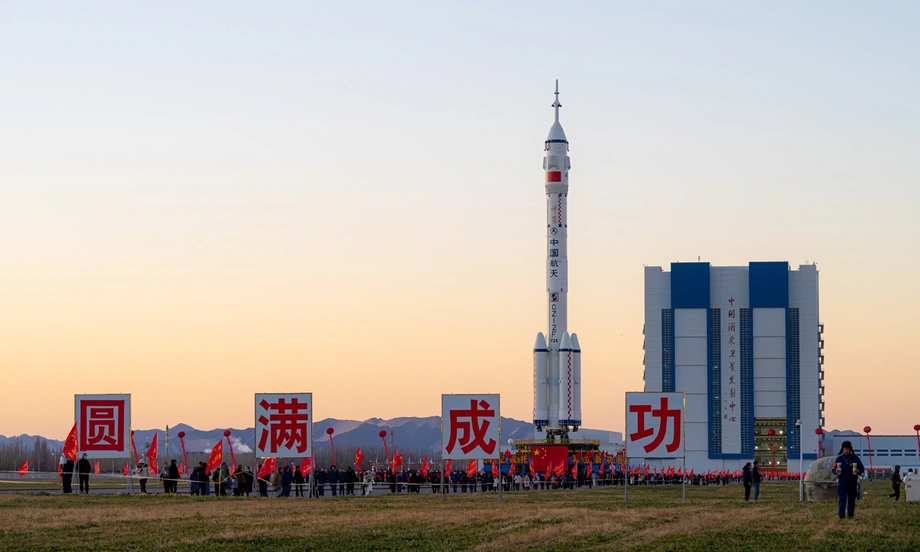
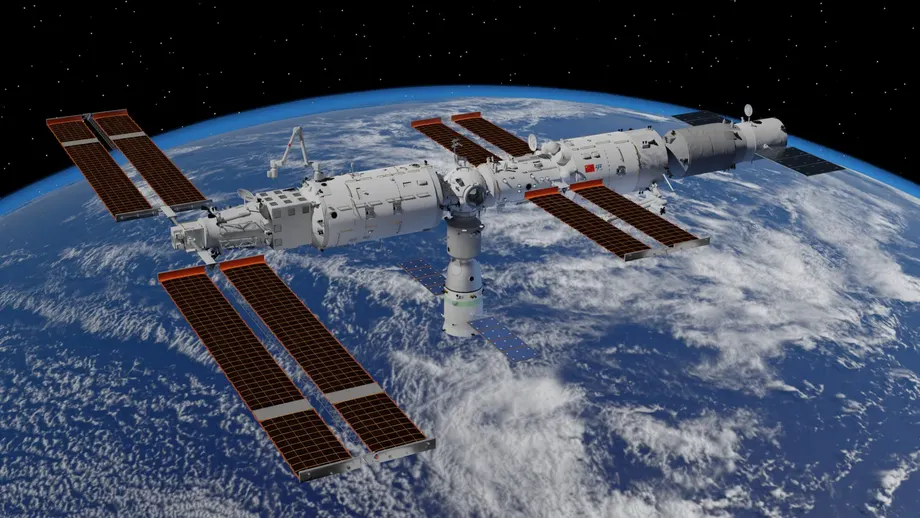
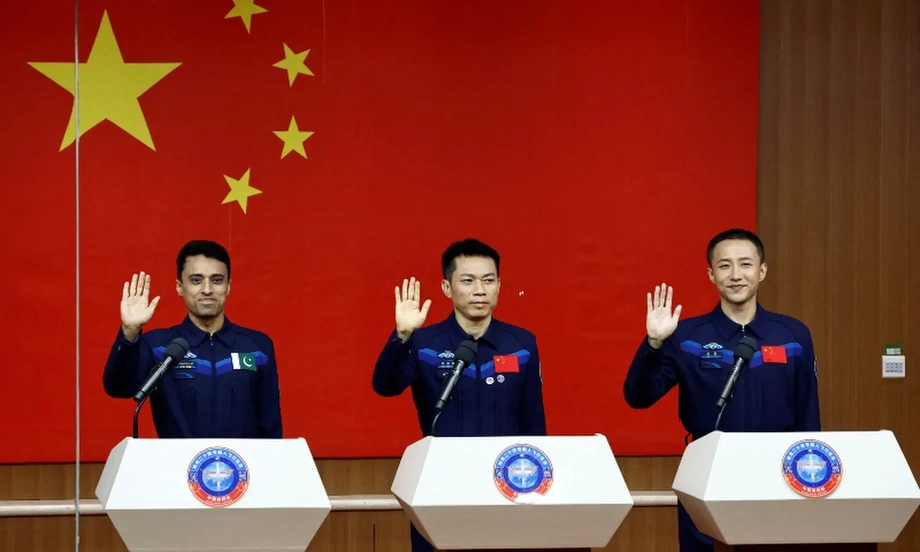
On November 25, 2026, the Tiangong space station hosted its first foreign astronaut as the Shenzhou-24 spacecraft docked with the Tianhe core module. Muhammad Zeeshan Ali, a 40-year-old Pakistan Air Force pilot and payload specialist, entered the orbital laboratory alongside Chinese commanders Tang Hongbo and Wu Yi. The rapid automated rendezvous took just 3 hours and 38 minutes from lift-off at the Jiuquan Satellite Launch Center. This marked the beginning of a joint mission that combines Chinese operational expertise with Pakistani scientific ambition.
Contents
Ali, the first Pakistani in orbit and the first foreign visitor to Tiangong, arrived to conduct joint research. His stay is set for roughly one week, significantly shorter than the six-month rotations typical for Chinese crews. During this time, he will manage experiments on microalgae and quinoa seeds. The arrival filled the station with six crew members, testing the Tiangong station's life-support capabilities as it manages the increased consumption of oxygen and water.
The China Manned Space Agency announced that the successful docking represents a major step in international space cooperation. President Xi Jinping sent congratulatory messages, highlighting the peaceful use of outer space. The mission builds on a cooperation agreement signed between Beijing and Islamabad in February 2025, solidifying ties that date back to the early 1990s.
A Customized Halal Menu for Space
A key focus of the mission has been the dietary care provided to the international visitor. The research team at the China Astronaut Research and Training Center prepared over 100 halal food varieties specifically for Ali. The menu features familiar Pakistani dishes such as butter chicken, lamb korma, beef nihari, and curried chickpeas. These meals were developed to match the local preference for spices like turmeric and curry powder.
Chen Junli, a researcher at the China Astronaut Centre, explained that the team conducted extensive taste tests. They adjusted recipes to ensure the food was light and easily digestible during the initial days in orbit. The entire production line follows halal requirements, ensuring compliance with Islamic dietary rules. This is the first comprehensive effort to provide space nutrition for an astronaut from a different food culture.
The team also incorporated Chinese staples into the menu. Initially, the plan included traditional spiced milk tea, but Ali expressed a preference for Chinese black tea after tasting it. The research team responded by adding more Chinese rice and black tea to his supply. The packaging features bilingual labels and clear chili icons to indicate spice levels, making the dining experience intuitive for all crew members.
The First Space Handshake
The entry of the new crew was marked by a symbolic welcome. Hong Kong astronaut Li Jiaying, a member of the existing Shenzhou-23 crew, baked a small cake in the space oven. This oven, delivered by the Shenzhou-21 mission, had previously allowed the crew to enjoy roasted chicken wings and steak. As Ali floated through the hatch, he was embraced by the Chinese crew in what officials called the first space handshake.
The handover ceremony on November 28 transferred control of the station's systems. Li Jiaying presented the freshly baked cake to her new colleagues. The two crews, now six astronauts in total, will share meals designed to respect both groups' dietary habits. This shared dining arrangement highlights the cultural integration taking place 400 kilometers above the Earth.
The environmental control and life support system has transitioned from a supply-based model to a regenerative one. The station now recycles 100% of its oxygen and maintains a water closure rate of over 95%. This technology allows the station to support six astronauts without excessive resupply from Earth. Each astronaut has a personal sleep pod, with the Wentian lab module featuring unique vertical and horizontal sleeping arrangements.
Scientific Research and Future Plans
Ali serves as a payload specialist, focusing on scientific experiments rather than piloting the spacecraft. His team at the Space and Upper Atmosphere Research Commission (Suparco) in Pakistan selected four primary experiments. These involve cultivating microalgae as a potential food source and studying how spaceflight affects quinoa seeds.
Amer Gilani, the project director for the Pakistani astronaut program, noted that the training emphasized emergency response and autonomous operation. Ali underwent seven months of intensive training in Beijing, including Chinese language classes and calligraphy practice. He will return to Earth aboard the Shenzhou-23 spacecraft, taking the seat of a crew member who will remain for a full-year stay.
Prime Minister Shehbaz Sharif and Chief of Defence Forces Field Marshal Syed Asim Munir held a phone call with Ali during his mission. They praised the mission as a testament to the strategic partnership between the two nations. Sharif remarked that the friendship between China and Pakistan is now "boundless as the universe." Ali reciprocated the gratitude, stating he carries the hopes of 250 million Pakistanis.
Context of Global Space Race
The mission occurs as the United States-led International Space Station (ISS) approaches the end of its operational life around 2030. The ISS was established by partners including the US, Russia, Europe, Japan, and Canada. However, geopolitical tensions have shifted the landscape. The US excluded China from the ISS in 2011 and subsequently restricted Chinese citizens from accessing US facilities.
Tiangong stands as an alternative for international cooperation. China aims to land astronauts on the moon by 2030, competing with the US Artemis program. The station is currently smaller than the ISS but is expected to double in size. Pakistan is preparing to contribute to this growth, with a Pakistani-built rover planned for a Chinese lunar mission around 2028.
Key Points
First foreign astronaut, Muhammad Zeeshan Ali, arrives at Tiangong on Shenzhou-24.
Customized halal menu features butter chicken and curried chickpeas for the visitor.
Station life support recycles oxygen and water, supporting six crew members.
Pakistan and China sign space agreements to foster long-term scientific ties.