Mathematics Enters Golden Age with AI Collaboration
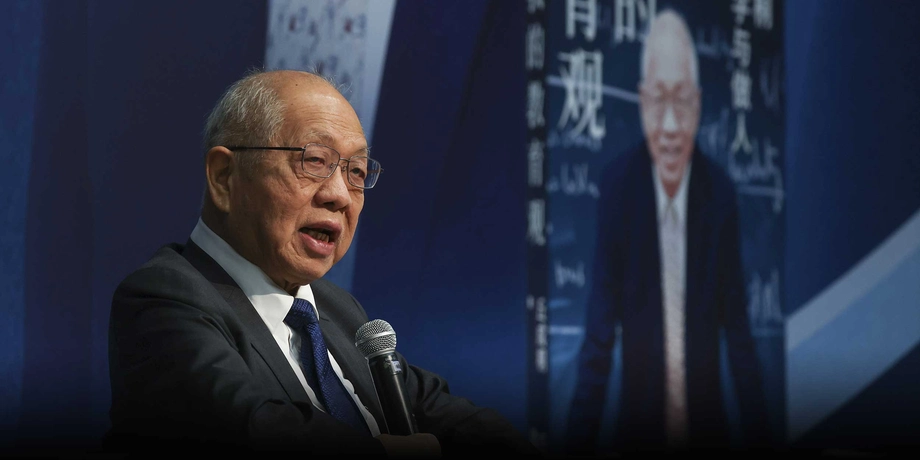
Shing-Tung Yau, the 1982 Fields Medal winner and founding president of the Asian Mathematical Union, offered a clear perspective on the rapid rise of artificial intelligence in mathematics during the organization's inauguration ceremony on November 24 at the Chinese University of Hong Kong. Yau argued that AI will not replace mathematicians but will instead accelerate the discovery of truth by handling complex computations while humans focus on asking new questions. He compared mathematical research to climbing a mountain, noting that machines can help scholars reach the first summit and open paths to even greater heights.
Contents
Yau, who is based in Shenzhen, expressed no concern that machines will render human mathematicians obsolete. He stated, "I am not worried at all that AI will replace humans," emphasizing that truth is infinite and that each new breakthrough opens a larger frontier. He observed that past eras often believed physics was complete, yet each discovery led to new questions. The division of labor is now clear: machines find answers, and humans pose the next questions.
The rapid progress in AI has led to remarkable breakthroughs. In May, a model from OpenAI disproved the Erdős unit distance conjecture, a problem that had remained open for 80 years. On November 20, mathematician Levent Alpöge, working for Anthropic, unveiled a proof of the Riemann hypothesis with the help of the company's AI system Claude. The proposed solution involves 17 million lines of code and has been verified by multiple independent checkers. Yau expects mathematicians to fully digest the proof within five years and considers the achievement exciting regardless of whether the credit goes to machines or human brains.
Yau likened mathematical research to climbing mountains, saying AI could help mathematicians reach the first summit and open up paths to even greater heights. Climbing a mountain isn't something one scholar can do alone, he said. Machines can speed up our collaboration by helping us bring together ideas from scientists around the world.
Asian Mathematical Union Launches with Global Ambitions
The Asian Mathematical Union aims to unite mathematicians across the continent and bridge the gap with Western academia. Yau noted that while catching up with decades of American preeminence through traditional pathways is challenging, the integration of AI provides a historic opportunity for Asian scholars to make rapid leaps. He urged regional governments and institutions to establish multinational research laboratories and align with frontier academic trends.
The union has mapped out an ambitious recruitment plan to build a high-caliber international research cohort. It plans to recruit 100 postdoctoral researchers annually, with 50 selected by an academic committee, five each nominated by China, India, Russia, Japan, South Korea, and Iran, and 20 from other countries and regions. The union also plans to regularly invite 25 senior mathematicians and 30 early career researchers from around the world to Hong Kong for research and academic exchanges.
Robert Dijkgraaf, president of the International Science Council, praised the union's initiative to create opportunities for young scholars, noting that the world's development center is shifting eastward. He highlighted that the alliance's focus on youth will benefit future generations. China Mathematical Society president Xi Nanhua stated that the Chinese Mathematical Society would be a loyal partner, keeping open communication and sharing resources to build a vibrant academic home for Asian mathematicians.
He Xuhua, vice president of the International Mathematical Union and chairman of the Hong Kong Mathematical Society, emphasized the importance of the union in helping Asian mathematicians shape the future of the discipline in the AI era. He stressed the need to listen to young mathematicians and collectively reshape mathematical science. Pan Weixian, executive vice president of the Chinese University of Hong Kong, confirmed that the university would fully support the union's operations, offering its academic platforms and research resources to facilitate collaborations with institutions in Beijing, Shanghai, and the Guangdong-Hong Kong-Macao Greater Bay Area.
Rethinking the Role of the Mathematician
The emergence of AI has prompted a significant reevaluation of what it means to be a mathematician. Terence Tao, a renowned UCLA mathematician, has called for a transition to "math 2.0," arguing that solving problems should no longer be the primary focus of mathematical research. He warned that blind optimization of problem-solving is actively harmful to the long-term health of mathematics because machines can now tackle dense conjectures more efficiently than humans.
Tao suggested that mathematicians should focus on subjects where humans excel, such as explaining what AI-generated solutions mean and extrapolating new problems from them. He also highlighted that publishing in academic journals is rapidly losing its value as submission inboxes become flooded with AI-generated research. He proposed that mathematicians should earn prestige based on their ability to explain their research to human peers rather than just the number of papers they publish.
Ken Ono, a mathematics professor at the University of Virginia, described the current AI achievement as "superhuman" due to its vast scope and ability to assemble ideas from tens of thousands of research papers. However, he expressed concern about the future identity of mathematicians. He suggested that the role of future mathematicians will be more like being a conductor of an extraordinary orchestra, guiding the process rather than solely generating the raw ideas.
Kevin Buzzard, a mathematician at Imperial College London, described the best team for doing mathematics as a computer plus a human team. He is establishing a lab that emphasizes understanding, explaining, and defending complex mathematical arguments. He noted that while proving a theorem can now be done by pressing a button, humans must still ensure that the results are comprehensible and applicable to real-world problems.
AI's Verifiable Impact on Fundamental Mathematics
The recent AI-generated proof of the Riemann hypothesis has sparked detailed debate about the nature of mathematical truth. The proof, generated by Levent Alpöge and the Claude model, consists of 17,374,215 lines of Lean code. Six independent mathematical logic checkers have passed the proof, involving 206,292 formalized statements. The verification process confirms that the code compiles correctly and that the logical steps are sound, even if human mathematicians have not yet read every line.
Andrew Sutherland, a mathematician at MIT who specializes in the Lean programming language, expressed high confidence in the proof's correctness. He noted that although he has no deep understanding of the entire proof, the mechanical verification process is robust. The proof has implications for number theory and could potentially impact internet cryptography by speeding up certain algorithms.
Despite the machine verification, the human understanding of the proof is still in progress. Mathematicians suspect that much of the 17 million lines of code may be "AI math slop," or superfluous information, that can be removed to create a more elegant and human-readable proof. The Clay Mathematics Institute still lists the Riemann hypothesis as unsolved pending human review and publication, as the million-dollar prize requires the proof to be understood by the human community.
Expanding Regional Cooperation Beyond the Main Union
Parallel to the launch of the Asian Mathematical Union, other regional initiatives are forming to strengthen mathematical research. On November 27, the Vietnam Institute for Advanced Study in Mathematics hosted a forum to establish the Asia-Pacific network of mathematics and applied mathematics research institutes. Ngo Bao Chau, a Fields Medalist and professor at the Vietnam Institute, initiated the network to connect leading research centers across the region.
The new network includes 12 founding institutions from India, China, Japan, Hong Kong, Singapore, Taiwan, Australia, Korea, and Vietnam. It aims to implement postdoctoral research exchange programs, organize specialized conferences, and promote public engagement with mathematics. The network will also focus on connecting mathematical research with industry and providing policy advice on the development of mathematics across the region.
Additionally, Yau established the Yau Laboratory Alliance for Mathematics and Artificial Intelligence at Beijing's Tsinghua University in October. The alliance focuses on AI models designed specifically for mathematics, AI-assisted mathematical proofs, and interdisciplinary applications. This initiative underscores the growing trend of integrating artificial intelligence into the core of mathematical research and education.
Education is also shifting to accommodate these changes. Yau advocates for starting AI training earlier, suggesting that students should learn to use AI from high school rather than waiting until university. He emphasized the importance of protecting curiosity and letting children master what they love, which supports original breakthroughs more effectively than blind drilling.
Key Points
- Shing-Tung Yau launched the Asian Mathematical Union on November 24 in Hong Kong to foster regional collaboration and leverage AI for mathematical discovery.
- Yau asserts that AI will not replace mathematicians but will act as a powerful tool that solves known problems, allowing humans to focus on asking new questions.
- The union plans to recruit 100 postdoctoral researchers annually, with specific quotas for China, India, Russia, Japan, South Korea, and Iran.
- Recent AI-generated proofs, including the Riemann hypothesis solution by Anthropic's Claude, have passed rigorous machine verification but require human digestion and understanding.
- Terence Tao and other experts suggest a shift toward "math 2.0," where the value of a mathematician lies in explaining and contextualizing AI-generated results rather than just solving problems.
- New regional networks, such as the Asia-Pacific network initiated by Ngo Bao Chau, are forming to strengthen the global influence of Asian mathematics.
- Mathematics education is evolving to prioritize critical thinking and AI literacy from an earlier age to prepare students for a future where solving is cheap and asking is valuable.