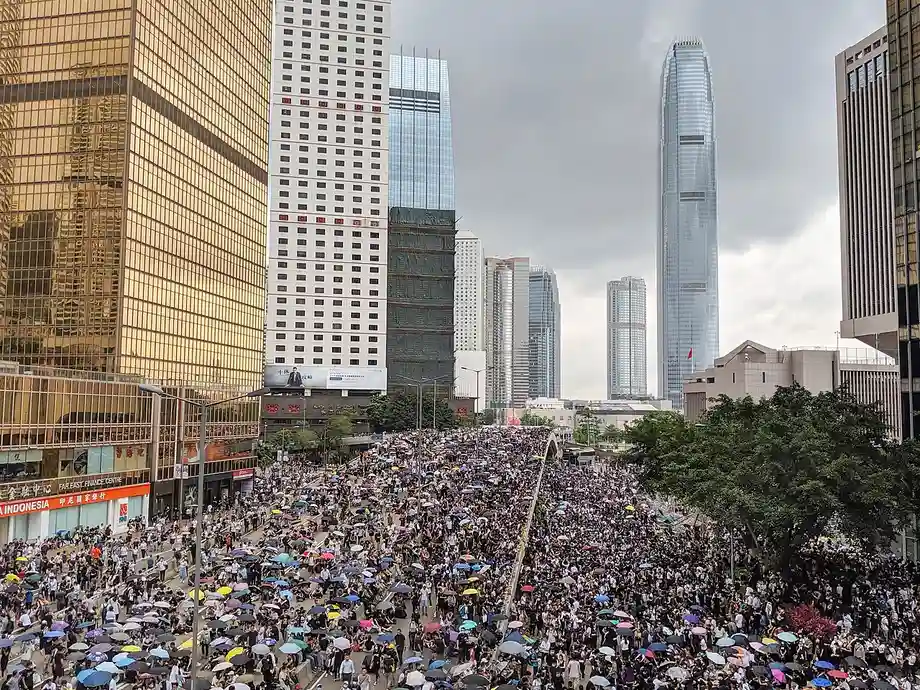
A formal end to a bill that never passed
Carrie Lam, Hong Kong's leader, said on Wednesday 23 October 2019 that her government had formally withdrawn the Fugitive Offenders and Mutual Legal Assistance in Criminal Matters Legislation (Amendment) Bill 2019. Secretary for Security John Lee made the formal legislative announcement, after Lam had promised on 4 September to withdraw the bill when the Legislative Council returned from its summer recess. The bill was introduced on 29 March 2019 and received its first reading on 3 April, but it never reached a final vote.
Contents
- A formal end to a bill that never passed
- How a murder case became the spark
- What the bill would have allowed
- Why the legal system was the central fear
- Key dates from proposal to withdrawal
- Lam offered concessions and warnings
- The five demands outlived the bill
- The protests reshaped the city's politics
- Why Beijing mattered even before the vote
- What changed after 23 October
- Key Points
The proposal would have allowed Hong Kong to transfer suspects, one request at a time, to places with no standing extradition agreement with the city, including mainland China and Macau. Extradition means one government handing a suspected or convicted person to another place to face investigation, trial or punishment. Opponents feared that the change would put Hong Kong people under a legal system controlled by the Communist Party. The controversy grew into the city's worst political crisis in decades and one of the sharpest challenges to Chinese leader Xi Jinping since he took power in 2012.
The withdrawal ended the bill's path through the legislature. The wider dispute continued. Lam refused the other demands that protesters had added as the movement grew: an end to what they called the 'riot' label for the 12 June clash, release of people arrested, an independent inquiry into police conduct, and her resignation with movement toward universal suffrage promised in the Basic Law, Hong Kong's constitutional document.
How a murder case became the spark
The immediate origin was a killing in Taiwan. In early 2018, Chan Tong-kai, a Hong Kong resident who was 19, killed his pregnant girlfriend Poon Hiu-wing while the couple were visiting Taiwan, then returned to Hong Kong. Chan admitted to Hong Kong police that he killed Poon. Police could not charge him with murder in Hong Kong or send him to Taiwan because no extradition agreement covered the two places.
Hong Kong's Fugitive Offenders Ordinance (Cap. 503) and Mutual Legal Assistance in Criminal Matters Ordinance (Cap. 525) did not apply to surrender requests or evidence sharing between Hong Kong and Taiwan. In February 2019, the government proposed a way to fill what it called a legal loophole: the chief executive could approve special arrangements with any place outside Hong Kong that lacked a standing agreement.
The Taiwan case gave the government a concrete story, but the proposed reach was much wider. Beijing officials, including Chen Zhimin, Zhang Xiaoming and Han Zheng, publicly supported the change and said 300 fugitives were living in Hong Kong. Starry Lee, chairwoman of the Democratic Alliance for the Betterment and Progress of Hong Kong, and legislator Holden Chow had pushed for a change in 2019 using the murder case as the reason. Many residents wanted a narrow arrangement with Taiwan that would end after Chan was surrendered.
What the bill would have allowed
The full title was cumbersome, but the mechanics were simple enough. The bill would have changed the Fugitive Offenders Ordinance and the Mutual Legal Assistance in Criminal Matters Ordinance so Hong Kong could make special surrender arrangements and provide evidence sharing with places outside the city. It would have lifted the geographic restriction that kept the mutual legal assistance ordinance from covering mainland China and Macau.
Under the draft, special arrangements would cover 37 of the 46 offence categories listed in Schedule 1 of the Fugitive Offenders Ordinance. Nine categories would be excluded. A triggering offence initially had to carry a prison sentence of one year, then three years, and was later adjusted to seven years. It also had to be triable on indictment in Hong Kong, meaning it was serious enough for a formal criminal charge and jury trial.
Special arrangements would be considered only where no standing agreement existed. The chief executive could issue a certificate saying a special arrangement existed, and that certificate would be conclusive evidence. A transfer still required several steps: an authority to proceed from the chief executive, a committal hearing in court, and a surrender order by the chief executive. Safeguards such as habeas corpus, a court order used to challenge unlawful detention, discharge because of delay, and judicial review of the chief executive's decision would remain in place.
Why the legal system was the central fear
Hong Kong has its own courts and legal traditions under the one country, two systems arrangement that began with the 1997 handover. The Basic Law promises a high degree of autonomy. Opponents of the bill feared that a transfer mechanism reaching mainland China would weaken the boundary between Hong Kong's jurisdiction and courts administered by the Communist Party. That concern was especially sharp for people who might face political charges, but it also ran through the business community.
The American Chamber of Commerce in Hong Kong, a business group, described the mainland's criminal process this way:
criminal process is plagued by deep flaws, including lack of an independent judiciary, arbitrary detention, lack of fair public trial, lack of access to legal representation and poor prison conditions
The Liberal Party and the Business and Professionals Alliance for Hong Kong suggested exempting 15 economic crimes from the 46 offence categories. The government exempted nine economic crimes and raised the prison threshold before lawmakers representing business interests eventually backed the bill. Those changes did not calm the wider opposition, which wanted the mainland excluded altogether or the proposal dropped.
The worry was practical. Businesses seeking enforceable contracts in China often used Hong Kong law to resolve disputes because the city was seen as stable and predictable. Some companies considered moving to Singapore if the bill passed. The prospect of political dissent cases and commercial cases crossing into mainland courts brought lawyers, journalists, human rights groups, business groups and foreign governments into the same opposition camp.
Key dates from proposal to withdrawal
The crisis moved quickly, and several dates explain why the formal withdrawal came so late. Lam suspended the bill on 15 June, after the second reading was disrupted, leaving it pending resumption of second reading. She declared on 9 July that the bill was dead, using a Cantonese phrase meaning dying a peaceful death, but she stopped short of a formal withdrawal. She also rejected an independent commission into police conduct, saying the existing Independent Police Complaints Council was enough.
- Early 2018: Chan Tong-kai killed Poon Hiu-wing in Taiwan and returned to Hong Kong.
- February 2019: The government proposed amendments; 29 March: the bill was introduced; 3 April: it received its first reading.
- 9 June: A march drew hundreds of thousands to more than one million people; 12 June: protests stalled the second reading; 15 June: Lam suspended the bill; 16 June: a larger march demanded full withdrawal.
- 1 July: Protesters stormed the Legislative Council Complex; 9 July: Lam said the bill was dead.
- 2 September: A leaked audio recording captured Lam describing her room to manoeuvre; 4 September: she promised formal withdrawal after 13 weeks of protests.
- 4 October: A mask ban was imposed under the Emergency Regulations Ordinance; 23 October: the bill was formally withdrawn.
Lam offered concessions and warnings
Before the protests, Lam, Hong Kong's chief executive, insisted that the bill was useful and accused opponents in the Legislative Council of 'talking trash'. She said the proposal would protect public safety and meet an international duty:
protect Hong Kong's public safety, and fulfil Hong Kong's international duty
Secretary for Security John Lee said the legal sector did not really understand the bill and that some lawyers had not read it before protesting. After the 12 June clash, Lam and Police Commissioner Stephen Lo called the event a riot, a term that became one of the protest movement's targets. Police later narrowed the description to five protesters, while the Civil Human Rights Front, a protest organiser, said none of them rioted.
A leaked audio recording received on 2 September captured Lam, Hong Kong's chief executive, saying her room to manoeuvre between the central government and Hong Kong was small. On 3 September she denied that she had tendered her resignation.
very limited
On 4 September, Lam announced a package: formal withdrawal when the Legislative Council resumed, new members for the Independent Police Complaints Council, dialogue at community level, and academics invited to assess the city's deeper problems. Protesters and democratic lawmakers said the concession was 'too little, too late'. Lam added that the government would answer demonstrations with firm policing:
stern law enforcement
The five demands outlived the bill
Protesters had started with a single aim, withdrawal of the bill. As clashes spread, they set out five demands that went beyond the legislation. The withdrawal answered one of them. Lam rejected the rest.
- Withdraw the extradition bill.
- Retract the 'riot' label for the 12 June clash.
- Release people arrested during the protests.
- Set up an independent inquiry into police conduct.
- Have Lam resign and move toward universal suffrage, meaning broad public voting for leaders, as promised in the Basic Law.
Police inaction during the 2019 Yuen Long attack and the brutality of the 2019 Prince Edward station attack escalated the unrest. By April 2020, police had arrested 10,279 people and charged almost 3,000. More than 2,600 people had been injured and two had died. No date was announced for settling the unresolved demands.
The protests reshaped the city's politics
The scale of the demonstrations made withdrawal unavoidable. The 9 June march was estimated from hundreds of thousands to more than one million people. A later rally before Lam's concession drew more than 1.7 million people. The protest wave became the largest series of demonstrations in Hong Kong's history.
The storming of the Legislative Council Complex on 1 July, the deaths of Chow Tsz-lok and Luo Changqing, one of whom was unarmed, and the sieges of the Chinese University and the Polytechnic University in November 2019 marked the escalation. COVID-19 quieted street protests in early 2020. In May 2020, Beijing moved toward a national security law. The standing committee of China's national legislature, the NPCSC, passed the law unanimously on 30 June 2020.
The national security law changed the political atmosphere again. Western governments suspended extradition treaties with Hong Kong, and more than 100 people, including prominent activists, were arrested after the law was imposed. The government said peace and stability had returned, while approval ratings for the government and the police fell to their lowest points since the 1997 handover. A wave of emigration followed the crackdown on civil society.
Why Beijing mattered even before the vote
The bill was written in Hong Kong, but the politics around it ran through Beijing. Beijing's support for the change and the claim about 300 fugitives fed concern that the city's separation from mainland law, a core part of one country, two systems, could be narrowed by a single amendment. The central government alleged that foreign powers were instigating the conflict. The movement was widely described as leaderless. The United States passed the Hong Kong Human Rights and Democracy Act on 27 November 2019, adding an international dimension to a dispute that had begun with a murder suspect in Taiwan.
Older grievances gave the bill a deeper charge. After the failure of the Umbrella Revolution in 2014 and the imprisonment of democracy activists in 2017, many residents feared the loss of autonomy. Xi Jinping's rise in 2012 and repression in Xinjiang added to that fear. The NPCSC's disqualification of six lawmakers, the Causeway Bay Books disappearances, the Moral and National Education controversy in 2012, and the Express Rail Link with its shared border arrangement all fed distrust. Since 1997, a daily quota of 150 immigrants from the mainland and large flows of mainland visitors had strained public services and local culture. Pollsters at the University of Hong Kong found younger respondents more distrustful of the Chinese government, and by 2019 almost no young people identified only as Chinese.
What changed after 23 October
The formal withdrawal meant the bill could not return to the Legislative Council in that form. Parties supportive of the government accepted the step. Starry Lee, leader of the Democratic Alliance for the Betterment and Progress of Hong Kong, said her party would not oppose withdrawal. Felix Chung of the Liberal Party backed withdrawal but wanted an independent commission.
For ordinary residents, the change was concrete but limited. Nobody could be surrendered under that bill, because the proposal was withdrawn. Police operations, arrests, court cases and arguments over the 12 June label continued. The mask ban imposed on 4 October under the Emergency Regulations Ordinance remained part of the government's response to street protests.
The legislative crisis had begun with a case that Hong Kong could not solve through existing extradition rules. It ended with the rules unchanged and with the city still divided over autonomy, police power and Lam's leadership. The political dispute continued into 2020 and beyond the protest wave, which has no generally agreed end date.
Key Points
- Hong Kong's government formally withdrew the extradition bill on 23 October 2019, after Lam promised on 4 September to do so.
- Secretary for Security John Lee announced the withdrawal of the bill, whose formal title was the Fugitive Offenders and Mutual Legal Assistance in Criminal Matters Legislation (Amendment) Bill 2019.
- The proposal arose from the 2018 murder of Poon Hiu-wing in Taiwan and the inability to send Chan Tong-kai there for trial.
- The bill would have covered 37 of 46 offence categories and used a prison threshold of seven years after revisions.
- Protesters' five demands included withdrawal, retracting the 'riot' label, releasing arrested people, an independent inquiry and Lam's resignation with universal suffrage.
- Police had arrested 10,279 people and charged almost 3,000 by April 2020, when more than 2,600 injuries and two deaths were recorded.
- A national security law passed by the NPCSC on 30 June 2020 deepened the political crisis and led Western governments to suspend extradition treaties.