Impact replaces time spent as the promotion test
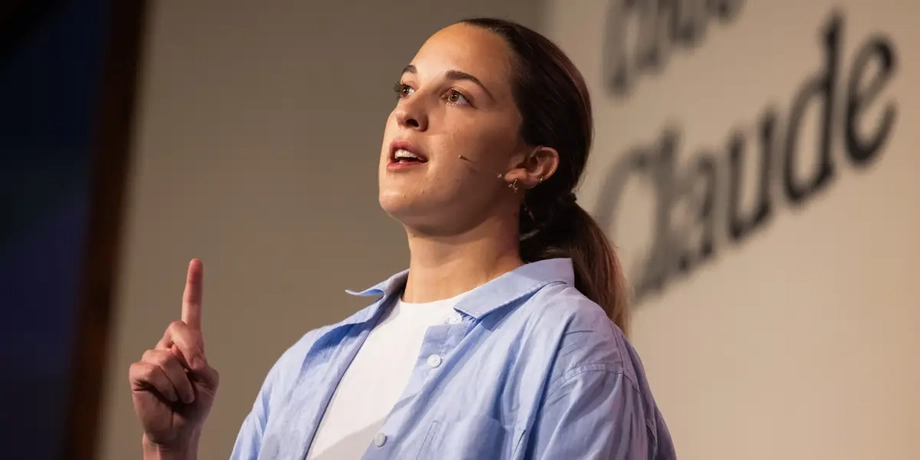
Katelyn Lesse, Anthropic's head of platform engineering, says artificial intelligence has broken one of the familiar ways of judging whether a software engineer is ready for promotion: the time needed to finish a difficult project. Speaking with Gergely Orosz on The Pragmatic Engineer in an episode published on November 25, 2026, she said work that once took years can now take months. Her team consequently gives more weight to measurable results, including CPU capacity saved, faster responses and incidents prevented.
Contents
- Impact replaces time spent as the promotion test
- A five month rewrite explains why the clock stopped working
- How can engineers trust code they did not read?
- Claude now helps decide reviews, deployments and alerts
- Small teams remain, but their work is multiplying
- The handwritten coding interview has lost its signal
- Hiring teams elsewhere face a flood of applications
- Outcome measurement reaches pay scales and contracts
- The dates behind Anthropic's rapid transition
- What remains undecided, and what still needs people
- Key Points
Latency, one of those measures, is the delay between a user making a request and the system responding. A large engineering project can therefore be valuable because it makes Claude respond sooner or costs less to operate, regardless of whether its completion took weeks or years. Lesse summarized the promotion standard in direct terms.
Ultimately, the fallback is always just impact.
Anthropic still has engineering levels and a formal promotion process. Project duration has simply become a weaker clue to the difficulty of someone's work. Reviews now include qualitative judgment about coordination across teams alongside numerical outcomes. For senior engineers, that remains difficult because each person may own different systems and problems. Lesse said the company is continually adjusting how it estimates the complexity of those responsibilities.
Her own vantage point is substantial. Her platform organization owns the Claude API and infrastructure supporting Claude Code and Claude Desktop, and she previously led engineering teams at Stripe. Claude Code is used by hundreds of thousands of workers worldwide, including Anthropic's engineers. Anthropic's IPO filing disclosed more than 11,900 customers spending at least $100,000 annually on Claude as of September 30. The company listed on Nasdaq on November 19 and was described during the episode as having a market capitalization of around $1 trillion, with roughly a tenth of the headcount of similarly valued businesses.
A five month rewrite explains why the clock stopped working
The clearest example is the reconstruction of Anthropic's Messages API. An API is the front door through which one piece of software requests work from another. This particular service sits in the path of every Claude token, handling authentication, tokenization, billing and safety checks before calling the GPU systems that generate a response. Tokens are the small units of text that language models process.
Anthropic built the original service as a Python monolith in 2023, when it was still primarily a research organization and Python made it easy to connect research and inference systems. Rapid traffic growth, CPU costs and difficulty obtaining additional capacity during a global CPU shortage eventually made that design expensive. Lesse also cited a Super Bowl commercial as one driver of rising request volume heading into 2026. Optimizing Python, adding a second Google Cloud region and pursuing other infrastructure savings did not remove the underlying overhead.
A few engineers then rebuilt the service in Rust in roughly five months, with some descriptions of the project putting the duration at five to six months. Nobody on the team was a Rust expert. Claude helped write the implementation and taught engineers about the language as they worked. A year earlier, the same group had chosen Go for new services because its members already knew that language.
The business results provide the sort of evidence Lesse now wants in performance discussions. Figures released with the migration account said CPU use per request fell by about 70%, while the median time to first token dropped by about 20%. A separate redesign of Cloud Managed Agents reduced that project's CPU consumption to approximately one third of its previous level, a saving of roughly two thirds. Those numbers describe engineering consequences that a project calendar cannot capture.
How can engineers trust code they did not read?
Lesse estimated that engineers closely examined only about 20% of the Rust code generated during the migration. Put another way, roughly 80% of the pull requests opened by agents did not receive a deep, line by line reading. Human attention concentrated on the remaining fifth, particularly central parts of the system where engineers needed to investigate or correct something.
The safety case rested on verification rather than inspection alone. Rust's compiler performs strict checks before a program can run. More importantly, the existing Python service provided a working answer key. The team sent production requests through both systems in a process called shadowing, compared their responses and continued until differences approached zero. Customers continued receiving the Python responses during testing, while Python remained available as a fallback for requests that produced Rust errors.
Lesse explained the principle behind accepting so much generated code without reading every line.
As long as you can really boil something down to make it verifiable in some way, then you don't have to look at every single line of Rust code that's getting written.
Customer privacy made that comparison harder. Anthropic does not inspect customer prompts or completions, so engineers could not simply open raw data whenever Python and Rust disagreed. They compared processing up to the point where a request entered inference, then compared token counts on the way out. Engineers also had to keep pace with features still being added to Python. Static checks eventually required new features to be implemented on both sides during a deliberately short period of parallel development.
The lesson for other engineering groups is specific: agent output becomes safer to use when a team can define the expected behavior and test it automatically. Reading less code shifts human effort toward building tests, comparison systems and boundaries that expose mistakes.
Claude now helps decide reviews, deployments and alerts
A Claude classifier examines every pull request at Anthropic, with a pull request being a proposed set of code changes. It decides whether human review is necessary, how many reviewers a change needs and which team should examine it. Routine work such as an SDK version update can proceed without a person. Riskier changes still receive human attention. When automated tests become unreliable, agents can repair them, review the repair, merge it and deploy it.
Anthropic also introduced Claude Ship in public beta on November 24. A developer using Claude Code can enter the /ship command to submit code, open a pull request, review changes, fix problems and decide on merge approval under the owning team's rules. Agents built by a platform acceleration group separately exercise systems against specifications written by people and open proposed fixes when behavior breaks.
The operational experiment extends to the engineers who respond to outages. Claude shadowed the API team's on call rotation for months before receiving live alerts. It now classifies an alert as real or noise, suppresses unnecessary pages, escalates genuine incidents and proposes fixes before a person arrives. The long term goal is for Claude to handle some incidents without waking anyone, but Lesse said that point has not been reached. The team owning a system remains responsible when something fails, including changes made without human involvement.
New engineers also begin by asking Claude to explain the codebase and internal systems. It can produce interactive tutorials and visualizations. Product managers can use Claude to build and release features, while engineers increasingly create tools for their own work. One engineer independently assembled a Slack channel where multiple agents pursue a common goal.
Managed Agents includes an Outcomes feature built around the same management idea as the promotion changes. A user describes the desired result rather than merely assigning a task, and a second agent evaluates whether the output meets that result. Lesse's practical advice is to steer an agent through feedback and testing until it meets the required standard, rather than accepting its first answer.
Small teams remain, but their work is multiplying
Anthropic has retained teams small enough to feed with two pizzas, generally five to eight engineers. In a separate conversation published on July 1, Lesse described a wider group that also includes an engineering manager, a product manager and a designer. That size still supports shared system knowledge, reliable ownership and an on call rotation.
The composition and output of those teams are changing. Almost every engineer may need to act as a technical lead, guiding agents and coordinating other contributors instead of concentrating solely on implementation. Lesse said eight engineers who previously ran one or two projects could potentially run four or five in parallel. Team members also remain collectively responsible for the systems they operate.
Planning has not accelerated at the same rate as coding. Platform engineers work with inference, research, safety and application teams, and getting everyone aligned at the start of a project still takes about as long as it did before AI. Lesse said the average engineer now spends more time coordinating than implementing.
You really, really, really shrink the implementation part.
That bottleneck increases the value of deciding what deserves to be built. Lesse expects demand for product managers, especially technical product managers, to rise rather than fall. Anthropic also has a product operations role intended to improve the systems and information behind decisions. She contrasted her expectation of possibly needing more than one product manager per team with OpenAI's cited ratio of 30 engineers for each product manager.
Quality assurance remains a shared responsibility rather than a dedicated team position. Anthropic uses many unit tests, fewer integration tests and a smaller number of slower tests covering complete user journeys. It also invests in evaluations that measure whether models and products behave as expected. In Lesse's earlier account, her teams' code was generated by AI, while engineers continued to own architecture, guide agents and review their output.
The handwritten coding interview has lost its signal
Anthropic's promotion problem has a hiring counterpart. Strong candidates were passing design and project discussions, then failing an algorithmic test that required them to write code by hand. Many no longer worked that way in their daily jobs. Lesse's organization phased out that interview across product and platform engineering and began testing exercises in which candidates review code written by an agent or build a system alongside one.
Architecture interviews and detailed discussions of past projects remain. The unsettled part is the replacement practical exercise. Lesse described the scale of the change and the signal her team wants to obtain.
It's a big change. We're basically trying to find what is the best way to really truly get signal on whether someone can use these tools really well to get work done.
No date was given for choosing a single replacement format. For applicants, the experiments place visible value on judging agent output, spotting errors, explaining a design and turning an objective into a finished release. Typing speed and memorized algorithm puzzles carry less weight in that model.
Hiring teams elsewhere face a flood of applications
Daniel Chait, chief executive and cofounder of the recruiting software company Greenhouse, described a related measurement problem in a May 2026 appearance on Chain of Thought. Greenhouse collects about 22 million job applications each month. Applications per opening have risen almost two and a half times since ChatGPT launched in 2022, while many recruiting teams have stayed the same size or shrunk. Chait said one recruiter may consequently face four or five times as many applications as a couple of years earlier.
Software engineers use application automation more than other groups in Greenhouse's data and submit the most applications. AI can then tailor resumes and cover letters until hundreds of candidates appear similar. Some employers respond by asking a general model to select 20 or 30 names from roughly 1,000 applications, while candidates apply to still more jobs to improve their chances.
Chait's recommended interview begins with the abilities required in the role and tests those directly. He dismissed the continued use of exercises built around manual typing or linked lists, which are basic data structures often used in algorithm puzzles.
It probably ain't typing, and it definitely ain't linked lists.
Greenhouse has moved assignments completed at home toward live sessions because an agent could otherwise produce much of the submission. Some sessions include watched use of the same AI tools a new employee would use. Greenhouse published written rules more than a year ago telling candidates when AI is permitted, and Chait expects that guidance to require revision well within five years.
Employers using an AI interviewer should also disclose that fact before the meeting, he said. A Greenhouse survey found almost two thirds of candidates had encountered an AI interview, while nearly 40% had abandoned a process because it felt janky. Clear disclosure allows an automated first round to give more people an initial conversation without surprising someone who expected a person. Chait also argued that many public layoff announcements overstate demonstrated AI productivity and instead reflect cuts after earlier overhiring.
Outcome measurement reaches pay scales and contracts
Anthropic's employment report points toward a more senior engineering workforce: the share of new junior hires in engineering fell from 27% to 9%. The period covered by that comparison was not given. Lesse said small teams have shifted toward senior members, with more people participating in design and coordination while agents handle much of the implementation.
For Japanese system integrators, outcome measurement also challenges the person month, commonly called the man month. One unit represents one engineer working for one month, so 10 units could mean 10 people for one month or five people for two months. Estimates have traditionally drawn on expected lines of code, while billing tables often connect rates to experience and skill levels. Layered subcontracting adds further coordination between clients and primary, secondary and tertiary contractors.
A contract priced entirely on labor inputs can reward slower delivery. If one engineer working with agents performs implementation previously assigned to five people, the billable labor could fall to one fifth under that simplified model. Faster work would then reduce revenue even while improving the customer's result.
Anthropic's experience suggests an alternative basis for pricing and assessment: response improvements, computing savings, avoided failures and successful coordination. That also gives explicit value to consensus building and verification design, work that can disappear inside coordination margins in a layered contracting structure.
The dates behind Anthropic's rapid transition
The promotion and interview changes emerged alongside a product launch, an infrastructure migration and Anthropic's entry into public markets.
- 2023: Anthropic built the original Messages API in Python while operating primarily as a research company.
- July 1, 2026: Lesse's separate account of team structure described small groups running more projects in parallel and relying heavily on generated code.
- September 30: The customer spending snapshot later disclosed in the IPO filing counted more than 11,900 customers at or above $100,000 annually.
- November 19: Anthropic listed on Nasdaq.
- November 24: Claude Ship entered public beta.
- November 25: Anthropic released migration results, and Orosz published his nearly two hour conversation with Lesse covering reviews, on call operations, hiring and promotions.
What remains undecided, and what still needs people
Anthropic has not finished designing its interview process, measuring the complexity of every senior engineer's work or allowing Claude to resolve incidents independently. Its review system sends risky changes to people, and its teams still carry operational responsibility. Those are active management tasks rather than settled formulas.
Lesse also sees possible future uses for groups of agents in complicated processes such as drug approval and legal due diligence. She presented those as potential applications, not capabilities Anthropic currently provides. Her nearer term message to engineers concerned about their professional identity is that agent design, architecture, verification and coordination leave plenty of engineering work.
The physical constraints are equally concrete. Microsoft President Brad Smith told a US Senate committee that shortages of electricians, plumbers and other skilled personnel were "the single largest challenge to expanding data centers", and presented an estimate that 500,000 new electricians would be needed over the next decade. Google has committed $15 million to training intended to support 100,000 electrical workers and 30,000 new apprentices. Some US openings for electrical facility engineers were offering $200,000 a year.
Faster code production does not remove the need to decide what software should do, prove that it works, supply computing facilities or maintain power and cooling. Anthropic's experiment changes where human judgment sits in that chain: less emphasis on hours and keystrokes, more emphasis on outcomes, verification and responsibility.
Key Points
- Katelyn Lesse said on November 25, 2026 that project duration had become less useful for promotion decisions at Anthropic.
- Engineering assessments now give greater weight to CPU savings, lower latency, avoided incidents and coordination across teams.
- A small team rebuilt Claude's Messages API in Rust in roughly five months without Rust experts on staff.
- Engineers closely reviewed about 20% of the generated Rust code, with shadow production traffic providing the main comparison against Python.
- A Claude classifier triages every pull request, while another agent categorizes API alerts before a human is paged.
- Anthropic retains small engineering teams, but they can run more projects concurrently and spend more time coordinating.
- Traditional handwritten algorithm interviews have been phased out in product and platform engineering; interviews using agents remain experimental.
- Greenhouse's Daniel Chait recommends live assessments, explicit AI rules and tests tied to the abilities required in each job.