A vast local vote with national consequences
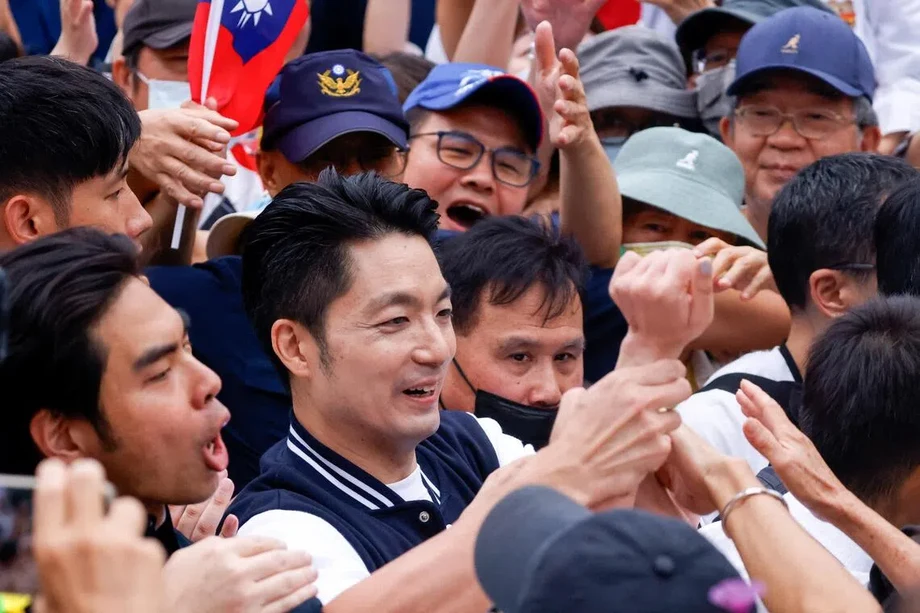
Voting began across Taiwan at 8 a.m. on Saturday, November 28, 2026, with 19,695 candidates competing for 11,051 local public offices and a separate ballot asking whether the island should abandon its nuclear-free homeland policy. Polling was due to end at 4 p.m., setting up an evening count that will measure the strength of President Lai Ching-te's governing party and the opposition before the 2028 presidential race.
Contents
- A vast local vote with national consequences
- Which offices and races are at stake?
- Why does the vote matter beyond city halls?
- What exactly does the nuclear referendum ask?
- Why AI, electricity bills and reactor safety dominate the debate
- How candidates and families spent voting morning
- What went wrong at polling stations?
- Why two voters face possible penalties
- What happens when voting ends?
- Key Points
The Central Election Commission (CEC) said 18,244 polling stations had been established across 8,906 electoral districts, with more than 300,000 election workers mobilized. Voters are choosing executives and representatives at every level of local government, from the mayors of the largest cities to the chiefs of individual boroughs.
Around 19.58 million people, approximately 85 percent of Taiwan's population, are eligible to vote in the local elections. About 600,000 of them are voting for the first time. Approximately 20 million people can participate in the referendum, which has a lower voting age and therefore a larger electorate.
The day combines decisions about municipal services and local representation with a national choice over energy. It is Taiwan's fourth referendum on nuclear power since 2018, and it follows the closure of the island's last operating reactor in May 2025. Election results are expected on Saturday evening, although the referendum count could take slightly longer.
Which offices and races are at stake?
Eighty one candidates are seeking to lead Taiwan's 22 cities and counties. Voters in the six largest municipalities, Taipei, New Taipei, Taoyuan, Taichung, Tainan and Kaohsiung, are electing mayors. Another 16 cities and counties are choosing mayors or magistrates, while thousands of other contests will determine who runs local councils, townships and neighborhoods.
The offices listed by the CEC show the unusual scale of the 9-in-1 elections, which are held every four years:
- 22 city and county leadership positions.
- 919 county or city council seats.
- 198 township chief positions.
- Six Indigenous district chief positions and 50 Indigenous council seats in municipalities.
- 2,076 township council seats.
- 7,780 borough chief positions.
The 2022 elections provide the clearest measure of what each party stands to gain or lose. The Kuomintang (KMT) won 14 of the 22 city and county leadership races, while the Democratic Progressive Party (DPP) secured five. The Taiwan People's Party (TPP) won one, and independent candidates took the remaining two.
Taipei has become unusually competitive. Incumbent KMT Mayor Chiang Wan-an is seeking another term against DPP legislator at large Puma Shen, whose rise in support has lifted opposition morale in northern Taiwan. In Kaohsiung, the main contenders are DPP candidate Lai Jui-lung and KMT candidate Ko Chih-en. They are competing to succeed DPP Mayor Chen Chi-mai in the largest city in southern Taiwan.
Why does the vote matter beyond city halls?
President Lai Ching-te's administration is facing what amounts to a midterm test. A larger DPP presence in local government would strengthen Lai's position as party chairman and help build momentum for a possible reelection campaign in 2028. A disappointing result could bring demands within the party for accountability, policy changes or new personnel appointments.
For the KMT, retaining the 14 city and county leadership posts won in 2022 would be an important measure of Chairwoman Cheng Li-wun's ability to unite the party. Losing ground would complicate its effort to turn local strength into a credible national campaign. The TPP and independent candidates also have an interest in whether voters preserve the more fragmented political map produced four years ago.
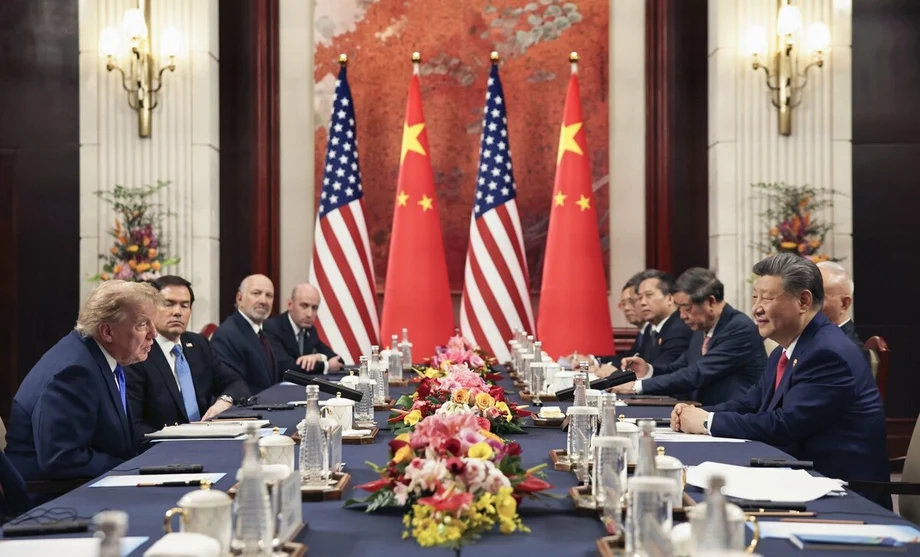
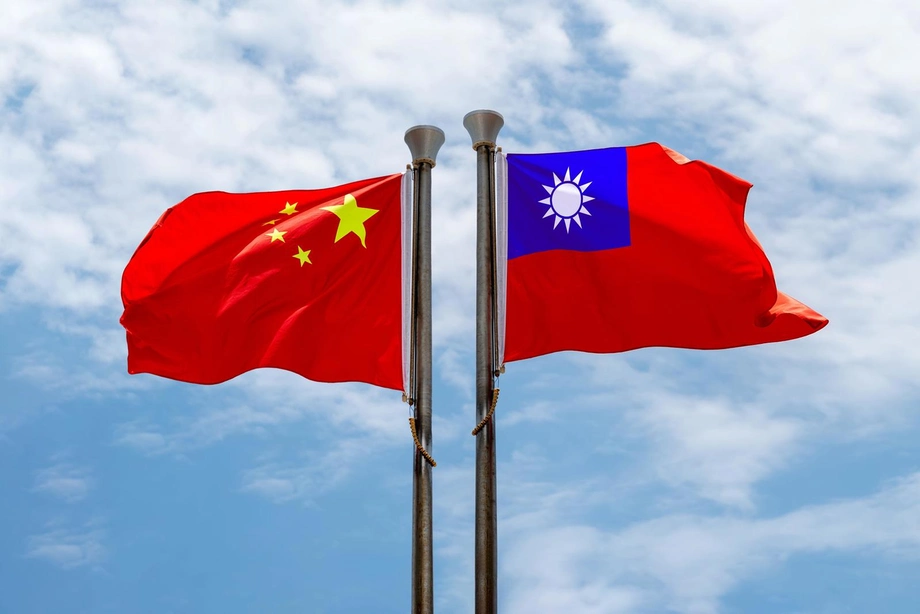
Beijing and Washington are scrutinizing the results for indications of public sentiment toward relations with China. The governing DPP leans toward independence, while the KMT is regarded as more open to engagement with Beijing. Escalating Chinese military drills, amphibious landing tests and disinformation campaigns using artificial intelligence form the security backdrop to the vote.
Inside polling stations, however, the immediate choices concern municipal government and local representation. Party totals will offer an early reading of the political mood, but individual contests also turn on local records, personalities and services. That combination explains why a borough race and a presidential campaign can feel far apart even though both are connected to Saturday's ballot.
What exactly does the nuclear referendum ask?
National referendum No. 22 was proposed by the KMT's legislative caucus and received support from the TPP. The governing DPP opposes it. The CEC approved the vote in August after the proposal completed the required political and legal process.
The question placed before voters reads:
Do you support the government using 'nuclear power' to revitalise the economy and thereby abolish the 'nuclear-free homeland' energy policy?
Passage requires more than finishing ahead among the ballots cast. Under Article 29 of the Referendum Act, valid votes in favor must outnumber valid votes against, and the yes total must also equal at least one quarter of all eligible voters. With approximately 20 million people eligible, supporters need roughly 5 million valid yes votes as well as a majority among valid ballots. Participation can therefore decide the outcome even when yes leads no.
The proposal establishes a broad policy direction. Decisions about individual reactors, safety work, fuel purchases and restart schedules remain separate practical questions. The path to the referendum has nevertheless overlapped with work already being done on a possible return to nuclear generation.
- May 17, 2025: Taiwan's last reactor closure took place at the Maanshan plant in Pingtung County, ending nearly five decades of nuclear electricity generation.
- March 27, 2026: Taiwan Power Company submitted its restart plan for Maanshan.
- April 2026: The nuclear regulator opened its review, while an environmental impact assessment proceeded alongside it.
- August 14, 2026: The Legislative Yuan approved the nuclear policy referendum proposal, which the CEC subsequently cleared for the ballot.
- November 20, 2026: The fifth and last of five televised debates brought together activist Huang Shih-hsiu, who supports nuclear power, and Citizens of the Earth spokesperson Deng Yu-you.
- November 28, 2026: Voters decide the proposal alongside the local elections.
The referendum therefore arrives while a specific restart application is already moving through technical reviews. Taipower expects safety inspections for Maanshan to take 18 to 24 months before the regulator makes its decision, and any restart in 2028 would also require fuel to be procured in advance.
Why AI, electricity bills and reactor safety dominate the debate
Taiwan's electricity system explains why the wording on the ballot carries such practical weight. Ministry of Economic Affairs figures following the Maanshan shutdown showed fossil fuels, principally coal and liquefied natural gas, supplying about 84 percent of electricity. Renewables, mainly solar and wind, contributed just over 12 percent, and nuclear generation fell to zero. Taiwan imports approximately 97 percent of its energy, leaving power costs and supply exposed to international fuel markets and shipping routes.
Supporters of nuclear power argue that semiconductor factories and data centers used for artificial intelligence need large, continuous supplies of electricity with low carbon emissions. Hung Yu-hsiang, a TPP legislator who presented that case during the November 18 debate, connected electricity directly to industrial strength:
A country's strength depends on its computing power, which in turn depends on electricity.
Hung cited government forecasts putting average annual electricity demand growth over the next decade at 2.5 percent, more than twice the average of the previous decade. He said that would require more than 7 billion additional kilowatt hours each year. A kilowatt hour is the unit of electricity used on household power bills. Nuclear supporters have also promised annual fuel savings of NT$70 billion to NT$100 billion, while arguing that greater use of reactors would reduce dependence on imported gas.
The November 18 presentation on AI power and fault risks also featured geologist Wang Shou-cheng, standing director of the Taiwan Geothermal Association and a researcher at National Taiwan Ocean University. He warned that restarting aging reactors could require years of work on equipment and geological safety. Taiwan's earthquakes and the condition of dormant plants are central to that assessment.
Deng Yu-you concentrated on financial risk and radioactive waste during the final debate. She cited foreign nuclear projects where construction schedules originally estimated at four or five years stretched to as long as 18 years, with costs multiplying several times. Her argument is that money committed to reactors could face repeated increases while waste management and accident recovery create expenses lasting far beyond a plant's operating life.
Both sides are addressing the same household and business concerns: whether electricity remains dependable, what it costs and how much risk accompanies its production. The referendum sets the policy direction, but the safety review, financing, fuel supply and waste arrangements will determine what can actually be built or restarted.
How candidates and families spent voting morning
In New Taipei, KMT mayoral candidate Li Sichuan voted at 9 a.m. at Banqiao Haishan Elementary School, accompanied by outgoing Mayor Hou Yu-ih. Li said he had gone to bed at 1 a.m. but fell asleep within 30 seconds. He brought no lucky charm, saying that his wife's hug and encouragement before he left home had reassured him. Hou welcomed the fine weather and the sight of residents turning out, and expressed hope for a smooth and peaceful election.
In Taichung, DPP mayoral candidate Ho Hsin-chun voted at about 9 a.m. at Shuangwen Junior High School in Dali. She was accompanied by campaign chief Tsai Chi-chang, the DPP legislative caucus whip, and city council candidates Lee Tien-sheng, Chang Fen-yu and Lin Te-yu. Ho said she had cooked wonton soup after the final day of campaigning and slept well. She invited supporters to gather at her campaign headquarters after 4 p.m. to watch the count.
A more demanding journey took place in Keelung, where DPP mayoral candidate Tung Tzu-wei voted with his grandfather, Tung Yung, who is aged 100 and uses a wheelchair. The polling station at the Boai Community Activity Center had no accessible entrance, so the wheelchair had to be carried inside. Tung said his grandfather's determination to accompany him had left him deeply moved.
Tung's sister returned from Japan to vote and flew back the same day because she had an examination. He said classmates and friends had also returned from the United States and Australia. Speaking as a candidate and as a family member accompanying an elderly voter, he urged residents to participate:
Cast your ballot for the future you want.
Two other candidates brought personal rituals to the morning. DPP Hsinchu County magistrate candidate Cheng Chao-fang voted at 10:45 a.m. at Dongxing Elementary School wearing a bracelet commemorating Zhao Mumu, an Italian nun who died last year after contributing to remote mountain communities in Hsinchu County. Cheng said it reminded him of his original purpose, and he planned to visit Shuizhen Park after voting.
In Taitung, KMT county magistrate candidate Wu Xiuhua voted at 10:30 a.m. at Yanwan Elementary School. She said the queue was the longest she had seen at that station and expected strong participation there. Wu thanked residents for accompanying her through the campaign, described every resident as her greatest source of luck and said she would begin thanking voters early the following morning.
What went wrong at polling stations?
An early problem at Fuhe Junior High School in Yonghe District, New Taipei, left voters waiting outside before polling began. The school's general affairs director had told the guard to open the gate at 8 a.m. because election staff needed to prepare the site. Some people who wanted to vote before starting other activities argued with the guard.
Yonghe District Chief Chou Ching-chen sent staff to investigate and notified the principal. Following coordination between the district office and the school, the gate opened at 7:55 a.m. Voters were then able to enter in order, and the episode did not delay the normal voting process.
Kaohsiung voters encountered a different source of confusion: city councilor ballots and referendum ballots were both white. Polling workers repeatedly explained that the longer paper was the councilor ballot and the shorter one was the referendum ballot. Some voters hesitated at the boxes after marking their papers, worried that using the wrong box would cancel their votes.
The Kaohsiung City Election Committee said a ballot placed in the wrong box would still be included in the vote count. Citing the staff handbook for the 2026 local elections and national referendum, it explained that election officials would then determine validity according to law. Putting a ballot in the wrong box does not by itself cause it to be discarded.
Why two voters face possible penalties
The CEC instructed voters to bring their national identification cards, personal seals and election notifications. A personal seal is the stamp commonly used to confirm identity. Voters were also told to switch off mobile phones, and cameras are prohibited inside polling stations.
At 8:08 a.m., a man aged 87 and surnamed Chang brought a phone that had not been switched off into polling station No. 46 at the Guandu Ziqiang branch of a Presbyterian church in Tamsui, New Taipei. The phone rang while he was in the ballot marking area, and he answered the call. Election and monitoring personnel stopped him and cited Article 65, Paragraph 3 of the Public Officials Election and Recall Act, which restricts mobile phones and equipment capable of taking photographs inside polling stations except for official duties.
The case was recorded and referred to the New Taipei City Election Commission. The possible fine ranges from NT$30,000 to NT$300,000, the same penalty range highlighted in the CEC's general reminder to voters.
In Kaohsiung, a man aged 96 and surnamed Pi entered polling station No. 2017 on Shanding Road in Daliao District at about 9:49 a.m. He cast his election ballot but carried the referendum ballot out of the station. The chief administrator stopped him, and officers from the Linyuan Police Precinct were called.
Pi told officers that the referendum paper had no candidate photograph, so he thought the blank looking sheet was useless. Police said the case would be sent to the election commission for a penalty and referred to the Kaohsiung District Prosecutors Office under the Referendum Act.
Election law separately provides fines of NT$5,000 to NT$50,000 for intentionally tearing up a ballot or placing something other than a ballot into a ballot box. Removing an election ballot from a polling station can bring up to one year in prison or a fine of up to NT$15,000. These rules explain why staff treated the white ballot confusion and the physical removal of a ballot as very different matters.
What happens when voting ends?
Counting was due to begin after polls closed at 4 p.m. Local election results are expected during Saturday evening, with the referendum announcement potentially coming later based on previous counts. No national turnout figure or final results were available while voting was under way.
The local outcome will be measured against the KMT's 14 leadership posts and the DPP's five from 2022, as well as the effect on Lai's position before 2028. The referendum count will turn on both the yes lead and the threshold of one quarter of eligible voters. A final decision on restarting Maanshan still depends on the technical review, and no final restart date has been set.
Key Points
- Polls opened at 8 a.m. on November 28, 2026, and were scheduled to close at 4 p.m.
- A total of 19,695 candidates registered for 11,051 local offices, including 81 candidates seeking leadership of 22 cities and counties.
- About 19.58 million people can vote locally, while approximately 20 million are eligible for the referendum.
- Taipei Mayor Chiang Wan-an faces Puma Shen, while Lai Jui-lung and Ko Chih-en are the main contenders in Kaohsiung.
- The KMT is defending the 14 city and county leadership posts it won in 2022; the DPP won five that year.
- The nuclear referendum requires more yes than no votes and yes support from at least one quarter of eligible voters, roughly 5 million people.
- Polling day brought a briefly closed school gate, confusion over white ballots and two cases involving an answered phone and a removed referendum ballot.
- Local results are expected Saturday evening, with the referendum result potentially following later.