The Final Faceoff Over Nuclear Energy
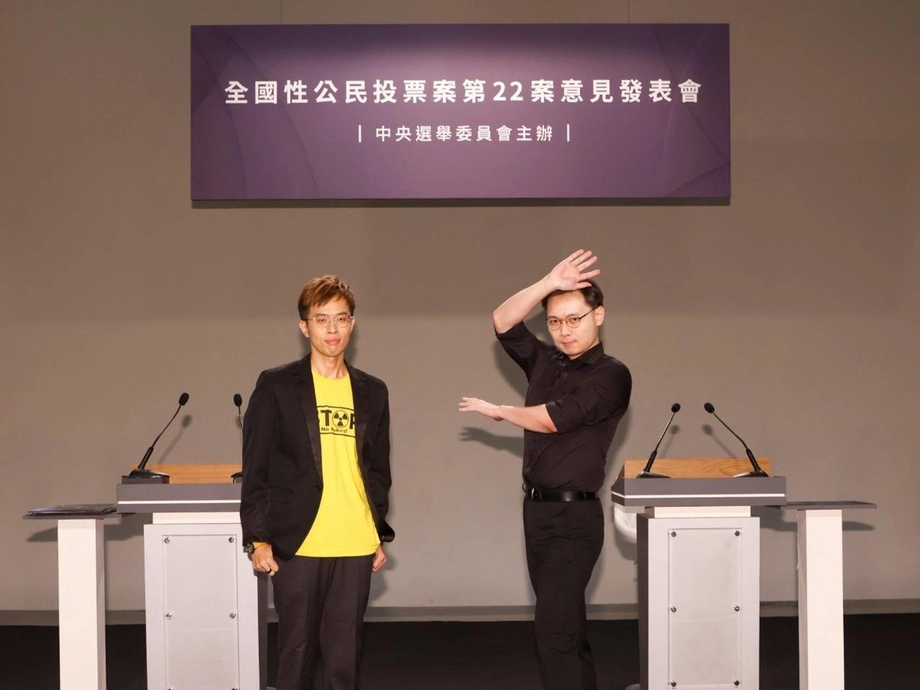
Taiwan reached the end of a heated series of televised policy debates on November 20, 2026, as proponents and opponents of nuclear power squared off in the fifth and final session broadcast nationwide by Public Television Service. The event, overseen by Central Election Commission member Huang Shu-duan, brought together pro-nuclear activist Huang Shih-hsiu and Citizens of the Earth spokesperson Deng Yu-you. The debate came just days before the scheduled November 28 nationwide vote on national referendum number 22, which asks citizens whether the government should use nuclear power to stimulate the economy and abandon its long-standing nuclear-free homeland policy. The proposal originated from the Kuomintang legislative caucus and received backing from the Taiwan People's Party, setting up a high-stakes choice for households and businesses as the island balances rising electricity demand from semiconductor fabrication and artificial intelligence against financial and safety concerns.
Contents
Voters face a choice that echoes earlier debates over energy security following the closure of Taiwan's final operating nuclear reactor at the Maanshan plant in Pingtung County on May 17, 2025. That shutdown marked the completion of a multi-year phaseout policy established under the Basic Environment Act of 2002 and pursued by the Democratic Progressive Party administration. Proponents argue that restarting dormant reactors and embracing new nuclear technologies are necessary to keep the industrial economy running smoothly and to avoid heavy reliance on imported fossil fuels. Opponents counter that nuclear investments carry massive financial risks, unresolved waste disposal challenges, and geological hurdles that make renewable energy a safer and more reliable path forward.
Economic Promises Versus Financial Realities
Pro-nuclear representatives focused heavily on the financial and industrial arguments for reversing the nuclear phaseout, pointing to soaring energy import expenses and the massive power requirements of advanced technology sectors. Huang Shih-hsiu argued that maintaining a non-nuclear policy forces state-run Taiwan Power Company to spend massive sums on imported fuels, noting that the utility faces natural gas procurement costs exceeding 4900 billion New Taiwan dollars for the upcoming year alone. According to his calculations, restarting four nuclear facilities and generating 60 billion kilowatt-hours annually could produce a wide price differential that generates substantial annual financial returns for the public. A kilowatt-hour measures electrical energy consumed or produced over time, representing the standard unit billed to household consumers. Huang contended that nuclear energy remains the only reliable way to provide the continuous, low-carbon electricity required by artificial intelligence data centers and chip manufacturing plants.
Opponents challenged these financial projections by pointing to massive budget overruns and construction delays at major international nuclear projects. Deng Yu-you compared nuclear investments to purchasing an unbuilt property that faces endless cost increases, citing foreign projects where original timelines of four to five years stretched to as long as 18 years while costs multiplied several times over. To illustrate the financial burden of plant maintenance and safety upgrades, Deng referenced the operational costs for extended life cycles at foreign facilities. Addressing the financial realities of nuclear maintenance, Deng stated:
The Diablo Canyon nuclear power plant in the United States, which is similar to our Maanshan plant, required extensive seismic reinforcement and equipment replacement to extend its operations. The total operational cost for just a five-year extension reached nearly 3900 billion New Taiwan dollars, an enormous expense that dwarfs any projected savings.
Deng argued that such funds would be better directed toward accelerating renewable energy sources and grid storage rather than sinking capital into aging nuclear infrastructure.
Geological Safety and Regulatory Reviews
Safety considerations and geological stability formed another major battleground between the competing campaigns, particularly regarding fault lines and earthquake risks in Taiwan. Huang Shih-hsiu maintained that safety reviews conducted by regulatory bodies have cleared existing facilities of immediate geological threats, pointing to official findings from the Nuclear Safety Commission. A report released by the Nuclear Safety Commission in 2024 concluded that the first and second nuclear plants feature no underlying faults, and that the Hengchun fault does not traverse the third nuclear plant site. Proponents also highlighted that international facilities operating near active fault zones in other nations continue to function safely after receiving engineering upgrades.
Critics challenged these assurances by highlighting ongoing geological investigations and the inherent risks of managing radioactive materials in an active seismic zone. Wang Shou-cheng, a researcher and representative for opposing viewpoints during earlier legislative presentations, pointed out that recent exploratory drilling by Taiwan Power Company revealed fault shear zones at the Maanshan location. Opponents emphasized that natural hazards like earthquakes and typhoons present persistent dangers that engineering solutions cannot completely eliminate. Furthermore, the debate touched on the unresolved challenge of long-term nuclear waste storage, with critics warning that introducing new reactors or advanced designs would only compound the burden on local communities that have spent decades resisting waste repository proposals.
Timeline of Nuclear Policy and Referendum Milestones
The path to the November 28 referendum involved a structured sequence of administrative approvals, legislative actions, and public forums designed to inform voters about the complex energy choice.
- August 28, 2026: Central Election Commission Chairman Michael You announced the approval of the nuclear policy referendum proposal after a review meeting.
- September 18, 2026: The election commission formally scheduled five televised debate sessions following legislative approval.
- October 15, 2026: Deadline for supporting and opposing factions to submit their designated representatives to the election commission.
- November 12 to November 20, 2026: Five televised debate sessions were broadcast across major television networks to air pro and con arguments.
- November 28, 2026: Eligible citizens cast their ballots on national referendum number 22 alongside local elections.
Advanced Reactor Technologies Under Scrutiny
Discussion during the debates also ventured into futuristic nuclear concepts, including small modular reactors and advanced generation systems proposed by pro-nuclear advocates as a clean energy solution. Supporters suggested that introducing these compact reactors could eventually provide flexible, localized power generation for industrial parks and high-tech manufacturing centers. Taiwan is not alone in revisiting its nuclear trajectory as nations worldwide reevaluate energy security amid international nuclear forecasts reflecting global efforts to expand capacity. Proponents argued that embracing innovative reactor designs keeps the island at the cutting edge of industrial power supply.
Opponents dismissed these advanced reactor proposals as unproven and economically unfeasible for Taiwan's immediate needs. Deng Yu-you noted that commercializing small modular reactor technology has faced continuous delays globally, with commercial startup dates pushed back repeatedly while estimated construction costs soared significantly above original projections. Citing research from independent energy organizations, opponents stated that the projected generation costs for these advanced reactors would far exceed those of wind, solar, and geothermal alternatives. Critics also warned that advanced compact units still produce radioactive waste, meaning that densely populated counties across Taiwan would likely face pressure to host new storage facilities without any guarantee of lower electricity bills.
The Bottom Line
The upcoming referendum asks voters to decide whether the government should reverse course on its nuclear phaseout policy to support economic growth and secure industrial power supplies. Key aspects of the ongoing debate include:
- Voters will cast ballots on national referendum number 22 on November 28, 2026, alongside local elections.
- Supporters estimate that restarting nuclear plants could save billions on imported fossil fuels and provide stable electricity for artificial intelligence and semiconductor manufacturing.
- Opponents warn of high restart expenses, long construction timelines, unresolved radioactive waste storage, and geological risks associated with active fault lines.
- Regulatory agencies continue to review safety submissions, while the public weighs the financial and environmental trade-offs of returning to nuclear power.