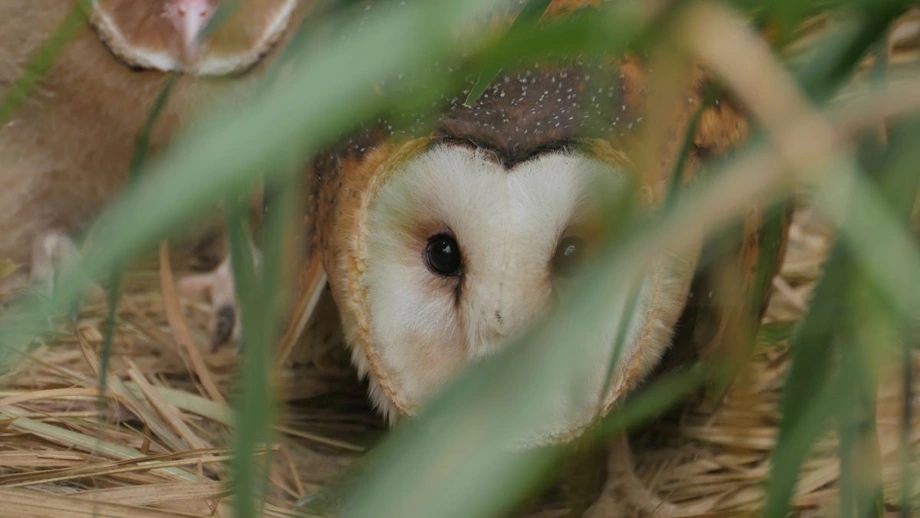
A forested farm becomes the focus of an owl habitat dispute
A plan to compensate for wildlife habitat lost to Taiwan's Shalun Science Park has opened a difficult conservation debate: whether trees at Shenkengzi Farm should give way to grassland for the endangered eastern grass owl, or remain part of a landscape supporting many kinds of birds.
Contents
- A forested farm becomes the focus of an owl habitat dispute
- Why keeping a mixture of habitats matters
- The compensation inventory extends beyond Shenkengzi
- Small demonstration areas face a question of scale
- Owl recordings show where protection is needed
- Why counting rats has become contentious
- Poison, roads and dogs complicate protection
- The park layout and review have evolved
- Restoration timing and public accountability remain central
- Key Points
The Southern Taiwan Science Park Administration estimates that the development needs compensation for 65.53 hectares of grassland habitat and 97.10 hectares of woodland habitat. Its April working presentation, dated April 10, 2026, lists all 101.84 hectares of the proposed Shenkengzi compensation area as woodland, without setting out a plan to convert it to grass.
At a continued meeting to define the scope of the project's second stage environmental assessment, some groups supported creating owl habitat by converting woodland at the farm. Several conservation organisations opposed extensive tree clearance, arguing that grassland, farmland and forest together sustain the area's bird life.
Participants agreed that habitat creation should preserve diversity rather than produce grassland alone. The administration must now assess the balance between trees and grass. No final proportion was agreed.
The dispute reaches beyond one farm. Shalun's latest official layout covers 506.97 hectares in Tainan's Gueiren District, near the high speed rail station. The government expects approximately 35,000 jobs and annual production worth NT$2.2 trillion, while conservationists want safeguards for a rare owl whose remaining habitat overlaps the development area.
Why keeping a mixture of habitats matters
Shenkengzi Farm was described during the dispute as approximately 97.7 percent woodland. The administration's April table classifies its proposed 101.84 hectares of compensation land entirely as woodland; the farm description and the compensation table use different land descriptions, with no reconciliation given.
Conservation groups opposing tree clearance say compensation should account for the whole community of wildlife. The administration's own ecological assessment describes birds using different parts of the landscape for different purposes.
Dry farmland and grassland with relatively natural vegetation contain some of the densest concentrations of protected species in the project area. Ring necked pheasants and oriental pratincoles use these open areas for feeding, while grass owls occur around the boundary between fields and grassland.
Plantations, broadleaf woodland and forest edges serve another function. Raptors perch in trees and hunt in neighbouring agricultural land. Keeping those habitats connected allows birds to move between places that provide food, cover and resting sites.
The practical disagreement is therefore about which land to change, how much to change and which species will benefit. Replacing trees with grass could create space for owls while removing habitat used by other birds. Retaining every wooded parcel would leave the administration needing other places to meet its grassland compensation target.
The compensation inventory extends beyond Shenkengzi
The administration has identified 435.50 hectares outside the park across Shenkengzi, Gangqian and Zhongzhou farms and land along the Erren River. That inventory contains 211.37 hectares of conventionally cultivated fields, 4.57 hectares of agricultural net houses, 140.97 hectares of woodland and 78.59 hectares of grassland.
Woodland and grassland together account for 219.56 hectares, while cultivated fields and net houses account for the remaining 215.94 hectares. Nearly half the inventory would therefore involve agricultural land, where compensation could require changes in farming practices or land use.
The official presentation identifies 71.03 hectares of grassland and 100.93 hectares under cultivation along the Erren River. It proposes assessing whether some farmland could grow forage grass or adopt farming methods that reduce harm to wildlife.
These options give the administration alternatives to concentrating grassland creation at Shenkengzi. They also bring farmers into the decision: land counted in an inventory still needs an agreed management arrangement, suitable vegetation and continuing care.
Small demonstration areas face a question of scale
The administration has adopted approximately 18 hectares of grassland along the Erren River through the Water Resources Agency's Sixth River Management Branch. Taiwan Semiconductor Manufacturing Co has taken responsibility for approximately two hectares within that area, and demonstration habitat work has begun.
Apple Bird Satoyama Conservation Foundation representative Tseng Lung-yung has argued that eastern grass owls need at least 200 hectares of continuous grassland, with nesting ranges of approximately 20 to 70 hectares. He questioned the value of isolated patches planted with cogon grass and measuring 10 hectares or less.
Tainan City Wildlife Conservation Association executive director Tseng I-shuo put an owl's activity range at up to 300 hectares. These figures describe different aspects of habitat use, but both accounts point to birds moving across areas much larger than the initial demonstration plot.
The administration's approach combines a breeding core inside the park with feeding areas and other habitat outside it. Whether those places function together depends on their location, vegetation and connections, as well as their size.
Experience at Ciaotou Science Park has sharpened the disagreement. Conservation groups have cited unstable results after four years of compensation work and called for development procedures to stop. Administration director Cheng Hsiu-jung has said grass owls appeared at the Kaohsiung and Ciaotou science parks every year from 2022 through 2025. The competing assessments place different weight on recorded visits and the continuing condition of the habitat.
Owl recordings show where protection is needed
The administration's preliminary acoustic survey recorded grass owls at 39 of 42 monitoring stations between June 2025 and February 2026. Recorders covered the park and suitable surrounding land within three kilometres, arranged on a grid of one kilometre by one kilometre.
Monitoring took place twice a month, for five days each time, from 6pm to 6am. Approximately 93 percent of stations recorded owl activity during those nine months. The survey maps the places where calls were detected, helping planners identify areas requiring closer attention.
Population estimates use other methods. A range of 200 to 500 birds nationwide has been cited in the assessment debate. Lin Chien-cheng, a retired National Yang Ming Chiao Tung University professor and deputy chair of the Taiwan Association for the Advancement of Industrial Technology, separately cited a 2025 Chiayi University monitoring estimate of approximately 110 pairs.
Lin also described automatic camera records from grassland in the development area's D zone, with owls appearing almost daily in some months. His argument is that the assessment should begin with a detailed picture of the farm as it exists, then measure how development changes conditions for wildlife and residents.
Other protected birds are present too. Preliminary ring necked pheasant surveys recorded 124 sightings across three seasonal visits in June, September and December 2025, mainly within the proposed park and watermelon fields to its north. The wider assessment also includes protected raptors, owls and wetland birds.
Why counting rats has become contentious
Some participants want monthly surveys of rodent density and rat poison residues because grass owls feed heavily on rodents. Their concern is twofold: the birds need sufficient prey, and eating poisoned prey can expose them to toxic chemicals.
Wildlife conservation participants questioned the evidence for linking a reduction in rodents to a decline in owl numbers. They also warned that extensive trapping and residue testing would require substantial staffing and expense, while offering only part of the information needed to understand the owl population.
Tseng I-shuo said owls can move across as much as 300 hectares, making it difficult to identify exactly where an individual bird caught its food. A useful investigation would need to connect findings about prey and poison with information about owl movements and feeding.
Collecting owl pellets was proposed as another way to study diet. Pellets are compact bundles of bones, fur and other material that owls cannot digest and bring back up after feeding. Examining them can help identify prey without trapping large numbers of rodents.
Tseng Lung-yung has also called for a survey to establish whether there are at least 100 adult owls before breeding. That is his proposed conservation benchmark, rather than a population count announced by the administration.
Poison, roads and dogs complicate protection
Cheng has identified stray dogs and agricultural rat poison as direct threats to grass owls. Ground nesting birds and their young can be vulnerable to dogs, while poison can move through the food chain when a predator eats a contaminated rodent.
Tseng Lung-yung described roadkill as the leading cause of grass owl deaths and rodenticides as a factor that can harm birds without immediately killing them. His account broadens the management task beyond planting suitable grass: owls also need safer movement routes and reduced exposure to hazards around feeding areas.
Lin cited a 2016 case in which three rodenticide ingredients were detected in a dead female grass owl, with two reportedly exceeding concentrations considered lethal to raptors. He argued that existing agricultural practices, including poison bait use, belong in the assessment of current conditions.
The administration's proposed measures include avoiding fire and chemical agents when clearing vegetation, reducing the risk of animals being struck by construction traffic, controlling food waste and discouraging the feeding of roaming dogs and cats.
Friendly farming and payments for ecosystem services are also under discussion. Such payments compensate farmers for managing land in ways that benefit wildlife, potentially extending safer feeding habitat beyond the formal park boundary.
The park layout and review have evolved
The government's September 2025 announcement described a park of approximately 531 hectares with 175 hectares of grassland, green space and water. The April 2026 official layout sets the development at 506.97 hectares and provides a more detailed land use plan.
Within that latest layout, industrial land totals 249.32 hectares, down from 277.64 hectares in the establishment plan. The administration says this is a reduction of 28.32 hectares, or 10.2 percent. Its combined green space category, including flood detention land, rises from 131.75 to 179.63 hectares, an increase of 47.88 hectares, or 36.3 percent.
Flood detention areas are intended to retain a grassy landscape, serving both drainage and ecological purposes. The plan also preserves a large forage grass area on the park's southern side and proposes corridors connecting vegetation inside the park with conservation areas outside it.
Key steps in the process include:
- September 24, 2025: The government publicly outlined the earlier park and habitat proposal.
- December 30, 2025: The Executive Yuan approved the establishment plan.
- March 27, 2026: A related meeting reached conclusions under which Taiwan Sugar Corporation suspended existing tree thinning.
- April 10, 2026: The administration's working presentation detailed the revised layout and compensation inventory.
- October 1, 2026: A second scoping meeting took place at the Ministry of Environment in Taipei.
Taiwan's environmental assessment rules require this second stage review for science park development covering at least 100 hectares. Scoping determines which impacts must be studied, where surveys should occur and what questions the assessment must answer.
Restoration timing and public accountability remain central
Tseng Lung-yung wants replacement habitat established before construction. At the October meeting, he warned that habitat creation could take longer than the preparation period for development.
Tseng, speaking as the Apple Bird Satoyama Conservation Foundation representative, described the time needed for restoration:
Creating an eastern grass owl habitat requires two years,
He said construction could begin in 18 months, leaving a potential six month gap. The earlier government estimate allowed 18 to 23 months for the second stage assessment, but a confirmed construction date and final restoration schedule have not been announced.
Participants also agreed on a rule for the ecological collaboration platform: its discussion records can inform the assessment, while positions that never became a platform consensus should stay out of the main assessment text as agreed conclusions.
Taiwan People's Party legislator Chen Gao-tzu has asked the Forestry and Nature Conservation Agency to designate important grass owl habitat at the project site. She said she would seek consideration of the issue through a legislative resolution.
The review must also address conditions affecting nearby communities. Lin has urged scrutiny of pesticide use, fertiliser, groundwater extraction, poison bait, livestock odours and surrounding facilities. The official investigation programme includes soil, air, noise, water, ecology and health risks, providing a framework for examining both the existing agricultural landscape and the proposed industrial development.
Key Points
- Conservation groups disagree over converting woodland at Shenkengzi Farm into grass owl habitat.
- The administration estimates compensation needs of 65.53 hectares of grassland and 97.10 hectares of woodland.
- An inventory identifies 435.50 hectares outside the park, including farmland, woodland and existing grassland.
- Grass owls were recorded at 39 of 42 acoustic monitoring stations during nine months of preliminary surveys.
- Participants favour diverse habitats, but the balance of trees and grass and the design of rodent monitoring remain under assessment.
- The latest official park layout covers 506.97 hectares, with construction timing still unconfirmed.