A November 28 vote meets an unfinished restart process
Taiwan's nuclear power debate sharpened on November 18 as supporters promised electricity for artificial intelligence and savings of NT$70 billion to NT$100 billion a year in fuel costs, while opponents warned that restarting aging reactors could require years of work on equipment and geological safety.
Contents
- A November 28 vote meets an unfinished restart process
- What voters are being asked to approve
- Why AI and chip factories dominate the argument
- Gas imports turn electricity into a security issue
- Why the two sides reach different cost estimates
- Faults and tsunami exposure drive the safety challenge
- Restart estimates range from months to a decade
- The government is assessing reactors while opposing the proposal
- Geothermal offers a competing investment argument
- Key Points
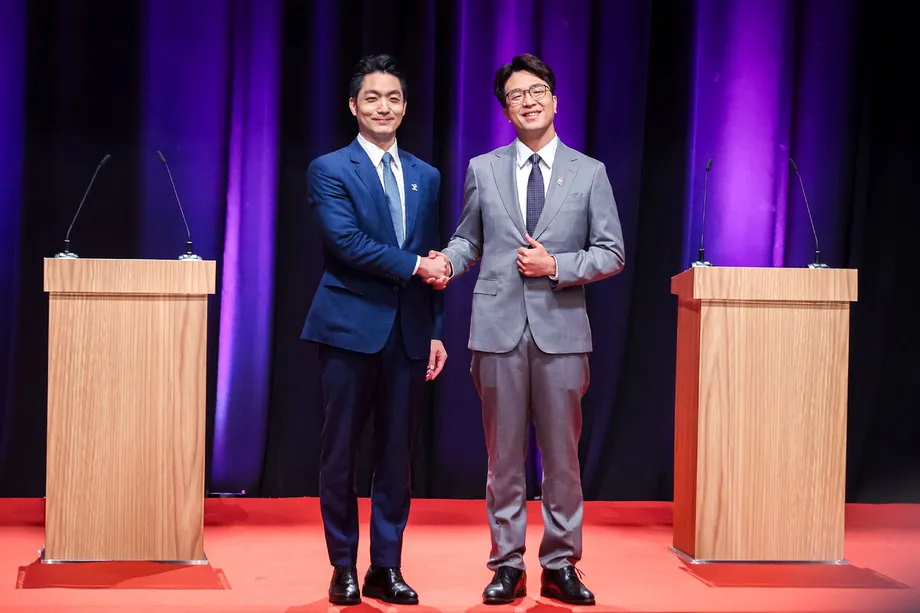
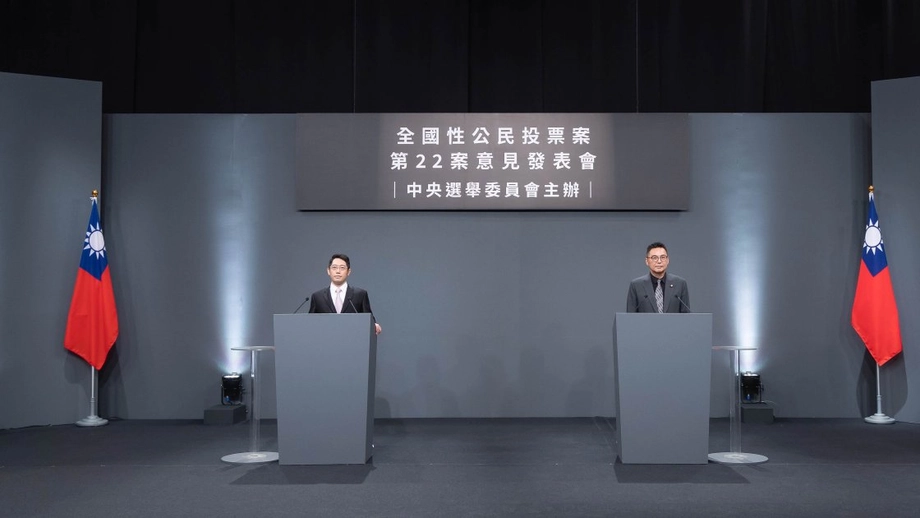
The fourth of five televised presentations organized by the Central Election Commission brought Taiwan People's Party legislator Hung Yu-hsiang face to face with geologist Wang Shou-cheng, standing director of the Taiwan Geothermal Association and a researcher at National Taiwan Ocean University.
Voters will decide national referendum No. 22 on November 28, 2026, alongside local elections. The proposal, introduced by the Kuomintang's legislative caucus and supported by the TPP, asks whether the government should use nuclear energy to revive the economy and abolish its nuclear phaseout policy. The ruling Democratic Progressive Party opposes it.
Taiwan shut its last operating reactor at Maanshan in Pingtung County on May 17, 2025. Yet assessments for possible restarts are already underway, creating a political argument about why voters are being asked to change policy while the government examines whether plants can safely return.
For households and businesses, the debate connects three practical concerns: how reliably electricity can be supplied, how much it will cost and whether the infrastructure can withstand Taiwan's natural hazards. The competing proposals attach very different prices and schedules to those goals.
What voters are being asked to approve
The referendum's English wording asks: "Do you support the government revitalizing the economy with nuclear energy and abolishing the 'nuclear-free homeland' energy policy?" It sets a broad policy direction, leaving individual plants and restart schedules to subsequent decisions.
Polling is scheduled from 8 a.m. to 4 p.m. Under Article 29 of the Referendum Act, passage requires both of the following:
- Valid votes in favor must outnumber votes against.
- Valid votes in favor must equal at least one quarter of all eligible voters.
The second requirement makes participation important: supporters need to reach a share of the entire electorate as well as win among those casting valid votes. The argument has developed since the earlier nuclear policy debate, when researchers challenged promises about AI electricity supplies, project costs and radioactive waste.
Why AI and chip factories dominate the argument
Hung said Taiwan needs nuclear power to provide reliable electricity with low carbon emissions for semiconductor manufacturing and artificial intelligence. Both industries depend on large, steady supplies of power, making electricity planning part of the country's industrial strategy.
Hung, explaining the connection between computing and national competitiveness, said:
A country's strength depends on its computing power, which in turn depends on electricity.
Citing government forecasts, Hung put average annual electricity demand growth over the next decade at 2.5 percent, more than twice the average of the previous decade. He said that would require more than 7 billion additional kilowatt-hours each year. A kilowatt-hour measures electricity used or generated over time, the same unit that appears on household power bills.
Hung estimated that extending operations at the No. 2 plant, also known as Guosheng, and the No. 3 plant, Maanshan, could supply about 30 billion kilowatt-hours annually. Vice Minister of Economic Affairs Lai Chien-hsin said during the second televised forum that the two plants together would generate about 10 percent of Taiwan's current electricity output.
The figures put nuclear power's potential contribution in perspective: the plants could provide a substantial block of electricity, while most generation would still come from other sources. At Hung's stated annual demand increase of more than 7 billion kilowatt-hours, 30 billion kilowatt-hours would equal less than five years of additional demand.
Gas imports turn electricity into a security issue
Hung argued that dependence on imported liquefied natural gas leaves Taiwan exposed if shipping is interrupted by a blockade of the Taiwan Strait. He put natural gas safety stocks at only 11 to 14 days and said generation from fossil fuels accounted for 84 percent of electricity.
Nuclear fuel can be stored for years, Hung said, giving it a security advantage over gas that must arrive regularly by ship. Describing his case for retaining nuclear generation, he said:
Keeping nuclear power means maintaining a last line of defense against power outages that threaten national security.
Chen Jong-shun, an associate research fellow at the Chung-Hua Institution for Economic Research's Center for Green Economy, made a similar argument during the November 14 forum. He supported continued renewable investment but said restarting reactors would diversify supply and reduce dependence on gas shipments.
Hung also connected fossil fuel use with air pollution and criticized the DPP for missing renewable energy targets while electricity prices rose. His argument brings together two different pressures on energy planning: cutting the emissions produced during ordinary operations and maintaining electricity supplies during a shipping emergency.
Why the two sides reach different cost estimates
Hung said replacing gas generation with electricity from the No. 2 and No. 3 plants could save Taipower NT$70 billion to NT$100 billion in annual fuel expenses. He linked those savings to the finances of Taipower and state energy supplier CPC, arguing that cheaper generation would ease pressure on public support for energy companies.
Hung cited nuclear electricity costs of NT$1.4 per kilowatt-hour, compared with NT$3.5 for solar installations on land. Wang responded that a restart calculation also needs to include the expense of replacing aging equipment and completing safety work.
Wang cited California's Diablo Canyon Nuclear Power Plant, putting the cost of equipment work associated with extending operations by five years at as much as NT$390 billion, about US$11.8 billion. He used the example to argue that keeping an existing plant running can require major new spending.
Electricity costs, fuel savings and guaranteed purchase prices answer different financial questions. Fuel savings measure one operating expense. A full restart budget also includes repairs, inspections and other work needed before generation resumes. A guaranteed purchase price sets what a producer receives for electricity under a government support scheme.
Those categories matter to consumers because a low fuel bill can coexist with a large bill for rebuilding equipment. The final effect on electricity prices depends on both the cost of operating the reactors and the investment required to return them to service.
Faults and tsunami exposure drive the safety challenge
Wang said reports from the Ministry of Economic Affairs' geological authorities and Taipower identified geological concerns at all four nuclear plant sites. He claimed active faults crossed the No. 3 and No. 4 sites, while the activity of faults around the No. 1 and No. 2 sites still required investigation.
Maanshan was central to his warning. Wang said both reactors stood on unstable geological structures and that five boreholes drilled by Taipower near the plant revealed fault shear zones. Such zones are bands of rock deformed as sections of the Earth's crust move against each other.
Wang, explaining why he wanted geological issues addressed before further restart commitments, said:
Earthquakes, typhoons and faults do not disappear because of a referendum.
Wang also challenged the plant's earthquake resistance, citing a capacity of 0.72G against what he argued should be 1.384G. The unit G expresses acceleration relative to Earth's gravity. The higher requirement was Wang's assessment in the debate.
Tsunami exposure added another concern. Wu Tso-ren, director of National Taiwan Ocean University's Institute of Hydrological and Oceanic Sciences, has warned that a major earthquake along the Manila Trench could send a tsunami roughly three stories high toward Maanshan within an hour.
Hung answered that Taiwan had strengthened its plants against earthquakes after the Fukushima disaster and that any restart would face strict safety checks. He pointed to Japanese reactors returning to service, including Onagawa, as examples supporting his case for extending existing plants.
Restart estimates range from months to a decade
Chen, speaking at the November 14 forum, cited nuclear industry estimates that reactors could restart in 18 months to three years. Wang estimated five to 10 years for equipment replacement and safety inspections, with costs potentially reaching several hundred billion New Taiwan dollars.
Chen argued that AI data centers and advanced chip factories can be built faster than major electricity infrastructure. Explaining why he viewed reactor restarts as a bridge while renewables expand, he said:
What Taiwan lacks most right now is neither goals nor technology, but time.
Wang focused on the work required at individual plants. He said Taiwan lacks a domestic nuclear industry supply chain and would depend on imported technology and components made for particular equipment. Each plant's geology, cooling arrangements and machinery could require different solutions.
Vice Minister Lai said Taipower was assessing safe restarts under amended law, including checks for damage caused by radiation exposure and corrosion. He also said nuclear waste disposal would need to be addressed. Those tasks help explain why a restart schedule depends on what engineers and regulators find.
No final restart date or total Taiwan project budget has been announced. The gap between Chen's and Wang's estimates gives voters a concrete measure of the disagreement: supporters present nuclear power as a relatively quick source of supply, while opponents expect extensive work before electricity could return.
The government is assessing reactors while opposing the proposal
President Lai Ching-te said on March 21 that the Ministry of Economic Affairs had determined Maanshan and the No. 2 plant in New Taipei's Wanli District met the conditions to begin the restart process. He cited AI electricity demand, the European Union's Carbon Border Adjustment Mechanism and geopolitical risks, while reaffirming support for renewables.
The EU mechanism places a carbon cost on certain imports, connecting the emissions associated with production to trade costs. Its place in Lai's explanation reflects the government's concern about supplying industry while reducing carbon emissions.
Hung accused the government of confusing the public by considering restarts while urging rejection of the referendum. Vice Minister Lai argued that existing law already allowed safety assessments and that industrial upgrading and supply chains also contributed to Taiwan's economic performance.
Lai, explaining the government's position at the second forum, said:
A referendum cannot replace the rigorous reviews required by law, nor can it dispense with scientific verification of the structural safety of equipment.
The main developments leading to the vote are:
- May 17, 2025: Taiwan's last operating reactor shut down at Maanshan.
- March 21, 2026: President Lai said Maanshan and the No. 2 plant qualified to begin the restart process.
- September 24: The Nuclear Safety Commission approved Taipower's Maanshan restart plan, with further safety assessments required before operation.
- November 14: The second televised forum examined restart schedules and the government's legal review process.
- November 18: Hung and Wang debated electricity demand, costs and geological risks at the fourth forum.
Geothermal offers a competing investment argument
Wang urged faster development of standardized advanced geothermal technology and other renewable sources. Geothermal plants use heat underground to generate electricity. He argued that repeatable designs could help lower costs as deployment expands.
Hung challenged geothermal's price, citing NT$8.55 per kilowatt-hour. Wang said that figure was a guaranteed purchase rate intended to encourage advanced geothermal technology, and cited NT$2.4 per kilowatt-hour for geothermal developed at scale in the United States.
Wang also argued that public money spent on nuclear referendums had an opportunity cost. He said four votes promoted by nuclear supporters over eight years had each cost more than NT$800 million on average, comparable in his estimate to building one plant like Yilan's Qingshui geothermal facility.
Hung instead proposed using nuclear generation as a steady foundation while wind, solar and geothermal grow. The disagreement therefore extends beyond whether renewables should expand. It concerns which investments should receive money and attention first, and whether nuclear restarts would help or slow that expansion.
The fifth and final televised presentation is scheduled for Friday, November 20, at 7 p.m. Nuclear activist Huang Shih-hsiu will speak in favor of the proposal, with Citizens of the Earth, Taiwan spokesperson Teng Yu-yu speaking against it.
Key Points
- Taiwan votes on nuclear energy policy on November 28, 2026, from 8 a.m. to 4 p.m., alongside local elections.
- Passage requires more yes votes than no votes and support from at least one quarter of eligible voters.
- Hung says restarting two plants could provide 30 billion kilowatt-hours annually and save NT$70 billion to NT$100 billion in fuel costs.
- Wang warns that geological risks, equipment replacement and safety inspections could make restarts costly and slow.
- Taipower's restart assessments are already underway, with further safety reviews and nuclear waste arrangements still required.
- The final televised presentation is scheduled for November 20 at 7 p.m.