A Himalayan kingdom wins recognition for protecting nature
Bhutan has become the first entire country to win an Earthshot Prize, receiving the 2026 Protect and Restore Nature award as it works to restore 50,000 hectares of damaged forests, farmland and urban landscapes by 2030. Princess Chimi Yangzom Wangchuck accepted the award from Catherine, Princess of Wales, in Mumbai on November 17.
Contents
- A Himalayan kingdom wins recognition for protecting nature
- Why a country with extensive forests needs restoration
- A constitutional promise with roots in Gross National Happiness
- What Restore Bhutan plans to deliver
- How the conservation work will be financed
- Niue tackles the cost of protecting a vast ocean
- Electric transport, chemical restrictions and offshore wind
- The finalists show different routes to environmental action
- A prize intended to turn recognition into wider action
- Key Points
The Himalayan kingdom, home to about 800,000 people, maintains nearly 70 percent forest cover and protects more than half its territory. Its forests help regulate Himalayan water systems serving an estimated 1.6 billion people downstream across South Asia, giving its conservation decisions a reach far beyond its borders.
The Earthshot Prize's 2026 winners list confirms Bhutan alongside India's Mahindra Last Mile Mobility, Niue Ocean Wide Trust, France's PFAS-Free France and Denmark's Ørsted. Each receives £1 million to expand its work, with all 15 finalists gaining access to a network of investors, businesses, philanthropists and environmental organisations.
Bhutan's award centres on Restore Bhutan, a government initiative launched in 2025. The programme connects a longstanding national commitment to conservation with a practical challenge: repairing land and water systems already under strain from drying springs, forest fires and other environmental pressures.
Why a country with extensive forests needs restoration
Nearly 2,000 water sources in Bhutan are drying, while forest fires affected almost 18,000 hectares between 2021 and 2024, according to the Earthshot Prize's Bhutan programme profile. Conservation International, a partner in Restore Bhutan, says government monitoring shows roughly a quarter of the mountain springs surveyed are drying up.
Those pressures explain why the programme reaches beyond protecting existing forests. A country can retain extensive tree cover while individual springs, farms and forest areas lose their ability to support people and wildlife. Restoration aims to bring those damaged places back to health through work suited to their conditions.
Restore Bhutan's target of 50,000 hectares equals 500 square kilometres. The programme combines scientific restoration methods with stronger forest fire management, community participation and Indigenous knowledge. Its work includes farmland and urban landscapes as well as forests, connecting conservation with the places where people grow food and live.
The water benefits matter at two scales. Within Bhutan, healthier springs and watersheds support communities and livelihoods. Across the wider Himalayan region, forests help regulate the freshwater systems on which large downstream populations depend. Watersheds are areas of land that collect rain and snowmelt and channel that water towards streams and rivers.
A constitutional promise with roots in Gross National Happiness
Bhutan's Constitution requires at least 60 percent of its land to remain under forest cover permanently. Karma Tenzin, director of the Department of Forests and Park Services, identified Article 5 as the basis of that requirement ahead of the Mumbai ceremony.
The country's current forest cover of nearly 70 percent sits about 10 percentage points above that legal minimum. Its Protected Areas Network covers more than half the country, providing another layer of protection for habitats and wildlife.
Princess Chimi Yangzom Wangchuck credited the Fourth Druk Gyalpo, Jigme Singye Wangchuck, with establishing the vision behind Bhutan's forest commitment. Speaking when she accepted the award, she described conservation as a responsibility passed between generations.
We are trustees of this one precious planet, and we hold it in trust for future generations.
That approach continues under King Jigme Khesar Namgyel Wangchuck. It is rooted in Gross National Happiness, the development philosophy that has guided Bhutan since the 1970s and treats economic prosperity, nature, culture and community wellbeing as connected goals.
Bhutan also absorbs more carbon than it emits, making it carbon negative. Forests contribute by taking carbon dioxide from the air and storing carbon in trees and soils. The Earthshot Prize estimates the annual value of Bhutan's forest and watershed services, including carbon storage and freshwater regulation, at US$14.5 billion. That figure values benefits provided by nature rather than money received by the government.
What Restore Bhutan plans to deliver
The Royal Government of Bhutan launched Restore Bhutan with the Department of Forests and Park Services, Bhutan Trust Fund for Environmental Conservation, Bhutan Ecological Society and Conservation International. The partnership combines government authority, conservation funding, scientific knowledge and community involvement.
The Earthshot Prize says the initiative aims to generate nearly 2 million tonnes of carbon dioxide savings and secure about 133 billion litres of water benefits. Conservation International places Restore Bhutan within its Mountains to Mangroves initiative and says the partnership also aims to improve livelihoods for more than 250,000 people.
The published timetables differ: Earthshot sets 2030 as the deadline for restoring 50,000 hectares, while Conservation International describes the restoration, water and livelihood ambitions as goals for the decade following the programme's 2025 launch. Neither gives a detailed schedule reconciling those timeframes.
Princess Chimi Yangzom Wangchuck, who represented Bhutan at the ceremony, described the programme as a continuation of the country's relationship with nature.
In Bhutan, we believe that caring for nature is caring for ourselves.
The main milestones show how the new programme builds on an older national policy:
- Since the 1970s: Gross National Happiness has connected development with environmental conservation and community wellbeing.
- 2021 to 2024: Forest fires affected almost 18,000 hectares in Bhutan.
- 2025: The government launched Restore Bhutan.
- November 17, 2026: Bhutan received the Earthshot Prize in Mumbai.
- 2030: Earthshot's stated deadline for restoring 50,000 hectares.
How the conservation work will be financed
Restore Bhutan is seeking funding that can continue beyond individual grants. Its model combines blended finance with Jurisdictional REDD+, according to the Earthshot Prize. Blended finance brings different kinds of funding together, potentially combining public or charitable support with private investment.
Jurisdictional REDD+ provides payments for verified reductions in forest loss across a whole country or another large administrative area. In simple terms, the approach links funding to measured forest protection results rather than paying only for isolated projects.
Community stewardship and education programmes are also part of the design. Local knowledge can help determine how land is managed, while education prepares younger generations to continue the work. Stronger fire management addresses a threat already visible in the country's recent losses.
The £1 million award gives Bhutan new resources, but the Earthshot network may also help it find technical advice and longer lasting financial partnerships. Winners speaking in Mumbai on November 17 described plans to attract investment, strengthen international cooperation and expand environmental initiatives that can support themselves economically.
Niue tackles the cost of protecting a vast ocean
Niue Ocean Wide Trust, winner of Revive Our Oceans, faces a financing problem similar to Bhutan's: how to sustain protection of a large natural area over many years. Niue's waters cover 327,000 square kilometres and shelter humpback whales, sea snakes and gray reef sharks.
Conservation International's conservation award announcement explains that the trust's Ocean Conservation Commitments allow contributors to sponsor areas of ocean. The proceeds support a planned NZ$32 million endowment, a fund designed to provide continuing income for conservation. The Earthshot award takes that fund beyond its halfway point.
Conservation International, the Government of Niue and Tofia Niue have worked on the trust since 2021, with support from the Blue Nature Alliance, led by Conservation International with Pew Charitable Trusts. Earthshot says the conservation scheme has helped increase fish numbers by 60 percent.
Bhutan and Niue are protecting very different environments, but both place continuing finance at the centre of their plans. Forest restoration and ocean protection require repeated work, monitoring and community support long after an award ceremony ends.
Electric transport, chemical restrictions and offshore wind
Mahindra Last Mile Mobility won Clean Our Air for expanding electric transport in India. It has sold more than 400,000 electric rickshaws and aims to put one million electric vehicles on Indian roads by 2030, with affordability for the drivers who own and operate them central to the approach.
Electric rickshaws replace fuel burning engines on short journeys through towns and cities. Before the ceremony, William and Catherine travelled in one of the company's vehicles to meet the finalists, bringing the winning technology into the day's events.
PFAS-Free France won Build a Waste-Free World after a campaign supported by more than 140,000 people helped secure France's 2025 legislation restricting many uses of PFAS and requiring polluters to contribute to cleanup. PFAS are often called forever chemicals because they break down extremely slowly in the environment. The campaign is seeking wider adoption of restrictions beyond France.
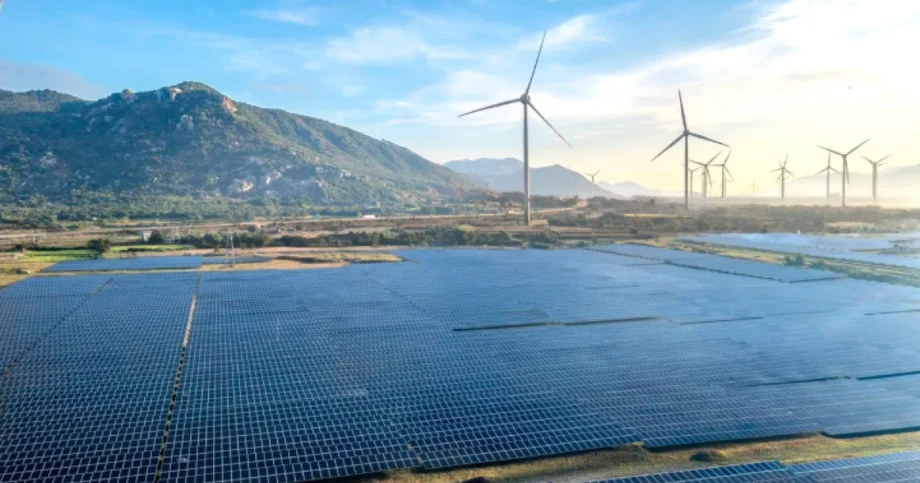
Ørsted won Fix Our Climate for shifting its business from fossil fuels towards offshore wind and cutting direct carbon emissions by more than 98 percent. The Danish company has installed more than 11 gigawatts of offshore wind capacity.
Earthshot says Ørsted plans another 8.1 gigawatts by 2030, including the Hornsea 3 project in the United Kingdom. Those planned projects are expected to supply electricity equivalent to the needs of about 17 million additional homes and avoid more than 28 million tonnes of carbon dioxide annually.
The finalists show different routes to environmental action
Bhutan competed against Australia's Indigenous Desert Alliance, which supports Aboriginal leadership in land management, and the Yellowstone to Yukon Conservation Initiative, which reconnects wildlife habitats across Canada and the United States. Jodi Hilty, the latter organisation's president and chief scientist, described its working region as three times the size of California.
The other Clean Our Air finalists were Argentina's Satellites on Fire, which uses artificial intelligence to track wildfires, and Uganda's AirQo, which provides air quality monitoring and data. Niue's fellow ocean finalists were the Zero Emission Maritime Buyers Alliance and the City of Barcelona.
South Korea Zero Waste Movement Network and the Philippines' Mother Earth Foundation joined PFAS-Free France in the waste category. Mother Earth Foundation, led by chair Sonia Mendoza, has worked on waste reduction since 1998.
Climate finalists included Kenya's Pula and India's Mahila Housing Trust. Pula's agricultural insurance and climate risk work spans 12 African countries and has helped protect more than 24 million farmers and over US$2.8 billion invested in agriculture. Mahila Housing Trust helps women in urban communities with low incomes address risks such as extreme heat.
The range matters because the awards cover both cutting pollution and helping people live with environmental changes already affecting them. Bhutan's restoration programme similarly combines carbon storage with practical needs for water, productive land and safer communities.
A prize intended to turn recognition into wider action
Prince William established the Earthshot Prize through The Royal Foundation in 2020, drawing inspiration from the Apollo Moonshot ambition. Its five environmental goals run to 2030. The 2026 finalists were selected from nearly 7,000 nominations across 169 countries.
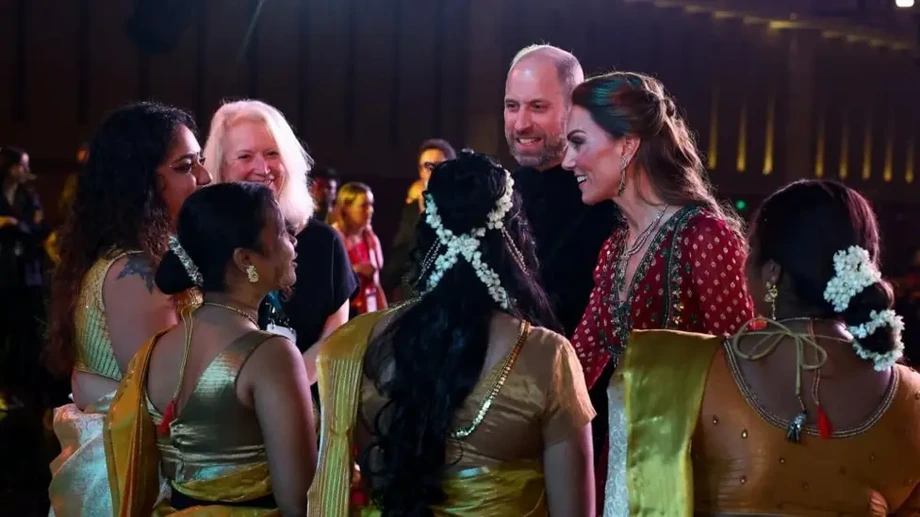
The Mumbai ceremony, held at the Jio World Convention Centre, was part of William and Catherine's visit to India. Film director Karan Johar hosted the event, attended by figures including Sachin Tendulkar, Alia Bhatt and Rami Malek. Catherine presented Bhutan's award and spoke about giving promising environmental ideas the chance to grow.
For Bhutan, the next practical test is delivery: restoring damaged land while maintaining its existing forest protections and building reliable finance. Its award brings those tasks to a larger international audience, alongside a model that connects a constitutional promise with community participation and measurable restoration goals.
Key Points
- Bhutan won the 2026 Earthshot Prize for Protect and Restore Nature in Mumbai on November 17.
- Princess Chimi Yangzom Wangchuck accepted the award from Catherine, Princess of Wales.
- Restore Bhutan targets 50,000 hectares of damaged forests, farmland and urban landscapes for restoration by 2030.
- Nearly 70 percent of Bhutan is forested, above its constitutional minimum of 60 percent.
- Drying water sources and forest fires are major pressures behind the restoration effort.
- Bhutan's forests help regulate Himalayan water systems serving about 1.6 billion people downstream.
- Each of the five winners receives £1 million, alongside access to support and potential partnerships.