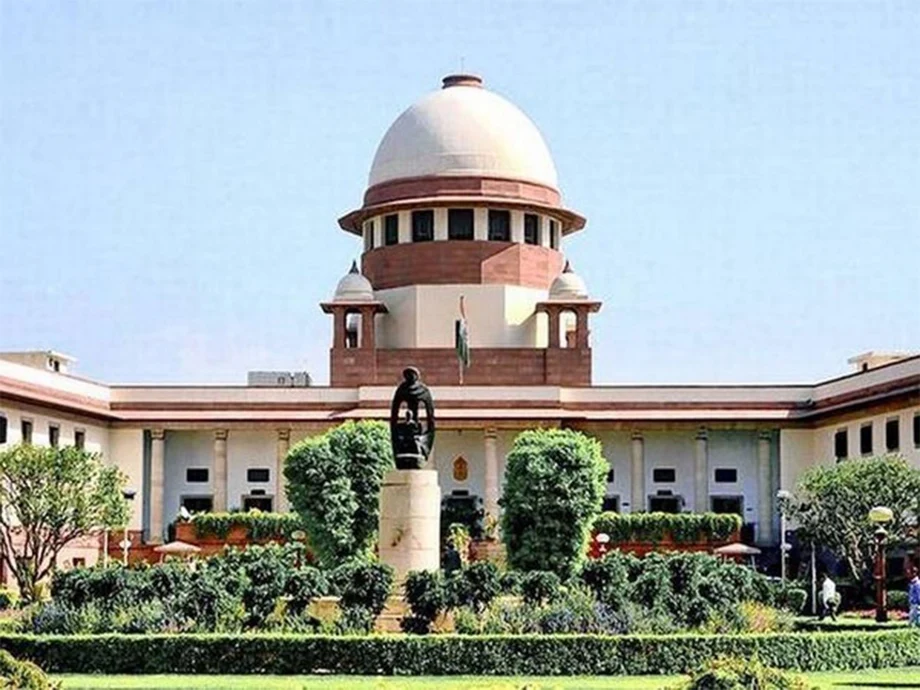
520 drains put civic administration under scrutiny
India's Supreme Court has ordered pollution checks where the Yamuna and its major drains enter and leave states, Union territories and districts, creating a framework to hold administrations financially accountable when water quality worsens within their boundaries.
Contents
- 520 drains put civic administration under scrutiny
- Water entering and leaving each jurisdiction will be compared
- A large construction plan faces a practical test
- Delhi's records reveal gaps in compliance and land protection
- Live readings must show whether plants are working
- Independent inspections will check the online figures
- Tankers, dairies and pollution incidents come under scrutiny
- River space and rehabilitation are part of the directions
- Named officers and deadlines carry the order into 2027
- Key Points
The November 4, 2026, order by Justices Manoj Misra and Manmohan addresses a river receiving wastewater through 520 drains. The draft Yamuna Action Plan puts the combined discharge from drains into the Yamuna and its tributaries at approximately 9,666.81 million litres a day, or about 9.67 billion litres.
The bench said pollution had increased despite huge expenditure on cleaning the river. It directed the Central Pollution Control Board (CPCB) to propose a formula for environmental compensation and ordered live monitoring of treatment plants, independent inspections and public identification of responsible officers.
Justices Misra and Manmohan, explaining why river restoration requires changes in everyday civic administration, said:
Everything that is wrong with civic administration in the towns, cities and villages situated along the banks of the river is reflected in the poor health of the river and in the 520 drains that discharge wastewater into the Yamuna. This is why, despite huge sums being spent on cleaning the river, pollution in the Yamuna has only increased.
The directions were issued in New Okhla Industrial Development Authority v. State of Uttar Pradesh & Ors., a continuing batch of civil appeals. The written order was uploaded on November 16, and the next hearing is scheduled for January 13, 2027, at 2 p.m. The immediate task for governments is to make treatment performance measurable and assign responsibility for the wastewater reaching the river.
Water entering and leaving each jurisdiction will be compared
The CPCB must place water quality information before the court for locations where the Yamuna and major drains ultimately flowing into it cross administrative boundaries. Comparing water entering an area with water leaving it gives the court a way to examine where conditions deteriorate.
The bench set out the accountability rule in these terms:
If the water quality deteriorates on any parameter while flowing through, or exiting a State/Union Territory or a District therein, then that State/Union Territory or District within the State/Union Territory shall be held accountable and penalised.
The measurements include biochemical oxygen demand, chemical oxygen demand, fecal coliform and total suspended solids. Biochemical oxygen demand measures the oxygen microorganisms need to break down organic material in water. Chemical oxygen demand measures the oxygen equivalent needed to chemically break down substances in a sample. Both help assess the burden of contamination.
Fecal coliform bacteria indicate contamination associated with fecal waste, while total suspended solids measure particles carried in the water. Together, these checks examine several aspects of pollution rather than relying on how the river looks.
The CPCB still has to propose the compensation formula; the order sets no monetary penalty against a particular state. Compensation or fines are to be deposited with the Supreme Court Registry. States and Union territories may recover the money from polluters and negligent officials after an inquiry.
The court applied the principle of Common but Differentiated Responsibilities: all basin states share responsibility for one continuous river ecosystem, with duties reflecting their contribution to pollution and capacity to address it. The bench identified prevention, payment for cleanup and restoration of ecological damage as parts of that responsibility.
A large construction plan faces a practical test
A committee headed by the Union Home Secretary submitted the draft Yamuna Action Plan, which identifies domestic sewage as the river's primary pollutant. The proposed construction programme includes 125 sewage treatment plants, 12 common effluent treatment plants, 10 municipal solid waste plants and 23 biogas plants.
Sewage treatment plants clean wastewater from homes and other premises. Common effluent treatment plants serve multiple industrial units, treating their wastewater at a shared facility. The distinction matters because domestic sewage and industrial discharges require appropriate collection and treatment systems.
The 125 proposed sewage treatment plants would provide combined capacity of 4,401.30 million litres per day. The plan also proposes expanding 20 existing plants in Delhi, Haryana, Uttar Pradesh and Himachal Pradesh from 867.1 to 1,192.16 million litres per day. That is an increase of 325.06 million litres a day, or approximately 37.5%.
The court said construction alone would be insufficient. Industrial pollution and untreated sewage must be stopped or reduced at their source. Where wastewater continues to be generated, it must be intercepted, collected and treated before reaching the river.
Missing sewer networks and connections between sewage drains and stormwater drains complicate that work. A plant can clean only the wastewater that reaches it, making collection pipes, drain interception and reliable operation essential parts of the same programme.
Delhi's records reveal gaps in compliance and land protection
Delhi's 37 existing sewage treatment plants exposed a major contradiction in the action plan. The plan claimed that 28 met CPCB standards, while the court noted that none met every prescribed standard. Only five met bacteriological standards.
The figures put the focus on the quality of water leaving treatment plants. Meeting some requirements while missing others leaves parts of the treatment task unfinished, including control of bacterial contamination where that standard is missed.
The court also identified conflicting descriptions of 35 water bodies and wetlands in Delhi's Zone 'O', the river zone. The action plan described them as free of encroachments, while a Delhi government annexure marked all 35 as encroached.
Those contradictions affect two central jobs: deciding what treatment facilities need to fix and identifying land requiring protection or restoration. The court's directions bring both under scrutiny, alongside the proposed expansion of infrastructure.
Live readings must show whether plants are working
Every sewage treatment plant, common effluent treatment plant and government commissioned biogas plant covered by the directions must install smart energy meters protected against tampering within one month. Electricity readings will form part of a wider record of plant operation.
Sewage and industrial effluent treatment plants must also install meters at their inlets and outlets, with continuous sensors at the final discharge point. The readings must cover discharge volume, pH, biochemical oxygen demand, chemical oxygen demand, suspended solids and ammoniacal nitrogen.
The pH reading shows how acidic or alkaline the water is. Ammoniacal nitrogen measures nitrogen present in ammonia forms, another indicator relevant to wastewater quality. Fecal coliform must be tested weekly in an accredited laboratory, and meters must be calibrated annually to check their accuracy.
Plant readings must be uploaded live to the websites of the CPCB and the relevant State Pollution Control Board or Pollution Control Committee. They must show operating hours, electricity consumption, volumes treated and discharge quality. Biogas plants must also record waste received and gas produced.
A break in the data feed lasting more than 24 hours will trigger a presumption that the plant is not operating, unless its operator proves otherwise. Operators will therefore have to maintain both treatment operations and a reliable flow of monitoring data.
Independent inspections will check the online figures
The CPCB must arrange unannounced sampling at least quarterly at every sewage treatment plant with capacity of five million litres per day or more, and at every common effluent treatment plant. Indian Institutes of Technology, National Institutes of Technology or accredited independent laboratories are to carry out the sampling.
Results must be published within 30 days beside the corresponding online readings. This allows independently collected samples to be compared with the data plants submit. Environmental compensation is to be recovered from operators for every day of noncompliance.
Inspection teams must receive immediate, unrestricted access to premises, installations and records, including at public and private facilities. Their work may include surprise sampling, checks on water volumes, sensor verification and technical assessments at any hour.
Central and state authorities must provide administrative, technical and operational support. Police commissioners, district magistrates and superintendents of police must supply security and executive assistance when requested by the CPCB. Operators and departments must also provide the data access needed to connect their systems to the board's central monitoring network.
Tankers, dairies and pollution incidents come under scrutiny
Urban local bodies must register septage tankers, equip them with GPS tracking and develop a portal tracing collection and disposal. Septage is waste removed from septic tanks and similar systems serving buildings without sewer connections. Tracking tankers is intended to make the destination of that waste visible.
The court also addressed dairy waste, observing that facilities proposed for authorised dairies would leave waste from illegal or unrecorded dairies unresolved. Household sewage, industrial discharges, dairy waste and solid rubbish all require action before they enter drains.
The CPCB must investigate pollution incidents including fish deaths, white foam, excessive algal growth and sudden increases in measured pollution. Its reports must identify causes and corrective measures. Eutrophication, one of the conditions covered, occurs when excess nutrients encourage heavy growth of algae and other aquatic plants, potentially reducing oxygen available to aquatic life.
Monitoring stations along the river and major drains must feed water quality data into the CPCB system. These river readings, plant records and incident investigations will give authorities connected ways to examine where pollution originates and how it moves downstream.
River space and rehabilitation are part of the directions
Delhi's Zone 'O' must be protected as a green zone. The court called for extending the green buffer, where possible, from the Yamuna's source to its confluence with the Ganga, giving the river room to flow and change course naturally.
The directions envisage restrictions on permanent construction, with provision for green parks and essential public infrastructure. Existing structures in Zone 'O' or a proposed extension are to be addressed under existing law, with alternative accommodation for occupants legally entitled to it.
The bench also connected sewage management to unauthorised colonies and slum clusters along drains and the riverbed. Unplanned construction and limited space make sewer installation difficult. It expressed the view that removing such settlements must follow rehabilitation of occupants.
For affected residents, the programme therefore involves housing as well as drainage. For civic authorities, it requires coordinating land protection, lawful action on structures, rehabilitation and wastewater collection rather than treating each as an isolated task.
Named officers and deadlines carry the order into 2027
Chief Secretaries of Yamuna basin states and Union territories, and Secretaries of the concerned central ministries, must nominate nodal officers of at least Special Secretary rank within two weeks of the order. These officers must coordinate with the CPCB, resolve administrative delays and ensure compliance reports and requested information reach it promptly.
Each treatment plant and major drain must also have a responsible officer named on a public portal. Those officers must file monthly compliance affidavits before the Supreme Court, making responsibility traceable to individuals as well as institutions.
The proceedings now have several distinct deadlines and recurring checks:
- November 4, 2026: The Supreme Court issued the monitoring and accountability directions.
- November 16, 2026: The written order was uploaded.
- Within two weeks of the order: Governments and ministries must nominate senior nodal officers.
- Within one month of the order: Covered plants must install smart energy meters.
- Every week: Accredited laboratories must test fecal coliform.
- At least quarterly: Independent teams must conduct surprise sampling at covered treatment plants.
- January 13, 2027, at 2 p.m.: The continuing appeals are listed for the next hearing.
The court has left civic administrators room to prepare workable plans while requiring measurable results. The next hearing will bring the case back before the bench after the initial appointment and equipment deadlines, with compliance also subject to continuing public data and sworn monthly reports.
Key Points
- The CPCB must monitor the Yamuna and major drains where they enter and leave states, Union territories and districts.
- Administrations face accountability when water quality deteriorates within their jurisdiction; a compensation formula is still to be proposed.
- The action plan proposes 125 sewage treatment plants, but the court requires action on pollution sources, collection networks and existing plant performance.
- None of Delhi's 37 existing sewage treatment plants met every prescribed standard, according to the court's findings.
- Live plant data, weekly bacterial testing, independent sampling and named responsible officers are required.
- Zone 'O' protection and action on settlements must follow legal requirements, including rehabilitation safeguards.
- The next hearing is January 13, 2027, at 2 p.m.