A cheaper filter for polluted homes
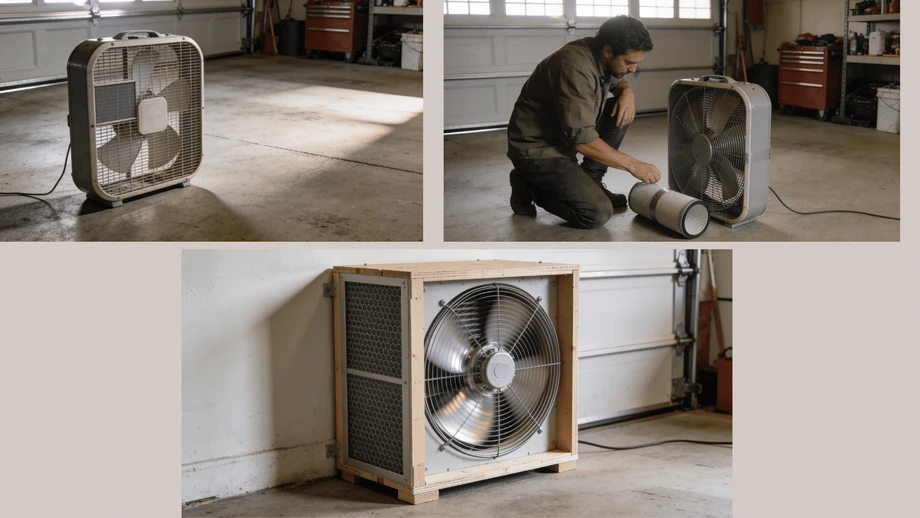
A steel dustbin, a cylindrical air filter and an exhaust fan form the core of a homemade air purifier promoted as an affordable option for households facing air pollution in Delhi, Noida, Ghaziabad and Gurugram. The listed parts cost about Rs 3,200 to Rs 3,250, compared with the Rs 10,000 starting price cited for commercial purifiers and Rs 40,000 to Rs 50,000 for more expensive models.
Contents
The design, credited to YouTube channel @Ecraftonic, puts a filter inside a stainless steel bin and uses a fan to draw air through it. Its appeal is straightforward: a family could spend less on the initial equipment, potentially making a separate unit for more than one room.
The practical challenge is making those parts work together. A filter needs an open route for incoming air, a fan powerful enough to pull air through its fibres, and seals that keep dirty air from slipping around it. Electrical connections inside a metal container also require particular care.
The detailed parts list puts the project above the roughly Rs 2,000 figure used to promote the idea. No measured clean air delivery rate, room coverage rating or electrical safety assessment is given for this particular assembly. Those missing specifications leave its actual capacity and suitability for continuous household use uncertain.
For anyone considering the project, the useful starting point is therefore the complete bill and the airflow arrangement. The price of a filter matters, but so does how much filtered air the finished machine can move through a room.
What the parts actually cost
The largest expense is the filter, listed at Rs 1,900. An exhaust fan adds Rs 700 and a steel dustbin Rs 500. Together, those three components already cost Rs 3,100, before wiring, a protective mesh or materials used to hold and seal the assembly.
- Air filter: Rs 1,900.
- Exhaust fan: Rs 700.
- Steel dustbin: Rs 500.
- Five metres of wire: Rs 70 to Rs 100.
- Protective mesh: Rs 30 to Rs 50.
These figures total Rs 3,200 to Rs 3,250. Foam, tape, cable ties, suitable electrical fittings and any professional assembly costs may add to the bill. Replacement filters and electricity are continuing expenses.
Against the cited Rs 10,000 entry price for a commercial purifier, the basic parts cost is about 68% lower. That is a comparison of purchase costs: buyers would still need to assess airflow, noise, safety, maintenance and the cost of replacement filters before choosing either option.
Getting the dimensions right
The more detailed version of the design calls for a steel bin about 14 inches tall and 10 inches wide. The cylindrical filter is approximately 8 inches across, with a central opening of 6 inches and a height of about 12 inches. An 8 inch filter centred inside a bin with an internal diameter of 10 inches leaves about 1 inch of space around its sides.
The original instructions allow a filter with an outside diameter below 10 inches and the same 6 inch central opening. They describe a fan with a circular plastic section measuring about 5 inches, intended to fit into that opening. The demonstrated filter is from TROO, although the instructions allow other brands.
Actual internal measurements are more useful than a product label when buying the parts. A bin advertised as 10 inches wide may have a narrower interior because of its rim, taper or construction. The fan housing, filter height and space needed for a guard also have to fit together.
The detailed design recommends an H13 HEPA filter with activated carbon and an outer mesh layer. Buyers should check the filter manufacturer's specifications, including its dimensions, intended airflow direction and replacement instructions, before choosing a matching fan and container.
Where the air must enter and leave
The proposed arrangement places the filter inside the bin with the fan at the top. The fan pulls air through the filter and releases it back into the room. Foam and tape are used around joints to keep air moving through the filtering material.
A solid steel bin creates an important construction question: where does room air enter? The instructions describe space around the filter, a top mesh or lid, and sealing materials, but leave the exact inlet arrangement unclear. Any working version needs an unobstructed route from the room to the outside of the cylindrical filter, followed by a separate outlet for cleaned air.
The roughly 1 inch space around the filter can distribute incoming air along its outer surface. Sealing that entire space beneath a closed lid would block the route unless another inlet were provided. Foam belongs at unwanted leaks between the dirty air side and the clean air side, while intended ventilation openings must remain open.
The distinction matters because a spinning fan can circulate air through a gap instead of drawing it through dense filter material. Correct airflow, a stable mounting and effective seals are central parts of the assembly, alongside the choice of filter.
What the three filter layers do
The outer mesh acts as a first barrier, catching larger debris such as hair and coarse dust. Keeping this material away from the finer filter helps reduce the rate at which it becomes clogged.
The HEPA layer captures airborne particles in a dense network of fibres. HEPA stands for high efficiency particulate air. The H13 class is associated with a minimum efficiency of 99.95% under its specified testing conditions. That percentage describes the filter's performance during a test; room cleaning also depends on airflow, seals and how much pollution keeps entering the space.
PM2.5 means particles measuring 2.5 micrometres or less, while PM10 includes particles measuring 10 micrometres or less. These are tiny airborne particles that can enter the respiratory system. HEPA filtration is relevant because it can capture fine particles carried through the material.
Activated carbon performs a different task. Gas molecules stick to its surface through a process called adsorption. It can help reduce some odours and certain volatile organic compounds, gases released by products such as paints, adhesives and cleaning agents. Its usefulness depends on the amount and type of carbon and the pollutants present.
The proposed fan and filter design uses mechanical filtration. Some commercial devices add ionisation or photocatalytic systems, certain versions of which can produce ozone or other potentially harmful byproducts. Households comparing products should check the actual cleaning technology as well as the advertised filter grade.
Why fan capacity and room size matter
An exhaust fan must overcome resistance as it pulls air through a filter. A fan that moves plenty of air through an open window may deliver much less through a tightly packed HEPA cartridge. Matching the fan to that resistance is one of the main engineering requirements of the project.
Clean air delivery rate, often shortened to CADR, describes how much cleaned air a purifier supplies over time. It helps match a device to a room. A high efficiency filter paired with weak airflow may clean a space slowly, while leakage around the filter reduces the amount of genuinely cleaned air delivered.
Walls, closed doors and furniture limit movement between rooms. A unit placed in a bedroom will mostly serve that bedroom, so a single homemade purifier should be planned around one occupied space. Making several units increases the initial bill and the number of filters that need replacement.
Households should also consider how long they can comfortably run the device. Fan noise, vibration and electricity use affect daily operation. The described assembly does not include the sensors and automatic fan adjustment found in some commercial models.
Metal housings make electrical safety essential
The original method calls for connecting a five metre wire to the fan. The expanded instructions also describe removing the fan's front grille and cutting away extra plastic to make it fit. Those changes bring electrical and mechanical risks into a project intended for use inside a home.
A damaged or loose mains connection can make a metal housing dangerous. A qualified electrician should assess the wiring, insulation, cable entry, plug, earthing requirements and suitability of the fan for the enclosure. Tape alone is not an adequate electrical safety system.
A protective guard should prevent fingers, loose fabric and other objects from reaching the blades. The fan should remain securely mounted, with its ventilation unobstructed. Removing parts of its original housing may also affect protection and stability, so the manufacturer's installation requirements matter.
The finished unit belongs on a stable, dry surface, away from water, curtains and anything that could cover an opening. Unplugging it before cleaning or adjusting parts is essential. Burning smells, unusual heat, damaged wiring or a change in fan noise call for switching it off and having it checked.
Filter care and everyday use
The detailed instructions suggest a filter life of roughly six to seven months. Actual replacement needs depend on pollution levels, running hours, filter construction and the manufacturer's guidance. Heavy dust loading can reduce airflow sooner.
The outer mesh can be gently brushed when the manufacturer permits it. The HEPA material needs different handling: washing, scrubbing or brushing its delicate fibres can damage it unless the product is specifically designed for that treatment. Cleaning the outer mesh and replacing the main filter are separate maintenance tasks.
Keeping doors and windows closed while outdoor particle pollution is high can reduce the amount entering the room. A purifier still needs to be part of a wider approach that includes controlling indoor smoke and other pollution sources and maintaining appropriate ventilation. A particle filter does not bring fresh outdoor air into a sealed room.
The steel bin project offers an accessible way to understand air filtration and potentially reduce the initial equipment bill. Its usefulness in a home depends on completing the design: a clear inlet and outlet, adequate airflow through the filter, secure construction and professionally assessed electrical connections.
Key Points
- The listed components cost Rs 3,200 to Rs 3,250, before some fitting materials and possible professional labour.
- The detailed design pairs a bin about 14 inches tall and 10 inches wide with a cylindrical H13 HEPA filter.
- Air needs a clear route into the enclosure, through the filter and back into the room.
- Room cleaning depends on fan capacity, filter resistance, seals and room size.
- Wiring inside a steel housing and modifications to fan guards require particular safety attention.
- The suggested six to seven months of filter use will vary with pollution, operating hours and manufacturer guidance.