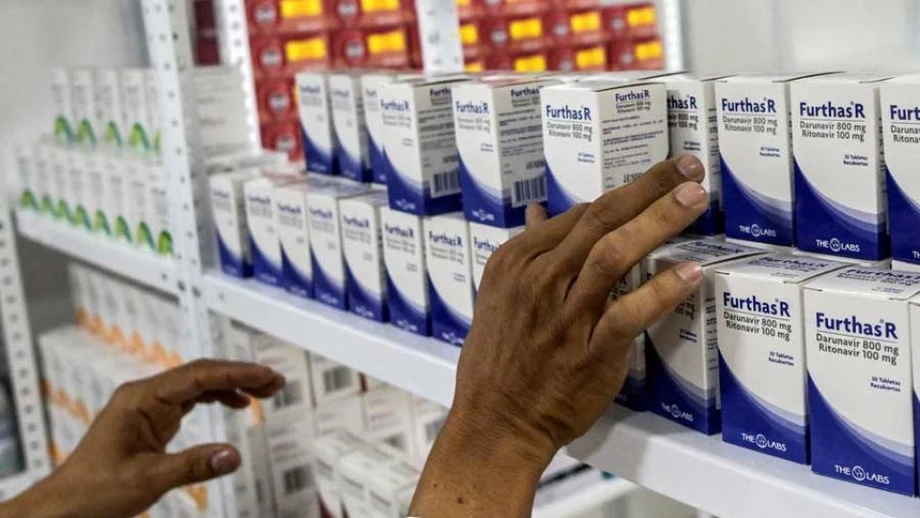
Historic Milestone in China's Fight Against HIV
Beijing marked a significant achievement in the battle against HIV on November 25, 2026, as the Chinese Center for Disease Control and Prevention announced that both treatment coverage and success rates have reached 95 percent. The announcement came during the 2026 World AIDS Day theme events, with Wang Jianwei, the director general of the China CDC, outlining the extensive network of facilities now supporting patients across the country. China has constructed nearly 60,000 HIV screening laboratories, more than 10,000 voluntary counseling and testing sites, and over 4,000 institutions providing antiviral treatment. This infrastructure supports a national strategy that aims to cut new infections and reduce deaths, keeping the overall epidemic at a low level through 2030.
Contents
The progress aligns with the China Plan for HIV/AIDS Prevention and Control 2024-2030, which was released in 2024. Wang emphasized that tackling the virus requires concerted efforts in science-based detection and case management. To improve access, China developed a phone-based program that allows people to find the nearest facility for consultation, testing, and medication through an online map. The country has also integrated drug resistance monitoring into its general surveillance network and scaled up molecular epidemiological investigation technology to improve early intervention.
Defining Treatment Success and Viral Suppression
Understanding what a 95 percent success rate means requires looking at the medical definition of treatment success. Treatment success is defined by viral load suppression, which occurs when the amount of HIV in the blood is reduced to undetectable levels. According to the China CDC, this state typically means the viral load remains below 50 copies per milliliter. When individuals maintain this level through regular medication, their lifespan and quality of life improve significantly, approaching those of the general population.
The percentage of people living with HIV who are receiving treatment and the treatment success rate have both reached 95 percent.
Wang Jianwei made these remarks on November 25, 2026, during the press conference. He noted that individuals in this suppressed state meet the international criteria for the "Undetectable equals Untransmittable" concept, which means they can effectively reduce the probability of transmitting the virus to others. Despite this high success rate, the virus is not yet completely curable, and long-term management remains necessary. The medical and prevention collaboration mechanism has successfully connected testing, confirmation, referral, and treatment follow-up services, creating a seamless chain of care for patients.
Global Context and UNAIDS Data
China's achievements come against a backdrop of global progress and new challenges. According to the latest data released by the Joint United Nations Programme on HIV/AIDS on November 24, 2026, 32.1 million of the 40 million people living with HIV worldwide are now receiving treatment. In 2025, the number of new HIV infections dropped to 1.2 million, and related deaths fell to 570,000, reaching the lowest levels in more than two decades.
Eva Kiwango, the director of the UNAIDS Office in China, highlighted these figures during the event. She stated that the UN goal of ending HIV as a public health threat by 2030 is still achievable, provided that public health services expand and remain equitable. Kiwango noted that China has increased investment, promoted artificial intelligence and other scientific innovations, and mobilized communities to combat the virus.
In the Asia-Pacific region, about 7.1 million people are living with HIV. Last year, the region recorded 280,000 new infections and 120,000 related deaths. China and African countries are deepening cooperation through funds for South-South cooperation, foreign medical aid, and other public health initiatives. China has contributed significantly to advancing and safeguarding global health, showcasing the power of combined efforts across all sectors of society.
Emerging Treatments and Clinical Efficacy
Beyond the broad statistics, recent clinical data highlights the efficacy of specific treatment regimens. A retrospective cohort study from Beijing Youan Hospital, evaluating treatment-naive individuals from 2018 through 2022, demonstrated that dolutegravir-based antiretroviral therapy achieved high rates of virological suppression. The study found that 95.07 percent of participants achieved suppression at 24 weeks, rising to 98.59 percent at 48 weeks.
The research included 142 participants who initiated either two-drug or three-drug regimens. Two-drug regimens showed significantly higher treatment continuity, with 98.67 percent retention at 48 weeks compared to 44.78 percent in three-drug groups. Reasons for switching regimens included treatment simplification, financial constraints, and adverse events, though none switched due to virological failure. Dolutegravir is widely recommended as a first-line therapy across 116 countries, though it is not yet included in China's free first-line treatment options.
International Funding Challenges
Despite the progress, international funding cuts threaten to undermine the global battle against the virus. The United States, historically the stand-out funder for antiretroviral drugs in low- and middle-income countries, suspended funding in January 2025. Although it later restored a limited amount, the effects have been devastating. A survey found that approximately 1,700 facilities previously offering treatments to people living with HIV had closed as a result of funding instability.
The US cuts have also curtailed preclinical vaccine research, forcing researchers to scale back and seek alternative funding. The US National Institutes of Health ended its program for preclinical HIV-vaccine research last year. Experts warn that a vaccine makes populations independent from access to drugs, making current research cuts particularly critical. However, new developments such as the FDA approval of generic versions of lenacapavir offer hope. This drug, which provides strong protection against HIV when administered twice a year, costs $40 per year for users, fueling hopes that it will help control the epidemic.
Zimbabwe Launches China-Funded Project
China's commitment to global health is further evidenced by new initiatives in Africa. On November 24, 2026, Zimbabwe launched a China-funded project to address high HIV prevalence among adolescent girls and young women in four high-burden provinces. The ceremony was held at Kuwadzana High School in the Banket area of Mashonaland West Province.
The three initiatives demonstrate our commitment to advancing health development, gender equality and community resilience.
Auxillia Mnangagwa, the First Lady of Zimbabwe, made this statement at the launch. She paid tribute to China for its enduring friendship and solidarity, noting that the program reflects the strong bilateral partnership. Chinese Ambassador to Zimbabwe Zhou Ding added that the project, implemented by UNAIDS Zimbabwe, marks an important milestone in bolstering the country's national HIV/AIDS response.
Zhou Ding emphasized that the project uses comprehensive interventions, including community-based health education, outreach services, wider testing provision, and strengthened care referral pathways. These measures aim to address both immediate and underlying drivers of HIV transmission, helping to build healthier, safer, and more resilient communities for generations to come.
Looking Toward 2030
The road ahead involves sustaining these gains. The world has a golden chance to improve HIV prevention, but it must not squander the current momentum. As lenacapavir and potential vaccines come online, the focus must shift toward ensuring stable funding and equitable access. The integration of artificial intelligence and scientific innovations in China provides a model for other nations, demonstrating how combined efforts can drive public health outcomes.
Researchers remain optimistic about the long-term prospects. The latest strategy for HIV vaccines, known as germline targeting, is designed to trigger the production of rare, highly potent antibodies that can prevent infection with diverse HIV strains. While it could take more than a decade to translate these results into a widely available vaccine, the current strategy shows promise. The key is for funders to ramp up investment now, rather than cutting back, to ensure that the progress made over the last two decades is not reversed.
The Bottom Line
- China reports that 95 percent of people living with HIV are receiving treatment, with 95 percent achieving viral suppression.
- Global new HIV infections dropped to 1.2 million and deaths to 570,000 in 2025, reaching record lows.
- International funding cuts, particularly from the US, have led to the closure of approximately 1,700 health facilities.
- Zimbabwe launched a China-funded project on November 24, 2026, targeting adolescent girls and young women.
- New treatments like lenacapavir and progress in vaccine research offer hope for controlling the epidemic by 2030.
- China's healthcare infrastructure includes nearly 60,000 screening labs and over 4,000 treatment institutions.