Legislation Puts City Experience at the Forefront
Tianjin has enacted a new law to bridge the gap between cultural heritage, commercial activity, and tourism. On November 27, the Tianjin Municipal People's Congress Standing Committee passed the Tianjin Regulations on Promoting the Integrated Development of Culture, Commerce, and Tourism. The law came into effect immediately upon publication, marking the first provincial-level regulation of its kind in China.
Contents
Officials stated that the legislation aims to transform the city from a simple sightseeing destination into a hub for immersive experiences. The law provides a legal framework to integrate various sectors, ensuring that historical sites, shopping districts, and entertainment venues operate as a unified network.
The goal is to make the city's cultural assets more accessible. By clarifying the roles of different government departments, the regulation seeks to remove bureaucratic obstacles that have previously slowed down the development of mixed-use spaces.
Officials highlighted that the law addresses the changing habits of modern travelers. Visitors now seek emotional connections and deep engagement with local history rather than just visiting famous landmarks. The regulation supports this shift by providing a legal basis for new business models and digital innovations.
The vitality of the law lies in its implementation.
Li Xuyan, deputy director of the Tianjin Municipal People's Congress Education, Culture, Health and Sports Committee, emphasized that the regulation will be enforced through active public promotion and regular government reviews.
Officials outlined four main changes for residents and visitors. Product offerings will become more diverse. Visitor experiences will feel more immersive. Service facilities will improve. Legal protections for consumer rights will strengthen.
The legislation covers five chapters with fifty specific provisions. It focuses on city branding, spatial planning, scenario creation, and service guarantees.
Wang Zeqing, director of the Legislation Affairs Office of the Standing Committee of the Tianjin Municipal People's Congress, explained that the law encourages immersive performing arts and high-level sports events.
The regulation also supports the development of the night economy. It promotes the sharing of public data and improves the functions of tourism distribution centers to help tourists navigate the city more easily.
We will turn the clauses one by one into scenes and connect the scenes into a network.
Wang Yagang, deputy director of the Tianjin Municipal Bureau of Commerce, explained how the business sector will align with the new rules. The bureau plans to link the regulation with the Fifteenth Five-Year Plan for the integration of culture, commerce, sports, and exhibitions.
Business leaders aim to upgrade commercial carriers and boost the economy of ticket stubs. They also focus on creating an environment suitable for international consumers.
Old Buildings Become Active Theater Stages
A core feature of the new law is the activation of historical buildings. Instead of leaving old structures as static museums, the regulation promotes turning them into dynamic stages for culture and commerce.
The Jiefang North Avenue and the Liberation Road Golden Street serve as prime examples. These areas are being renovated to host street performances and pop-up markets.
The regulation supports the creation of immersive performing arts. For instance, the open-air version of the classic play Sunrise is now a regular weekend event. Audiences watch actors perform on the streets, blending the drama with the city's history.
Wang Zeqing noted that the law encourages the mining of local cultural roots. It highlights the development of the洋楼经济 (Western-style villa economy) and the expansion of coastal consumption scenes.
The legislation also focuses on the Haihe River as the city's central artery. Officials plan to integrate resources along the riverbanks to create a continuous cultural corridor.
Yan Peizhou, director of the Tianjin Municipal Culture and Tourism Bureau, outlined plans to optimize the spatial layout. The strategy centers on one core area, one belt, and two parks.
The bureau will activate existing resources such as Western-style villas and industrial heritage sites. This approach turns idle spaces into vibrant tourism hubs.
Officials aim to cultivate new business formats like digital heritage and immersive exhibitions. These innovations help translate cultural resources into tangible consumer experiences.
The regulation also promotes regional cooperation. Tianjin will work with neighboring Beijing and Hebei Province to share resources and create joint tourism routes.
I thought I was just passing by, but the final line kept me rooted in place.
Tourists visiting the open-air performance of Sunrise have praised the immersive nature of the shows.
Yang, a visitor from Shandong, described how the performance changed his weekend experience. He noted that the actors moved freely among the audience, creating a seamless connection between the story and the physical environment.
The integration of culture and commerce is evident in the revitalization of the Zhangyuan historical complex. Visitors can follow a guided narrative through century-old courtyards, interacting with actors and exploring historical artifacts.
The Zhangyuan site has seen significant growth in visitor numbers. In 2025 alone, it received 280,000 visitors, accounting for over 65 percent of the site's total foot traffic.
The city has also developed new consumption scenarios. Officials support the creation of robot experience stores and XR immersive exhibitions.
The goal is to make the city's heritage feel current. Digital technologies help bridge the gap between traditional culture and modern consumer habits.
Ticket Stub Economy Links All Sectors
The regulation introduces the ticket stub economy as a key mechanism to drive consumption across different sectors. This system allows visitors to use a single ticket for a movie, play, or sports event as a coupon for dining, shopping, and transportation.
Tianjin has launched the Jinlv Ticket Stub Plan to formalize this network. The plan includes a dedicated mobile application and a local alliance of merchants.
Wang Yagang explained that the ticket stub economy creates a closed loop of consumption. A visitor attending a play can use the ticket to get a discount at a nearby restaurant or shop.
This approach encourages tourists to spend more time in the city. It turns one-time visits into multi-stop journeys through different commercial and cultural venues.
The government will upgrade commercial hubs such as the Quanyechang Shopping Center and Jinwan Plaza. These areas will integrate smart technologies to enhance the shopping experience.
Officials also plan to promote the economy of new store openings. Brands will be encouraged to open flagship stores in Tianjin to attract local residents and tourists alike.
The regulation supports the development of night markets and cultural activities. These events extend the hours of commercial activity into the night.
Wang Yagang highlighted the role of digital cultural creative products. Local brands will use digital platforms to sell traditional crafts to a wider audience.
The law also addresses the needs of international visitors. Tianjin will build specific business districts friendly to inbound consumption.
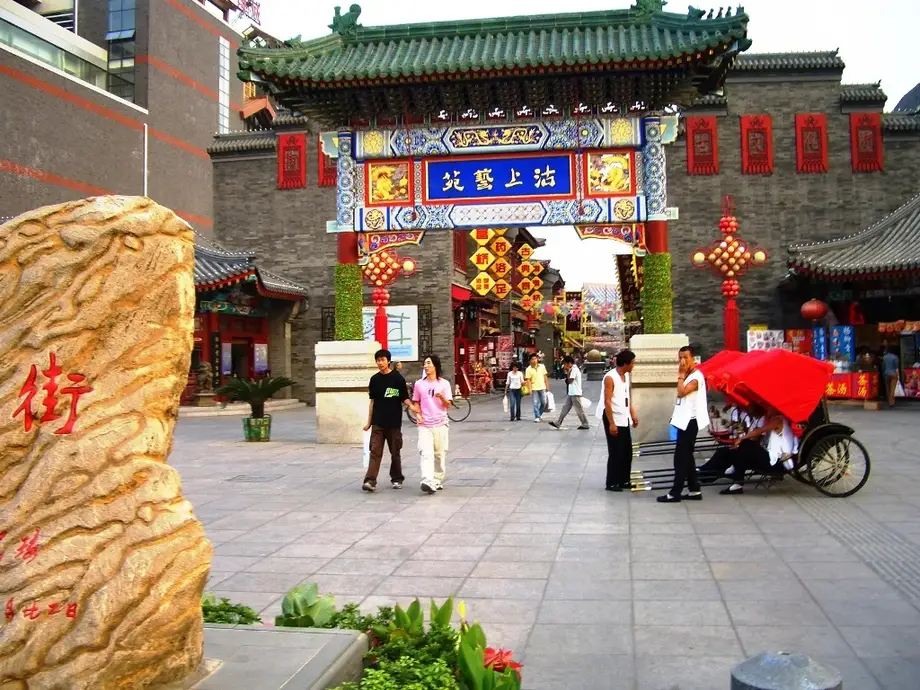
Areas such as the Golden Street, Ancient Culture Street, and the Five Avenue Historical District will receive targeted upgrades. These upgrades include improved signage and payment systems.
Officials will use the law to foster cross-industry collaborations. The aim is to create unique cultural products that appeal to both domestic and international markets.
Smart Services Enhance Visitor Experience
The regulation mandates improvements in public services to make travel in Tianjin more convenient. The city will expand its accessibility features for the elderly and disabled visitors.
Officials will upgrade tourism information centers and improve the efficiency of complaint response mechanisms.
A 24-hour tourist complaint hotline will be established to address issues promptly. This ensures that visitors have a clear channel to voice concerns.
Wang Zeqing mentioned the push for smart scenarios in the city. Artificial intelligence will be used to manage traffic flow and enhance visitor services in key areas.
The legislation also promotes the integration of sports and tourism. Tianjin will host more high-level sports events to attract participants and spectators.
Yan Peizhou explained that the city will focus on creating distinctive cultural brands. These brands will reflect the unique characteristics of the local population.
Officials plan to develop specialized tourism products for different timeframes. These include day trips for local residents, weekend getaways, and in-depth tours for long-term visitors.
The regulation encourages the use of digital tools to promote the city. Public data will be shared among government departments and private companies to improve service delivery.
Officials aim to create a city environment that is welcoming to both residents and visitors. The law sets clear standards for service quality.
The government will conduct regular evaluations to ensure the law is implemented effectively. This ensures that the legal provisions translate into real-world improvements.
The legislation also addresses the role of the private sector. Businesses will receive guidance and support to innovate and expand.
Officials will work with commercial operators to create joint promotions. These promotions will highlight the city's cultural heritage and modern attractions.
The city will continue to invest in infrastructure. Upgrades to transportation and public spaces will make it easier for tourists to access cultural sites.
Before the pandemic, Hong Kong received more than one million visitors from Japan annually.
Contextual comparisons with other major cities show the potential impact of such legislation.
Analysts note that integrated approaches can significantly boost local economies. By combining culture, commerce, and tourism, cities can create more resilient growth models.
Implementation Plans and Future Outlook
The implementation of the regulation will proceed in phases. The first phase focuses on raising awareness and establishing operational guidelines.
Government departments will issue detailed rules to support the main law. These rules will cover specific areas such as heritage preservation and commercial licensing.
Officials plan to launch promotional campaigns to introduce the new measures to the public.
The city will also focus on talent development. Training programs will be introduced to equip workers with the skills needed for the new integrated economy.
Investment in cultural tourism will increase. The government will allocate funds to support key projects and infrastructure improvements.
Officials will monitor the economic impact of the regulation. Data on visitor numbers and spending will be tracked to assess progress.
The law provides a stable framework for long-term development. Investors and businesses can plan their strategies with greater confidence.
Officials aim to position Tianjin as a top-tier cultural tourism destination in China. The regulation is a key step toward this goal.
The city will continue to experiment with new business models. Successful initiatives will be scaled up and replicated in other areas.
The regulation sets the stage for a new era of urban development. Tianjin is leveraging its unique heritage to drive modern economic growth.
Key Points
- Tianjin has enacted China's first provincial regulation on the integration of culture, commerce, and tourism.
- The law came into effect immediately upon publication on November 27.
- It provides a legal framework to merge historical sites, shopping, and entertainment.
- The legislation encourages the use of old buildings as active cultural and commercial spaces.
- A new ticket stub economy will link dining, shopping, and entertainment discounts.
- Officials plan to upgrade public services and introduce smart city technologies.
- The law promotes regional cooperation with Beijing and Hebei Province.
- Businesses will receive support to develop innovative digital and cultural products.