New York Lands Another Dodgers Pitcher
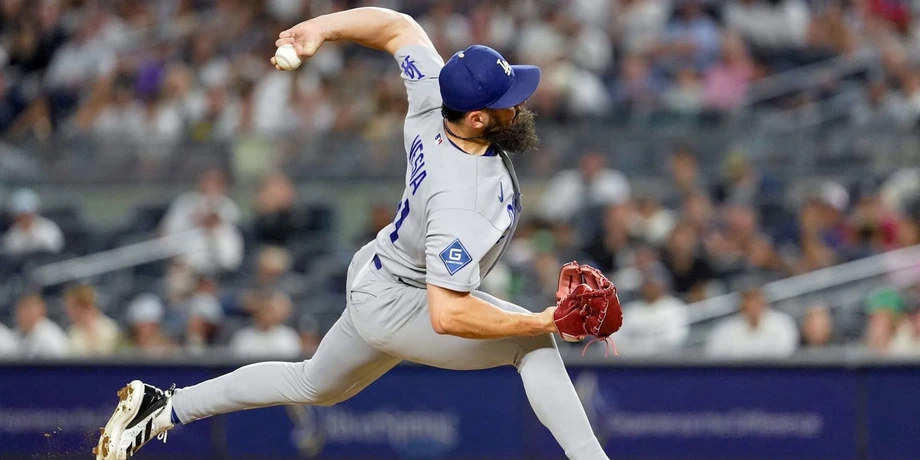
The New York Mets have agreed to sign left-handed reliever Alex Vesia to a contract worth $39 million over three years, according to people with knowledge of the deal. The agreement was reported on Saturday, Nov. 28, and is pending a physical, the standard medical examination that must be completed before a contract becomes official. The Mets had not announced the signing as of Saturday evening.
Contents
- New York Lands Another Dodgers Pitcher
- Why the Mets Kept Shopping for Left-Handers
- The Numbers Behind a Reliable Arm
- How Vesia Wins Without a Power Fastball
- A Fast Market and a Simple Contract
- What the Mets Have Built
- The Dodgers Have a Bullpen Problem
- Why the Next Few Days Matter
- A Moving Day Video and a Farewell From Los Angeles
- What Changes for Both Teams
- Key Points
Vesia, 30, spent the past six seasons with the Los Angeles Dodgers, where he became one of the most trusted left-handed arms in the late innings. He was part of the Dodgers teams that won the World Series in 2024 and 2025. His move to New York follows the Mets' agreement with Tarik Skubal, the two-time Cy Young Award winner, on a contract worth $450 million over nine years, the largest deal ever for a pitcher.
For the Mets, Vesia is the third left-handed pitcher added this offseason, after Skubal and reliever Darwinzon Hernandez. For the Dodgers, he is the latest piece of a bullpen that has been pulled apart since the end of the 2026 season. The team wanted to re-sign him, but the market for proven relievers was strong and the Mets moved quickly.
A reliever, also called a relief pitcher, enters after the starting pitcher and is usually asked to protect a lead or keep a game close for an inning or less. Left-handed relievers are especially valued because they present a different look to left-handed batters, who often have the advantage against right-handed pitchers. Vesia built his career on those assignments.
Why the Mets Kept Shopping for Left-Handers
New York made left-handed pitching a priority for a clear reason. In 2026, MLB as a whole recorded the most plate appearances by left-handed batters in a season since at least 1961, the start of the expansion era. A plate appearance is every completed turn at bat, including walks and hit by pitches. More left-handed hitters in lineups means more demand for pitchers who can retire them.
David Stearns, the Mets' president of baseball operations, said at the start of the month that building a staff able to handle left-handed hitters had become essential.
In today's game, you need to have pitchers who can really get left-handed hitters out.
The Mets acted on that view. They signed Skubal to lead the rotation, added Hernandez to deepen the relief corps, and now have Vesia for the innings that decide games. New York traded relievers Brooks Raley and A.J. Minter at the August deadline, leaving holes that the front office has spent the winter filling.
Their 40-man roster now lists eight left-handed pitchers, including starter Sean Manaea. The 40-man roster is the group of players a club can use in the majors without making another move. Spring training will bring a contest for bullpen places, with Vesia expected to take one of the most important roles.
The Numbers Behind a Reliable Arm
Vesia's 2026 season was his busiest and one of his best. He made a career high 72 appearances, the most on the Dodgers, and posted a 3-1 record with three saves, 20 holds and a 2.64 ERA. He struck out 74 batters in 58 innings, a rate above 11 per nine innings, and finished with a 1.07 WHIP. WHIP measures walks and hits allowed per inning; a lower number is better. A hold is awarded to a reliever who protects a lead before the closer takes over.
Across his six seasons in Los Angeles, Vesia pitched in 367 games and threw 328 innings with a 2.66 ERA and 438 strikeouts. His full major league record, including his 2020 debut with the Miami Marlins, is 372 appearances, 332 2/3 innings, a 2.87 ERA, 443 strikeouts, 22 wins, 14 losses, 16 saves and 96 holds. In the postseason he has a 2-0 record and a 1.59 ERA over 22 2/3 innings.
The durability stands out. Since 2021 he has thrown at least 40 innings every season, and he has topped 58 innings in each of the last three. He pitched more than 60 games in four of the last five seasons and still made 56 appearances in the one season he fell short of that mark. Since 2021, only 2023 ended with his ERA above 3.02.
His 2024 season was a showcase of his value in October: 67 appearances and a 1.76 ERA. In 2025 he made 68 appearances and set a career high with 26 holds while helping the Dodgers win another title. The 2026 season added volume to that record, with a career best 72 games.
How Vesia Wins Without a Power Fastball
Vesia does not overwhelm hitters with velocity. His fastball sits below the league average, according to scouting data, and he allowed ground balls at one of the lowest rates in baseball. He ranked in the second percentile for ground ball rate, meaning nearly every other pitcher in MLB kept the ball on the ground more often. A fly ball pitcher who gives up few hard hit balls can still succeed, and Vesia does it with swings and misses.
His strikeout ability carried him in 2026. He generated whiffs at his best rate since 2022, and his 74 strikeouts came in only 58 innings. That mix lets him enter with runners on base and go for strikeouts instead of relying on a double play. The approach has worked in the regular season and in October, where his 1.59 ERA over 22 2/3 innings is the clearest evidence that he can handle pressure.
His role with the Mets will likely look familiar: left-handed hitters in the middle of a game, then the toughest part of the order in the late innings. New York's bullpen lacked that kind of certainty after the August trades. Vesia gives the Mets a pitcher who has done the job on a championship team.
A Fast Market and a Simple Contract
The deal contains no deferrals and no options, meaning the Mets will not push salary into later years and neither side has a choice to extend or end the contract early. The $39 million total works out to $13 million per season. That is well below the $23 million average on Adrian Morejon's new contract with the Toronto Blue Jays, a deal worth $115 million over five years, and far below the $50 million average on Skubal's $450 million contract over nine years.
Timing shaped the market. Morejon agreed with Toronto shortly before Vesia's deal was reported, and the two agreements landed within about 30 minutes of each other. The quick movement showed how fast the remaining relief arms were going. Vesia also drew interest from the New York Yankees, the San Diego Padres and the Marlins, his first major league team. More than half of MLB clubs were linked to him at some point, and the Dodgers hoped to bring him back.
The Yankees were seen as a threat if they offered a contract of three or four years. It was unclear whether the Dodgers could match such an offer. The Mets did, and they did it before the market could slow down.
What the Mets Have Built
New York missed the playoffs in 2026, and the front office responded with a winter of major spending. Skubal gives the Mets an ace at the top of the rotation. Hernandez, who built his career in Japan with SoftBank before returning to the majors, adds depth. Vesia gives the bullpen a proven left-hander for the innings that decide close games.
The three pitchers fill different needs. Skubal is a starter, Hernandez is a relief option with a comeback story, and Vesia is the late inning specialist. The Mets had to rebuild the bullpen after trading Raley and Minter, and they have now added two left-handed relievers on contracts spanning three years. The 40-man roster contains eight left-handed pitchers, which gives the club options and competition in spring training.
For a team that missed the postseason, the appeal is clear. The Mets are buying certainty. Vesia has pitched in 55 or more games in five straight seasons, and he has done it in a major market with a championship contender.
The Dodgers Have a Bullpen Problem
Los Angeles has lost more than Vesia. Evan Phillips has agreed to join the Atlanta Braves, and Kris Bubic has agreed to join the Cleveland Guardians. Blake Treinen and Brusdar Graterol remain free agents. The Dodgers traded Bobby Miller, and relievers Seth Halvorsen and Ben Casparius are set to miss all of 2027 after Tommy John surgery, a procedure that replaces a torn ligament in the elbow and usually requires a year or more of recovery.
The club has not made a major move to replace those arms. Its only addition of note is Robert Stephenson, who signed a deal in the minor leagues last week. The Dodgers could promote pitchers from their farm system or move starters such as left-hander Justin Wrobleski and right-hander Emmet Sheehan into relief roles. That would still leave the unit short of the depth it had in 2025.
Other clubs are also hunting for relievers. Morejon's deal with Toronto removed one of the best left-handers from the board. The top remaining names are disappearing quickly, and the Dodgers have little time to react.
Why the Next Few Days Matter
MLB is scheduled to enter a lockout on Tuesday, a labor dispute that would stop teams and players from communicating about contracts. A lockout is a work stoppage ordered by owners; during one, free agent signings and trades generally cannot proceed because clubs cannot talk to players or their agents. The Dodgers have only a few days to address their bullpen before that channel closes.
- Sunday, Nov. 22: The Mets agree with Tarik Skubal on a contract worth $450 million over nine years.
- Saturday, Nov. 28: Adrian Morejon agrees with the Blue Jays on a deal worth $115 million over five years; within about 30 minutes, Vesia agrees with the Mets.
- Tuesday, Dec. 1: A lockout is scheduled to begin.
The Mets got their work done in time. Their agreement with Vesia was reported on Saturday, just before the lockout was set to begin. The Dodgers, by contrast, are still shopping in a market that has already lost Vesia, Morejon and Phillips. The timing adds pressure to a roster that already had holes.
No date has been given for Vesia's physical or for a formal announcement. The deal is not final until that examination is complete.
A Moving Day Video and a Farewell From Los Angeles
Vesia's wife, Kayla, gave Dodgers fans a farewell with a video posted on Instagram. The clip showed the couple packing a room that appeared to be a home training room, stacking boxes labeled with their names and those of their dogs, Rufus and Rocket. In the video they ask each other where they are going. The answer is Citi Field, the Mets' ballpark in Queens. The last box carried a large Mets logo.
Fans responded with messages wishing Vesia well in New York and saying they would miss him. Kirsten Watson, a reporter for the Dodgers' regional sports network, added her own note.
I am really happy for the two of you. Sending lots of love and blessings.
The video offered a softer ending to a hard decision. Vesia had been a favorite in Los Angeles for his intensity on the mound, and he leaves after six seasons, two World Series titles and a career high 72 appearances in his final year with the club.
What Changes for Both Teams
For the Mets, the deal adds a proven late inning left-hander to a bullpen that needed one. Vesia's contract costs $13 million per season, a manageable sum for a pitcher who has been durable and effective in the regular season and the postseason. He joins a club that has spent heavily to return to the playoffs.
For the Dodgers, the cost is harder to measure. Vesia was not their closer, but he was the left-hander they trusted in the biggest spots. Replacing 72 appearances and a 2.64 ERA will take more than one signing, and the team has already lost Phillips and Bubic. The Dodgers still have arms in their system and can sign free agents, but the market is thin and the lockout is near.
The agreement also shows how quickly the relief market can move. Within about 30 minutes of Morejon's deal with Toronto, Vesia had a new home. The Mets were ready, and the Dodgers were left to search for answers.
Key Points
- Alex Vesia agreed to a contract with the Mets worth $39 million over three years, pending a physical.
- The 30-year-old left-hander spent six seasons with the Dodgers and won World Series titles in 2024 and 2025.
- He made a career high 72 appearances in 2026, posting a 2.64 ERA and 74 strikeouts in 58 innings.
- The Mets also signed Tarik Skubal for $450 million over nine years and Darwinzon Hernandez for $12 million over three years.
- New York made left-handed pitching a priority after MLB set a post-1961 high for left-handed plate appearances in 2026.
- The Dodgers have lost Vesia, Evan Phillips and Kris Bubic, while Blake Treinen and Brusdar Graterol remain free agents.
- Los Angeles has until Tuesday, when a lockout is set to begin, to make more moves.
- Vesia's wife, Kayla, announced the move in an Instagram video featuring the couple's dogs and a destination of Citi Field.