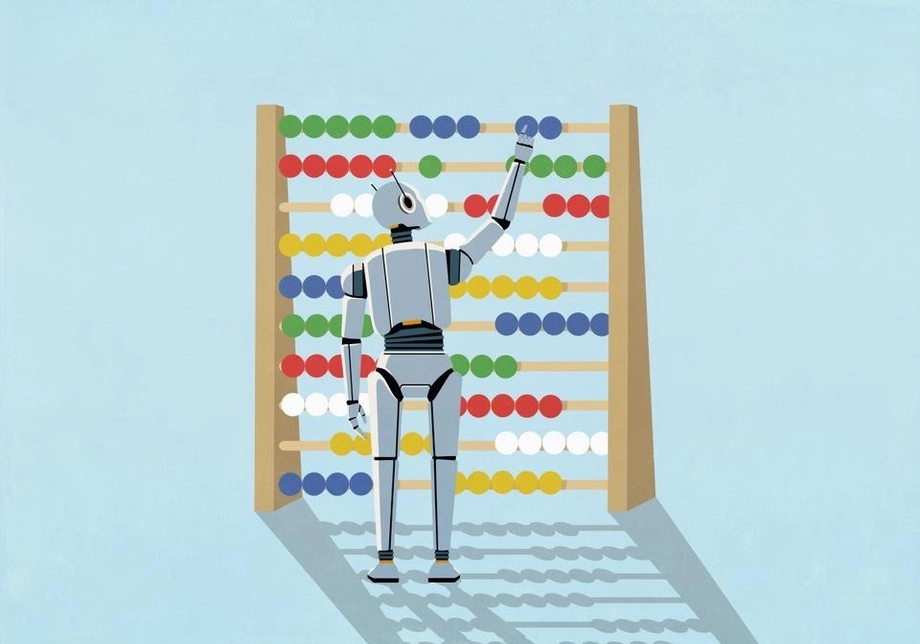
Three Quarters of Young Mathematicians Are Weighing an Exit
Nearly 76% of 268 early career mathematicians surveyed by researchers at MIT said the likelihood that they will continue a career in mathematical academia is declining because of artificial intelligence. The respondents were graduate students, postdoctoral researchers and others at the start of research careers. The survey went out as OpenAI published solutions to more than 700 longstanding problems, including the Navier-Stokes equations, which describe how water, air and other fluids move.
Contents
- Three Quarters of Young Mathematicians Are Weighing an Exit
- A Year That Broke the Rhythm of the Field
- The Proof That No Human on Earth Understands
- How Four Checks Turned 17 Million Lines Into a Verdict
- What a Machine Proof Costs, and Who Can Afford One
- Leaders Say They Will Discuss It. Students Cannot Wait Nine Months.
- Johns Hopkins Tells Applicants to Show Their Work
- The Telescope Argument for Staying
- The Encryption Question Hanging Over the Field
- Where the Jobs Are Moving
- Key Points
Their frustration was aimed at institutions rather than at software. Many respondents described academic leaders as indecisive, ineffective and silent. OpenAI and Anthropic have both pledged financial support and advisory groups to help mathematics absorb the shock, and the same students judged those offers too small for the speed of the change. Three quarters of a generation in training is now asking a question their supervisors never had to answer: whether the job they are preparing for will exist.
Researchers further along sound much the same. At an emergency Royal Society meeting in London in late October, theoretical physicist Miranda Cheng described the moment without hedging.
It's probably the end of mathematics as we know it.
The meeting came three weeks after OpenAI posted more than 700 preprints written by its models. Mathematicians stayed up through the night reading them, trying to establish whether research programmes built over decades had been made redundant in an afternoon. Simon Machado, a mathematician at the Swiss Federal Institute of Technology in Zurich, called it a challenge like nothing the field had faced before.
A Year That Broke the Rhythm of the Field
OpenAI's run began in April 2026 with results on the Erdős unit distance conjecture and the Jacobian conjecture, both open for decades. In August the company released a batch of ten important results. In early September it announced a solution to Navier-Stokes, one of the seven Millennium Prize Problems listed by the Clay Mathematics Institute in 2000, each of which carries a $1 million award.
Then came 6 October. OpenAI posted more than 700 preprints that it said addressed more than 300 major open problems; a tally of the release counted 722 papers covering 372 problems, and the company later withdrew some of them after mistakes surfaced. The papers arrived without the seminars, referee reports and slow conversations that normally surround new mathematics. Catherine Cossaboom, a master's student at the University of Oxford, described the effect of reading the list.
To just see it as a giant list, without the care and thought and the love that goes into doing this work on a normal basis, it was really jarring.
The dates now mark the field's calendar.
- April 2026: OpenAI reports results on the Erdős unit distance conjecture and the Jacobian conjecture.
- August 2026: a batch of ten important results is released.
- Early September 2026: OpenAI announces a solution to the Navier-Stokes problem.
- 6 October 2026: more than 700 preprints are posted, said to cover more than 300 open problems.
- 26 October 2026: the company announces three separate claims in mathematics, computing and physics, including a challenge to a computing hypothesis used in hundreds of papers, and invites independent review.
- Late October 2026: the Royal Society holds an emergency meeting on mathematics and artificial intelligence.
- 20 November 2026: Levent Alpöge announces a proof of the Riemann hypothesis made with Claude.
- 21 November 2026: the Lean and Mathlib communities certify the statement and the proof.
- 23 November 2026: Anthropic and OpenAI release separate machine checked proofs that VP and VNP differ.
Hugo Duminil-Copin, a Fields Medal winner at the University of Geneva who studies transitions in complex systems, found his own subject inside the October release.
Not a single one of the major open problems I have publicly mentioned throughout my career was left untouched.
The Proof That No Human on Earth Understands
Levent Alpöge, a mathematician at Anthropic who is 34, announced on 20 November that he had proved the Riemann hypothesis while working with the company's AI assistant, Claude. The hypothesis, posed by Bernhard Riemann in 1859, concerns how prime numbers such as 2, 3, 5 and 7 are scattered among the whole numbers. It had resisted proof for 167 years and sits on the Clay institute's Millennium list.
What Alpöge released was not a paper in the ordinary sense. It was a library of roughly 17 million lines of formal code spread across about 175,000 files and modules, with no conventional argument attached; the underlying proof has been described as more than 250,000 pages long. Andrew Sutherland, a mathematician at MIT who specialises in computer checked proofs, ran the material through every test he could devise.
Even though I have no understanding of the proof, and nobody does, I am more confident that this proof is correct than any proof I have ever encountered.
James Maynard, a Fields Medal winner at Oxford, had to rewrite a lecture in China at a conference marking Riemann's 200th birthday when news reached him overnight.
We're confident that the proof is correct, but no human on the planet really understands the proof properly.
A proof produced without AI followed within days. Alessandro Masullo, a mathematician based in Rome, had been working on the problem for years and released his own argument. A compact rewrite of about 76,000 lines by Luke Sernau and collaborators has since passed independent checks, and readable explanations are beginning to circulate. The Clay Mathematics Institute still lists the Riemann hypothesis as open, and conventional peer review lags behind machine verification.
How Four Checks Turned 17 Million Lines Into a Verdict
Lean is not an AI. It is software that records a proof in a language a computer can parse and then tests each step for logical errors, a technology built up over decades. A proof that passes its kernel follows from its assumptions without gaps.
On 21 November the Lean and Mathlib communities published a joint statement certifying the result. Their check covered four questions.
- Whether the definition of the Riemann hypothesis in the code is the right one.
- Whether the entire body of code runs without errors.
- Whether the code proves the Riemann hypothesis, rather than some slightly different proposition.
- Whether a bug could have caused a false proof to be accepted.
The third question mattered because a proof can be formally flawless and still be about the wrong theorem. Experts compared the statement of the Riemann hypothesis already registered in Mathlib, a shared library of formalised mathematics, with the statement Alpöge proved, using two independent tools, and found them identical. For the fourth, the proof was run through several verification programs besides Lean's own kernel, and all judged it correct. Organisers said dozens of people processed the code and obtained the same proof data. The statement concluded that both the proposition and its proof are correct, and congratulated Alpöge.
What a Machine Proof Costs, and Who Can Afford One
The Navier-Stokes result shows the industrial scale behind these announcements. OpenAI set 10,000 AI agents, software systems built around a language model that can reason, act and run code, working together for 88 hours to find the solution; a further 17 hours went into checking it with Lean. The company estimated the total cost at about $15 million. Against the $1 million that comes with a Millennium Prize, that is a net loss of $14 million.
Rivalry between the laboratories is now part of the record. On 23 November Anthropic and OpenAI released separate proofs that the complexity classes VP and VNP are different, a question posed by Leslie Valiant in 1979 and an algebraic relative of the better known P versus NP problem. Anthropic's paper noted that whether its formal statements matched its informal claims was judged only by AI readers.
Access has widened at the same time. Cinna Davis, who is 16 and a senior at the Illinois Mathematics and Science Academy, keeps a public repository cataloguing dozens of proofs and counterexamples in combinatorics, number theory and discrete geometry produced with a language model and a set of scripts she refined over months, including a disproof of the Caiolo–Ferroni–Hoster conjecture on matroids.
Leaders Say They Will Discuss It. Students Cannot Wait Nine Months.
Albane Théry, an applied mathematician at the University of Warwick who helps moderate an online forum called Proofs and Prompts, framed the training problem that departments have not answered.
How do we train people if a good PhD thesis can be prompted out of an LLM?
She said the response from people in permanent positions tends to be that they will see and discuss, and that the timescale could be too long for postdoctoral researchers and doctoral candidates who will be out of a job in nine months. Jad Hamdan, a postdoctoral mathematician at Oxford, described the gap between long term thinking and present need.
While it is clear that faculty are working hard to find long-term solutions to the problems we are all facing, there doesn't seem to be as much guidance on what to do in the meantime.
Jakub Dobrowolski, a doctoral candidate at Queen Mary University of London, said the risk grows the younger and less experienced a researcher is, and pointed to the practical problem of proposing a programme that may run two or three years.
Now I feel like whatever I propose might just expire within a year.
A survey by the Martingale Foundation in London last month measured the gap between generations: 89% of doctoral students said AI would weaken their development as mathematicians, against 68% of academic staff. Behaviour has changed as well. Peter Sarnak, a number theorist at Princeton University, described the new caution about sharing unfinished work.
Nobody wants to share new ideas because of the speed at which somebody else can take them and write a paper.
Johns Hopkins Tells Applicants to Show Their Work
In late November the mathematics department at Johns Hopkins University published guidelines for prospective doctoral students and job applicants. The department says it expects transparency about AI use in mathematical research and does not judge candidates on whether they prefer the tools. It will not give positive weight to written work without evidence that the authors understand its contents, whatever the significance of the results.
Yiannis Sakellaridis, a professor in the department who chaired the committee that drafted the guidance, said the text responded to habits already forming rather than to applications the department had received, including the temptation to find a conjecture in a paper, ask a model to prove it and attach the answer to an application. He described the wider situation bluntly.
Mathematics is undergoing a radical change right now. In fact, we're in a state of crisis.
Questions about how much doctoral students may use AI, and whether they may draft theses with large language models, will take longer to settle, and the guidelines are not the final word. Other institutions have already had to rule on conduct. Santiago Schnell, a mathematician whose first language is not English, resigned as provost of Dartmouth College last month after a committee led by faculty members found he had used AI in ways that violated the college's ethical and academic expectations and had not fully cooperated with the investigation that followed.
The Telescope Argument for Staying
Sakellaridis rejects the conclusion that nothing is left for people. Understanding and producing proofs, he argues, have come apart for the first time, which creates a false impression that the human role has ended.
AI is like telescopes. The invention of telescopes did not finish off astronomy. On the contrary, it empowered it and it allowed it to look deeper into space.
His point is that a telescope shows you stars; it does not tell you what they are made of. Understanding what the machines return, and asking the next question, stays with people. Mathematics, he said, is endless: every solved problem opens new ones, and AI cannot be conceptual.
Ken Ono, a number theorist at the University of Virginia who is on leave as founding mathematician at Axiom Math, has spent the year testing that position. His team released the first complete formalisation of the classification of finite simple groups, a proof announced in 1983 that drew on decades of work and had a major gap filled in 2004. Their AI helped produce 43.1 million lines of formal code, found a problem in a published route to a key theorem and supplied an alternative argument. The work took 24 days.
Ono, who is 58 and has supervised 35 doctoral students and 17 postdoctoral researchers, wrote that he nearly quit mathematics last year, and that his father, a number theorist who died in January, compared AI to Ramanujan: a source of results from an unexpected place that leaves much to understand. At a National Academies meeting he put his view of institutional hand wringing this way.
Hope is not a plan, and nostalgia is not mentoring.
Two days after OpenAI announced its Navier-Stokes solution, a scheduled lecture at Berkeley turned into a town hall lasting almost two and a half hours, where students asked about credit, transparency, hiring and how mathematicians whose work came first had been treated. More than 8,000 mathematicians have signed a declaration issued on 11 September by Terence Tao and 25 other Fields Medal winners, titled A Severe Misalignment of AI in Mathematics, warning that rapid mass production of true or false statements could destroy fertile ground instead of feeding new ideas. A newer body, the Association for Human Mathematics, has more than 1,000 members who commit to research without AI.
The remedy taking shape inside departments is what Tao calls digestion: absorbing a result, simplifying it and putting it in context until a person understands it. Ono argues that students need room to struggle with the subject and to question the tools they use. History offers one reason why understanding pays. MRI scanners once required patients to lie still for up to half an hour while a machine gathered many images; the mathematics of compressed sensing, worked out in the mid 2000s by a mathematician, statisticians and an electrical engineer, allowed an image to be rebuilt from far fewer scans, and the improvement came from understanding why reconstruction was possible at all. Teaching is moving the same way, with oral examinations and class presentations weighed as ways to test understanding that no model can supply on a student's behalf.
The Encryption Question Hanging Over the Field
The mathematical news has spilled into security. Scott Aaronson, a theoretical computer scientist, wrote on his blog that the laboratories may be holding results that break current cryptography.
I'm virtually certain, from multiple reliable sources, that the AI labs are now sitting on one or more bombshells in that area.
Much of the world's protected traffic, from bank transfers to diplomatic cables, rests on RSA encryption, which multiplies two large primes to lock a message; reading the message means factoring that product back into its parts, a task beyond any current machine for keys of the usual length. Governments and companies had been preparing for Q-Day, the point when quantum computers could break these systems, assumed to be years or decades away. The VP versus VNP result concerns which problems efficient algorithms can solve, the same territory of hardness assumptions that encryption rests on. Intelligence agencies such as GCHQ have long recorded traffic they could not read, and a decryption advance would put old intercepts within reach.
Where the Jobs Are Moving
For students deciding what to do next, the employment data points in two directions. Nearly 40% of employers now expect proficiency with automation techniques for entry level roles in mathematical modelling and statistics. A 2023 World Economic Forum report projected that 30% of tasks in analytical and data related jobs could be automated by 2027, with routine data processing, standard statistical computation and repeated financial forecasting most exposed. The same report found that 60% of roles demanding advanced critical thinking and creativity carry little risk of automation over the following decade.
Demand is growing elsewhere. Job openings for AI specialists have risen by more than 74% a year, and employment in data science is projected to grow 36% between 2021 and 2031. More than 60% of mathematics curricula at universities in the United States have added AI content, and workers with machine learning skills command a wage premium of up to 20%. The abilities that hiring now rewards sit beside the mathematics rather than replacing it, which is the argument departments are making to students who watched a machine prove the Riemann hypothesis in November.
Key Points
- A survey of 268 early career mathematicians by MIT researchers found nearly 76% said the likelihood of continuing in mathematical academia is declining because of AI.
- Many described academic leaders as indecisive, ineffective and silent, and called the financial support and advisory groups promised by OpenAI and Anthropic insufficient.
- OpenAI released more than 700 preprints on 6 October covering more than 300 open problems, after results in April and a Navier-Stokes solution in early September.
- Levent Alpöge announced a Claude assisted proof of the Riemann hypothesis on 20 November; the Lean and Mathlib communities certified it on 21 November after four separate checks.
- The formal proof runs to about 17 million lines in some 175,000 files, and no human yet understands the argument.
- The Navier-Stokes solution cost OpenAI about $15 million, a net loss of $14 million against the $1 million Millennium Prize.
- Johns Hopkins will not give positive weight to written work without evidence the author understands it, and Dartmouth's provost resigned over AI use.
- The Martingale Foundation found 89% of doctoral students expect AI to weaken their development, against 68% of academic staff.