Revenue Decline Drives Innovation in Exhibition
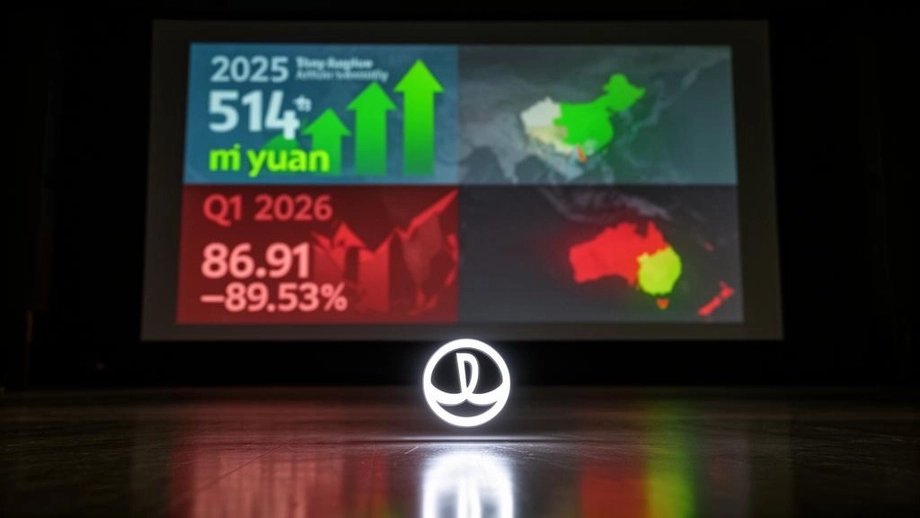
The box office receipts of Ruyi Film, China's leading cinema operator formerly known as Wanda Film, have faced significant headwinds. The company reported that its operating revenue for the first three quarters of 2026 reached 8.397 billion yuan, a 14.2 percent drop from the previous year. Net profit attributable to shareholders plummeted 99.2 percent to 5.6766 million yuan. This sharp decline reflects the cyclical pressures facing the industry after a strong period in 2025, when the company swung to a net profit of 514 million yuan and recorded an operating revenue of 12.65 billion yuan.
Contents
The downturn in the first quarter of 2026 was particularly stark. Revenue fell 36.33 percent year-on-year to 3 billion yuan, while net profit plunged 89.53 percent to 86.91 million yuan. The national box office dropped 51.3 percent in the same period, and admissions fell 48 percent. Despite these challenges, Ruyi Film maintained a counter-cyclical market share of 14.5 percent in the first quarter, up from the previous year, demonstrating the resilience of its operational strategy. The company attributes the domestic pressure to a high base effect from last year and a shift in content supply, while overseas operations in Australia provided a stabilizing force.
The "Urban De-stress" Plan and Sound Healing
To adapt to the changing market, Ruyi Film launched its Urban De-stress Plan on November 27. The initiative introduces an immersive sound healing product called Bamboo Forest Sound Bath: Hearing Yourself, which will roll out to 703 of its cinemas in December. This marks the first large-scale deployment of such a product in China, targeting urban professionals seeking mental relaxation.
The sound healing experience lasts approximately 40 minutes and utilizes instruments such as singing bowls, stream drums, and handpans. The cinema environment provides a large screen and surround sound to create an immersive atmosphere. The company also offers eye masks and aromatherapy to enhance the experience. Chen Zhihi, the chairman and president of Ruyi Film, noted that the product is designed to offer a high-quality, immersive leisure experience that differs from online audio or simple nap pods.
Pricing for the sound healing service ranges from 100 to 800 yuan per session, depending on the level of service and whether it is a one-on-one experience. The product is still in its preparatory phase and has not yet been listed on major ticketing platforms. Cinema managers indicated that the program will utilize empty screening times and available halls to schedule sessions, typically during midday or evening slots.
The cinema is no longer limited to a single function of movie screening. It is gradually becoming a comprehensive experience space that integrates screening, socializing, entertainment, consumption, and leisure. We are pushing the Super Entertainment Space strategy to dig deep into the physical space and professional audio-visual value of cinemas.
The sound healing initiative is part of a broader shift toward diversified business models. Ruyi Film has also introduced the interactive film variety show Friends Meaning Annual Party and its Pin Hao Pian business, which allows for the live screening of dramas, variety shows, and sports events. The company aims to make visiting the cinema a regular habit for the public.
Diversification Beyond Ticket Sales
Cinema operators are actively exploring new revenue streams beyond traditional ticket sales. The rise of streaming services and changes in consumer habits have pressured the core box office market, prompting cinemas to offer a wider array of services. These include nap pods, hot pot dining, coffee, and even puzzle bead crafts for children.
The puzzle bead service, offered by chains such as Ruyi Cinema and AM Cinema, is particularly popular. It charges between 9.9 and 19.9 yuan per hour, allowing families to engage in a creative activity while waiting for a screening or resting. The market for sound healing also includes related services like spa and aromatherapy, with prices varying based on customization.
Non-ticket revenue has grown significantly, now accounting for up to 30 percent of total revenue in some cinemas. The National Film Administration and the State Administration for Market Regulation have encouraged these innovations in an June directive, supporting the transformation of cinemas into multi-functional cultural spaces.
- Sound healing sessions: 100 to 800 yuan per session.
- Puzzle bead crafts: 9.9 to 19.9 yuan per hour.
- Nap services: Monthly passes cost 69.9 yuan, with single sessions at 19.9 yuan.
Experts emphasize that these innovations must revolve around film content. Differentiated management should not be a blind replication of trends but should focus on enhancing the core viewing experience. The fundamental challenge for cinemas remains whether movies can once again become a compelling reason for the public to go out.
Strong Performance in High-End Formats
Despite the general decline in box office revenue, Ruyi Film has shown strength in high-end formats, particularly IMAX. The company holds 397 IMAX screens, which constitute more than 50 percent of the national total. In the first 11 months of 2026, Ruyi Film captured 44.61 percent of the national IMAX box office for imported blockbusters.
This strong positioning is expected to benefit from the release of Avengers: Endgame, which is scheduled for December 16, 2026. The company recorded 19.5 billion yuan in domestic direct cinema box office in the third quarter, a 4.0 percent increase year-on-year. Its market share rose to 16.0 percent, an 8.2 percent year-on-year growth.
Ruyi Film has also opened eight new stores by the end of the year, including locations in Shanghai and Hangzhou. The company continues to optimize its portfolio by closing underperforming cinemas with negative cash flow while expanding in key urban areas. The company plans to complete the full laser conversion of its five-star cinemas by the end of 2026.
Financial Outlook and Strategic Shifts
Ruyi Film's financial reports highlight a period of structural adjustment. While the annual results for 2025 showed a return to profitability with 514 million yuan in net profit, the first quarter of 2026 saw a significant dip. The company's directly operated cinemas in China generated 1.72 billion yuan in box office revenue during Q1 2026, down 49.8 percent compared to the previous year.
Australian operations provided a buffer, with Hoyts achieving 75.95 million Australian dollars in box office revenue during Q1 2026, a 26.3 percent year-on-year increase. This overseas success helped offset domestic pressures, with the Australian chain ranking first in market share for the first time.
The company attributes its strategic transformation to the need for resilience. By leveraging its network of over 700 directly operated cinemas and rich intellectual property reserves, Ruyi Film is building online and offline entertainment consumption experiences. The focus is on high-quality content release to gradually unleash audience demand.
Looking ahead, the company expects the market to recover as more high-quality films are released. The introduction of new formats like sound healing and interactive screenings aims to attract audiences back to cinemas for reasons beyond traditional movie watching.
Key Points
- Ruyi Film reported a 99.2 percent drop in net profit for the first three quarters of 2026, reaching 5.6766 million yuan.
- The company launched the Urban De-stress Plan, introducing sound healing services to 703 cinemas starting in December.
- Sound healing sessions cost between 100 and 800 yuan, targeting urban professionals seeking mental relaxation.
- Cinemas are diversifying revenue streams, with non-ticket income reaching up to 30 percent of total revenue.
- Ruyi Film captured 44.61 percent of the national IMAX box office for imported films in 2026.
- Australian operations by Hoyts provided a 26.3 percent year-on-year increase in box office revenue during the first quarter.
- The company plans to open eight new stores and complete laser conversions of five-star cinemas by the end of 2026.