The Counting at a Mrauk-U Cemetery
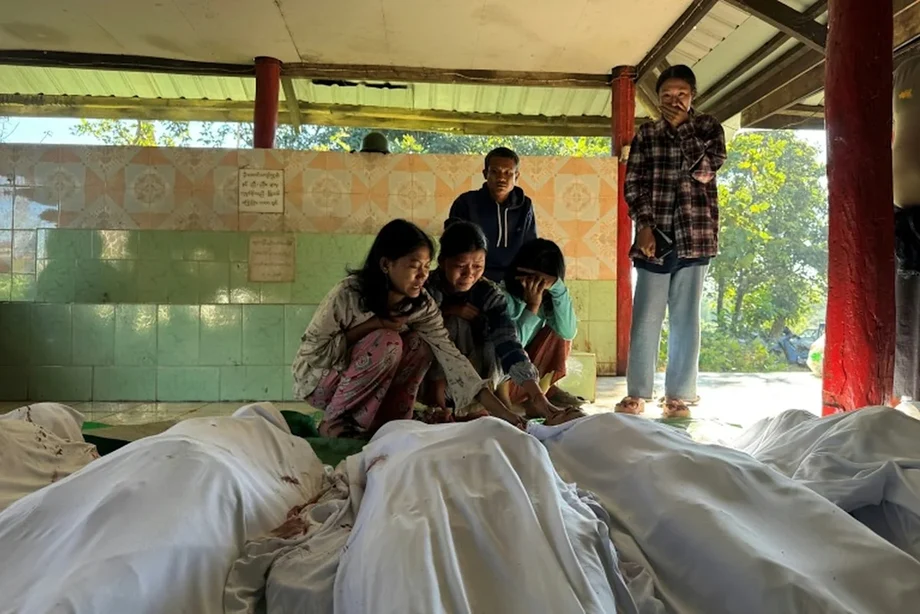
Bodies were still arriving at the cemetery in Mrauk-U on Sunday, the morning after military aircraft bombed the town twice. A photographer counted 28 dead laid out there, and a 29th had been carried to the home village of the person who died, according to Hla Maung Oo, who heads a funeral organization in the town in Myanmar's western Rakhine State.
Contents
- The Counting at a Mrauk-U Cemetery
- Three Days, Four Strikes: How the Attacks Unfolded
- Two Waves of Bombs, Four Hours Apart
- A Wedding Gathering Near the Shan Border
- Thursday: A School, a Monastery and a Religious Ceremony
- The Government Says It Struck Fighters
- Why the Counts Do Not Agree
- A Genocide Ruling, Then More Airstrikes
- The Air War in Numbers
- Key Points
The strikes on Saturday, November 28, hit a market area in the afternoon and the same neighborhood again after dark. They belonged to a wave of attacks across three parts of the country in three days: a wedding gathering near the border of Shan and Karenni states in the east, two residential wards of Mrauk-U in the west, and a school compound in the central Magway region two days earlier.
Opposition groups and a rescue official at the scene put the combined toll across those three days at more than 70 dead and more than 70 wounded, children among them. Residents and an aid worker counted 49 killed and more than 90 wounded in Saturday's attacks alone. Witnesses in Mrauk-U spoke of about 50 dead over the weekend as bodies were pulled from the rubble.
Myanmar has been at war since the army seized power from Aung San Suu Kyi's elected government on February 1, 2021. The conflict has killed more than 100,000 people, according to estimates by the conflict monitor ACLED, and displaced more than 3.5 million. Mrauk-U itself has been held by the Arakan Army, an ethnic armed group, since February 2024.
Three Days, Four Strikes: How the Attacks Unfolded
The deadliest stretch of the war so far this month moved across the country's center, east and west within 72 hours, and the targets were places where civilians gather: a religious ceremony, a wedding, a market and two residential wards.
- November 26, Thursday afternoon: a fighter jet, artillery and drones hit a compound holding a school and a Buddhist monastery in In Yone village, Sinbaungwe township, Magway region, during a religious ceremony.
- November 28, Saturday around midday: airstrikes, drones and artillery hit a settlement on the Shan and Karenni border as residents and displaced people prepared for a wedding.
- November 28, about 4pm: two bombs of about 500 pounds each are dropped on a market area in Mrauk-U, Rakhine State.
- November 28, about 7.50pm: two more bombs hit the same neighborhood, where rescuers were still working.
- November 29, Sunday: 28 bodies are counted at the Mrauk-U cemetery, and state television defends the Magway strike.
- One week earlier: the International Court of Justice rules that Myanmar committed genocide against the Rohingya during the 2017 military operations in northern Rakhine.
Two Waves of Bombs, Four Hours Apart
A spokesperson for the Arakan Army said a fighter jet dropped two bombs of about 500 pounds each on Mrauk-U at around 4pm, then two more at about 7.50pm local time. The town's streets filled with rescue workers between the two waves, which is why the second strike caught people in the open.
Hla Maung Oo said the afternoon bomb killed 10 civilians at a market and the evening bomb on the same area killed 19 more. He accused the military of targeting civilians deliberately. A local aid worker put Saturday's total in the town at about 28 civilians killed, including children and elderly residents, and about 30 wounded. Wai Hun Aung, a senior rescue official who went to the scene, counted at least 24 dead and more than two dozen wounded, and warned that the figure would grow.
Some of the bodies can no longer be counted. They have been torn to pieces. All of them were civilians.
Video from the town showed wood and brick buildings leveled, charred debris across the streets and residents standing at the lip of a bomb crater. Under a covered pavilion, sobbing relatives grieved over bodies laid on a tiled floor, some bloodied and most covered with white sheets or green tarpaulins.
Kyawt Aye Sein, 25, lost her husband in one of the strikes. A family of six nearby was killed when a bomb fell on their house, she said.
The bomb landed directly on that house. When it hit, everything caught fire.
She grabbed her son and ran when the bombs began to fall.
We spent the whole night running toward the outskirts of the ward.
She and her son slept in an open field with many others, and, she said, "everyone from our ward was there". A military strike on the town's hospital in December killed more than 30 people.
A Wedding Gathering Near the Shan Border
Residents of the settlement known as Moe Bye, on the borders of Shan and Karenni states, and displaced people sheltering there were preparing for a wedding when the attack came at midday on Saturday. It combined airstrikes, drones and artillery, according to local residents. Other accounts give the location as Le Kyi Lone village in Pekhon township in Shan State, near displacement camps and a school.
Residents said 21 people were killed, among them children in kindergarten and the first grade, and more than 60 were wounded. Banya Khung Aung, secretary 2 of the Interim Executive Council of Karenni State, put the dead at 21 civilians, children included, and the wounded at 30. The council, also known as Kayah, is an interim governing body set up by resistance groups in the region.
Whether viewed from the air or from the ground, it is very clear that this location is a displacement camp. But deliberately bombing it repeatedly constitutes a war crime.
The council condemned the attack in a statement as a war crime and asked the United Nations and the international community to take firm action over it.
Thursday: A School, a Monastery and a Religious Ceremony
Two days before the weekend strikes, on the afternoon of November 26, a fighter jet, artillery and drones hit a compound containing a school and a Buddhist monastery in In Yone village in Magway's Sinbaungwe township. A religious ceremony was under way. Teachers and children were among those in the compound.
A statement from the National Unity Government, the exiled administration that coordinates opposition to military rule, said about 20 civilians were killed along with nine fighters of the People's Defence Force, the armed wing it set up, and that 21 other people were wounded. Local accounts said at least 30 people were killed at the school compound, children among them.
Nay Phone Latt, a spokesperson for the National Unity Government, said the group was pursuing those who ordered the strike.
We are trying to hold those responsible for the airstrikes accountable.
The People's Defence Force was formed after the 2021 coup, when peaceful protests against military rule were met with lethal force and many opponents of the army took up arms. Large parts of the country are now contested between the military and a patchwork of ethnic armies and pro-democracy militias.
The Government Says It Struck Fighters
State broadcaster MRTV acknowledged the Magway strike on Sunday evening, in a report that described the target as a gathering of the People's Defence Force for a ceremony marking the completion of military training. The report said several fighters were killed, that the raid followed systematic aerial reconnaissance, and that there were no civilian casualties.
The military-backed government took office in April after elections held earlier this year, and it has stepped up ground and air attacks in recent months to take back areas held by opposition forces. It made no immediate comment on the weekend strikes, and the army could not be reached for comment on them.
Myanmar's military is the only armed force in the country with fighter jets. Resistance groups have no effective way to defend themselves against bombs dropped from the air, which is why the air campaign has become the most lethal part of the war for civilians.
On accusations of abuses, the military has often called pro-democracy forces terrorists and said it strikes only legitimate military targets.
Why the Counts Do Not Agree
Every figure in this story comes from someone counting under pressure: funeral workers at a cemetery, rescue crews who reached a bombed ward before the second wave of bombs fell, an interim administration with its own records. No outside body has verified the numbers, and rescue workers say some victims were blown apart and could not be counted whole.
At the wedding gathering, the head of a local humanitarian aid group gave 21 dead, while another witness put the toll at 17. In Mrauk-U, Hla Maung Oo counted 29 across the two strikes, Wai Hun Aung at least 24, and an aid worker about 28. The totals for the three days range from about 50, the figure witnesses in Mrauk-U gave for the weekend, to more than 70 counted across Thursday and Saturday by opposition groups and the rescue official.
Wounded people who die later, families who bury their dead in their home villages, and wards too dangerous to search all push the real number above any tally made in the first 24 hours. Wai Hun Aung said as much at the scene, and the figures reported on Sunday were already higher than those given on Saturday night.
A Genocide Ruling, Then More Airstrikes
The bombs fell about a week after the International Court of Justice, the United Nations' highest court, ruled that Myanmar committed genocide against the Rohingya, the mainly Muslim minority, during the military's 2017 operations in northern Rakhine State. The court decides disputes between states; its ruling places the conduct of the army in Rakhine before the world's most senior judicial body.
The ruling did not stop the air campaign. Within days, aircraft were over Mrauk-U, a town in the same state where the 2017 operations took place, and over Kayah and Shan in the east and Magway in the center. Communities that had waited years for a court to name the violence now watched bombs fall on markets, schools and a wedding.
The Air War in Numbers
A record kept by the National Unity Government counts 15,327 airstrikes in 6,653 separate incidents between February 1, 2021, and the end of October 2026. The same tally records 6,467 civilians killed, 562 schools damaged and 848 religious buildings damaged.
Set against that, the roughly 70 deaths reported over three days amount to about 1 percent of the civilians the opposition administration counts as killed from the air since the coup, a share reached in a single week. The total toll of the war, more than 100,000 dead by ACLED's estimate, is now matched by a displacement crisis of more than 3.5 million people.
What is not yet known is whether any body will investigate the strikes, whether the military will answer questions about them, and whether the International Court of Justice ruling will be followed by proceedings against individuals. The figures reported on Sunday will rise as hospitals count their dead and families return to villages to bury them.
Key Points
- Military airstrikes over three days in Myanmar killed more than 70 people and wounded more than 70, according to opposition groups and a rescue official.
- Residents and an aid worker counted 49 killed and more than 90 wounded in Saturday's strikes in Mrauk-U, Rakhine State, and in Moe Bye on the Shan and Karenni border.
- Two waves of bombs, at about 4pm and 7.50pm, hit the same Mrauk-U neighborhood; 28 bodies were counted at the town cemetery on Sunday.
- The wedding strike killed 21 people, including kindergarten and first grade pupils, and wounded more than 60, residents said.
- A Thursday strike on a school and monastery compound in Magway killed about 20 civilians and nine resistance fighters, the National Unity Government said.
- State broadcaster MRTV said the Magway target was a People's Defence Force training ceremony and that no civilians died.
- The strikes came a week after the International Court of Justice ruled Myanmar committed genocide against the Rohingya in 2017.
- The National Unity Government records 15,327 airstrikes and 6,467 civilians killed from the air since the February 2021 coup.