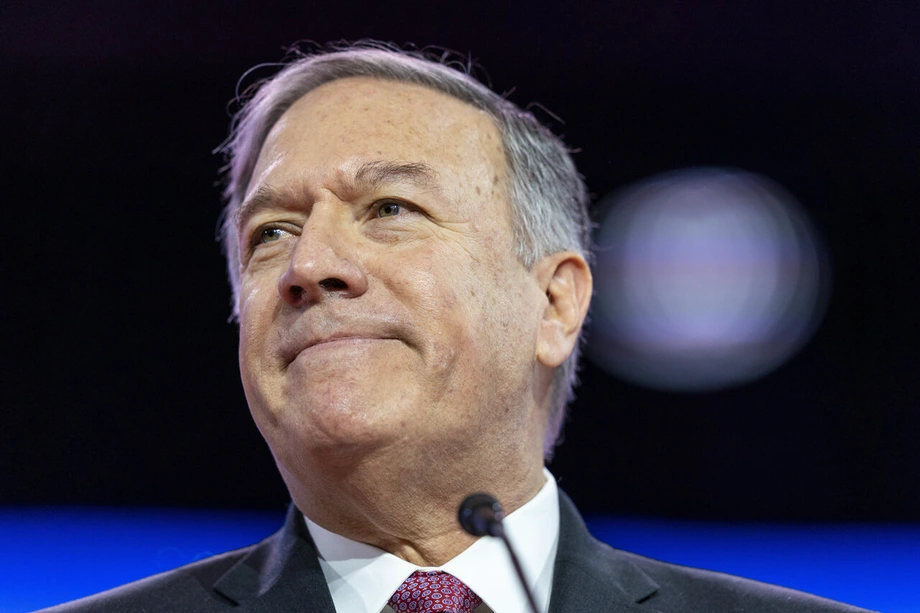
Pompeo Pushes for Formal Recognition and Arms Deals
Former US Secretary of State Mike Pompeo has issued a direct call for President Donald Trump to formally recognize Taiwan as an independent nation and approve billions of dollars in previously authorized military sales to the island. Speaking during an interview on the "The General and the Journalist" podcast on the UK's Times Radio, Pompeo emphasized that the United States must strengthen its deterrence against Beijing while avoiding direct military conflict. His remarks come shortly after Trump met with Chinese President Xi Jinping in Shenzhen, raising questions about whether Washington might soften its stance on Taiwan to preserve diplomatic ease with China.
Contents
Pompeo, who served as Secretary of State from April 2018 to January 2021 during Trump's first term, highlighted that Taiwan's self-defense capabilities have improved significantly over the past decade. However, he noted that gaps remain in the island's military readiness. He argued that President Xi Jinping is well aware of the difficulties involved in launching an invasion of Taiwan. Consequently, Pompeo urged the United States and its regional allies to bolster their deterrent capabilities. "Taiwan is an independent country and we should recognize this," Pompeo stated. He added with characteristic bluntness that when China gets angry about this recognition, the US should simply tell them to see a therapist if they feel hurt.
He expressed concern that current US policy toward Taiwan might be influenced by the recent diplomatic engagements between Trump and Xi. When asked if he worried that these interactions could affect the administration's approach to Taiwan, Pompeo replied with a clear "yes, I am worried." He also voiced regret over the erosion of freedom in Hong Kong, signaling a broader strategic shift toward treating the Chinese Communist Party as a primary adversary in need of firm containment.
Trump Xi Meeting in Shenzhen was a focal point of recent diplomatic activity, setting the stage for Pompeo's timely intervention.
Billions in Arms Sales Await Presidential Action
A central pillar of Pompeo's message is the urgent need for President Trump to finalize arms deals that have already been approved by the US government. "There are billions of dollars worth of arms sales that have been approved, and now they need the president to sign them off. I hope he does," Pompeo said on the podcast. These pending deals represent a significant investment in Taiwan's defense infrastructure, covering advanced weaponry and technology designed to counter the growing threat from mainland China.
The approval process for these arms sales typically involves the US Department of Defense and the State Department, but final authorization rests with the President. Pompeo's public appeal underscores the political weight of these decisions. By urging Trump to act, the former Secretary of State is advocating for a more robust security commitment to Taiwan, ensuring that the island has the necessary tools to defend itself against potential Chinese aggression.
Pompeo also drew parallels between Beijing's diplomatic objections and those used by Russian President Vladimir Putin to justify the invasion of Ukraine. He suggested that Russia often cited NATO expansion as a pretext for its actions, a narrative he believes China uses similarly to rationalize its claims over Taiwan. By comparing the two situations, Pompeo highlighted the importance of not letting diplomatic pressure from Beijing undermine the sovereignty of neighboring democracies.
His comments reflect a strategic perspective that views Taiwan not just as a local issue, but as a critical component of the US Indo-Pacific security architecture. The former Secretary of State believes that the US must prepare for potential confrontation with the Chinese Communist Party while simultaneously making every effort to avoid a full-scale military conflict.
Arms Sales Approval is a key administrative step that can significantly impact regional stability.
Personal Stance and Future Political Ambitions
Pompeo's arguments are grounded in his personal experience and ongoing engagement with Taiwan. Since leaving office, he has visited the island multiple times, reinforcing his connection to the region. He pointed out that despite being sanctioned by Beijing, he remains free to travel to Taiwan, a fact he uses to illustrate Taiwan's distinct political and diplomatic status separate from mainland China. This personal freedom, he argues, is a testament to the island's independence.
The former Secretary of State also hinted at his future political aspirations. Reports indicate that he has not ruled out a bid for the US presidency in 2028. His current advocacy for Taiwan serves as a clear statement of his foreign policy priorities and could shape his platform as he considers another run for the highest office. By positioning himself as a hawk on China and a defender of Taiwan, Pompeo is aligning his political brand with a tough but pragmatic approach to global affairs.
He expressed hope that the United States will "do the right thing" regarding Taiwan, implying that the current path might require adjustments to fully reflect the reality of Taiwan's status. His warnings about the potential impact of the Trump-Xi meetings on US policy suggest that he views the relationship as delicate and prone to compromise if not carefully managed.
Pompeo's Taiwan Visits highlight his active role in post-presidency diplomacy.
Strategic Implications for the Indo-Pacific
The broader implications of Pompeo's statements extend beyond bilateral relations. By calling for formal recognition of Taiwan and the release of arms sales, he is advocating for a more assertive US policy in the Indo-Pacific. This shift could influence how regional allies, such as Japan, South Korea, and Australia, view US security guarantees. A stronger US commitment to Taiwan could serve as a deterrent to Chinese expansionism, encouraging allies to deepen their own defense collaborations.
Pompeo's comparison of Beijing's reactions to Putin's justifications for invading Ukraine is particularly salient. It suggests that the US should not be swayed by diplomatic niceties or economic considerations but should remain steadfast in supporting democratic nations against authoritarian pressure. This perspective aligns with a growing consensus among US policymakers who view China as a systemic rival.
The timing of his comments is significant, coming as the world monitors the evolving dynamics between Washington and Beijing. With the US economy facing various challenges and global security threats on the rise, a clear and consistent policy toward Taiwan is seen as essential for long-term stability.
US Indo-Pacific Strategy is being tested by recent diplomatic moves and military posturing.
Timeline of Key Developments
April 2018: Pompeo begins tenure as US Secretary of State.
January 2021: Pompeo's term ends; Taiwan remains a key focus of his post-presidency.
2026 (November): Pompeo meets Trump and Xi in Shenzhen; issues podcast remarks.
2026 (Late November): Reports highlight pending arms sales awaiting presidential approval.
2028: Potential deadline for US presidential election, with Pompeo as a possible candidate.
Pending Arms Sales are critical for Taiwan's immediate defense needs.
What Remains to Be Seen
While Pompeo has laid out his vision clearly, several questions remain regarding how President Trump will respond. It is not yet known whether the President will sign off on the arms deals promptly or if he will prioritize diplomatic relations with China. The exact details of the arms packages, including the types of weaponry and the total financial value, are expected to be released by the US Department of Defense in the coming weeks. Furthermore, the long-term impact of any formal recognition of Taiwan by the US on global trade and security remains to be determined.
Taiwan Recognition Status is a key factor in regional geopolitics.
The Bottom Line
Former US Secretary of State Mike Pompeo urges President Trump to recognize Taiwan as an independent state.
Pompeo calls for the approval of billions of dollars in pending arms sales to Taiwan.
He compares Beijing's objections to Russian justifications for invading Ukraine.
Pompeo expresses concern that recent Trump-Xi meetings may weaken US policy toward Taiwan.
The former Secretary of State hints at a potential 2028 presidential bid.
Regional allies are watching closely for shifts in US security commitments.