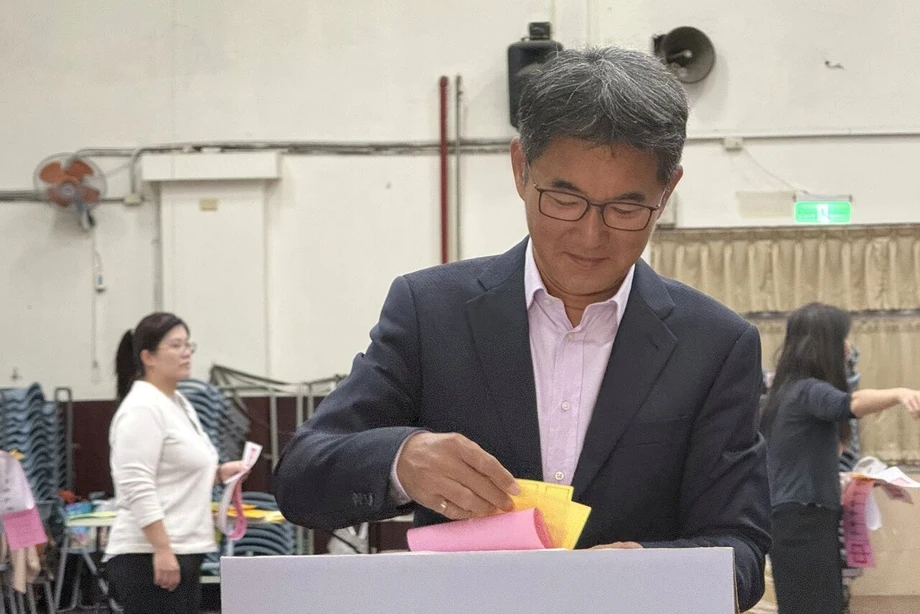
Yunlin Changes Hands by 173 Votes
The Central Election Commission announced at 11:19 p.m. on Nov. 28 that Liu Chien-kuo, 57, the Democratic Progressive Party candidate for Yunlin County magistrate, had won the election by 173 votes. The commission's final figures gave Liu 178,357 votes, or 49.21 percent, and Chang Chia-chun of the Kuomintang 178,184 votes, or 49.16 percent. Supporters at Liu's campaign headquarters set off fireworks and cheered that he was their county commissioner. The commission announcement at 11:19 p.m. was followed by final confirmation at 11:21 p.m., while the checked result is also listed at 11:25 p.m.
Contents
- Yunlin Changes Hands by 173 Votes
- How the Count Swung From Ahead to Behind
- The Report Form That Delayed the Result
- Liu's First Day Promise
- Chang Chia-chun Seeks a Recount
- A Test for the Chang Family
- Mountain Line Gains Offset Coastal Line Losses
- How President Lai Helped Turn the Race
- Yunlin in the National Map and the Recount Wave
- Chang Li-shan Says She Let Supporters Down
- What Comes Next for Yunlin
- Key Points
The margin was tiny. The two main candidates together received 356,541 votes, and with about 362,473 valid votes, the gap was about 0.05 percent of valid votes. A recount becomes possible under Article 69 of the Civil Servants Election and Recall Act when the gap is within 0.3 percent of valid votes. At that valid vote total, 0.3 percent would be about 1,087 votes. Yunlin's gap was far smaller.
The result ended eight years of Kuomintang control of the county government and stopped Chang Chia-chun from following her aunt, outgoing Magistrate Chang Li-shan, into the magistrate's office. It also gave the Democratic Progressive Party a county it had failed to win in 2022, when Chang Li-shan beat Liu by more than 54,000 votes. In a place where local elections are often decided by family networks and township organizations, a win by 173 votes is a political earthquake.
The race had four candidates. Liu was candidate number 3, Chang number 2, lawyer Wu Ping-hui number 1 and dentist Lin Chia-yu number 4. Wu had run for Tainan mayor in 2022 and for legislative seats in Tainan and Yunlin. Lin had run for Yunlin magistrate in 2005, 2018 and 2022. The main contest, however, became a contest over the Chang family's hold on Yunlin politics.
How the Count Swung From Ahead to Behind
The counting began at 4 p.m. and lasted more than seven hours. Chang's campaign saw a large swing in a few minutes. At about 8:25 p.m., its tally system showed her ahead by 863 votes, and screens at her campaign event displayed the words for victory and elected. Another count put her early lead at 354 votes around 8:30 p.m. Within five minutes, Liu's own tally put him ahead by 93 votes.
Later that evening, ten polling stations had still not been added to the official count. At 9:50 p.m., Liu's campaign said he led by 117 votes. At 10:18 p.m., commission figures had Chang at 176,975 votes and Liu at 176,965 votes, a lead of just 10 votes for Chang, with three stations still counting. The final count reversed that lead again.
- 6:30 p.m.: Chang had led by about 6,000 votes before Liu moved ahead by nearly 100 votes.
- 8:25 p.m. to 8:30 p.m.: Chang's tally showed leads of 863 votes and 354 votes in different counts, then Liu's tally showed a lead of 93 votes.
- 9:50 p.m.: ten polling stations were still outstanding, and Liu's campaign reported a lead of 117 votes.
- 10:18 p.m.: Chang led by 10 votes with three stations outstanding.
- 11:19 p.m.: the commission announced Liu's final lead of 173 votes.
The sequence explains why neither campaign wanted to declare a winner too early. Chang did appear at her campaign headquarters in Huwei with her aunt, saying internal statistics showed she was ahead, but the final result depended on commission figures. Liu waited until the commission finished counting.
The Report Form That Delayed the Result
The long wait was not only about a close race. The Yunlin County Election Commission said polling station 494 at Yunlin Elementary School reported its results incorrectly. Mountain and plain councilor votes were both added into the county councilor vote total, so the number of voters and the number of councilor votes did not match during checking.
Staff from the township office went back to the polling station, brought the ballots and report forms back for handling, and confirmed the report form was the problem. A suspected copying mistake in reported vote numbers also circulated during the count, while the county commission's own explanation focused on the mismatched form. Another key step involved recounting two ballot boxes in a large neighborhood of Douliu. The same checking process also changed the Douliu City mayor race. Yin Ling-ying of the Democratic Progressive Party had been ahead by 25 votes, but Huang Yu-mei of the Kuomintang ended up winning by 27 votes.
For voters, the confusion meant that early celebration in one camp could turn into silence within minutes. For the county, the episode showed how a single form at one polling station can affect public confidence when the margin is only a few hundred votes. The commission's final numbers, not campaign totals, became the reference point for every later step.
Liu's First Day Promise
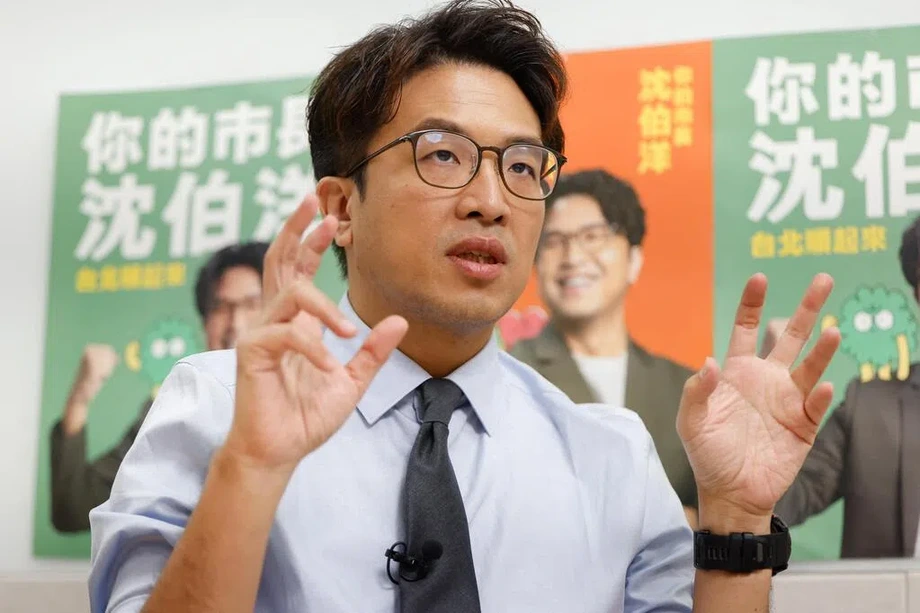
Liu Chien-kuo, the Democratic Progressive Party winner, spoke after the count finished. He thanked young voters who returned home to cast ballots and said their participation showed a wish to change Yunlin. He said he would enter the county government with a clean record and no political baggage, meet regularly with department heads and listen to residents.
We won Yunlin back. We will start work immediately.
Liu said Yunlin had fallen behind Chiayi County in industry, jobs and social welfare. He promised to begin work on his first day in office, develop new industries with help from the central government, care for older residents and children, and create jobs so young people could return to Yunlin and live with their parents. He also described a county government where people could find officials, see them and get help when they asked.
His campaign proposals gave that promise a practical shape. They included an artificial intelligence and drone startup park, a center to train artificial intelligence talent, a medical care industrial park and a cultural technology cluster. A startup park is a place where new companies can get space, services and links to partners. His welfare pledges included free health insurance for residents aged 65 and older, along with more support for education, health care and care for older people over a long period.
Liu also referred to a complaint filed with local prosecutors one or two days before voting over alleged vote buying. He called it a serious insult to his political character and said he and his team had run a clean campaign. He pointed to the party's local results, saying more than 90 percent of county council nominees won, about 60 to 70 percent of township head nominees won, and the party fielded a record number of representative and village head candidates.
Chang Chia-chun Seeks a Recount
Chang Chia-chun appeared at her campaign headquarters with her aunt, County Magistrate Chang Li-shan. She said the commission's figures did not match her camp's internal count and pointed to a large number of invalid ballots. An invalid ballot is a ballot that cannot be counted, for example because it is blank or marked in a way that does not meet the rules. The commission reported more than 8,000 invalid ballots, a figure Chang cited.
Chang, tears in her eyes, told supporters she would ask for a recount under the election law. She said she would apply to the Yunlin District Court within three days. The law allows a candidate whose margin is within 0.3 percent of valid votes to ask a court to seal ballot boxes and recount them. The rules give seven days after voting to request sealing, 20 days to complete the recount and seven more days for election commissions to review the result.
The vote count for the magistrate race was very close, but our internal count shows we are winning.
Chang also said that if the commission confirmed the same numbers her camp had calculated, she would serve residents with greater humility and stronger action. Earlier in the night, she had said her camp believed it had won while still waiting for official confirmation. A court recount had not been completed when the final figures were announced, and no hearing date was given beyond the legal deadlines.
A Test for the Chang Family
The contest carried a family name into the county's history books. Chang Li-shan was serving her second term as magistrate and had served eight years in office. Her niece Chang Chia-chun sought to become the third member of the Chang family to hold the magistrate's office. Chang Chia-chun is also the daughter of former Magistrate Chang Jung-wei, who served from 1999 to 2005.
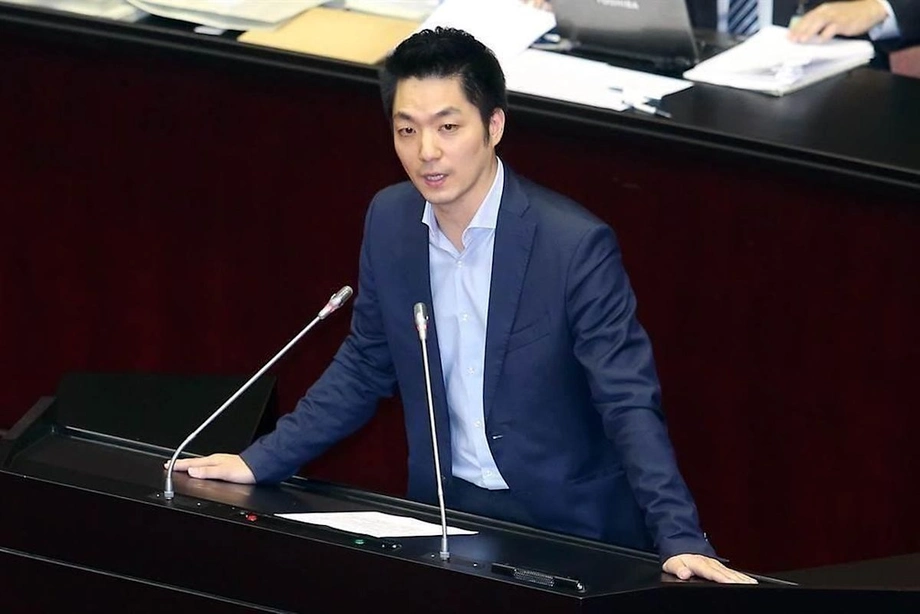
Chang Chia-chun had her own record. She served two terms in the Legislature from 2008 to 2016 and returned in 2024 as a legislator elected from the national constituency. Her campaign promised to continue her aunt's policies, expand industrial parks for semiconductors, drones and electric vehicles, improve welfare and create chances for young people. The Chang family has longstanding links with local agricultural and fisheries groups, which gave its political network deep roots.
Liu made that network his main target. He said Yunlin should be governed for residents instead of by one political family. He had represented Yunlin in the Legislature since 2009, after serving as a county councilor and a representative in Douliu City. His 2022 run for magistrate ended in a defeat of more than 54,000 votes against Chang Li-shan. On Nov. 28, the same candidate won by 173 votes.
Mountain Line Gains Offset Coastal Line Losses
Local politics in Yunlin often talks about a mountain line and a coastal line. These are not formal government units. They are groupings of townships that voters and campaigns use to describe where support is strongest. In this election, the two sides nearly cancelled each other out.
Liu led in nine mountain line areas: Douliu, Citong, Linnei, Xiluo, Erlun, Lunbei, Dapi, Gukeng and Dounan. His largest gain in that grouping was more than 4,400 votes in Douliu, his home base. Chang nevertheless won more than 3,000 votes in Xiluo and more than 2,200 in Citong, showing that the mountain line was not uniform.
Chang led in nine coastal line areas, including Huwei, Tuku and Mailiao. Her margin in Huwei was more than 4,100 votes, and her margin in Mailiao was more than 4,800 votes. Liu did better in Shuilin and Beigang. All 638 polling stations were counted, yet neither candidate could build a cushion large enough to avoid a late legal dispute.
How President Lai Helped Turn the Race
President Lai Ching-te, who also leads the Democratic Progressive Party, became an unusually visible part of the Yunlin campaign. He visited Yunlin at least eight times from August onward, including five trips in November. Yunlin was the only county or city where he personally served as campaign headquarters chair.
His schedule moved from small temple stops to large rallies. On Nov. 12, he visited five coastal townships and five temples in one afternoon. On Nov. 14, he stood in the rain in Mailiao wearing a raincoat. On Nov. 19, he visited temples in four townships, and on Nov. 21 he attended a large rally in Douliu. Central government officials also came to Yunlin to support Liu.
Lai's message was about more than one office. He described Yunlin as a historic place of democracy, recalling earlier activists such as Su Tung-chi, and argued that local political resources should not remain in the hands of one family. Former Magistrate Su Chih-fen was credited with helping unite Democratic Progressive Party supporters across the mountain and coastal areas, a shift described as mountain and sea integration.
The campaign also made a tactical choice in Chang's strongholds. In Huwei and Tuku, the party did not nominate candidates in some local races, a move intended to reduce the number of local contests that could bring Kuomintang voters to the polls. The result suggested that Chang Li-shan's record in office did not automatically transfer to her niece. Voters could respect the outgoing magistrate and still reject family succession.
Yunlin in the National Map and the Recount Wave
The Yunlin result was part of a tight nationwide set of local elections held with a national referendum on Nov. 28. When counting finished early on Nov. 29, the Kuomintang held 11 county and city governments, the Democratic Progressive Party held 10 and an independent held one. The Democratic Progressive Party won Taichung, Hsinchu County, Changhua, Yunlin, Chiayi City and Yilan from the Kuomintang. The Kuomintang held Taipei, New Taipei and Taoyuan and won back Kinmen and Penghu.
At 12:15 a.m., commission chair Yu Ying-lung explained the overall count at a news conference. All eight incumbent county and city leaders who sought reelection won. Women held 10 county and city leadership posts, the same number as in 2022. Voters also approved Referendum Case 22 on ending the non nuclear homeland policy. The central government said it respected the result and would handle nuclear power under three conditions: nuclear safety, solutions for nuclear waste and social consensus.
Yunlin was not the only close race. In Hualien, Kuomintang candidate Yu Shu-chen had 63,013 votes at 11 p.m., ahead of independent Chang Chun by 357 votes, with 2,568 invalid ballots. Chang Chun said the margin was within the recount threshold and said he would ask a court to preserve ballots. A margin of 173 votes in Yunlin was even narrower than Hualien's 357. Both counties moved toward recount procedures after a night in which small numbers decided who led.
The national picture gave Liu's win extra weight. Democratic Progressive Party gains from Taichung and Changhua down to Chiayi, Tainan, Kaohsiung and Pingtung gave the party a continuous stretch of local governments across much of western and southern Taiwan. Yunlin sat at the center of that chain, and its transfer broke a Kuomintang line that had included the county for eight years.
Chang Li-shan Says She Let Supporters Down
Chang Li-shan, the outgoing Yunlin County magistrate and Chang Chia-chun's aunt, posted on Facebook in the early hours of Nov. 29. She thanked people who had supported and accompanied the campaign. Her message accepted the surprise result and said there was much to review.
The election result was surprising. There is much to review and not enough effort. Thank you to the friends who supported and accompanied us. We let everyone down... I am really sorry... With gratitude and prayer.
The note closed a chapter for a political family that had held the magistrate's office through Chang Jung-wei and then Chang Li-shan. Chang Chia-chun's defeat ended the bid for a third Chang magistracy. For Liu, the narrow win gave him the county government but also a task made harder by a nearly even electorate and a recount request.
What Comes Next for Yunlin
Liu said he would move immediately on industry and welfare, working with the central government and meeting department heads regularly. The first practical test will be turning campaign proposals into budgets, staff work and services that residents can see. The promises include job growth, support for young families, health insurance help for people aged 65 and older, and new industrial projects.
Chang's recount request creates a parallel process. She said she would apply within three days, and the law sets a window of seven days after voting for a court application to seal ballots. If a court orders recounting, the work must be completed within 20 days, and election commissions then have seven days to review the result. The result could be affirmed or changed if counting errors are found.
Yunlin's political balance will shape the next stage. Liu won despite the Chang family's organization, President Lai's heavy involvement and a late challenge over ballots. Chang's camp will decide how to rebuild after a loss by 173 votes. The next legislative contest will also draw attention to how both sides regroup.
For residents, the exchange of power means a new county administration with promises on jobs, welfare and industry, starting from a result so close that every ballot mattered. The next test is whether the new team can turn a narrow win into steady service across both the mountain and coastal areas.
Key Points
- The commission announced Liu Chien-kuo's win by 173 votes over Chang Chia-chun.
- Liu received 178,357 votes and 49.21 percent; Chang received 178,184 votes and 49.16 percent.
- Chang said she would seek a recount, citing a difference from her internal count and more than 8,000 invalid ballots.
- The result ended eight years of Kuomintang rule and blocked the Chang family's bid for a third magistrate.
- Liu promised immediate work on industry, jobs and welfare, including artificial intelligence and drone projects.
- A reporting form problem and late station counts made the result swing several times before the final announcement.