A Narrow Win Rewrites Taichung's Political Map
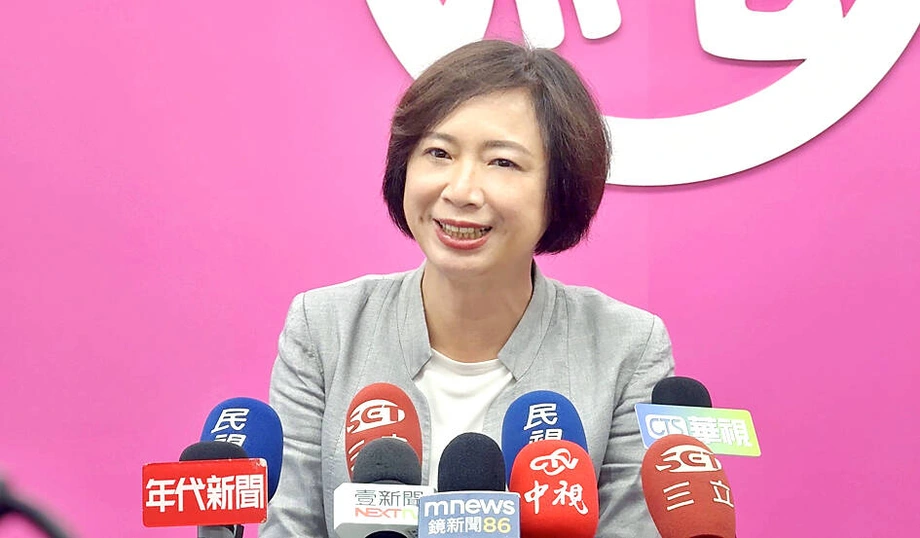
Democratic Progressive Party legislator Ho Hsin-chun (何欣純) won Taichung's mayoral race on Saturday by 35,079 votes, putting the city on course to return to DPP control after eight years under the Kuomintang. Central Election Commission figures showed Ho with 776,310 votes, or 50.68 percent of valid votes, against 741,231 votes, or 48.39 percent, for KMT candidate Johnny Chiang (江啟臣), the incumbent Legislative Yuan deputy speaker. Hung Li-hua (洪麗華) of the Law Justice Party received 14,113 votes, or 0.92 percent.
Contents
- A Narrow Win Rewrites Taichung's Political Map
- How the Vote Map Changed
- Sixteen Years of Political Swings
- Who Ho Hsin-chun Is
- Chiang's Attempt to Carry Lu's Legacy
- Buses, Metro and the Politics of Daily Life
- AI, Robotics and Major Projects Ahead
- How a Late Surge Took Shape
- What Taichung Meant in the National Vote
- What Changes for Taichung and Taiwan
- Key Points
The count was close throughout the night, with Ho's lead moving between a few thousand votes and about 20,000 as ballots were counted. Her final margin was 2.29 percentage points. Chiang conceded at about 8:30 p.m., and Ho declared victory at about 8:50 p.m. The result was not official until the CEC confirmed it, and no certification date was given. If the count stands, Ho, 52, will succeed outgoing KMT Mayor Lu Shiow-yen (盧秀燕) on Dec. 25. Lu is finishing a second consecutive term of four years and is barred by term limits from seeking a third.
Ho Hsin-chun, the DPP winner in the count, spoke to supporters at about 8:50 p.m. and described the result as a shared victory rather than a personal win.
Today's election result is not a personal victory for me, but a victory for all Taichung residents
Ho also thanked Lu for eight years of work and thanked Chiang for his role in the race. She said Taichung needed Chiang to work with her from the Legislative Yuan, and she pledged to develop the city into a major international city with the stature of a capital. Taichung is Taiwan's second most populous city, with about 2.87 million residents.
How the Vote Map Changed
Four years ago, the same city looked much harder for the DPP to win. Lu, then the KMT mayor, defeated DPP candidate Tsai Chi-chang (蔡其昌) by 274,883 votes, receiving 799,107 votes, or 59.35 percent, against Tsai's 524,224 votes, or 38.93 percent. Lu led in all 29 administrative districts. In the 65 seat Taichung City Council, the KMT won 32 seats and the DPP won 24, with neither party holding a majority.
This year's vote showed how local strongholds shifted. Ho took 57.8 percent in her home Dali District, an area she had represented in local and national office. Chiang topped 70 percent in Heping District, showing the strength of his support in another part of the city. The two results sat side by side in a city known for changing its political direction.
The city council also changed shape. The DPP won 29 of the 65 seats, while the KMT won 28. It was the first time the DPP had a larger caucus than the KMT in the Taichung council. The mayoralty and the council now both lean DPP, giving the incoming administration a stronger base for local legislation, though no single party has a council majority.
Sixteen Years of Political Swings
Taichung's political history since its upgrade helps explain why the result is being described as a turnover rather than a simple change of mayor. The city has changed party control twice before in the 16 years since the merger.
- 2010: Taichung City and Taichung County merged into a special municipality. KMT politician Jason Hu (胡志強), who had governed the former city, became the first mayor of the merged municipality.
- 2014: DPP candidate Lin Chia-lung (林佳龍) defeated Hu, producing the first party turnover.
- 2018: KMT candidate Lu Shiow-yen defeated Lin, producing the second turnover and beginning the KMT's latest period in city hall.
- 2022: Lu won reelection by 274,883 votes and led in all 29 districts.
- March 31, 2026: The KMT selected Johnny Chiang through an internal contest after Lu could not seek another term.
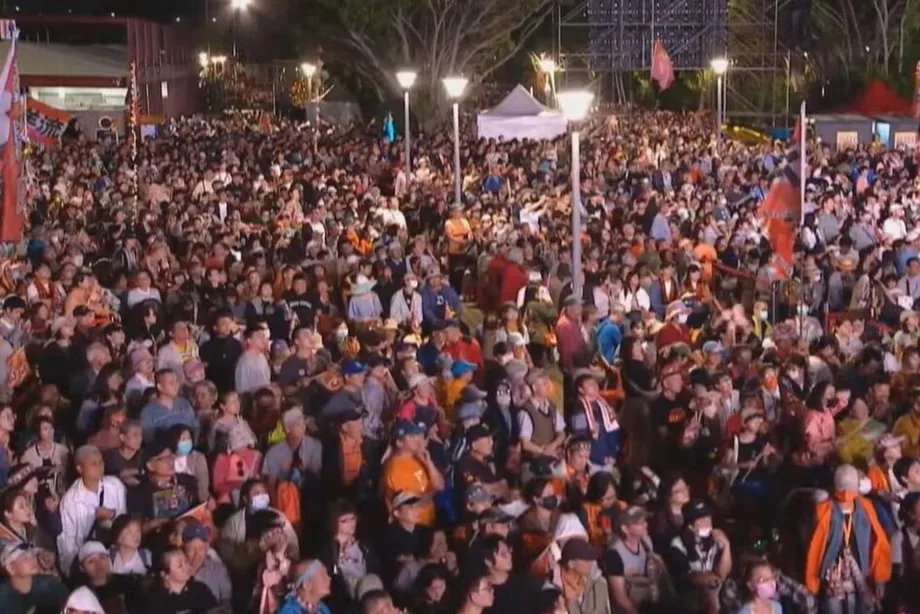
- Nov. 27, 2026: Ho held a rally on the eve of the election at Yuanman Outdoor Theater, with more than 20,000 supporters in attendance.
- Nov. 28, 2026: Ho led Chiang by 35,079 votes in the count, Chiang conceded, and Ho declared victory.
- Dec. 25, 2026: Ho is due to take office as mayor.
The sequence makes Saturday's result Taichung's third party turnover in 16 years. It also ends a period of KMT control that began when Lu defeated Lin in 2018 and continued through Lu's reelection in 2022.
Who Ho Hsin-chun Is
Ho was born in Taichung and built her career in the city's Dali District. She served two terms on the former Taichung County Council before winning a seat on the merged Taichung City Council in 2010. She entered the Legislative Yuan in 2012 after winning a by election and has since won four consecutive terms representing Taichung's seventh legislative district, which covers Taiping and Dali.
Ho holds a master's degree in women's studies from the University of York in the United Kingdom. Her work in politics has included gender equality issues, including proposals to amend the Gender Equality in Employment Act. Inside the DPP's legislative caucus, she served as director general and secretary general, roles that gave her experience in coordinating lawmakers and policy positions.
Ho sought the DPP's Taichung mayoral nomination in 2022 but was not selected, and she began this race with lower name recognition than Chiang. Her public style was cheerful, with a loud laugh and frequent smiles. That style stood in contrast to Chiang's more reserved manner, and it became part of her effort to reach voters beyond the DPP base.
Chiang's Attempt to Carry Lu's Legacy
Chiang, 54, is a native of Taichung's Fengyuan District. He studied diplomacy at National Chengchi University, earned a master's degree at the University of Pittsburgh and a doctorate at the University of South Carolina. He became head of the Government Information Office at 38 in 2010, was elected to the Legislative Yuan in 2012 and won a 2020 contest for the KMT chair. He lost the KMT's Taichung primary in 2018 to Lu by 0.6 percentage points, then won the party's nomination this year.
Lu campaigned with Chiang, hoping to pass her administration's record to a successor. Opinion polling in May put Chiang at 40.6 percent and Ho at 24.4 percent, a lead of 16.2 points. An October survey narrowed the gap to 37.3 percent against 31.3 percent. A November survey put Ho ahead, 41.1 percent to 30.4 percent. A poll is a snapshot of opinion before voting, while the CEC count is the official measure of the ballots cast.
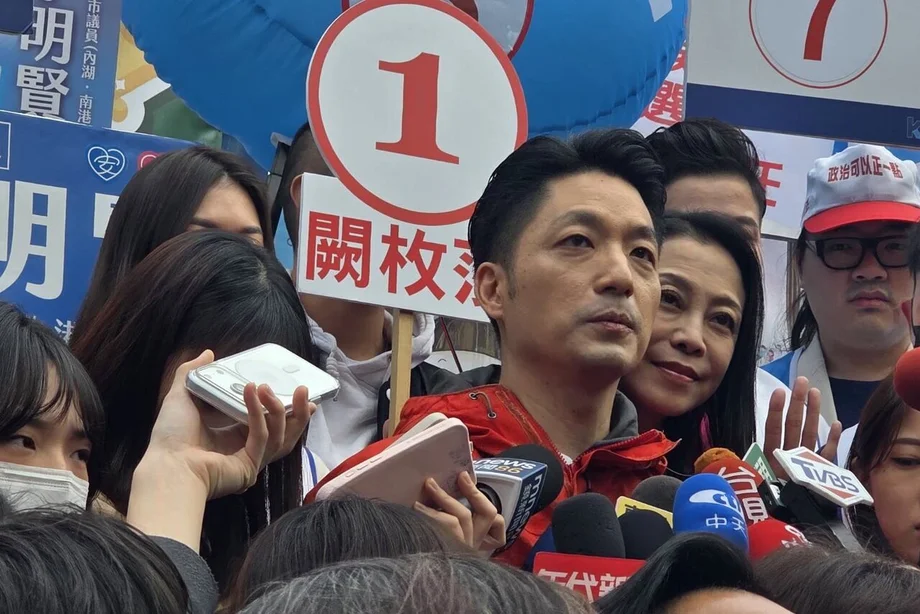
Chiang's campaign stressed continuity with Lu's administration, including major infrastructure and welfare programs. He also focused on the KMT base as Ho reached toward younger voters. On election night, Chiang appeared at his campaign headquarters with Lu and KMT legislators Wang Yu-min, Yang Chiung-ying, Lo Ting-wei, Huang Chien-hao, Liao Wei-hsiang and Yen Kuan-heng. He bowed several times and said the result fell short because his own efforts were insufficient.
Johnny Chiang, the KMT candidate and Legislative Yuan deputy speaker, wrote on Facebook that the election was temporary and that Taichung had to keep moving forward.
Elections are temporary, but this great city that we are so proud of must continue to move forward
Lu appeared at Chiang's headquarters at about 8:40 p.m., held his hand on stage and said she was sorry she could not hand over the mayoralty successfully. She thanked campaign workers and voters, then left without taking questions from reporters. Lu later congratulated Ho on winning.
Buses, Metro and the Politics of Daily Life
Ho built much of her campaign around everyday problems, especially traffic congestion and the bus network. She criticized the replacement of articulated buses, which could carry up to 141 passengers, with smaller electric buses that accommodate about 60 passengers. The change left some routes overcrowded, and she promised more bus capacity and reorganized routes. She also pledged to upgrade the city's official bus app, improve ticketing services and improve working conditions for drivers.
Ho pointed to poor road access at the Shuinan Transit Center, which opened in August, and said bus connections there were inadequate. She proposed faster metro construction, a youth affairs department to help with employment and entrepreneurship, and more childcare services, including care in the evening and on weekends. She also backed reform of the senior and elderly transit card, another issue that touches daily travel.
Chiang offered a different answer. He promised to continue Lu's welfare programs and major infrastructure projects, accelerate work on the Taichung Metro Blue and Orange lines, and introduce free bus rides for city residents. He also proposed a public safety network using AI, meaning computer systems that help identify patterns and support decisions. Voters were therefore choosing between a mayor focused on bus capacity, childcare and youth support, and one promising continuity, free rides and technology in public safety.
AI, Robotics and Major Projects Ahead
Chiang also sought to make Taichung a manufacturing hub for artificial intelligence, often shortened to AI, and robotics. His plan included a smart manufacturing park and training for workers moving into those industries. Robotics and AI in this context refer to machines and software that can perform tasks, analyze data or assist production. Taichung already has a concentration of machinery, precision manufacturing and technology industries.
The next mayor will also have to manage projects that need cooperation between city and national government. These include MRT construction, expansion of Taichung International Airport, drone and robotics industries, the venues known as the giant egg and super giant egg, and the growth of convention and concert business. These projects matter because they affect transport, jobs, tourism and how easily residents move around the city.
Ho said she would recruit talent broadly for the city administration. That pledge matters in a special municipality, one of Taiwan's six largest city administrative units, where the mayor manages a large budget and many services. The city's scale also gives national parties a reason to watch the result closely: a mayoralty here can shape party momentum in central Taiwan.
How a Late Surge Took Shape
On Nov. 27, Ho held the rally on the eve of the election at Yuanman Outdoor Theater. She took the stage at 8:44 p.m. and spoke for 27 minutes, wearing a white and ocean current orange jacket. Behind her were the DPP's 32 nominated city council candidates. More than 20,000 supporters chanting the slogan Ho Hsin-chun wins filled the venue.
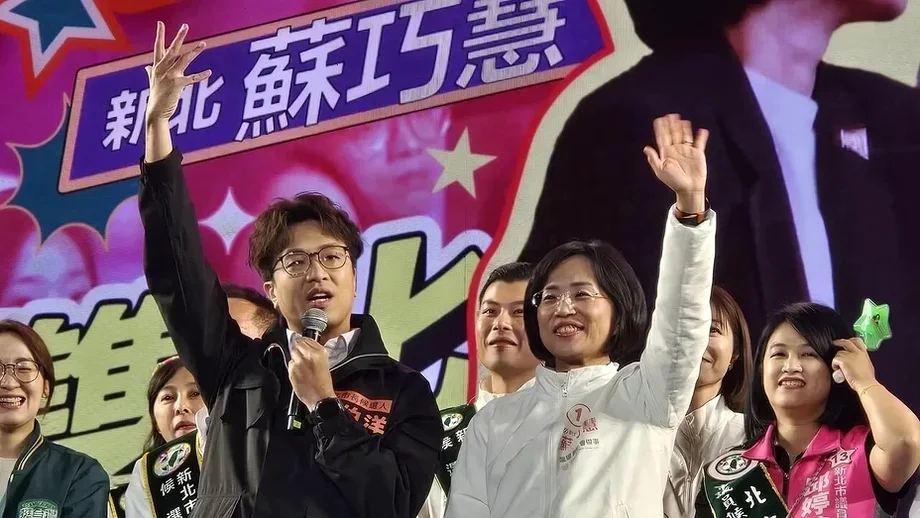
Ho became emotional as she thanked supporters she called 小水滴 and 小欣肝. She recalled a woman who had returned from Poland to vote and a supporter holding a birthday sign dated Nov. 27. She linked her Taichung race to the DPP campaign in Taipei, urging supporters to help Puma Shen, also known as Shen Po-yang, and saying the cheers helped her forget her fatigue.
The campaign had begun with Chiang ahead in name recognition and early polling. Ho's team used a more flexible style, including turning campaign headquarters into a night market style event that drew people in. Late in the race, issues about her husband's bribery conviction and sentence and her lack of support for amendments to the Senior Citizens Welfare Act were raised. Her campaign kept its focus on buses, youth, childcare and jobs, while Chiang stayed with the KMT base and Lu's record.
What Taichung Meant in the National Vote
Taichung was one of six city or county leadership seats flipped by the DPP, a major gain for the ruling party. Of 22 city and county seats, the DPP won 10 and the KMT won 11, while independent Kao Hung-an (高虹安) retained one. The DPP also took Yunlin County, Hsinchu County, Changhua County, Chiayi City and Yilan County, while holding Tainan and Kaohsiung. The KMT held Taipei, New Taipei and Taoyuan and flipped Penghu.
The KMT held Taipei despite the O'Shen Wave, a grassroots movement around DPP Taipei candidate Puma Shen. Taipei Mayor Chiang Wan-an (蔣萬安) won anyway. The Taiwan People's Party failed to win a mayoralty or county magistracy; its only candidate in those races, Chang Chi-kai (張啟楷), lost in Chiayi City to DPP's Wang Mei-hui (王美惠), despite KMT backing. The party did win more than 30 council and township races.
Central Taiwan also saw other changes. DPP candidate Chen Su-yueh (陳素月) won the Changhua County magistracy and said county administration would serve people without party discrimination. In Nantou County, KMT candidate Hsu Shu-hua (許淑華) won reelection and thanked opponent Wen Shih-cheng (溫世政) for a positive campaign. Yunlin and Hualien were decided by extremely narrow margins, leaving room for recount requests if rivals ask for them.
Cheng Li-wun (鄭麗文), the KMT chairwoman, told a press conference on Saturday night that the party had lost ground compared with four years earlier, when it won 14 city and county seats. She said the party would conduct a full review.
Whether we won or lost, we will conduct the most comprehensive and thorough review in every city, county, and constituency across Taiwan
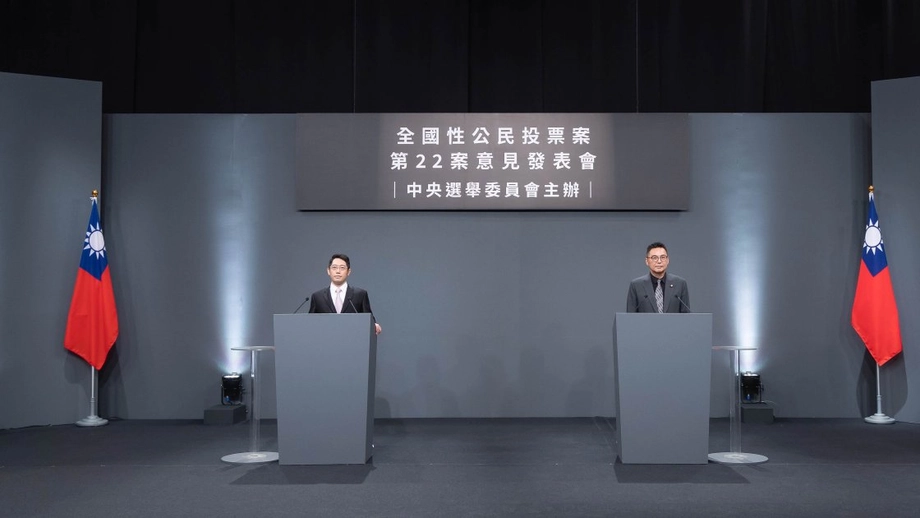
Chen Shih-min (陳世民), an associate professor in the Department of Political Science at National Taiwan University, said Cheng's stance toward China made it harder for the KMT to win centrist voters. He also pointed to the party's obstruction of government initiatives, delays in reviewing the central government's general budget and the O'Shen Wave. A national referendum held alongside the local elections passed, with KMT backing and Taiwan People's Party support, opening a path for efforts to bring nuclear power back into Taiwan's energy mix and end the DPP policy of a homeland without nuclear power.
What Changes for Taichung and Taiwan
Ho's win gives the DPP control of Taichung's mayoralty and ends eight years of KMT rule in the city. For residents, the practical test will be whether buses become less crowded, routes better connected, the bus app more useful and childcare easier to find outside standard hours. The youth affairs department she proposed would give young people a specific city office focused on employment and entrepreneurship.
For businesses and workers, the test will be how the city handles MRT construction, airport expansion and industries such as drones, robotics and AI. Taichung's mixture of machinery, precision manufacturing and technology firms makes these issues more than abstract policy. A special municipality has wider responsibilities than an ordinary county, so the mayor's decisions reach transport, industry, welfare and city planning at the same time.
For national politics, the result gives the DPP a foothold in central Taiwan before the 2028 presidential election. The KMT loses the chance to extend Lu's tenure through Chiang, who promised to keep working for Taichung from other positions. Ho said she would recruit talent broadly and thanked both Lu and Chiang. The next firm date already given is Dec. 25, when the winner is due to take office.
Key Points
- Ho Hsin-chun led Johnny Chiang by 35,079 votes, with 50.68 percent of valid votes to his 48.39 percent.
- The result ends eight years of KMT control and marks Taichung's third party turnover in 16 years.
- Ho is set to take office on Dec. 25 and has promised better bus capacity, youth support, childcare and metro construction.
- Chiang conceded and said the city must move forward; Lu Shiow-yen thanked supporters and congratulated Ho.
- Nationwide, the DPP won 10 of 22 city and county seats, the KMT won 11, and an independent won one.