Thousands Fill Sanchong Playground for Ocean Current Rally
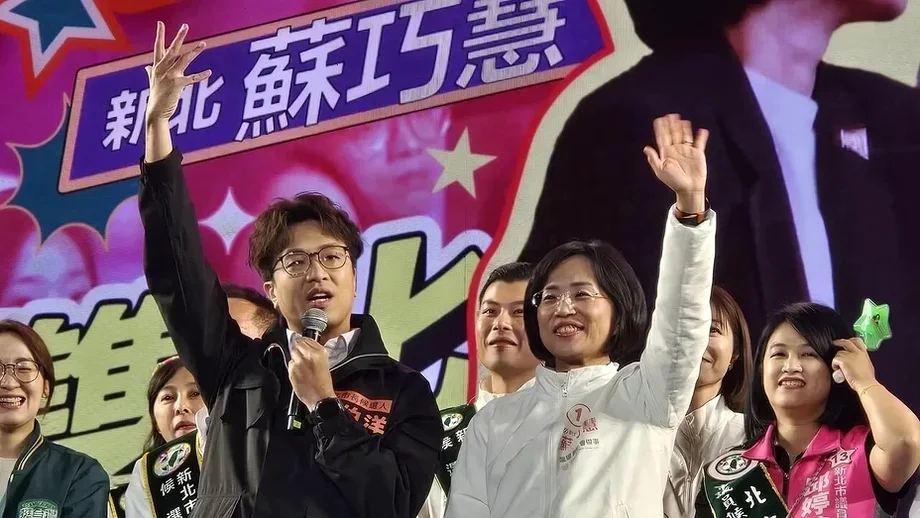
Voters gathered at the Sanchong Sanhe Junior High School playground on the evening of November 21, 2026, for a joint campaign event featuring Democratic Progressive Party New Taipei mayoral candidate Su Chiao Hui and Taipei mayoral candidate Puma Shen. Organizers estimated the crowd reached 20,000 attendees as supporters packed the athletic field and spilled into surrounding streets. Official police and municipal estimates placed the crowd size at 15,000 attendees. The gathering marked a major push during the final gold week of campaigning ahead of the November 28 local elections, bringing together twin campaigns that have used the ocean current theme to draw energetic turnouts across northern Taiwan.
Contents
- Thousands Fill Sanchong Playground for Ocean Current Rally
- Grand Entrance Takes More Than Ten Minutes Through Packed Crowds
- Puma Shen Signs Child Welfare Pledge Following Public Appeal
- Su Chiao Hui Highlights Local Roots and Multi-Generational Vision
- President Lai Ching-te Outlines Three Key Visions for Northern Taiwan
- Campaign Rivalry and Local Context in the New Taipei Race
- At a Glance
Supporters began queueing outside the school grounds hours before the official start time. By late afternoon, hundreds of people had lined up near the MRT Sanhe Junior High School station, with the waiting crowd stretching approximately one kilometer along the sidewalk. Organizers had set up around 4,000 chairs on the playground, but every seat filled rapidly as attendees waved red and orange flags and displayed homemade signs. The high demand for space forced the campaign to manage overflowing crowds as supporters continued arriving throughout the evening.
Grand Entrance Takes More Than Ten Minutes Through Packed Crowds
The main highlight of the evening occurred shortly before 8 p.m. when Su Chiao Hui and Puma Shen arrived at the venue together. As the two candidates stepped into the crowd, enthusiastic supporters rushed forward to high-five them and offer words of encouragement. The sheer density of the crowd made movement difficult, turning what should have been a short walk to the stage into a slow procession that lasted more than ten minutes. Security personnel and campaign staff worked to clear a narrow path through the surging sea of supporters while attendees chanted campaign slogans and held up glowing light boards.
Outside the main gates, thousands of people who could not fit inside the school grounds stayed behind to participate from the street. Holding illuminated signs and waving banners, these supporters followed the proceedings through loudspeakers and chanted slogans in coordination with the main assembly. Speakers leading the event, including legislators Lin Chu-in and Lee Kun-cheng, announced the massive turnout numbers to the cheering audience while thanking volunteers for managing the heavy foot traffic along the busy urban corridor.
Puma Shen Signs Child Welfare Pledge Following Public Appeal
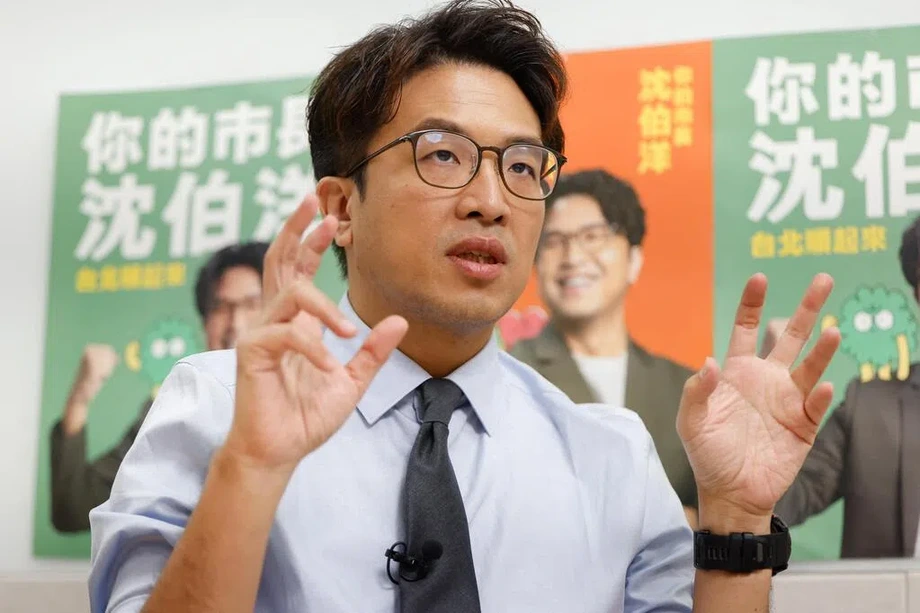
Earlier on the same day, Puma Shen attended an official televised policy presentation where he encountered families affected by the Sharlissa Kindergarten child abuse case. The parents approached the candidate to voice their concerns regarding institutional oversight and systemic failures in handling child welfare complaints. Without hesitation, Shen paused to listen to their grievances and immediately signed a formal pledge presented by the families.
The signed document outlines specific commitments that would take effect immediately upon taking office, bearing the text: "幼教法草案加速推進、監視錄影設備裝設、就任第一天成立跨局處專案小組處理系統性問題與證據保全、提供家長與孩童心理諮商。" Speaking directly to the affected families, Shen promised that his administration would prioritize the welfare of children and parents from day one.
Regardless of my future position, I will continue addressing these concerns. If elected, my very first day in office will involve establishing a cross-departmental task force to handle systemic issues, secure evidence, provide necessary data, and ensure psychological counseling is available for parents and children.
The sudden commitment drew widespread attention across political circles, highlighting how local grievances continue to shape candidate platforms during the final stretch of the mayoral race. Observers noted that the swift response to the grieving families contrasted with the traditional, slower pace of bureaucratic engagement during high-stakes election campaigns.
Su Chiao Hui Highlights Local Roots and Multi-Generational Vision
Addressing the cheering audience in Sanchong, Su Chiao Hui emphasized her deep personal and political connections to New Taipei, contrasting her background with past mayoral contenders. Sitting in the audience to watch her speech were her parents-in-law, who attended the rally to show their family support. Su told the crowd that her candidacy represents a culmination of local growth and community development within the region.
In her remarks, Su outlined a multi-generational view of urban evolution, explaining how municipal priorities have shifted over time. She pointed out that earlier generations focused heavily on military security, while the following generation prioritized basic political structures. According to Su, the current era demands a primary focus on cultural enrichment and community identity.
Flowers remain connected to their roots while reaching out to touch neighboring cities, making this metropolitan region of ten million people across Taipei, New Taipei, Keelung, and Taoyuan shine brighter together.
The candidate noted that the enthusiasm surrounding her joint appearances with Puma Shen reflects a growing appetite for fresh political attitudes and collaborative governance across municipal boundaries.
President Lai Ching-te Outlines Three Key Visions for Northern Taiwan
President Lai Ching-te took the stage as the final speaker of the evening, delivering a speech that underscored the strategic importance of the dual-city campaign. Lai praised both candidates for running positive, optimistic campaigns that focus on substantive policy proposals rather than personal attacks. He noted that even when faced with aggressive criticism or rumors from opponents, both candidates chose to respond with grace and keep their focus on the needs of voters.
Lai highlighted three primary layers of significance behind the joint candidacies. First, he described the election as a generational handoff where younger leaders are stepping up to guide the future of Taiwan's largest metropolitan areas. Second, he emphasized the necessity of transforming the relationship between Taipei and New Taipei from passive competition into active cooperation, creating a true regional living circle where residents easily cross the Tamsui River for work, school, and daily life. Third, Lai pointed to the broader regional integration visible in recent campaign stops across central Taiwan, arguing that local governance is evolving toward broader cooperative networks.
To lighten the mood before concluding his remarks, Lai joked about Su Chiao Hui musical talents, noting that she is known to play the piano and sing. When Lai playfully asked the crowd whether she could dance, Su quickly waved her hands in denial, prompting the president to smile and urge supporters to help secure a victory so everyone could celebrate together after the ballots are counted.
Campaign Rivalry and Local Context in the New Taipei Race
The massive turnout in Sanchong occurred against the backdrop of an intensely competitive mayoral race in New Taipei. Just three kilometers away from the DPP rally, opposing political forces held competing campaign events, highlighting the fierce competition for undecided voters in the densely populated district. Public opinion polls published in recent weeks have shown shifting margins between Su Chiao Hui and her main opponent, Kuomintang candidate Li Sichuan, with each camp questioning survey methodologies and voter sample weightings while ramping up street-level mobilization.
The race has also drawn comparisons to earlier high-profile events in the capital, recalling how former president Tsai Ing-wen joins Puma Shen during large-scale weekend rallies to boost online viewership and motivate hesitant voters. Similar motorcade events in October, such as Puma Shen's first motorcade through northern districts, demonstrated the potency of large outdoor processions in generating momentum, despite occasional traffic disruptions. As the final week of the campaign unfolds, both major political camps are relying on high-energy rallies, personal appearances by senior national figures, and direct voter contact to secure a decisive advantage in the closing days.
At a Glance
- The Ocean Current joint rally for Su Chiao Hui and Puma Shen took place on November 21, 2026, at the Sanhe Junior High School playground in Sanchong District.
- Organizers reported that attendance reached approximately 20,000 people, with official police and municipal estimates placing the crowd at 15,000 attendees, causing the venue to reach full capacity before the candidates arrived.
- Puma Shen signed a pledge during an earlier policy forum to establish a cross-departmental task force for child welfare and family support on his first day in office if elected.
- President Lai Ching-te delivered the final speech of the evening, emphasizing regional integration, positive campaigning, and the strength of the dual-city partnership.
- Voters will head to the polls on November 28, 2026, to choose mayors and city council members across Taiwan.