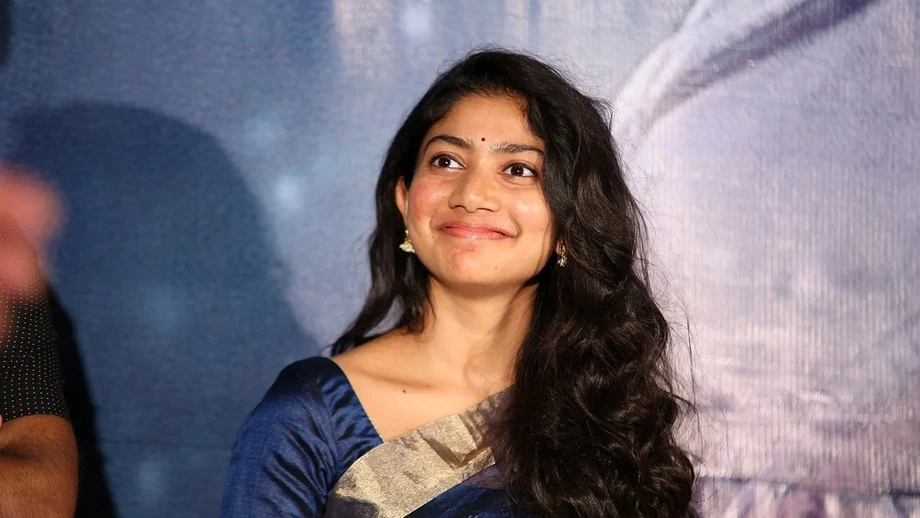
A private change and a very public verdict
Sai Pallavi, 34, answered the criticism surrounding her portrayal of Sita during a conversation with journalist Barkha Dutt at the We the Women event in Mumbai on Friday, November 27, 2026. Three weeks after the film reached cinemas, she said she was aware of the comments about her appearance, but believed that lasting confidence had to come from within.
Contents
- A private change and a very public verdict
- What she said about looks and online scrutiny
- The objections began before the film opened
- How one battle scene became a dispute over scripture
- Tanishaa Mukerji praised Ram but rejected this Sita
- Four to five years spent waiting for meaningful roles
- Why she works without a manager or entourage
- Her natural look began with insecurity, not this controversy
- The film's scale and the next date
- Key Points
Her Sita appears opposite Ranbir Kapoor as Rama in Nitesh Tiwari's Ramayana, which opened on November 5 as the first of two films based on the epic. Ravie Dubey plays Lakshman and Yash plays Ravana. Namit Malhotra and Yash produced the film. Pallavi, whose career has mainly been in Tamil, Telugu and Malayalam cinema, described the role as an intensely personal experience rather than a dramatic turning point that she could easily explain in public.
When Dutt asked how playing Sita had changed her life, Pallavi said every character leaves something with an actor, while making it clear that she wanted to keep the specifics private.
My life has always been about moving from one movie to another. It does bring some sort of a change to you because you carry a bit of the role in your heart. I've had a few changes (in me), but they all are very personal, and I don't think it is something that the world would understand or should even know. It is not even a bigger deal.
Her answer drew a line between the effect of playing Sita and the public judgment of her performance. The personal changes belonged to her; the questions about casting, beauty and combat scenes had become part of a much wider argument about how a sacred story should be adapted.
What she said about looks and online scrutiny
Online discussion had followed Pallavi since her casting was announced. Some comments asked whether she matched a traditional image of Sita, while later criticism addressed her looks, accent and chemistry with Kapoor. Pallavi said the remarks about how beautiful Sita ought to be had reached her.
I'm not blind to social media things that are out there, like, 'Sita ma, how pretty she should look', and all of that, but if it shakes your core, then I think the flaw lies there, and you need to get stronger.
She then explained what she meant by becoming stronger. Her response was not a claim that everyone had welcomed her casting, nor an attempt to answer each objection individually.
I think I'm as secure as any human being can be, and opinions are opinions. So, growing up if you've some sort of insecurity, you just need to make sure you are strong within, and you can fight the rest of the world or shut the noise out.
Pallavi offered two ways of living with public criticism. A person could develop enough resilience to face it, or stop giving it attention. Her description of comments as opinions placed the responsibility for her sense of confidence with herself, rather than with the volume of praise or condemnation online.
The objections began before the film opened
Dipika Chikhlia, who played Sita in Ramanand Sagar's 1987 television series Ramayan, questioned Pallavi's appearance before the film was released. Chikhlia acknowledged her acting ability, but wondered whether she fit traditional descriptions of the character. She specifically said that the Ramayan does not mention Sita having curly hair.
Mukesh Khanna, widely known for playing Shaktimaan, raised a different objection after the release. Speaking on his YouTube channel, he objected to scenes in which Sita fights demons, uses weapons and takes part in combat. He argued that the Valmiki Ramayana does not portray her as a warrior.
The two criticisms concern separate questions. One is about whether an actor's face and hair meet an audience's inherited picture of Sita. The other is about what Sita actually does in the story. There has been no public count or audience survey showing how many viewers support either objection, so the visible volume of social media posts does not provide a reliable measure of their reach.
How one battle scene became a dispute over scripture
At the centre of the narrative dispute is the disputed battle scene in which Sita fights beside Rama against the 14,000 demons belonging to Khara and Dushana. The episode takes place during their forest exile. In the Valmiki account cited by critics, Rama asks Lakshmana to take Sita to safety and then confronts the attacking force alone. The film instead places her beside him, changing her location, Lakshmana's protective role and Rama's position as the sole fighter on his side.
Tiwari addressed that choice at the film's Los Angeles premiere. He said the filmmakers had drawn inspiration from the Adbhuta Ramayana, a Sanskrit telling in which Sita displays extraordinary divine power, while developing her as a warrior princess. He also said the production had retained Rama's divine identity.
Author Amish Tripathi later defended the film's warrior portrayal. Tripathi, whose novels include Sita: Warrior of Mithila, said that audiences often know only one telling of an epic. He presented three texts as versions credited to Valmiki and described a very different form of combat in one of them.
Because we are not taught the Ramayana and the Mahabharata through our education system, we are not aware of all the versions. There is a version called the Adbhuta Ramayana, credited to Valmiki. He wrote three versions: the Valmiki Ramayana, the Adbhuta Ramayana, and the Ananda Ramayana. In Adbhuta Ramayana, the elder, more powerful Ravana was killed by Sita. She was a warrior in that version. It's not a new version. It's an ancient version credited to Valmiki.
Tripathi also argued that understanding of ancient stories can grow over time, comparing it with changing attitudes toward Homer's Odyssey after the discovery of Troy in Europe during the nineteenth century.
The precise disagreement therefore extends beyond whether any tradition contains a fighting Sita. The Adbhuta Ramayana places her most dramatic act of combat in a confrontation with Sahasra Ravana, a Ravana with a thousand heads. Tiwari's film brings the idea of a fighting Sita into the forest battle against Khara and Dushana. That creative movement between episodes explains both the director's defence and the objections from viewers who expected the familiar sequence.
Tanishaa Mukerji praised Ram but rejected this Sita
Actor Tanishaa Mukerji, the sister of Kajol, added another prominent criticism in a review spread across three posts on X. She praised the film's visuals, story and acting, and described Kapoor's Rama as outstanding, but said Pallavi's presence as Sita broke her connection with what she was watching.
Sai Pallavi I'm sure, is a great actor but, unfortunately for me, is a complete miscast as Sita. She disconnects me completely from the visual!
Her review was not a rejection of every performance. Mukerji wrote that she had wondered whether her admiration for Kapoor in Animal would prevent her from accepting him as Rama, only to find him perfect in the role. She also recalled being introduced to the Ramayan through Ramrajya, a film that starred her late grandmother.
Yash's Ravana received a more qualified assessment. Mukerji praised his power, body language, action and arrogance, while saying she missed the scholarship and learning associated with Ravana. She wanted more warmth in the scene involving Surpanakha's husband and less uninterrupted anger when Ravana approaches Sita dressed as a Sadhu, or holy man. Her comments show how one viewer could admire the scale and central male performances while still finding the casting of Sita distracting.
Four to five years spent waiting for meaningful roles
Pallavi's response to the Sita debate also returned to the choices that shaped her career. Across roughly ten years in cinema, she said she had spent nearly four to five years waiting for meaningful characters rather than accepting conventional commercial offers. That amounts to almost half of her career, although she did not say whether the waiting occurred in one continuous period.
Asked which parts she turns down, Pallavi described characters who exist mainly to add glamour and who could be replaced without changing the film. She said refusing such work was difficult when she was starting out, but eventually helped define the kind of roles that came to her.
If it is just going to be a part that is used as a tool for glamour or something that is replaceable, I wouldn't want to be that. I always look for strength in a character. So, over time, when you put your foot down and you do not want to do certain things, that itself speaks for itself, and after that you start getting roles that have some substance.
The emotional cost of waiting was part of her answer. She described the uncertainty of watching other performers accept familiar roles while wondering whether she should do the same.
At that time, each day would feel painful; you don't know whether roles written are good or everybody happens to be doing certain things which seem okay, so should I give in. Then I would think will I be able to live with myself after that film is out. It is not easy.
Her test was whether she could accept herself after a film's release. That account gives practical context to her call for inner strength: she presented patience and refusal as habits developed over years, not as confidence that appeared after she was cast as Sita.
Why she works without a manager or entourage
Pallavi also said she continues to work without a manager or entourage, meaning the team of assistants and support staff that often surrounds a major star. She connected that decision to a desire to remain approachable when directors and actors want to discuss stories with her.
When it comes to cinema, it is all about making it simple, being approachable to directors and actors, and not make it a hard and intimidating process to get the stories across. I think having a middleman or a support could help, but I like it this way. I'm quite somebody who likes to do everything myself, so in that way this works for me.
She acknowledged that an intermediary or support system could be useful. Her preference was therefore a description of how she works, rather than a claim that every actor should adopt the same arrangement. In her account, removing layers between herself and filmmakers makes communication simpler and leaves her in control of the process.
Her natural look began with insecurity, not this controversy
Pallavi's appearance has been discussed for much of her career, and she said her choice to appear naturally on screen stretches back about ten years. She linked it to the limited variety she saw among women in films while growing up, contrasting that with the range of ages and body types visible among male actors.
If I had seen some actors who were themselves, maybe I would not have felt conscious. The male actors are usually seen in different sizes, ages, and surviving, and when you look at women, they always seem to be perfect.
She said she now felt able to stand for the representation she had missed. That did not mean she had always felt secure. Pallavi admitted to being insecure at the start of her career and connected her eventual choices to playing recognisable women in believable situations.
To be honest, I was insecure in the beginning of my career...I think the audience wants to consume something that is real and I have picked roles which have real women in real situations.
She explained that an airbrushed appearance could become a barrier between such a character and the audience. She also said directors had accepted her commitment to the characters. At the Mumbai event, she noted that she was wearing lip gloss, eyeliner and moisturiser, while foundation or concealer made her feel like a different person.
Her final qualification was directed at people who feel differently about cosmetics. She did not present her own comfort as a rule for other women.
If you feel good wearing makeup, then it's your call. You should not have to fit yourself in a box to be a certain way.
This longer account changes the meaning of the phrase natural look. For Pallavi, it involves personal comfort, the kinds of women she wants to portray and the images she saw as a young viewer. It predates the Ramayana casting debate by years.
The film's scale and the next date
The commercial response forms another part of the story. The opening day figures were ₹64.85 crore net in India and ₹77.50 crore gross on November 5, across five languages and approximately 25,200 shows. By the final days of November, the reported India net collection had reached ₹992 crore, with worldwide gross receipts above ₹1,775 crore.
A crore means 10 million, so ₹992 crore equals ₹9.92 billion. Net ticket revenue has the applicable ticket taxes removed, while gross revenue includes them. The film had also passed $30 million in North America, reportedly becoming the first Indian release to cross that mark there, and had grossed ₹80 crore in the Telugu states. Those figures describe different markets and measures within its theatrical run.
The two Ramayana films have a reported combined production budget of about ₹4,000 crore, or ₹40 billion. Alongside Kapoor, Pallavi, Yash and Dubey, the ensemble includes Sunny Deol, Lara Dutta, Arun Govil, Kajal Aggarwal, Rakul Preet Singh and Vivek Oberoi. The second instalment is scheduled for Diwali 2028; a precise opening day has not been given.
The main dates in the dispute and Pallavi's response are:
- November 5, 2026: Ramayana opened in cinemas, beginning the debate over its released scenes as well as its casting.
- November 26: Mukerji's review across three posts was drawing attention for its praise of Kapoor and criticism of Pallavi's casting.
- November 27: Pallavi spoke with Dutt in Mumbai, and Tripathi's defence of the warrior portrayal was published.
- Diwali 2028: The second film in the adaptation is scheduled to reach cinemas.
Key Points
- Sai Pallavi addressed scrutiny of her Sita portrayal at the We the Women event in Mumbai on November 27, 2026.
- She said playing Sita brought personal changes that she did not feel the world needed to know.
- Her answer to comments about beauty was to become strong within and either face the criticism or shut out the noise.
- Dipika Chikhlia questioned her look, Mukesh Khanna objected to her combat scenes and Tanishaa Mukerji called her miscast.
- Nitesh Tiwari and Amish Tripathi cited the Adbhuta Ramayana in defence of a warrior Sita, while critics focused on the particular forest battle used in the film.
- Pallavi said she spent four to five years of her ten year career waiting for meaningful roles.
- She works without a manager or entourage and described her natural appearance as a personal choice shaped by representation and early insecurity.
- Ramayana passed ₹992 crore in reported India net collections, and its second instalment is scheduled for Diwali 2028.