A big opening before the Diwali rush
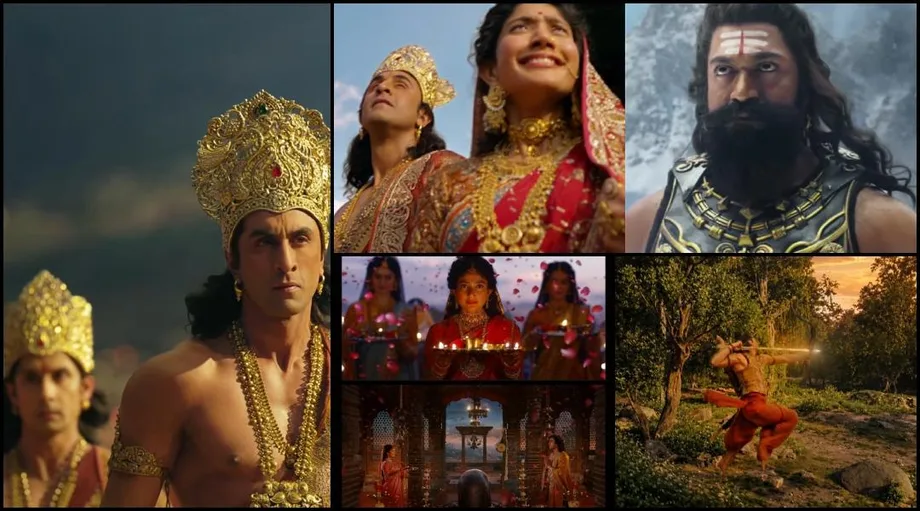
Ramayana: Part 1 earned ₹64.85 crore net in India on Thursday, November 5, 2026, with ₹77.50 crore in domestic gross receipts across five languages and approximately 25,200 shows, according to figures attributed to box office tracker Sacnilk. Directed by Nitesh Tiwari, the film stars Ranbir Kapoor as Rama, Sai Pallavi as Sita and Yash as Ravana.
Contents
- A big opening before the Diwali rush
- What net and gross collections mean
- Hindi supplied nearly three quarters of revenue
- Which opening records did Ramayana pass?
- The films that remain ahead
- Evening screenings drew stronger attendance
- Overseas totals have a wider range
- A ₹4,000 crore project faces its next test
- From Ravana's song to the sequel calendar
- Key Points
The opening put the film ahead of the career benchmarks listed for Kapoor, Pallavi and Tiwari. It arrived before Diwali, on a day without a national holiday, giving the production several days of festive business to pursue after its first screenings.
Ramayana ranked third among the Indian openings listed for 2026, behind Ranveer Singh's Dhurandhar: The Revenge at ₹102.55 crore and Yash's Toxic at ₹101.10 crore. Among Hindi releases, the reported comparisons placed it second for the year, ahead of the ₹62 crore attributed to Ajay Devgn's Drishyam: The Conclusion.
The scale of the production makes the next few days especially consequential. The two films in the Ramayana project reportedly carry a combined production budget of about ₹4,000 crore. Friday advance sales stood at ₹29.46 crore gross, while forecasts for the first weekend exceeded ₹375 crore net.
Domestic opening figures are relatively consistent across the accounts, but overseas totals and the sequel's release year have competing accounts. Those differences matter because international ticket sales and the timing of Part Two are central to the commercial story of a production spanning two films.
What net and gross collections mean
India's ₹64.85 crore net collection represents ticket revenue after applicable ticket taxes have been removed. The ₹77.50 crore gross figure includes those taxes. A crore means 10 million, so the net opening amounts to ₹648.5 million.
The difference between the two domestic measures is ₹12.65 crore. Worldwide box office figures generally combine domestic gross receipts with gross receipts from overseas markets. Comparing that worldwide total directly with India's net collection would mix different measures.
Producers also receive only a portion of cinema ticket revenue because cinemas and distributors take shares. Assessing the project's finances therefore requires more than comparing its reported production budget with the amount collected at ticket counters. Revenue from streaming, television, music and other rights also forms part of the business.
Hindi supplied nearly three quarters of revenue
The Hindi version earned ₹47.50 crore net, accounting for about 73.2% of the ₹64.85 crore domestic total. It also occupied 20,678 of the reported 25,200 shows, or approximately 82.1% of screenings.
The other four language versions together contributed ₹17.35 crore, or about 26.8% of net receipts, from 4,522 shows. Kannada supplied the largest contribution after Hindi, followed by Telugu.
- Hindi: ₹47.50 crore net from 20,678 shows.
- Kannada: ₹7.25 crore net from 1,197 shows.
- Telugu: ₹6 crore net from 1,776 shows.
- Tamil: ₹2.60 crore net from 992 shows.
- Malayalam: ₹1.50 crore net from 557 shows.
Kannada accounted for about 11.2% of domestic net revenue from roughly 4.8% of shows. Its reported receipts averaged approximately ₹60,568 per screening, compared with about ₹22,972 for Hindi. Ticket prices, cinema capacity and attendance all affect that calculation, so occupancy figures provide another useful measure of audience demand.
Hindi remained the largest market by a wide margin. Yet the contribution from the other languages helped lift the film from a ₹47.50 crore Hindi opening to a national total approaching ₹65 crore, an important difference when assessing the records attached to its debut.
Which opening records did Ramayana pass?
Ranbir Kapoor's previous benchmark was Animal at ₹63.80 crore in the opening comparison supplied for Ramayana. The new film surpassed that figure by ₹1.05 crore, an increase of about 1.6%. Sai Pallavi's listed benchmark was Amaran at ₹21.40 crore, making Ramayana's opening just over three times that amount.
Nitesh Tiwari's previous best was Dangal at ₹29.78 crore. Ramayana opened at roughly 2.18 times that figure. For Yash, the new film ranked third behind KGF: Chapter 2 at ₹116 crore and Toxic at ₹101.10 crore.
The Diwali comparison also favoured Ramayana. Its ₹64.85 crore opening exceeded Thugs of Hindostan at ₹52.25 crore by ₹12.60 crore and Tiger 3 at ₹44.50 crore by ₹20.35 crore.
Those rankings use Ramayana's combined collection across five languages. The distinction matters when reading descriptions such as biggest Hindi opener: the film's Hindi version earned ₹47.50 crore, while ₹64.85 crore was its total across all languages.
The films that remain ahead
Dhurandhar: The Revenge led the listed 2026 openings at ₹102.55 crore, followed by Toxic at ₹101.10 crore. Ramayana was ₹37.70 crore behind the first film and ₹36.25 crore behind the second.
The comparison with Ranveer Singh's films needs particular care because two different titles appear in the opening figures. Ramayana exceeded the original Dhurandhar's reported ₹28 crore debut, while Dhurandhar: The Revenge remained ahead at ₹102.55 crore.
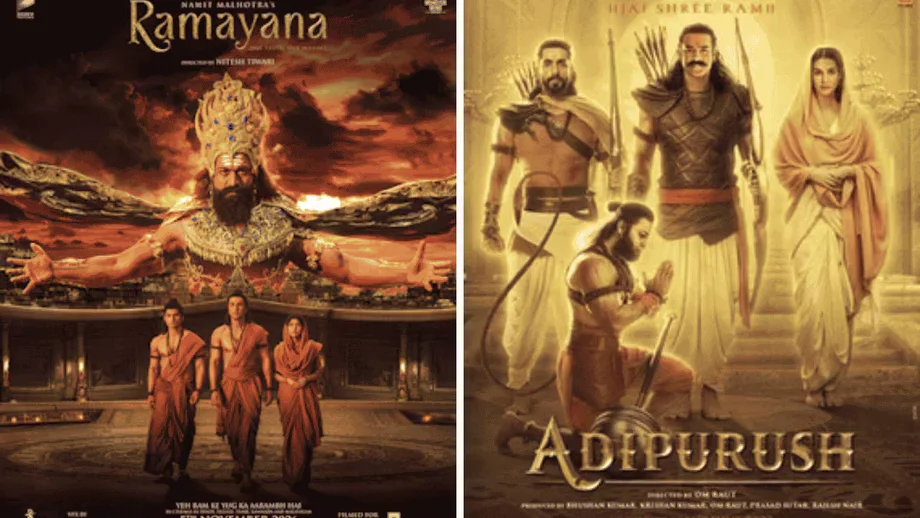
Jawan's ₹75 crore opening also remained above Ramayana by ₹10.15 crore. Adipurush, another adaptation of the Ramayana epic, opened at ₹86.75 crore across languages, leaving the new film ₹21.90 crore behind that benchmark.
The broader list placed Ramayana 13th among Indian openings, immediately below Coolie at ₹65 crore, a gap of just ₹15 lakh. Pushpa 2 led that list at ₹164.25 crore, followed by RRR at ₹133 crore, Baahubali: The Conclusion at ₹121 crore and KGF: Chapter 2 at ₹116 crore.
Kalki 2898 AD, Salaar: Part 1 – Ceasefire and Devara: Part 1 were also ahead, alongside the other titles already listed. Ramayana therefore combined several career records with a position below the largest national debuts.
Evening screenings drew stronger attendance
Ramayana's Hindi 3D screenings recorded average occupancy of 29.05% on the opening day. Occupancy measures the proportion of available seats sold, rather than the number of tickets sold across the entire release.
Morning occupancy was 22.77%, rising to 26.31% in the afternoon and 38.08% in the evening. The evening figure was 15.31 percentage points above the morning level, showing stronger demand later in the day within that format.
Delhi and the National Capital Region had 1,146 screenings in the reported Hindi market breakdown, followed by Mumbai with 960 and Pune with 452. Bengaluru recorded 43% occupancy across 316 shows, with evening occupancy reaching 67%. Kolkata registered 38% across 299 shows, while Hyderabad reached 37.3% across 206.
Some cinemas were described as having full morning screenings, while the wider Hindi 3D figures showed substantial spare capacity. Attendance varied by city, cinema and time, giving exhibitors a more detailed picture than the national collection alone.
Pre Diwali travel and household preparations, premium ticket prices, limited promotion at local venues and audience caution following Adipurush were cited as possible reasons for an opening below expectations of more than ₹100 crore. No numerical estimate was given for the effect of each factor.
Overseas totals have a wider range
Ramayana's worldwide opening was reported at ₹127.50 crore in one account. With domestic gross fixed at ₹77.50 crore, that total implies approximately ₹50 crore from overseas. An earlier estimate put overseas receipts at ₹20 crore to ₹40 crore and anticipated a worldwide opening above ₹100 crore.
The international figures also included an overseas opening below $5.5 million, with $1.5 million attributed to paid previews in North America. Sony Pictures handled international distribution.
A partial North American count stood at $940,000 from 1,009 locations by noon Pacific time. Projections at that stage placed the eventual opening at about $3.5 million, compared with an earlier expectation of $4 million including premieres. The midday count, preview receipts and projected final opening cover different stages of the release.
The overseas figures carry particular weight for a film with such a large reported budget. A ₹127.50 crore worldwide opening would give the production a much larger starting total than domestic net receipts alone, while the division of revenue among cinemas, distributors and producers will determine how much reaches the production companies.
A ₹4,000 crore project faces its next test
Prime Focus Studios, led by Namit Malhotra, produced Ramayana in collaboration with DNEG and Yash's Monster Mind Creations. The reported ₹4,000 crore production budget covers both parts, spreading the project's commercial ambitions across two releases.
The cast also includes Ravi Dubey as Lakshman and Sunny Deol as Hanuman, alongside Rakul Preet Singh, Arun Govil, Lara Dutta and Vivek Oberoi. Early audience and review responses included praise for Kapoor and Yash, as well as the visual effects used to create the epic's settings and action.
Advance bookings before the opening were reported at ₹50.5 crore. Friday, November 6, had ₹29.46 crore gross in advance sales. That figure represents tickets already sold for Friday, with further purchases possible as screenings take place.
Forecasts placed the first weekend above ₹375 crore net and worldwide lifetime receipts between ₹1,600 crore and ₹1,800 crore. These are projections, with audience recommendations and attendance during the Diwali period expected to shape the final results.
Using ₹375 crore as a weekend benchmark, the film would need another ₹310.15 crore net after its first day. That is about 4.8 times Thursday's collection, illustrating the scale of the growth built into the forecast.
From Ravana's song to the sequel calendar
Yash's portrayal of Ravana was a focus before release, including the Ravana Tandavam release in October. Anirudh Ravichander and G.V. Prakash Kumar sang the Tamil version, released on October 20, for A.R. Rahman's music.
Prakash, a composer, actor and singer, described how Rahman invited him to the recording session after a visit to Ayodhya. He said:
I didn't know beforehand. While I was coming back from the airport, I got a call from AR Rahman asking me to come and sing.
The promotional sequence drew praise for Yash's performance and criticism from some viewers over the music and Hindi lyrics. The attention placed Ravana's presentation at the centre of discussion before audiences saw the full film.
The release calendar now contains a material difference. October coverage listed Part Two for Diwali 2027, while the opening day account placed it at Diwali 2028. No official confirmation resolving the release year accompanied those dates.
- October 20, 2026: The Tamil version of Ravana Tandavam was released.
- November 5, 2026: Ramayana: Part 1 opened in cinemas.
- November 6, 2026: Friday advance sales stood at ₹29.46 crore gross.
- Diwali 2028: The latest reported target for Part Two, following an earlier Diwali 2027 listing.
Ramayana begins its festive run with a large domestic collection, several career benchmarks and stronger evening attendance. The immediate test is whether the next days can turn those opening figures into the sustained ticket sales assumed in its weekend forecasts.
Key Points
- Ramayana: Part 1 earned ₹64.85 crore net and ₹77.50 crore gross in India on November 5, 2026.
- Hindi contributed ₹47.50 crore net, about 73.2% of the domestic total.
- The opening exceeded the listed career benchmarks for Ranbir Kapoor, Sai Pallavi and director Nitesh Tiwari.
- Dhurandhar: The Revenge, Toxic, Jawan and Adipurush remained ahead in the opening comparisons.
- Worldwide receipts were reported at ₹127.50 crore, alongside lower earlier overseas estimates.
- The reported ₹4,000 crore budget covers both films; the latest sequel target is Diwali 2028, compared with an earlier 2027 listing.