A familiar epic meets an unusually ambitious release
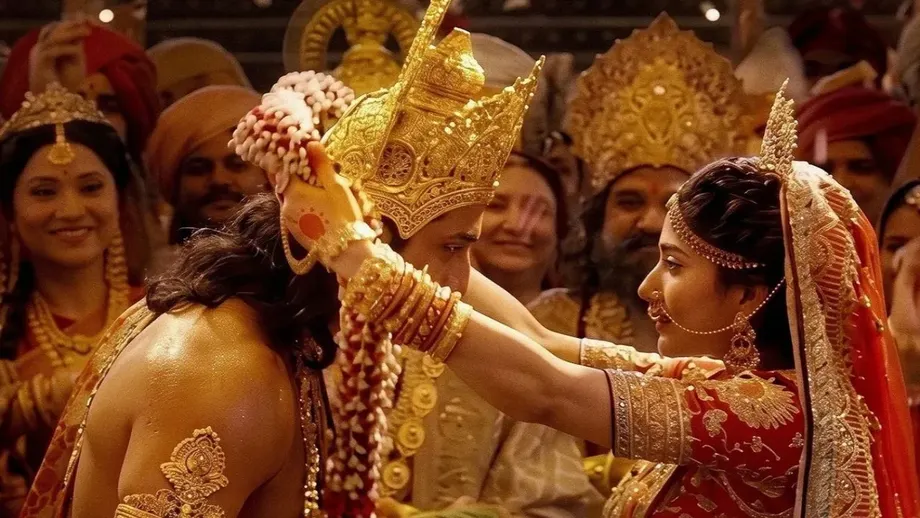
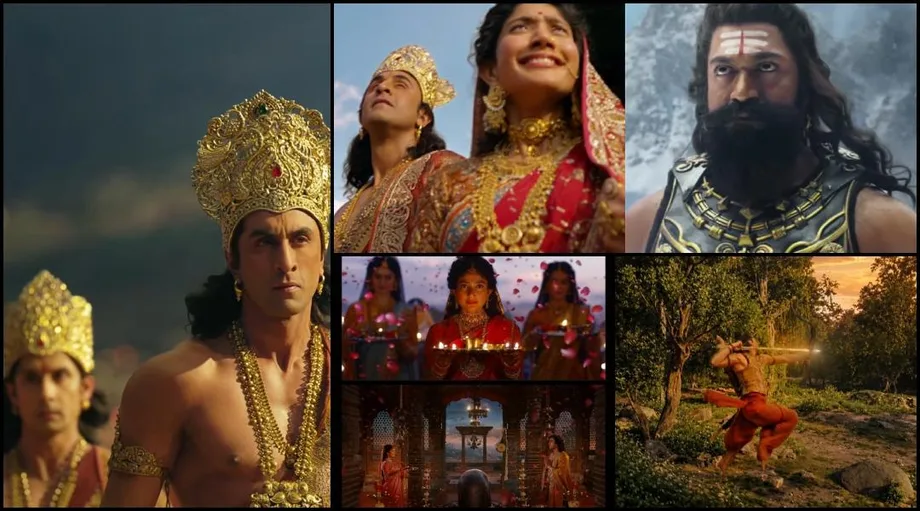
Nitesh Tiwari's Ramayana is targeting a worldwide theatrical release on November 5, 2026, with advance bookings announced for October 20 and a second instalment planned for Diwali 2027. Ranbir Kapoor plays Rama, Sai Pallavi plays Sita and Yash plays Ravana in a production whose ambitions extend from a planned IMAX release to dubbing in nearly 40 languages.
Contents
- A familiar epic meets an unusually ambitious release
- Rama's hardest choice comes before the battle
- Different expectations surround Rama and Sita
- Yash and Ravie Dubey draw attention
- Visual scale brings both excitement and scrutiny
- Rahman and Zimmer share the musical task
- Nearly 40 languages anchor the overseas plan
- Hanuman's arrival points towards the sequel
- Key Points
The makers reportedly confirmed on October 11 that the worldwide opening would be on November 5, 2026, with advance bookings beginning on October 20, Dussehra.
Producer Namit Malhotra is backing the adaptation through Prime Focus Studios, working with visual effects company DNEG and Yash's Monster Mind Creations. Sony Pictures is handling international distribution, while A R Rahman and Hans Zimmer share the music credits.
The central challenge is more intimate than those production details suggest: making a story familiar to generations feel emotionally immediate. Early critical descriptions praise the separation of Rama from his father, Ravie Dubey's performance as Lakshman and Yash's imposing Ravana. Reactions to the visual effects and the central pairing are less consistent.
The release chronology needs care. November 5 remains the announced opening date, while descriptions of completed previews and an appearance during the closing credits are already circulating. Paid previews on November 4 have been mentioned without confirmation. A final runtime, the full language list and the scope of the widely discussed Rs 2,000 crore budget figure have not been established in the announcements detailed so far.
For audiences, the immediate picture is a film with a firm advertised release date, an extensive international campaign and sharply different expectations about how its spectacle will translate into drama.
Rama's hardest choice comes before the battle
Ramayana follows Rama, the human incarnation of Vishnu, from his upbringing in Ayodhya to exile and the search for Sita after Ravana abducts her. His skill with weapons matters, but the story places equal weight on how he treats his family and honours obligations.
Rama is preparing to become king when his stepmother Kaikeyi calls upon two promises made by his father, King Dashrath. She demands that Rama spend 14 years in exile. Rama accepts, while Sita and his younger brother Lakshman choose to accompany him.
Dashrath's inability to prevent the departure gives the adaptation one of its strongest emotional passages, according to an early assessment. The father's grief and eventual death bring a personal cost to a decision that might otherwise seem like a simple demonstration of duty.
The forest journey leads to Sita's abduction by Ravana, the ruler of Lanka. Rama and Lakshman then set out to find her. Because the project spans two films, viewers are being asked to follow this conflict across separate theatrical releases rather than expect the entire epic in one sitting.
Different expectations surround Rama and Sita
Kapoor's performance is described in favourable criticism as restrained, with stillness and measured expressions replacing the more familiar energy of some of his contemporary roles. That approach fits a Rama whose authority depends as much on self control as on physical strength.
Pallavi's Sita receives particular praise in the same assessment for taking an active role in the journey. She is described as a healer and a fighter, with action scenes that give her responsibilities beyond accompanying Rama or awaiting rescue.
Reactions around the second trailer are more divided. Some viewers were unconvinced by the Rama and Sita pairing, while Pallavi's limited presence in that promotional footage left less opportunity to judge their relationship. The contrast puts the film's quieter scenes under pressure to deliver as much as its battles.
Yash and Ravie Dubey draw attention
Yash's Ravana is a recurring point of praise across reactions to both the promotional footage and the fuller dramatic descriptions. His physical presence and controlled delivery are singled out as central to a ruler presented as proud, formidable and accustomed to power.
The performance is described as relying on looks and posture rather than constant shouting. That offers a useful contrast with Kapoor's calmer Rama: two commanding figures whose authority comes from very different attitudes towards other people.
YouTube channel Our Stupid Reactions also singled out Yash, with one host calling his Ravana the film's standout performance. The reviewers described the cinematography, editing, score, production design and visual effects as "off the charts", while suggesting that newcomers to the epic might find some character relationships and narrative details harder to follow.
Ravie Dubey's Lakshman also receives strong praise, particularly for combining devotion with practical responsibility. A scene involving the golden deer places him between conflicting duties when Sita wants him to follow Rama and he is reluctant to leave her unprotected.
Kunal Kapoor appears as Indra, while Anupam Kher was announced on October 13 as the voice of Jatayu, the bird associated with the attempt to stop Sita's abduction. Those roles broaden an ensemble that must connect the human relationships with the epic's divine world.
Visual scale brings both excitement and scrutiny
Ramayana's visual ambition reaches beyond battle scenes. Descriptions of the film include Ayodhya, Lanka, forests and celestial settings, with distinct architecture, creatures and weapons intended to make each place recognisable.
Sequences attracting praise include Rama's battle with Khar-Dushan, Ravana's confrontation with Indra and Indra's visit to Vaikunth Lok, the divine abode associated with Vishnu. Together, they suggest an adaptation moving repeatedly between earthly events and a much larger sacred universe.
Criticism concentrates on uneven creature imagery, including depictions of Khar-Dushan and Kumbhkaran. Some early commentary describes these images as artificial or cartoonish. Other viewers praised the second trailer's effects, action and colour treatment, leaving the consistency of the finished visual world as a central point of debate.
Named reactions following the Los Angeles premiere on October 28 offer further accounts of the film's scale. Film critic Edward Douglas wrote on X that he was fascinated by an epic he described as "the Hindu equivalent of the Odyssey or The Ten Commandments". He added: "The visuals were generally outstanding and loved the characters/actors." Douglas also called it "a much bigger movie than RRR", while noting the complexity of the story.
Ramayana scholar Jamey Hood, who attended the premiere, said in an Instagram video that the visual effects team had "just raised the bar into the stratosphere as to what's possible visually". She described the imagery as "goosebump-inducing" and recalled spontaneous applause during the screening.
The English dubbing drew more qualified responses. Our Stupid Reactions said it occasionally felt less natural than the original language, although the reviewers praised the technique for keeping dialogue largely synchronised with the actors' facial movements. A separate reviewer, whose name was not supplied in the available account, found the altered mouth movements distracting and questioned whether AI had been involved. That reviewer described an "uncanny cartoonish quality", but added that "outside of the weird moving mouths, Ramayana rips".
Rahman and Zimmer share the musical task
A R Rahman and Hans Zimmer are credited as the film's composers. Early praise places particular attention on Zimmer's contribution to the background score, especially during combat and scenes involving divine power.
The score has two connected jobs: making enormous action sequences feel powerful and keeping the audience close to characters facing loss, loyalty and separation. Ramayana's family drama needs room to breathe alongside its supernatural spectacle.
The shared credit also matters when discussing the film's creative identity. Although much of the early enthusiasm focuses on Zimmer, the announced musical partnership includes Rahman. A detailed division of their work has not accompanied the release information.
Nearly 40 languages anchor the overseas plan
Malhotra's international campaign includes promotion at CinemaCon 2026 and San Diego Comic-Con, alongside Sony Pictures' distribution role. The production is also planned for IMAX cinemas worldwide, placing large screens at the centre of its theatrical pitch.
A trade source says Ramayana has been dubbed in nearly 40 languages. Dubbing replaces spoken dialogue with performances in another language, allowing audiences to follow the story without relying entirely on subtitles. The precise language selection will determine how widely that access extends.
The strategy joins two different goals: reaching people who already know the epic and introducing its characters to audiences encountering them for the first time. Clear relationships between Rama, Sita, Lakshman and Ravana will be essential to both groups.
The reported Rs 2,000 crore figure adds to expectations about production scale. For viewers, however, the practical test is how consistently the settings, action and performances work together throughout the story, including scenes without armies or elaborate effects.
Hanuman's arrival points towards the sequel
Sunny Deol plays Hanuman, with his appearance placed during the closing credits of Part One in descriptions of the ending. That introduction is intended to connect the first film to the second instalment, scheduled for Diwali 2027.
Earlier information placed Deol near the conclusion, with the exact position described as either the final scene or a sequence around the credits. The more recent description specifies the closing credits. Viewers interested in his introduction therefore have a reason to remain seated as the film ends.
The promotional and release timetable stretches across several months:
- July 11, 2026: The worldwide trailer premiere was announced.
- July 24, 2026: The date set for that trailer premiere.
- October 13, 2026: Anupam Kher was announced as Jatayu's voice.
- October 2026: A second trailer was unveiled in Bangalore.
- October 20, 2026: Advance bookings are scheduled to begin.
- November 5, 2026: Part One is scheduled to open worldwide.
- Diwali 2027: Part Two is planned for release.
Tiwari's adaptation ultimately rests on the connection between those two scales: a vast theatrical event and the personal choices that keep the epic familiar. Early responses suggest particular strength in Ravana, Lakshman and the family drama, alongside continuing disagreement about the effects and central pairing.
Key Points
- Ramayana Part One is scheduled for November 5, 2026, with bookings opening October 20.
- Ranbir Kapoor, Sai Pallavi and Yash play Rama, Sita and Ravana.
- Early reactions praise Yash and Ravie Dubey, while views on the effects and lead pairing vary.
- A R Rahman and Hans Zimmer share the music credits.
- International plans include Sony Pictures distribution, IMAX screenings and dubbing in nearly 40 languages.
- Sunny Deol's Hanuman is described as appearing during the closing credits, ahead of Part Two in Diwali 2027.