An Emergency Exception Moves Into the Security Debate
Japan is considering writing an emergency exception to its ban on allowing nuclear weapons into the country into its next National Security Strategy. The proposal would preserve the country's three non-nuclear principles while spelling out circumstances in which a vessel carrying U.S. nuclear weapons could enter a Japanese port.
Contents
- An Emergency Exception Moves Into the Security Debate
- What Would Change, and What Would Stay?
- The 2010 Statement at the Centre of the Proposal
- How Takaichi's Position Has Developed
- Why Access to Japanese Ports Matters
- A Compromise Faces Political and Diplomatic Tests
- Hiroshima and Nagasaki Seek a Firm Commitment
- Local Assemblies Reveal a Divided Response
- Key Points
The government plans to revise the strategy and two related security documents by the end of the year. The current strategy, adopted in 2022, commits Japan to upholding the principles: no possession, no production and no introduction of nuclear weapons.
Prime Minister Sanae Takaichi's government has reportedly settled on retaining those principles, after some government and ruling party members sought a broader review. Officials are nevertheless considering changing the existing assurance that the basic policy of upholding them will remain unchanged, alongside language describing an emergency exception.
That would put a position first expressed in parliament in March 2010 into a central government policy document. The practical question is whether Japan could admit a U.S. vessel carrying nuclear weapons when its government considers such access essential to national security.
The proposal brings together two commitments that Japanese governments have maintained for decades: opposition to nuclear weapons at home and reliance on American nuclear protection. For Hiroshima and Nagasaki, and for communities hosting U.S. military facilities, the wording carries consequences far beyond an editorial change.
What Would Change, and What Would Stay?
The discussion centres on the third principle, which bars bringing nuclear weapons into Japan. The proposed exception concerns weapons belonging to the United States, rather than a Japanese programme to manufacture or possess them.
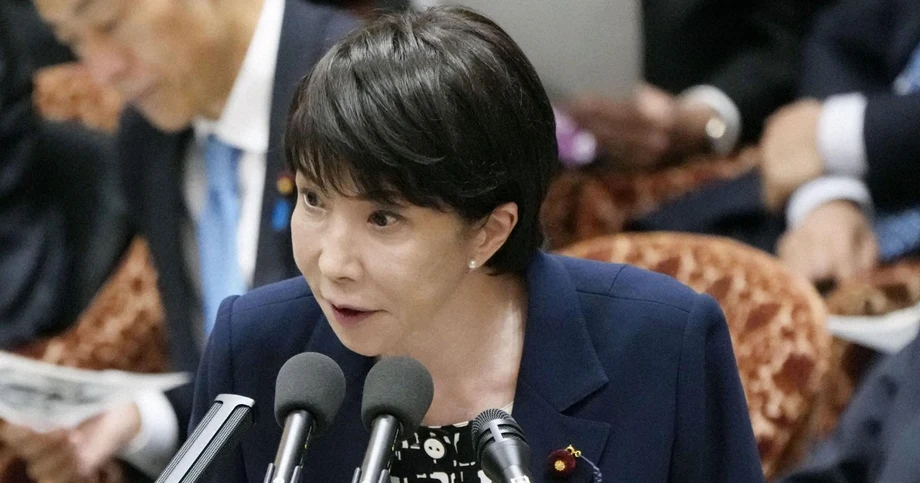
Takaichi has separately rejected nuclear sharing, an arrangement involving the deployment of U.S. nuclear weapons for joint operation. Speaking in parliament, she stated:
Nuclear sharing is not currently being considered in Japan, and it is not appropriate.
The government's emerging approach would leave all three principles in place but explain how an emergency could be handled. Officials considering a broader revision reportedly concluded that there was little purpose in changing the principles themselves.
The final wording, the definition of an emergency and the procedures for Japanese and American decisions have not been announced. Those details would determine how much practical freedom the proposed exception gives a future government.
The 2010 Statement at the Centre of the Proposal
Katsuya Okada, foreign minister under the former Democratic Party of Japan government, outlined the position during a parliamentary committee session in March 2010. He described an exceptional situation in which a temporary visit by a U.S. vessel carrying nuclear weapons was necessary to protect Japan.
Okada said the government would have to take responsibility for such a decision and explain it publicly:
"If Japan's safety cannot be guaranteed without allowing a temporary port call by a U.S. vessel carrying nuclear weapons, the government should stake its fate and make a decision, and explain it to the public," he said.
Successive governments have endorsed that position, including Takaichi's administration. Writing it into the National Security Strategy would give it a more formal place in Japan's security planning than a parliamentary answer alone.
Okada also led the investigation into a secret arrangement dating from the Cold War. A Foreign Ministry panel acknowledged that Tokyo had allowed U.S. vessels carrying nuclear weapons to visit Japanese ports without the prior consultation that was supposed to be required.
That history makes public explanation a central issue in the present debate. The proposed wording would address openly a possibility that earlier governments had handled through a concealed arrangement.
How Takaichi's Position Has Developed
Takaichi advocated reviewing the principles during the 2024 Liberal Democratic Party leadership election. Her concern was that preventing nuclear weapons from entering Japan could reduce the credibility of American protection in a crisis.
In her book Study of national power, published before that leadership contest, she argued that the ban on introduction was unrealistic if Japan expected U.S. extended deterrence, while supporting continued bans on possession and production.
After becoming prime minister in October last year, Takaichi initially said she shared Okada's position. At the House of Representatives Budget Committee on October 14, she said there was room to consider how the security documents should address his remarks and American extended deterrence. She also said the government maintained the principles as a policy.
The main steps behind the current debate are:
- March 2010: Foreign Minister Katsuya Okada described a possible emergency decision allowing a temporary visit by a U.S. vessel carrying nuclear weapons.
- 2022: Japan adopted its current National Security Strategy, pledging to uphold the three non-nuclear principles.
- 2024: Takaichi advocated a review during the Liberal Democratic Party leadership election.
- October 14: Takaichi told a parliamentary committee there was room to consider how Okada's position should be reflected in the revised documents.
- November 3, 2026: Interviews with former Okinawa Governor Denny Tamaki and Sasakawa Peace Foundation executive director Nobukatsu Kanehara set out opposing positions on retaining or reviewing the principles.
- Year's end: The government plans to complete revisions to the three security documents.
Why Access to Japanese Ports Matters
Extended deterrence means the United States promises to defend Japan using its full range of military capabilities, including nuclear weapons. Its purpose is to discourage an attack by convincing an opponent that the costs would be too great.
Takaichi's concern is that restrictions on access to Japanese ports could make that promise harder to carry out during an emergency. Japan faces growing Chinese military activity and North Korea's nuclear and missile threats, which the government cites as reasons to strengthen defence planning.
Foreign Minister Toshimitsu Motegi told parliament that the security environment had become much more severe since Okada's 2010 statement and that threats had expanded. He supported examining the issue within the framework of the existing three principles.
A U.S. programme to develop a nuclear cruise missile launched from the sea, known as SLCM-N, gives the debate a future operational dimension. The United States decided to develop the missile in 2018, and submarines carrying it could potentially visit Japanese ports in the 2030s.
The weapons a submarine carries and the system that powers it are separate matters. In this debate, the relevant issue is whether a visiting vessel carries nuclear weapons.
A Compromise Faces Political and Diplomatic Tests
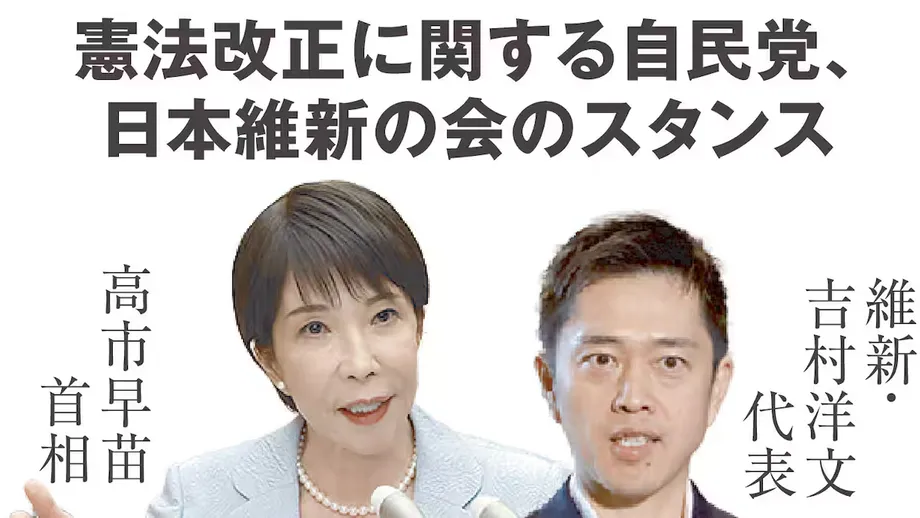
The Liberal Democratic Party includes members wary of revising the principles. Its junior coalition partner, the Japan Innovation Party, is more supportive of change. Keeping the principles while adding Okada's emergency position could offer common ground during negotiations over the documents.
The wording would also shape how other countries understand Japan's policy. Motegi said in October that the government needed to consider foreign reactions to explicitly including Okada's remarks in the security documents.
China could use an exception to support its accusations of Japanese militarism as Takaichi seeks stronger defence capabilities. Japan's current strategy pairs the non-nuclear principles with commitments to an exclusively defensive policy and to avoiding becoming a military power that threatens other countries.
The proposed compromise therefore has two audiences. Japanese officials want to reassure the public that the principles remain, while giving Washington a clearer statement of what Tokyo might permit in an emergency. The exact language will determine how those messages fit together.
Hiroshima and Nagasaki Seek a Firm Commitment
Hiroshima Mayor Kazumi Matsui and Nagasaki Mayor Shiro Suzuki met Takaichi to request that Japan uphold the three principles. They described them as the product of historic decisions by previous governments.
Suzuki called the principles a national policy and said he had asked the prime minister to maintain them. According to the mayors' account of the meeting, Takaichi did not directly address the principles in her response.
The mayors also requested Japanese participation as an observer at a review conference of the Treaty on the Prohibition of Nuclear Weapons beginning in late November. Takaichi responded that Japan needed to proceed cautiously in view of its security environment.
The treaty request and the argument over port access reflect the same tension for the two cities attacked with atomic bombs: how Japan can pursue nuclear disarmament while continuing to depend on U.S. nuclear protection.
Local Assemblies Reveal a Divided Response
At least 12 assemblies in Kumamoto Prefecture received motions calling for the principles to be upheld after Takaichi's administration took office. Six rejected the motions and six approved them, dividing those assemblies evenly.
The rejections came in the prefectural assembly and the city assemblies of Kumamoto, Hitoyoshi, Tamana, Amakusa and Koshi. Opponents gave reasons including the need for careful deliberation, the view that a motion was premature and the argument that future generations should decide.
Arao, Minamata, Yamaga and Kikuchi approved motions, as did the towns of Ozu and Kikuyo. Assemblies elsewhere, including Hiroshima Prefecture, Hiroshima and Nagasaki cities, and Kanagawa and Nagano prefectures, also approved calls to retain the principles.
Hirosaku Shiroshita, head of Komeito's Kumamoto chapter, said his party was encouraging assemblies with Komeito members to submit such motions. He argued that communities should speak before a concrete revision was under way and planned further efforts in Yatsushiro, Uto and Uki.
Former Okinawa Governor Denny Tamaki has also urged the government to retain the principles. In an interview published on November 3, 2026, he said permission to bring in nuclear weapons would have a major effect on municipalities hosting U.S. bases. Nobukatsu Kanehara, executive director of the Sasakawa Peace Foundation, advocated a review in a paired interview.
For those municipalities, an emergency exception would connect national strategy directly to decisions about access to local facilities. Their concerns will sit alongside alliance planning and coalition negotiations as the government prepares the final text.
Key Points
- Japan is considering an explicit emergency exception allowing entry by U.S. vessels carrying nuclear weapons.
- The government reportedly intends to retain the three non-nuclear principles while changing wording in its security documents.
- The proposed exception draws on a parliamentary statement made by Foreign Minister Katsuya Okada in March 2010.
- Takaichi has rejected nuclear sharing while leaving room to consider emergency access.
- Hiroshima and Nagasaki's mayors have requested a firm commitment to the principles, while local assemblies have taken differing positions.
- The government plans to revise the National Security Strategy and two related documents by year's end.