Why Did a Court Clear the Way for the Dock?
A Louisiana state court has dismissed a lawsuit that had stalled a $400 million financing plan for a new dock on the Mississippi River. The Port of South Louisiana can now move ahead with a public hearing on the bonds that will pay for the dock, which is a key piece of the $5.8 billion steel mill that Hyundai Steel and Posco are building in Ascension Parish.
Contents
- Why Did a Court Clear the Way for the Dock?
- What Will the Dock Actually Do?
- How Will the $400 Million Be Repaid?
- What Did the Lawsuit Argue?
- What Will the Mill Make, and Who Will Buy It?
- Who Owns the Mill and Who Is Paying?
- What Do the Jobs and Power Look Like?
- Who Is Pushing Back?
- What Is Still Undecided, and When Are the Next Dates?
- Key Points
The fight began when residents and environmental groups sued, claiming the port had not properly told the public about the bond plan. A Louisiana state court granted a temporary restraining order on November 16, which is a court order that pauses an action while a case is heard. The hearing set for November 17 was postponed. The court dismissed the case the next day as premature, because the port's commission had not yet given the bonds final approval. Some later coverage dates the dismissal to November 18, but the court action came a day after the restraining order.
Julia Fisher-Cormier, executive director of the Port of South Louisiana, said the ruling confirmed the port's position from the start.
This ruling reinforces what we have maintained throughout this process: the Port of South Louisiana acted properly and in accordance with its responsibilities. This is great news for Louisiana and allows us to take the next step with this historic project.
What Will the Dock Actually Do?
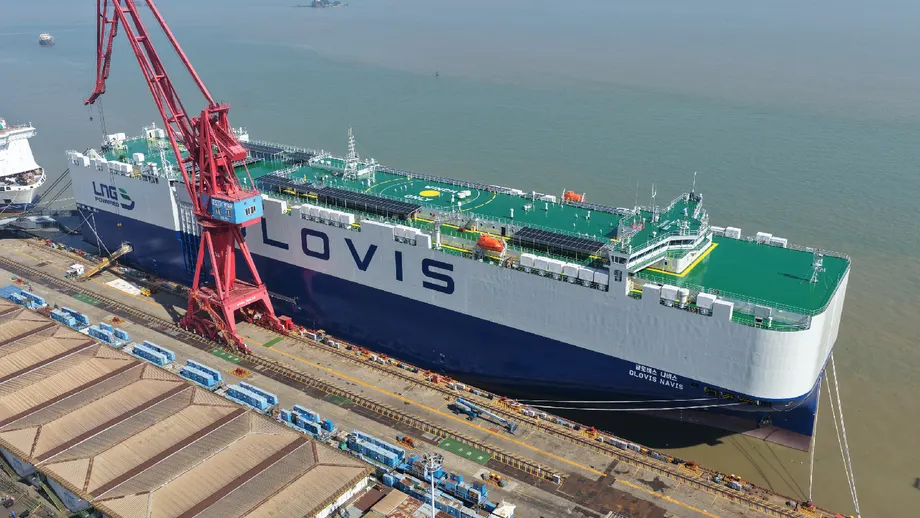
The $400 million will build docks, cargo terminals and conveyor belt systems on the Mississippi River that can berth large vessels. These facilities let ships unload the iron ore that the mill needs to make steel. The dock is also meant to serve the wider Riverplex MegaPark industrial zone and other industrial development along the river's west bank.
Louisiana can accommodate Panamax-class vessels, which are ships sized to fit the locks of the Panama Canal and can carry about 70,000 tons. The state's position near major US rail networks is expected to cut freight costs for raw materials coming in and finished steel going out.
Hyundai-Posco Louisiana Steel plans to import about 3.6 million tons of iron ore a year from countries such as Brazil, according to data released by Louisiana Economic Development last year. The ore will be turned into direct reduced iron, a form of iron made by removing oxygen from ore without melting it. That iron then goes into an electric arc furnace, a furnace that melts metal using electricity, along with steel scrap bought in the US.
How Will the $400 Million Be Repaid?
The port will issue revenue bonds, which are debt repaid from the money a project earns. In this case the bonds would be repaid exclusively through revenue from leasing the dock to Hyundai-Posco Louisiana Steel, so the company's rent is the income that pays investors back.
The $400 million port bond is part of a package approved by the Louisiana State Bond Commission in September, the state panel that signs off on public borrowing. That package is up to $900 million, with the remaining $500 million set aside for the mill's production facilities. A different figure of up to $1.3 billion has also been reported for the same approval, and the sources do not explain the gap between the two totals.
What Did the Lawsuit Argue?
In an October press release, the Louisiana Bucket Brigade described a lawsuit brought by the Center for Constitutional Rights on behalf of Rural Roots Louisiana and the Louisiana Bucket Brigade. The case was filed in the 40th Judicial District in St. John the Baptist Parish, where the port is headquartered. The plaintiffs raised two main flaws in the port's process.
- Public notice: the plaintiffs say the port never told Ascension Parish residents about its plan to finance the terminal, which the law requires.
- Retroactive loan approval: on September 17, the port asked the State Bond Commission to approve a $15 million loan from Louisiana Economic Development, even though the loan had been signed on June 23, 2026. The state constitution requires approval before debt is issued.
Anne Rolfes, director of the Louisiana Bucket Brigade, explained the notice claim in her own words.
According to the Constitution of Louisiana, if you want to do something like build a massive industrial dock, you've got to tell people in the location that it's going to be built. Our lawsuit argues the Port of South Louisiana absolutely failed to do that.
The complaint also says that the former and current executive directors of the port signed agreements to keep information secret (NDAs) with Hyundai. Port agendas and minutes call the terminal 'Project Henry', and Bond Commission member Rep. Kendricks Brass also signed an agreement related to the project.
What Will the Mill Make, and Who Will Buy It?
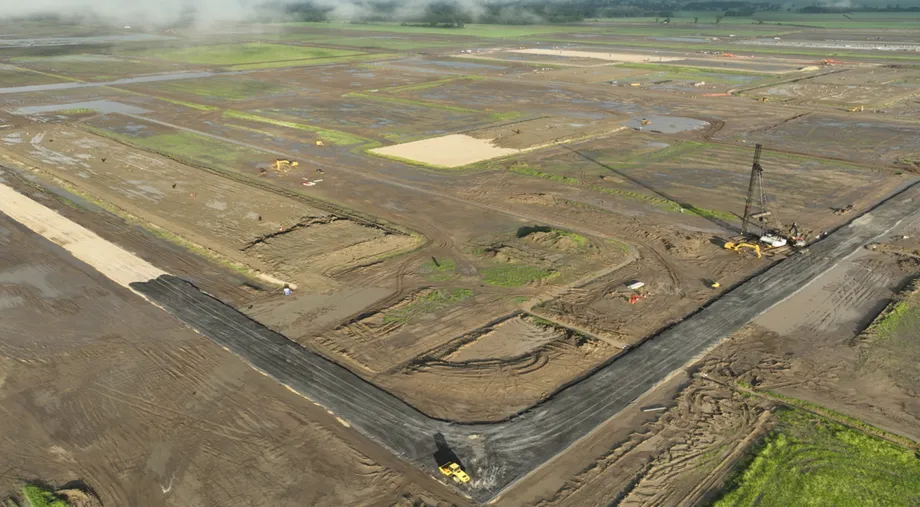
The mill will make 2.7 million tons of steel a year, including 1.8 million tons of automotive sheet and 900,000 tons of sheet for general use. It sits on a 7.37 million square meter site, which is roughly 1,800 acres inside Riverplex MegaPark. Another figure gives the site as 1,700 acres.
Kim Hyoung-jin, head of Hyundai Steel's North American business, told a September press briefing that buyers had already been secured for 1.4 million tons of the automotive sheet. That is about 78 percent of the automotive output. The buyers are 800,000 tons for Hyundai Motor and Kia's US plants and 600,000 tons for Posco. The sources do not say who will buy the remaining 400,000 tons.
The mill is designed to supply automakers in North America with steel made in the US, which helps it avoid the 50 percent US tariff on imported steel. Hyundai Motor Group Executive Chair Chung Euisun has previously said steel from the Louisiana facility should be used in the group's Atlas humanoid robot. He also said the company aims to sell to rocket builders such as SpaceX, AI data centers and power generation projects.
Who Owns the Mill and Who Is Paying?
POSCO Holdings will invest 858.6 billion won ($582 million) for a 20 percent stake in the mill, according to a document filed with South Korea's Financial Supervisory Service, the country's financial regulator. The ownership split is Hyundai Steel 50 percent, Hyundai Motor 15 percent, Kia 15 percent and POSCO 20 percent.
The four companies will provide half of the $5.8 billion project funding, which is about $2.9 billion. Outside borrowing covers the rest. POSCO's $582 million matches its 20 percent share of that $2.9 billion. POSCO is also selling its remaining stake in Nippon Steel, and it received 25.3 billion yen from a September sale of those shares. It expects to receive more than 200 billion won more as it sells assets that are not core to its business.
What Do the Jobs and Power Look Like?
Entergy Louisiana and Hyundai-POSCO Louisiana Steel signed an electric service agreement to power the mill. Phillip May, Entergy Louisiana's president and CEO, said in an Entergy news release that the company was pleased with the decision.
We're thrilled Hyundai Steel has decided to call Louisiana home, and together, we're powering new opportunities and strengthening our state's position as a leader in advanced manufacturing.
Louisiana Economic Development expects more than 1,300 direct jobs and about 4,100 indirect jobs, which adds up to 5,400 potential jobs across the Baton Rouge area. Direct jobs are the positions inside the mill, while indirect jobs come from suppliers and services that serve it. Direct jobs make up about one quarter of the total. The state's FastStart program has begun posting openings in business operations, administrative work, warehousing, logistics and engineering.
Training starts before the mill opens. River Parishes Community College has been building a workforce training center on Highway 945 in Donaldsonville since February, and the center is expected to finish in the first quarter of 2028. The company worked with the college to develop the training curriculum.
Who Is Pushing Back?
Twila Collins, a Modeste resident and member of Rural Roots Louisiana, questioned the public money behind the project. Her nephew is an operator who must travel to another parish for work, and she said local hiring is missing. Her words were released in a statement by the Louisiana Bucket Brigade.
My nephew is an operator, and he has to go to another parish to get work. They don't hire from Donaldsonville and our area. All of this is promises and nothing guaranteed.
Anne Rolfes, director of the Louisiana Bucket Brigade, criticized the incentives in the same release.
This is not economic development, its destruction. These deals with Hyundai have no enforceable mechanisms for employment and are lopsided giveaways from Louisiana taxpayers to a corporation that's not even from here.
At the time of reporting, none of the port, Hyundai-POSCO, Louisiana Economic Development or the Ascension Parish Government had responded to the lawsuit.
What Is Still Undecided, and When Are the Next Dates?
The port has not received final approval for the bonds, and the sources do not give a date for that final vote. The next step is the public hearing on the $400 million bond. The timeline so far looks like this.
- June 23, 2026: A $15 million loan from Louisiana Economic Development is signed before state approval.
- September 17, 2026: The State Bond Commission meets, and the port asks for retroactive approval of the loan.
- November 16, 2026: A Louisiana state court grants a temporary restraining order, and the hearing is postponed.
- November 17, 2026: The court dismisses the case as premature. Some later coverage dates the dismissal to November 18.
- Wednesday, November 25, 2026: Public hearing at a special port commission meeting on the $400 million bonds.
- First quarter of 2028: The River Parishes Community College training center is expected to finish.
- First quarter of 2029: The mill is expected to begin operation, with construction continuing through the end of 2028.
Key Points
- A Louisiana court dismissed the lawsuit over the $400 million dock financing after a November 16 restraining order.
- The port's bonds are repaid only from the dock lease paid by Hyundai-POSCO Louisiana Steel.
- The mill will make 2.7 million tons of steel a year and is expected to start operating in the first quarter of 2029.
- POSCO will invest $582 million for a 20 percent stake in the mill.
- The mill is expected to create more than 1,300 direct jobs and 5,400 potential jobs in total.
- Advocacy groups say the port failed to give public notice and sought after-the-fact approval of a $15 million loan.