A broadcast that began with addiction and moved to a museum in Patna
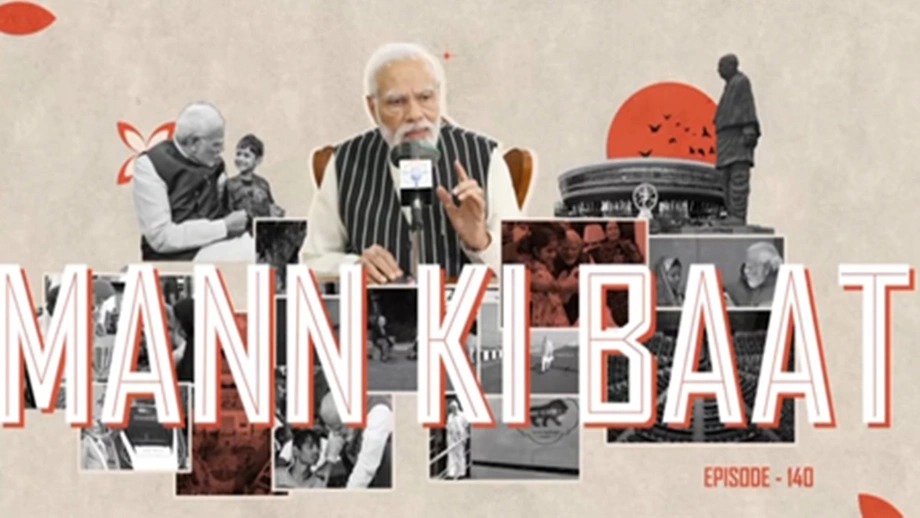
Prime Minister Narendra Modi's Mann Ki Baat reached its 140th episode on Sunday, 29 November 2026, opening at 11 am with drug addiction among young Indians and going on to lost mobile phones, cyber fraud, the training of government employees and a museum in Patna ranked among the world's best. The programme airs on the last Sunday of each month.
Contents
- A broadcast that began with addiction and moved to a museum in Patna
- How a stolen phone is blocked, and why the IMEI matters
- Two citizens whose reports cut thousands of connections
- A young man's account, and a campaign against drugs
- Government staff back in class, on a platform holding 7,000 courses
- Patna's museum at ninth in the world, and a Red Dot in Berlin
- Chocolate from camel milk, and a pavilion in Venice
- Cycles, cooking oil and a food bank in Canada
- From Surguja to booth 228: how the party listened
- Key Points
The numbers the prime minister read out carried much of the hour. Sanchar Saathi, the government's digital platform for telecom safety, has recorded more than 30 crore visits on its portal and about 3 crore app downloads, and 14 lakh lost mobile phones have been traced and handed back to their owners with its help. The same system has helped stop potential fraud losses of more than Rs 5,000 crore, with more than 1,600 institutions, among them banks, payment apps, telecom companies and police, connected to it.
Modi described what a lost handset costs a family: contact numbers, photographs and documents kept in one place. The platform, he said, lets an owner block the handset so that a thief cannot put a new SIM card into it and keep using it, and it leaves the police a trail to follow.
The prime minister's Mann Ki Baat page and the Information and Broadcasting Ministry's archive carry the official record of the broadcast, and the MyGov campaign page lists the episode among the programme's editions.
How a stolen phone is blocked, and why the IMEI matters
Every handset carries a unique identity number called the IMEI, a string of digits written into the phone itself rather than into the SIM card. Because the number belongs to the device, it survives when a thief swaps the SIM. Sanchar Saathi works on that principle.
An owner first files a complaint with the police, then enters the IMEI and a few details on the platform to have the handset blocked. Once the block is in place, any attempt to connect that phone to a network with a new SIM makes it easier for the police to find. "This platform is available in 23 languages and it is very easy to use," Modi said, asking listeners to spread word of it. "Our small precautions can make the digital world safer for all of us."
Banks, payment applications, telecom operators and police forces are among the institutions linked to the system, which lets a fraudulent call or message reported in one place be checked against records held elsewhere. The prime minister urged anyone who spots a suspicious call to log it even after escaping the trap, arguing that the number that failed with them may be the number that catches an elderly person next.
Two citizens whose reports cut thousands of connections
Modi named two men whose individual diligence, he said, has produced results at scale. Himanshu Singh, who lives in Pune, reported more than 300 suspicious numbers over the past year, and his reports helped get about 18,000 mobile connections cancelled. Vivek Alhuri, in Nellore in Andhra Pradesh, shared more than 900 numbers used for fraud, and his reports led to nearly 17,000 connections being cut.
The two cases put a figure on what the platform is built to do. A complaint that begins with one person's phone call becomes a record that banks, payment firms, telecom operators and police can act on together, which is why the prime minister presented citizen reporting as a civic duty rather than a technical chore.
A young man's account, and a campaign against drugs
Drugs came first in the running order. Modi said the talent of India's young people is discussed around the world and that they are working hard for large goals, but that addiction has become a serious obstacle in front of those dreams. He then spoke on air to a young man who had come out of addiction after hardship that, by the prime minister's account, included homelessness and separation from his family.
Friend, I will congratulate you once again for coming out of this terrible addiction to drugs. You have shown that when there is willpower, no goal remains impossible.
Modi told the young man that his words would give strength to others trying to quit, and that keeping the younger generation away from drugs matters for families and for the country. "I am satisfied that today the activity of society against drugs is increasing in the country," he said, adding that the Nasha Mukt Yuva Abhiyan, a campaign to keep young people off narcotics, is running with force and that young people have beaten addiction through their own willpower.
Union Minister of State Satish Chandra Dube, who listened to the episode, picked out the same passage as the broadcast's central message.
Today all of us countrymen got a very big message in Mann Ki Baat, a drug free India. The prime minister connected a person who had been addicted on the phone and he told his whole story. It is a very big message that addiction destroys your body and gives you nothing.
Government staff back in class, on a platform holding 7,000 courses
Modi turned next to iGOT Karmayogi, the online learning platform built under Mission Karmayogi, the national civil services capacity building programme. The platform is run by Karmayogi Bharat and is meant to shift training from rules to the requirements of a person's post.
Government employees, including those with 20 to 25 years of service, are using it to learn something new while carrying out their duties. "There are more than 7,000 courses in 17 Indian languages available for government employees on the iGOT Karmayogi platform," Modi said, adding that more than 1.75 crore course completions have been logged. More than 200 of the courses deal with artificial intelligence and emerging technology, subjects he said have drawn particular interest; one employee may be studying AI while another learns Indian Sign Language.
The catalogue also covers office procedure, cybersecurity, disaster management and the Right to Information Act, and is reached through a web portal or a mobile app. Central government staff, state and union territory employees, Anganwadi workers, health workers, teachers, police personnel and sanitation staff are among those enrolled. "Nagarik Devo Bhava is the core mantra of Mission Karmayogi," Modi said, using the phrase that treats the citizen as deserving of the highest regard.
Patna's museum at ninth in the world, and a Red Dot in Berlin
Bihar Museum in Patna placed ninth on a list of the world's 100 best museums, the highest position for any museum in Asia and ahead of the Louvre in Paris and The Met in New York, Modi said. He asked people to set aside time for local museums when they travel.
Gujarat's Anant Anadi Vadnagar Archaeological Experiential Museum won the Red Dot: Best of the Best award in Berlin this month, the first Indian museum to receive it. The museum stands at the excavation site, has a passage that lets visitors look several metres below ground, and holds more than 5,000 artefacts recovered from layers of different historical periods.
See the coincidence, I was born in Vadnagar and I am the MP of Kashi.
Modi also noted that the Shankaracharya of the Kanchi Kamakoti Peeth, who visited Vadnagar days earlier, described the town as the Kashi of Gujarat. Bihar's BJP president Sanjay Sarawagi said the mention of the Patna museum had lifted spirits across the state's 14 crore people.
Bihar minister Dilip Jaiswal linked the recognition to work done under Chief Minister Nitish Kumar.
When the prime minister talked about the museum today, the people of Bihar remembered Nitish Kumar, that in Nitish Kumar's time this museum, Bapu Sabhagar, Bapu Tower, Marine Drive and Ganga Path were built, which today are an example for the whole world and are counted among historic pages.
Chocolate from camel milk, and a pavilion in Venice
From Patna the broadcast moved to Kutch, where camel milk from herders is being turned into chocolate by Amul, alongside saffron flavoured milk and a powder that keeps without refrigeration and suits people who cannot digest lactose. Modi said exports of chocolate and cocoa products have risen 25 per cent over the past year, helped by startups working with Indian flavours and opening opportunities for farmers and women entrepreneurs.
He also reported a result from Italy. About 450,000 people visited India's pavilion at the Venice Art Biennale, an exhibition he called the Olympics of the art world, and visitors from around the world voted the pavilion the best.
Cycles, cooking oil and a food bank in Canada
Fit India's Sundays on Cycle campaign has completed 100 weekly editions without a break since December 2024, drawing about 37 lakh participants at more than 30,000 locations. With winter setting in, Modi repeated his call to cut daily cooking oil use by 10 per cent, framing both appeals around obesity and everyday fitness.
Service abroad featured as well. The Sai Dham Food Bank in Canada serves about 60,000 people every month in the Greater Toronto and Hamilton areas, including elderly people and persons with disabilities, and Kulwinder Sanghera of Red FM has turned community radio into a channel for connecting people with such work.
Union Home Minister Amit Shah, in posts after the broadcast, picked out the Sanchar Saathi discussion, the campaign against drugs and the 125th birth anniversary of painter Sobha Singh, for which a Rs 125 commemorative coin has been issued. Shah said the Home Ministry is working to carry these efforts forward at the grassroots so that the country becomes safer, healthier and more self reliant.
From Surguja to booth 228: how the party listened
Leaders across states organised listening sessions, several of them in public places rather than at party offices. Chhattisgarh Chief Minister Vishnu Dev Sai heard the episode in Surguja.
We are lucky that we listened to this programme in the land of Surguja, in the city of Maa Mahamaya. People across the country wait eagerly for the last Sunday of every month so that they can connect with the prime minister through this programme.
Uttar Pradesh BJP president Pankaj Chaudhary described the programme as nonpolitical and said the prime minister uses it to bring forward good work being done by people across the country, and to raise awareness of social issues, health, fitness, the achievements of young people and the success of startups. Deputy Chief Minister Brajesh Pathak listened at booth 228 in Babu Banarasi Das ward of the Lucknow Cantonment assembly segment, and said the contributions of young people, senior citizens and entrepreneurs receive particular attention.
In Odisha, Deputy Chief Minister Pravati Parida, who holds the tourism portfolio, listened with party workers and residents in Denu panchayat and said she was glad the prime minister himself is urging Indians to step out in good weather, visit tourist spots and see local museums. Rajasthan minister Jawahar Singh Bedham heard the broadcast at the BJP state office in the presence of Chief Minister Bhajan Lal Sharma and state president Madan Rathore, and said every episode brings something new and an address that inspires.
Kunwar Basit Ali, national president of the BJP Minority Morcha, said the prime minister brings forward inspiring people from different parts of the country and discusses health, art, children and senior citizens like a guardian, putting the country's varied experience on one platform. Sadhvi Niranjan Jyoti, chairperson of the National Commission for Backward Classes, said that since 2014 Modi has shared suggestions received from the public for building a developed India, many of them about national welfare, personal health and family wellbeing, with yoga as one example.
Key Points
- The 140th episode of Mann Ki Baat was broadcast at 11 am on Sunday, 29 November 2026, the last Sunday of the month.
- Modi opened with drug addiction among young people and spoke to a young man who had left addiction behind, saying willpower makes any goal possible.
- Sanchar Saathi has taken more than 30 crore portal visits, logged about 3 crore app downloads and helped recover 14 lakh lost phones.
- More than 1,600 institutions, including banks, payment apps, telecom companies and police, are connected to the platform, which is available in 23 languages.
- Potential fraud losses of more than Rs 5,000 crore have been prevented, according to the prime minister.
- Himanshu Singh of Pune and Vivek Alhuri of Nellore reported hundreds of fraud numbers, helping cut about 18,000 and nearly 17,000 connections respectively.
- iGOT Karmayogi offers more than 7,000 courses in 17 Indian languages, with more than 1.75 crore course completions and over 200 modules on AI and emerging technology.
- Bihar Museum in Patna placed ninth among the world's 100 best museums, the highest in Asia, and the Vadnagar museum in Gujarat won a Red Dot: Best of the Best award in Berlin.
- India's chocolate and cocoa product exports rose 25 per cent in a year, with camel milk chocolate from Kutch among the products cited.
- Fit India's Sundays on Cycle campaign completed 100 weekly editions, with about 37 lakh participants at more than 30,000 locations.
- Leaders in Chhattisgarh, Uttar Pradesh, Odisha, Bihar and Rajasthan held listening sessions, from Surguja to booth 228 in Lucknow Cantonment.