Walmart Removes Flipkart's Group Chief Executive
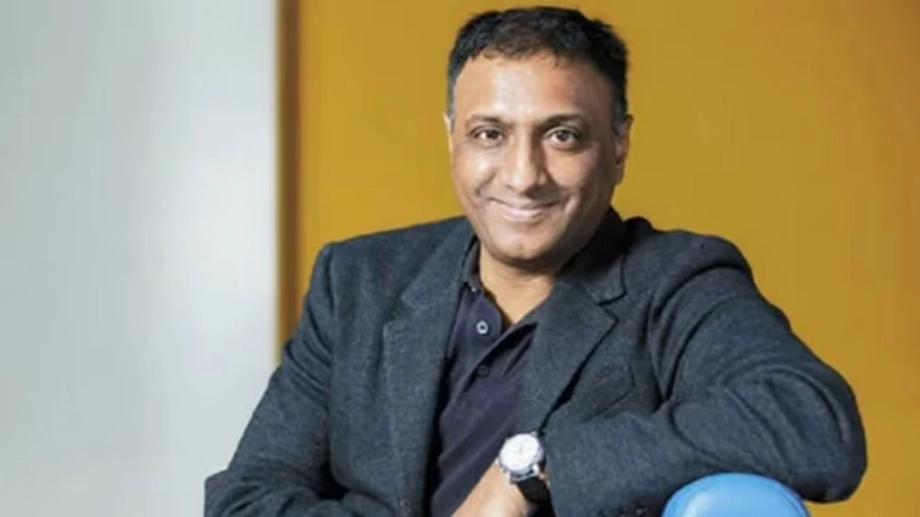
Walmart asked Kalyan Krishnamurthy to step down as group chief executive of Flipkart, according to three people aware of the development, ending a run of more than 11 years in which the Bengaluru company became India's largest online marketplace. Flipkart announced the change on November 25 and said he will leave on December 4. Balaji Thiagarajan, the chief product and technology officer, will lead the company alongside the board, and a successor is to be announced in the coming weeks.
Contents
- Walmart Removes Flipkart's Group Chief Executive
- What the Kickback Investigation Covers
- Two Stints, and a Company Remade
- Two Trips to Bentonville, Eight Years Apart
- The Numbers That Built the Pressure
- Why the Listing Kept Sliding
- A Thousand Former Employees Ask for Their Money
- The Executives Leaving With Him
- Quick Commerce Is Where the Fight Now Is
- What the Change Means for Investors
- Key Points
The decision was taken in Bentonville, Arkansas, not in Bengaluru. Two people said Walmart held a couple of meetings with Krishnamurthy before the announcement, and that a handover of about six months is the norm when a chief executive leaves. This one was finished in roughly a week. One of the people described it as an unceremonious exit and said the move was driven by the parent company rather than by an executive choosing to go.
Chris Nicholas, president and chief executive of Walmart International, cast the change as a succession already under way. In an internal letter seen by Business Standard, he wrote that the company had been searching for a new leader while Krishnamurthy weighed his decision.
As Kalyan was weighing this decision, we've been hard at work to find a new CEO for Flipkart that can build on the strong foundation you've built and help keep the entrepreneurial spirit alive, while moving the company into its next era.
In Flipkart's public statement, Nicholas added that both companies had benefited from Krishnamurthy's leadership, crediting the governance he brought in. The statement did not give a reason for his departure and did not say what he will do next. It said the business grew more than fivefold under him, and put the group's scale at more than 500 million registered users, more than 150 million products across over 80 categories and 1.4 million sellers, including those on its Shopsy platform.
What the Kickback Investigation Covers
Behind the succession sits an internal investigation that has spread well beyond its first targets. The probe began in Flipkart's smartphones category and in luggage and travel accessories, and now reaches across the group, including the fashion platform Myntra and the travel booking site Cleartrip, the people said. The allegation is that executives took commissions from sellers in exchange for better visibility on the platform.
Whistleblower complaints placed the sums at more than ₹150 crore paid by vendors, a figure that became public and added to the pressure on Walmart. People familiar with the company's thinking said that as chief executive, Krishnamurthy was ultimately held responsible for failing to prevent the payments. Walmart also raised concerns about the performance of his top lieutenants and about new businesses that had not taken off or were slow to do so.
Those people described Walmart as conservative and old fashioned, an owner that gave Flipkart's managers wide freedom but dislikes public disputes. Coverage of the kickback claims fed that discomfort.
Two Stints, and a Company Remade
Krishnamurthy came to Flipkart as an outsider with a finance background. He spent seven years in eBay's Asia finance operations, joined Tiger Global in 2011 and arrived at Flipkart in May 2013 as interim chief financial officer representing the investor. He soon pushed into sales and category management, clashing with co-founder Sachin Bansal, who saw Flipkart mainly as a technology company. He left in November 2014.
He was brought back in June 2016 as Flipkart was losing ground to Amazon, given charge of the commerce business, and moved quickly to reshuffle the leadership team and personally approach smartphone brands including Xiaomi, Motorola and Lenovo to return to the platform. Flipkart regained momentum in the festive season. He replaced co-founder Binny Bansal as chief executive in January 2017 and became group chief executive in 2018.
- May 2018: Walmart acquires 77 per cent of Flipkart for $16 billion
- 2020: Flipkart expands into wholesale through the purchase of Walmart India
- April 2021: Cleartrip acquired
- July 2021: Shopsy launched; $3.6 billion raised at a group valuation of $37.6 billion
- 2022: focus shifts to conserving cash
- December 2023: Walmart puts in another $600 million
- August 2024: Flipkart Minutes takes the company into quick commerce
- May 2026: the listing is put on hold
- November 25, 2026: departure announced; last day December 4
Over the period Flipkart raised roughly $30 billion in primary and secondary capital from investors including Walmart, Google, Tencent, eBay, SoftBank, GIC and CPP Investments. Industry executives said he ran the company with the zeal of a founder, remained close to customers and shared credit with the senior team he built from 2016 onwards.
Two Trips to Bentonville, Eight Years Apart
Walmart's control over Flipkart's top job has a history. In the third week of April 2018, Sachin Bansal flew to Bentonville ahead of the rest of the Flipkart team as Walmart prepared to buy 77 per cent of the company for $16 billion. He met chief executive Doug McMillon and chairman Greg Penner and asked for the right to appoint the chief executives of Flipkart, Myntra and PhonePe. He did not get it, according to Mihir Dalal's book Big Billion Startup. Krishnamurthy, then running Flipkart, had made clear he would leave rather than work under Bansal again. Lee Fixel of Tiger Global, the largest investor, backed Krishnamurthy, and Bansal exited as part of the transaction. Walmart announced the deal on May 9, 2018, at a valuation of more than $20 billion, with Krishnamurthy staying on.
Krishnamurthy was in Bentonville again this month. Talks with Walmart's leadership over the proposed listing and a plan to give employees liquidity broke down, according to people familiar with the matter, and his departure followed.
The Numbers That Built the Pressure
Flipkart Internet Private Limited's filings with the Registrar of Companies for the year ended March 2026 show revenue from operations up 18 per cent to ₹1.45 trillion, or ₹1,45,880 crore. A crore is 10 million. Consolidated net loss narrowed only slightly, to ₹8,468 crore from ₹8,646 crore a year earlier, even as margins improved.
For Walmart, that combination was the problem. The people said the parent concluded that growth was not happening, new initiatives had not taken off, and losses stayed high. Krishnamurthy's defenders inside the industry point to what he built. Business strategist and independent director Lloyd Mathias said he turned the Big Billion Days festive sale into a major national shopping event and took it to about five times its earlier size.
He has grown the Big Billion Days five-fold since joining and turned it into a major shopping event. He also helped transition Flipkart from the startup culture built by the Bansals into a Walmart subsidiary with stronger corporate and retail governance. His departure, at this stage, could slow down that transition further.
Why the Listing Kept Sliding
Krishnamurthy had been preparing Flipkart for a stock market listing, having moved the company's domicile from Singapore to India and completed a corporate restructuring. The offering never came. In May, after Walmart chief executive John Furner visited Bengaluru, the parent asked Flipkart to defer the listing and to reach EBITDA breakeven by the end of the 2027 financial year before considering a fresh fundraise. EBITDA is earnings before interest, tax, depreciation and amortisation, a rough measure of whether day to day operations make money. A proposed funding round of $2 billion to $2.5 billion ahead of the listing did not materialise.
The two sides wanted different things. Krishnamurthy wanted the listing done quickly, according to a person familiar with the discussions. Walmart wanted profitability, cost cuts and tighter operations, and at the company's rate of spending an offering would have been hard to pull off. "Walmart wanted to do the IPO when Walmart is ready," that person said. Krishnamurthy acknowledged the limits of his own authority in July, saying the decision on a listing was not his to make.
A Thousand Former Employees Ask for Their Money
Delays to the listing left thousands of staff and former staff holding stock options they could not sell. In a collective representation dated October 10, about 1,000 former employees of Flipkart and its group companies wrote to the boards of Walmart Inc and Flipkart, seeking clarity on the offering and a way to cash in vested options. They also asked for parity with current employees if the company bought back shares.
Walmart came under pressure to provide that liquidity, partly because the dispute had become public, and the people said the parent felt Krishnamurthy had not been able to resolve it. Walmart's next step may be to clear the issue within this financial year by buying out outstanding options and putting in more money, possibly at a discount given that Flipkart is loss making. Nicholas told Bloomberg that Walmart does not need a listing to raise cash and is working on a plan to give employees liquidity.
The Executives Leaving With Him
Krishnamurthy's exit follows a year of departures from the group. Group chief financial officer Sriram Venkatraman left, as did Myntra chief executive Nandita Sinha, who moved to Swiggy to run Instamart. Flipkart veteran Ankit Jain joined Swiggy as senior vice president of operations. Gunjan Bhartia, Amer Hussain, Prathyusha Agarwal, Aakriti Chandra, Manikandan Rengaswamy and Nishitkumar Mehta are among other senior executives who left in the past year, and at least 14 vice presidents and senior vice presidents have gone over the same period.
People close to Krishnamurthy may follow him out, according to people familiar with the matter, and more exits are possible. Mathias said the lack of an exit route for option holders could hurt retention.
A prolonged IPO timeline could lead to attrition.
Quick Commerce Is Where the Fight Now Is
The leadership change lands in the middle of a costly contest. Flipkart entered quick commerce, the delivery of groceries and everyday goods within minutes, only in August 2024 with Flipkart Minutes, later than Blinkit, Swiggy Instamart and Zepto, which now compete alongside Amazon's own rapid delivery service. Flipkart has also been weighing a move into food delivery and has been chasing younger shoppers with new categories, while defending its main marketplace against Amazon and Meesho.
Investments beyond the core business have yet to pay for themselves. Cleartrip, the travel booking platform bought in April 2021, and Pinkvilla, a entertainment content business, are cited as ventures that have not made a meaningful contribution to group revenue. Flipkart's own accounting shows the cost of the expansion: a net loss of ₹8,468 crore in the last financial year.
What the Change Means for Investors
A chief executive leaving weeks before a hoped for listing is rarely read as good news by shareholders. Mathias said the timing could weigh on investor confidence and on the valuation Walmart might hope to achieve, and that buyers would probably want to watch the company through two or three quarters under new leadership before settling on a price.
Flipkart's argument is that the institution outlasts the individual. Industry executives said the senior team Krishnamurthy assembled since 2016 has built a culture that will survive him, and Nicholas said in his public statement that the company's potential in India remains the reason Walmart is invested. Krishnamurthy made a similar case about himself and the company.
It has been a privilege to be part of Flipkart's journey. I am proud of the scale of the business we have built, but equally proud of how we have built it. Strong ethics, integrity and high standards of governance have been central to Flipkart's growth. Our team has helped change how millions of Indians shop, expanding choice and creating opportunities for sellers, entrepreneurs and businesses across the country.
What is not yet known is who takes over, when the kickback investigation concludes, whether Walmart buys out employee options and at what price, and when a listing might happen. The 2027 financial year is now the deadline Walmart has set for breakeven, and the search for a new chief executive is the first test of how it intends to get there.
Key Points
- Walmart asked Flipkart group chief executive Kalyan Krishnamurthy to step down; Flipkart announced the change on November 25 and his last day is December 4.
- Chief product and technology officer Balaji Thiagarajan and the board lead in the interim, with a successor due in the coming weeks.
- An internal probe into seller kickbacks has expanded from smartphones and luggage and travel accessories to the whole group, including Myntra and Cleartrip.
- Whistleblower complaints allege more than ₹150 crore in kickbacks from vendors; Krishnamurthy was held responsible for not preventing them.
- Flipkart's revenue from operations rose 18 per cent to ₹1.45 trillion in the year to March 2026, while net loss narrowed to ₹8,468 crore from ₹8,646 crore.
- Walmart deferred the listing in May 2026 and set EBITDA breakeven by the end of the 2027 financial year as the target; a $2 billion to $2.5 billion funding round did not happen.
- About 1,000 former employees wrote to the Walmart and Flipkart boards on October 10 seeking liquidity for vested stock options.
- At least 14 vice presidents and senior vice presidents have left in the past year, along with executives including group CFO Sriram Venkatraman and Myntra chief executive Nandita Sinha.