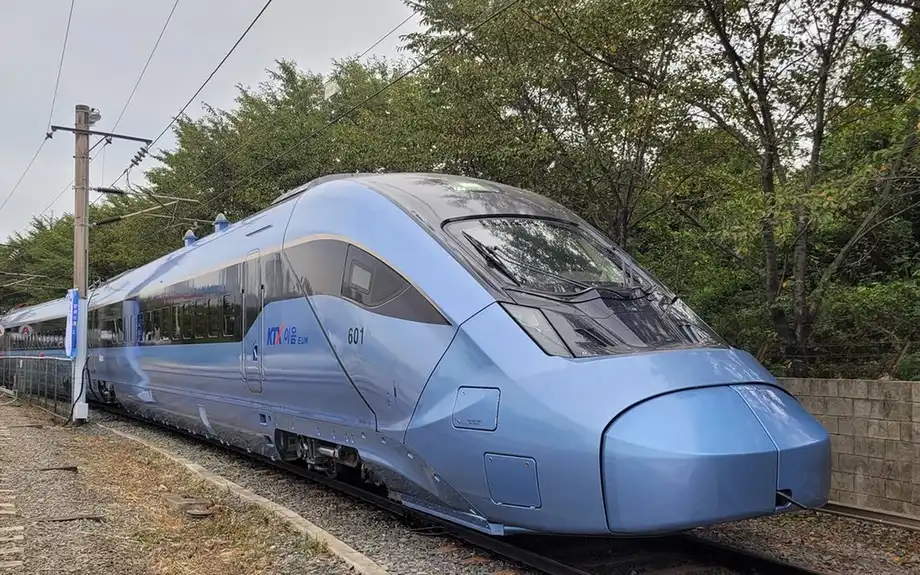
A record order becomes a partnership lasting decades
Morocco's order for 110 electric trains from Hyundai Rotem has expanded from the South Korean manufacturer's largest railway supply contract into a relationship worth nearly $2 billion. The 2025 agreement with the National Railway Office, known as ONCF, was valued at 2.2 trillion won, about $1.5 billion or roughly 15 billion Moroccan dirhams. A maintenance contract awarded in June 2026 added 748.2 billion won, close to $487 million, for work on the fleet over 20 years.
Contents
- A record order becomes a partnership lasting decades
- What the 110 Korean trains will do
- A contest lasting more than a year
- Financing and diplomacy prepared the ground
- The maintenance contract changes the scale of the deal
- Morocco wants factories and skills alongside the trains
- The 2030 tournament is a deadline, 2040 is the target
- Alstom and CAF complete the programme
- What the deal changes for suppliers and passengers
- Key dates in the programme
- What to Know
ONCF announced the distribution of its wider train programme on 26 February 2025. Three manufacturers were chosen to supply 168 trains for 29 billion dirhams, approximately $2.9 billion. Hyundai Rotem received the largest portion by number, while France's Alstom and Spain's CAF received the other orders. The contract marked Hyundai Rotem's entry into Morocco and surpassed its previous record, Australia's NIF project for trains with two passenger decks, worth 1.4 trillion won. The Moroccan contract was about 57 per cent larger by value in won.
What the 110 Korean trains will do
Hyundai Rotem will supply 110 electric trains with two passenger decks, comprising 440 cars, or an average of four cars per train. Sixty trains are intended for regional services and 50 for urban networks. They will be able to travel at up to 160 kilometres per hour and are expected to serve mainly Casablanca, Morocco's largest city, and surrounding areas. The railway project described with the order covers 250 kilometres, although the allocation does not specify how each section will use the regional and urban trains.
The Korean share amounts to 110 of the programme's 168 trains, or about 65 per cent of the fleet on order. Its stated value of 15 billion dirhams is also about 52 per cent of the 29 billion dirham procurement total. These proportions show why the contract matters to both parties: Morocco obtains most of its new trains from one supplier, while Hyundai Rotem gains a substantial base in a market where it had not previously operated.
Two passenger decks allow a train to carry more people without making it proportionally longer, an advantage where station platforms and busy urban tracks constrain train length. ONCF has not given a seating capacity for each Korean train. The design nevertheless fits the programme's central purpose, which is to move larger numbers of passengers around major urban areas and between nearby cities.
A contest lasting more than a year
ONCF selected the suppliers after an international tender that lasted more than a year and used a competitive dialogue. In this procurement method, the buyer discusses technical and commercial proposals with contenders before settling the final offers. ONCF said the three winners presented the strongest proposals on technical and economic grounds, rather than treating the purchase as a simple comparison of train prices.
Chinese manufacturer CRRC Zhuzhou Locomotive competed in the regional and urban categories but did not advance to the final selection. CAF and Hyundai Rotem subsequently became the principal contenders for the conventional train order, with the Korean company securing the 110 trains. Alstom, Spanish manufacturer Talgo and Chinese company CRCC were also named among the companies competing for Moroccan railway work as suppliers sought positions in the expanding market.
Initial descriptions of the Korean order had listed 40 intercity trains, 60 trains for very fast services and 50 regional trains. ONCF's final allocation instead placed all 110 Hyundai Rotem trains in rapid regional transport, including the stated regional and urban split. It assigned the 18 fastest trains to Alstom and the 40 intercity trains to CAF, making the final programme 18 plus 40 plus 110.
Financing and diplomacy prepared the ground
Financial preparations began a year before the awards. On 26 February 2024, Morocco's Ministry of Economy and Finance and the South Korean embassy signed a financing protocol for a new generation of ONCF trains. ONCF director general Rabie El Khlie and Yoon Hee-sung, head of the Export Import Bank of Korea, also signed a loan agreement to finance the acquisition of 110 regional trains from Korean suppliers.
South Korea's Ministry of Land, Infrastructure and Transport and Korail, the state owned Korean railway operator, supported the international campaign. Transport minister Park Sang-woo made an official visit to Morocco in 2024 to promote the country's railway industry. The Korean proposal included technology transfer and specialist training, alongside the trains themselves. Korail was also expected to contribute expertise in maintenance and repair.
A representative of Hyundai Rotem, speaking for the company after the award, attributed the result to coordination between government bodies and private industry.
We were able to win this order through the One Team Korea approach, which brings together the public and private sectors to highlight the competitiveness of South Korean railways internationally.
Spain arranged financing for its portion of the programme as well. Its government approved a repayable loan on favourable terms, valued at 7.8 billion dirhams, for as many as 40 intercity trains. The euro amount was capped at €754,302,566, and the arrangement was associated with OECD financing rules. The support linked supplier financing, domestic manufacturing interests and Morocco's effort to renew its fleet.
The maintenance contract changes the scale of the deal
When the supply award was announced in 2025, Hyundai Rotem and Korail were expected to maintain and repair the trains through separate agreements negotiated with the Moroccan authorities. That expectation has since acquired a much clearer financial scope, while plans for implementation also include cooperation between Hyundai Rotem and ONCF through a maintenance joint venture.
The June 2026 maintenance contract covers all 440 cars for 20 years. Its 748.2 billion won value, close to $487 million, pays for routine servicing, management of replacement parts and technical support during major overhauls. A major overhaul is the extensive work needed after substantial use, going beyond daily inspections and ordinary repairs to keep equipment suitable for continued service.
At the stated currency conversions, the supply and maintenance agreements total approximately $1.987 billion. The maintenance portion therefore accounts for close to a quarter of the combined amount. It also gives Hyundai Rotem a reason to retain staff, technical knowledge and parts arrangements in Morocco long after the final train is delivered.
For ONCF, a defined maintenance structure connects the purchase price with the cost and practical work of keeping the fleet available. Spare parts planning can reduce delays when components wear out, while technical support during heavy maintenance gives the local railway access to knowledge held by the original manufacturer. The ownership split and operating start date of the proposed joint venture were not given.
Morocco wants factories and skills alongside the trains
The procurement includes industrial compensation, technology transfer and the development of train production facilities. Industrial compensation, often called an offset, requires a supplier to direct investment, production or other economic activity into the buying country instead of simply exporting finished equipment. ONCF's programme connects these requirements with the creation of a domestic supply chain for railway equipment.
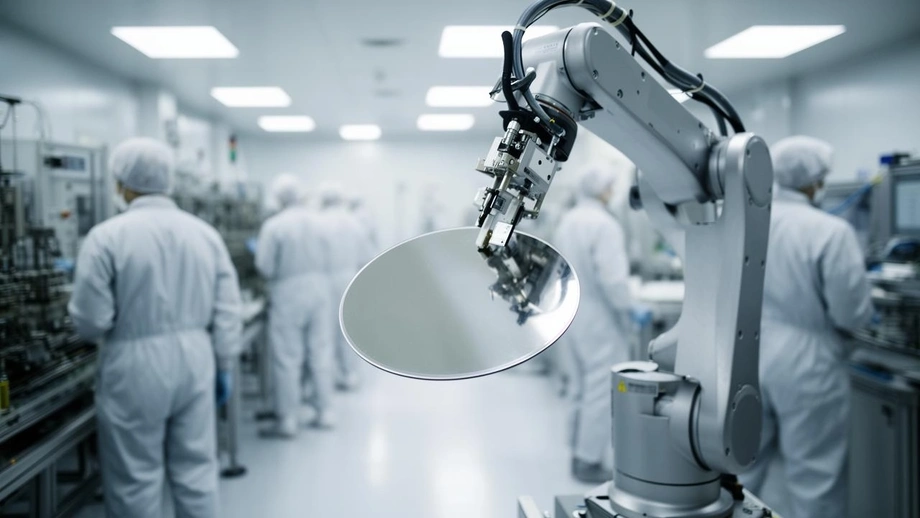
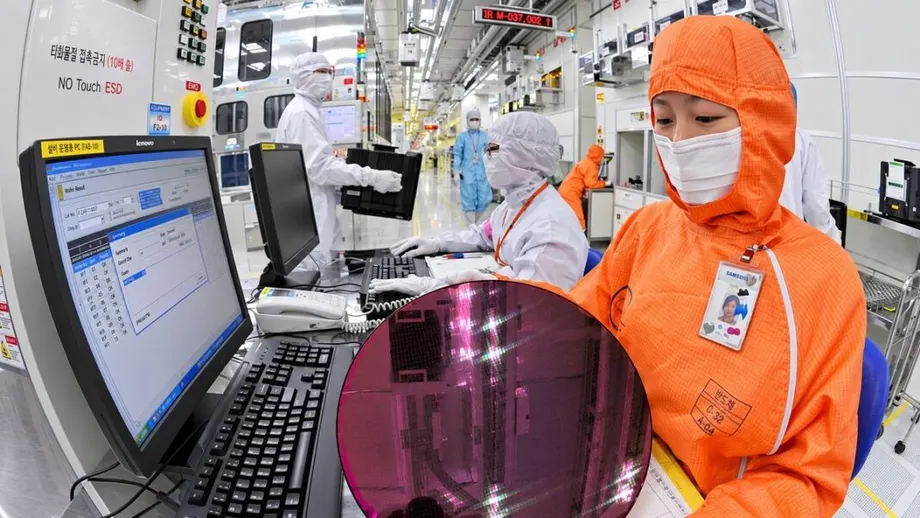
Hyundai Rotem had proposed building a factory in Morocco if it won the contract. Part of the train fleet is also expected to be manufactured locally, although the precise division between Korean and Moroccan production has not been set out. The proposed industrial activity is intended to develop Moroccan manufacturing skills and create a base from which trains or components could eventually be exported.
Specialist training is central to that ambition. Assembly work can establish production experience, while maintenance and repair training can build knowledge of electrical systems, braking, diagnostics and parts management. No factory location, construction timetable or production capacity has been announced, so the scale of local manufacturing and the number of jobs it could support remain undecided.
The 2030 tournament is a deadline, 2040 is the target
Morocco is preparing its transport system for the 2030 football World Cup, which it will cohost with Spain and Portugal. It will become the second African country to host the tournament, after South Africa in 2010. The railway programme supports that preparation by expanding passenger capacity and by advancing plans to extend the line for very fast trains from Kenitra towards Marrakech, alongside faster regional services in the kingdom's main regions.
ONCF's longer planning horizon reaches 2040. By then, it aims to increase the number of cities served by rail from 23 to 43, an addition of 20 cities. It also wants about 87 per cent of the population to have access to railway services. The 168 train procurement supplies equipment for that expansion, but the urban reach described for 2040 will depend on tracks, stations and connections as well as vehicles.
For passengers around Casablanca, the immediate promise is more urban and regional capacity from the 50 urban and 60 regional trains. For travellers between major cities, the CAF and Alstom orders address other parts of the network. No delivery timetable or date for the Korean fleet's entry into passenger service was included in the award details, leaving the sequence in which these benefits will arrive unclear.
Alstom and CAF complete the programme
Alstom's portion comprises 18 Avelia Horizon trains designed for speeds of up to 320 kilometres per hour. The company had been selected in 2024, and the €781 million contract was signed in March 2025. These trains support the extension of very fast services towards Marrakech, rather than the urban and regional duties assigned to Hyundai Rotem.
CAF is supplying 40 intercity trains, completing the three way division of the 168 train order. Its full corporate name is Construcciones y Auxiliar de Ferrocarriles. The Spanish financing arrangement covering up to 40 intercity trains provided financial support for this segment while the final allocation was being completed.
The Moroccan business later contributed to Alstom's regional results. In the first half of its 2026 to 2027 financial year, the company's sales in Africa, the Middle East and Central Asia rose 16 per cent to €894 million. Alstom also recorded a group net loss of €954 million, placing the regional sales growth beside a much weaker worldwide financial result.
What the deal changes for suppliers and passengers
The combined contracts give Hyundai Rotem four connected roles: train supplier, maintenance provider, industrial partner and potential local manufacturer. That is a broader commitment than delivering vehicles and leaving their operation entirely to the buyer. For Morocco, it creates an opportunity to combine additional passenger capacity with technical training and domestic production, provided the promised industrial facilities and partnerships are put into practice.
The bidding outcome also shows how railway competitions are changing. Price and the number of trains remain central, but maintenance for two decades, financing arranged before the award, staff training and local investment all formed part of the contest. The next measurable milestones will be factory commitments, delivery dates, the start of passenger services and the operating arrangements for maintenance.
Key dates in the programme
The procurement developed through separate financing, supply and maintenance decisions before reaching its present scope.
- 26 February 2024: Morocco and South Korea signed a financing protocol, while ONCF and the Export Import Bank of Korea agreed a loan for the 110 regional trains.
- During 2024: Alstom was selected for the fastest train segment, and South Korean transport minister Park Sang-woo visited Morocco to promote Korean railway suppliers.
- 26 February 2025: ONCF announced 168 train orders worth 29 billion dirhams, divided among Hyundai Rotem, CAF and Alstom.
- March 2025: Alstom signed its €781 million contract for 18 Avelia Horizon trains.
- June 2026: Hyundai Rotem secured the 748.2 billion won contract to maintain all 440 Korean supplied cars for 20 years.
- 2030 and 2040: Morocco is preparing for the World Cup first, then pursuing ONCF's targets of 43 cities served by rail and access for about 87 per cent of the population.
What to Know
- Hyundai Rotem's 110 train supply contract is worth 2.2 trillion won, about $1.5 billion or 15 billion Moroccan dirhams.
- The Korean order comprises 440 electric cars, with 60 trains for regional routes and 50 for urban services, mainly around Casablanca.
- A maintenance contract awarded in June 2026 added nearly $487 million and covers the fleet for 20 years.
- The two Korean contracts total approximately $1.987 billion at the stated conversions.
- Morocco's complete programme covers 168 trains worth 29 billion dirhams, including 40 intercity trains from CAF and 18 Avelia Horizon trains from Alstom.
- Technology transfer, specialist training, local production and a possible Moroccan train factory accompany the vehicle purchases.
- Delivery dates, the trains' passenger capacity and the proposed factory's location and timetable have not been given.