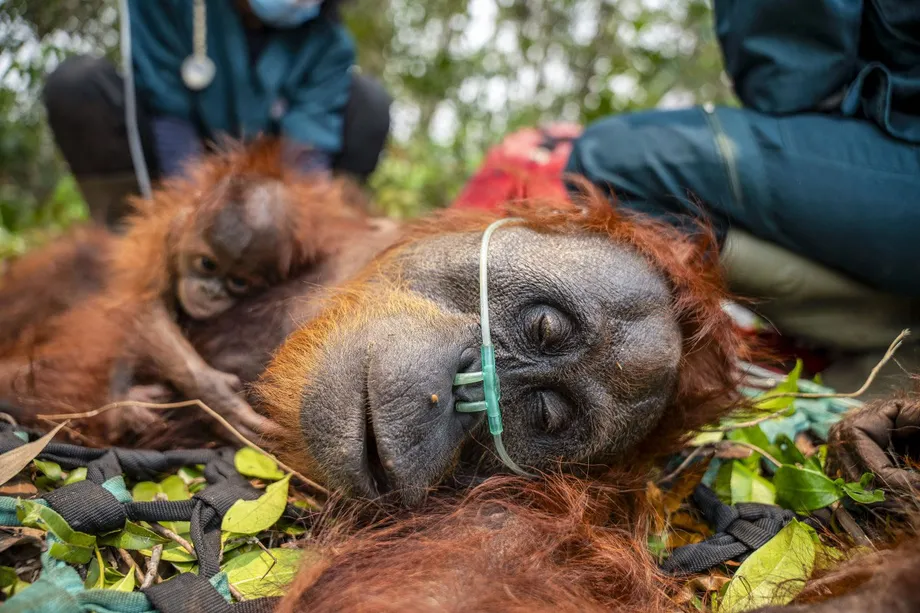
A red code for the forests of Batang Toru
Only an estimated 658 Tapanuli orangutans remain in the wild after floods and landslides triggered by a cyclone killed at least 58 of the apes in 2025. The disaster struck the Batang Toru ecosystem in South Tapanuli regency, North Sumatra, the only place on Earth where this critically endangered species lives. Often described as the world's rarest great ape, the Tapanuli orangutan now faces a deeper extinction crisis as forest destruction, industrial projects and fires across Indonesia shrink the space available to wildlife.
Contents
- A red code for the forests of Batang Toru
- Why this ape has so little room for loss
- A mine, a power plant and a proposed moratorium
- Fire and smoke drive Bornean orangutans from their homes
- What rescues in Kalimantan reveal
- Why moving animals cannot replace protecting forests
- The human cost and the national policy test
- What the 2030 biodiversity deadline means
- What to Know
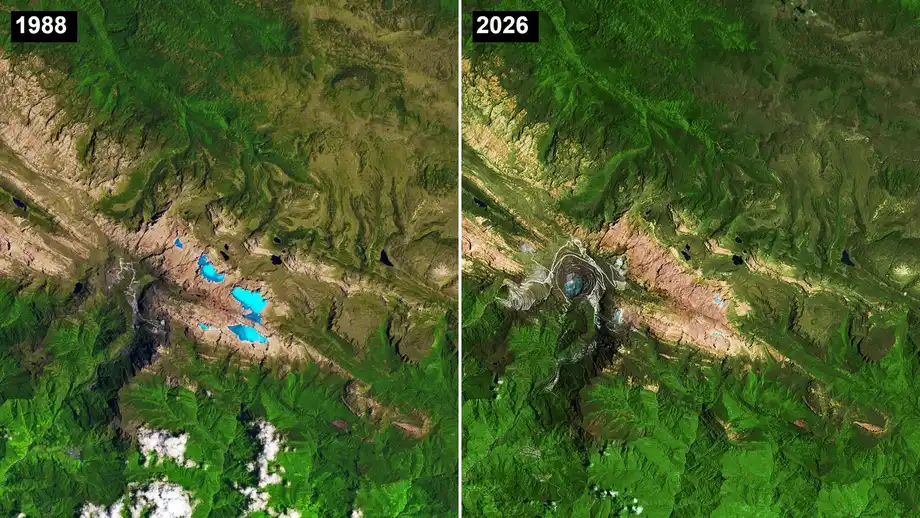
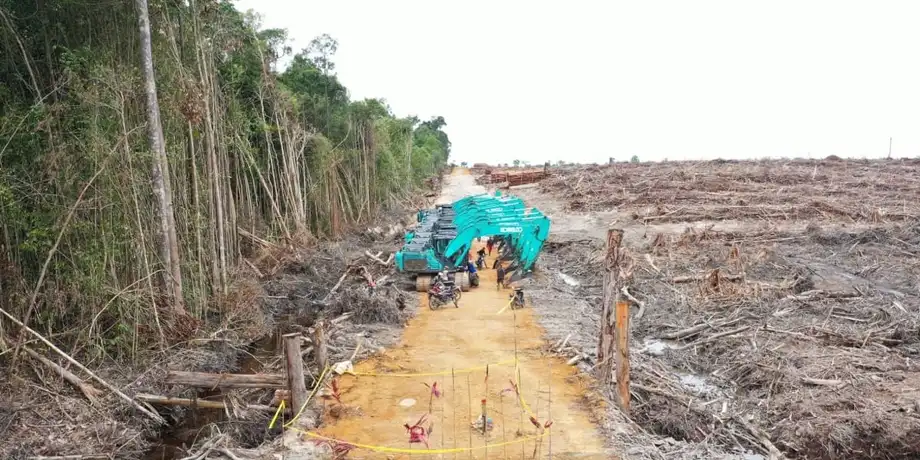
Environmental groups Mighty Earth and Satya Bumi issued a red code warning in a joint report published on October 24. Their assessment found that the 2025 disaster damaged more than 8,300 hectares of forest in western Batang Toru, the largest of three forest blocks inhabited by the orangutans. Damage on that scale matters intensely for a species with such a small population and no second home elsewhere.
Forest fragmentation adds another danger. When continuous forest is divided into separated pieces, orangutans can lose access to food, nesting trees and potential mates. Restoring the canopy, meaning the interlocking crowns of trees that the apes use to travel, feed and nest, is central to the recovery plan proposed by conservation groups. They want the remaining forest protected before restoration begins, arguing that replanting cannot keep pace with further destruction.
Several dates show how quickly the pressures have accumulated:
- In 2025, floods and landslides killed at least 58 Tapanuli orangutans. Weeks later, President Prabowo Subianto suspended the business permits of 28 companies over alleged environmental breaches that worsened the disaster.
- Earlier in 2026, the government allowed the Martabe gold mine and the Batang Toru hydropower project to resume operations after environmental compliance requirements were said to have been met and fines paid.
- From July through October 2026, more than 2.8 million hectares burned across Indonesia, with Kalimantan hit especially hard.
- On October 16, United Nations Secretary-General António Guterres addressed global biodiversity talks. The red code warning for Batang Toru followed on October 24.
- On November 20, rescuers moved an orangutan named Rajiv from a burned forest area in Ketapang to a surveyed habitat elsewhere in West Kalimantan.
Why this ape has so little room for loss
Alexander Nater and colleagues scientifically described Pongo tapanuliensis as a distinct species in the journal Current Biology in November 2017. People had known about the Batang Toru orangutans for more than a century, but they had previously been treated as part of the Sumatran orangutan population. Research into their bodies, behaviour and genetics established that they were different enough to constitute a third Indonesian orangutan species, alongside the Sumatran and Bornean species.
Population estimates have varied considerably. Nater and colleagues estimated about 800 individuals in 2017, while a 2018 estimate by Kuswanda put the number between 495 and 577. Indonesia's Orangutan Conservation Strategy and Action Plan for 2019 to 2029 used a range of 577 to 760. Those figures come from research conducted between 2017 and 2019 and are not current population counts. The estimate of 658 is the figure now being used after the 2025 disaster.
Genetic research makes the species even more unusual. Analysis of mitochondrial DNA, genetic material commonly used to trace maternal ancestry, suggests that the Tapanuli lineage separated from other orangutans about 3.5 million years ago. Despite living in Sumatra, it is genetically closer to Bornean orangutans through that line of evidence. Tapanuli orangutans also have longer, thicker hair that tends to curl at the ends, relatively small heads and flatter faces than their Sumatran relatives.
Their daily lives show why protecting individual trees matters. Researchers have recorded the apes nesting in about 91 tree species from 27 families. Trees in the Fagaceae family are frequently selected because their strong structure and closely spaced horizontal branches can support a nest. The average nesting tree stands more than 16 metres tall. Orangutans tend to stop nesting in a tree while it is fruiting, possibly reducing encounters and competition with other animals. In lowland dry forests, they have also been observed using tools to obtain cemengang fruit (Neesia sp.), a behaviour previously associated with orangutans living in swamp forests.
A mine, a power plant and a proposed moratorium
Phil Aikman, Southeast Asia campaign director at Mighty Earth, says a moratorium should cover industrial expansion, smallholder agriculture and logging by small operators, all identified as drivers of rainforest destruction in orangutan habitat. He argues that limiting those activities would create room for canopy restoration and a broader recovery plan.
There is now far too little Tapanuli orangutan habitat left to allow any further rainforest loss.
Two major projects sit within the geographical range of the species. PT Agincourt Resources operates the Martabe gold mine on the western edge of the habitat. The company is a subsidiary of the global conglomerate Jardine Matheson and is developing a new pit to the north. PT North Sumatra Hydro Energy, a power producer with Chinese backing, is developing the Batang Toru hydropower plant. The government designates the plant as a national strategic project intended to strengthen Sumatra's electricity system, and the company is accelerating operations at its facility, which has a planned capacity of 510 megawatts.
Both businesses were among those affected by the permit suspensions after the 2025 disaster, and both were subsequently allowed to resume. Their return illustrates the choice facing Indonesia: the mine and power plant promise economic activity and electricity, while their locations overlap with the limited range of an ape that cannot simply be moved to another island or forest.
Spokespersons for the two companies had not responded to requests for comment by the time of publication. No date has been given for a government decision on the moratorium sought by conservation groups.
Fire and smoke drive Bornean orangutans from their homes
Kalimantan, the Indonesian part of Borneo, has experienced a different but connected emergency. Roughly 300,000 blazes were recorded across the region between July and October as an exceptionally strong El Niño dried peatlands and winds helped spread fire. El Niño is a climate pattern that can bring hotter and drier conditions to Indonesia. More than 2.8 million hectares burned nationwide during those four months.
As of early October, at least 290 animals had been rescued from multiple locations across the country. That total included 96 Bornean orangutans relocated from burning peatland in four Kalimantan provinces. The International Union for Conservation of Nature warned that fires had affected 52 percent of the total Bornean orangutan population, including animals situated in national parks.
Peat makes these fires especially destructive. It consists of partly decayed plant material that normally remains wet, but drained or dried peat can smoulder for long periods and release dense smoke. At the Tuanan Orangutan Research Station in Central Kalimantan, where scientists have studied Bornean orangutans for more than 20 years, October readings showed particulate pollution at roughly 400 times the World Health Organization's safe threshold.
Erin Vogel, a primatologist at Rutgers University, described the orange and brown haze that settled over the research forest and silenced much of its usual wildlife activity.
It felt like you were on Mars. You didn't hear birds; you didn't hear insects; you didn't hear anything except trees burning and falling.
Vogel's team found a male orangutan they had followed for more than 15 years lying on the ground and breathing heavily. Days later, he was eating vegetation and climbing trees near the station, indicating a partial recovery. Other orangutans were forced from burned areas into surviving forest fragments, where more animals had to compete for fewer supplies of food and shelter.
What rescues in Kalimantan reveal
The Natural Resources Conservation Agency (BKSDA) and Yayasan Inisiasi Alam Rehabilitasi Indonesia (YIARI) rescued 72 orangutans from areas affected by fire in Ketapang and North Kayong districts, West Kalimantan, between August and late November. Nine came from a single area within about two months. YIARI programme operations director Argitoe Ranting said the number of rescues demonstrated the severe effects on wild populations and their habitat.
Rescue teams are also turning to technology. On October 14, residents reported two orangutans near a construction site at Kilometre 39 on Jalan Cilik Riwut in Sei Gohong Village, Palangka Raya City. A thermal drone, which detects heat rather than relying only on visible light, helped the Borneo Orangutan Survival Foundation's Nyaru Menteng team locate a female estimated to be between nine and ten years old. She was in relatively healthy condition.
Some discoveries point to deaths rather than successful rescues. Ranting also described the discovery of three skeletons suspected to be orangutans in one West Kalimantan area on October 28, 2023. He treated the repeated findings as evidence that threats to the animals had persisted beyond a single fire season.
Rajiv's rescue shows how a response can work. Villagers in Desa Mayak, Ketapang, found him in a forest area that had burned and reported his presence. YIARI's orangutan protection unit and village partners then verified the report and monitored his condition and movements. On November 20, BKSDA West Kalimantan, YIARI and PT Mohairson Pawan Khatulistiwa (MPK) moved him to the company's concession in Desa Ulak Medang.
Why moving animals cannot replace protecting forests
Translocation means capturing a wild animal and releasing it in another suitable habitat. Ranting said fires remove food sources, shelter and living space, leaving orangutans at risk even after flames and smoke are no longer visible. He stressed that a destination must have appropriate habitat and be capable of supporting the animals over the long term. MPK selected the receiving area after an ecological survey found conditions suitable for wildlife and relatively safe from the fire threat at Rajiv's original location.
West Kalimantan BKSDA head Murlan Dameria Pane described rescue operations as an emergency response rather than a substitute for lasting forest protection. He said healthy animals should be moved promptly to safe habitat, while surrounding communities help protect them after release. He also supports wildlife corridors, strips or networks of habitat that allow animals to travel between separated forest areas without being forced into farms, roads or settlements.
The MPK concession is estimated to provide habitat for around 1,000 orangutans, making its condition consequential for a much larger population than Rajiv alone. Company president director Silverius Oscar Unggul said MPK would maintain the ecological functions of its forest, including its peat ecosystem and wildlife habitat. Ranting paired that commitment with a call for patrols, biodiversity monitoring and sustainable ecosystem management.
The human cost and the national policy test
The wildlife emergency is unfolding alongside the human and economic toll of Indonesia's worst fire season in 11 years. An assessment by the Center of Economic and Law Studies put the combined economic and health costs between 359.58 trillion and 565.03 trillion rupiah. It estimated that physical asset destruction and disruptions to economic activity alone amounted to 340 trillion rupiah, equivalent to about 2.69 percent of national gross domestic product. Smoke placed 17.4 million people across 12 provinces at risk of acute respiratory infections, while the Health Ministry recorded more than 401,500 cumulative cases across seven provinces and 63 districts by early November.
The government has also announced action against eight companies linked to forest and land fires in Kalimantan. Land rights covering more than 42,000 hectares are to be withdrawn or withheld, while another three companies with concessions exceeding 11,000 hectares face inspection. Three businesses could lose their entire cultivation rights, known as HGU. An HGU is the legal authority to cultivate a specified area of land, and it is distinct from the permit authorising the business activity itself.
National figures on pulp sector deforestation provide another measure of the pressure on forests. Clearing for pulpwood plantations rose from about 5,600 hectares in 2017 to 24,300 hectares in 2022, more than four times the earlier area. That reversal followed a period between 2011 and 2017 when deforestation driven by the pulp industry fell by 95 percent. The figures show how quickly conservation gains can weaken when land clearing accelerates again.
What the 2030 biodiversity deadline means
Hundreds of national delegations and international groups gathered in Yerevan, Armenia, for the United Nations biodiversity talks known as COP17. Their task is to accelerate the global commitment to conserve 30 percent of land and ocean by 2030. The 30 by 30 framework was established four years ago and forms part of a wider package of 23 goals, including slowing species extinction and mobilising a US$200 billion nature fund by 2030.
A recent UN assessment found the world largely off track. Around 60 percent of the 196 signatories to the Convention on Biological Diversity have established national biodiversity strategies and action plans, but writing a plan is only the first step. Implementation determines whether forests remain standing, species recover and money reaches conservation work.
Indonesia ratified the convention in 1994 and has developed its own national biodiversity strategies and action plans. Yale University nevertheless placed the country 168th among 177 countries in its environmental assessment, highlighting the distance between formal commitments and conditions on the ground.
Addressing the summit on October 16, Guterres urged leaders to deliver more action, speed and will to "make peace with nature". His closing warning was brief.
There is no time to waste.
For the Tapanuli orangutan, the global targets come down to a small and specific place: the damaged forests of western Batang Toru, the canopy links that could reconnect its habitat and the survival of an estimated 658 remaining animals. For Bornean orangutans, success would mean fewer emergency rescues and more intact peat forest in which the animals can find food and raise their young.
What to Know
- An estimated 658 Tapanuli orangutans remain after at least 58 died in the 2025 floods and landslides in Batang Toru.
- More than 8,300 hectares of forest were damaged in western Batang Toru, prompting Mighty Earth and Satya Bumi to issue a red code warning on October 24.
- Conservation groups want a moratorium on further habitat destruction and restoration of the fragmented forest canopy.
- The Martabe gold mine and Batang Toru hydropower project overlap with the species' range and have resumed operations after suspensions.
- More than 2.8 million hectares burned nationwide from July through October, while fires affected 52 percent of the Bornean orangutan population according to the IUCN.
- Rescuers saved 72 orangutans in two West Kalimantan districts between August and late November, including animals displaced from burned peatlands.
- The world remains largely off track to meet its 2030 biodiversity goals, leaving Indonesia's forest protection and enforcement decisions with immediate consequences for both orangutans and people.