A full moon, 5,600 lanterns and a strict city ban
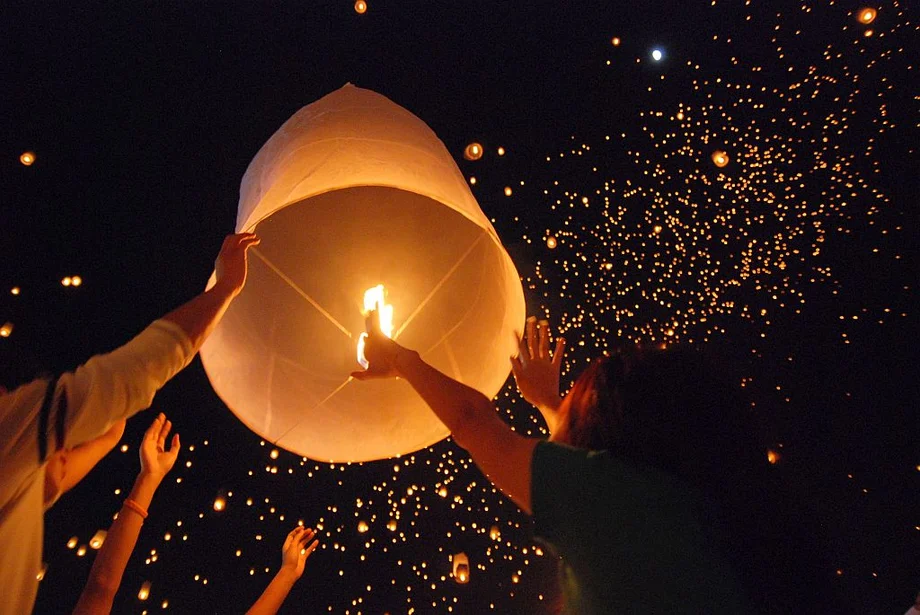
At around 9 pm on 24 November 2026, crowds at The CAD Cultural Center Lanna in On Klang, Mae On district, released 5,600 lanterns into the night sky. Video filmed around that time showed illuminated paper lanterns rising from the venue outside Chiang Mai city, with thousands of visitors taking part in a full moon celebration. The scene travellers often picture has been widely described as the inspiration for the floating lantern scene in Disney's 2010 animation Tangled.
Contents
- A full moon, 5,600 lanterns and a strict city ban
- Why the lanterns rise
- The white crow and the five Buddhas
- Where the famous photos really happen
- The Old City answers with clay lamps and candlelight
- The 2026 festival week, day by day
- The crowd becomes an airport record
- What the festival earned, and what the rules protect
- How Yi Peng sits beside Loy Krathong
- What travellers should know before they book
- Key Points
The same night had a different rule inside Chiang Mai's Old City. Releasing a sky lantern is banned inside Chiang Mai municipality. During the festival, the airport safety zone stretches 4.6 km either side of the runway and 18.5 km beyond each end, covering the Old City. A person who releases a lantern there can face up to five years in prison and a fine up to 200,000 baht. The result is a split festival: crowded ticketed fields outside the city for mass releases, and a free celebration with lamps in the historic centre.
Why the lanterns rise
Yi Peng is a Lanna festival of lights lasting three days and culminating on the full moon of the second month of the Lanna lunar calendar, usually in November. Yi means two and peng means full moon day. The Lanna calendar runs two months ahead of the calendar used in central Thailand, which is why Yi Peng and Loy Krathong often fall together. They are separate traditions: Loy Krathong is the national water festival, while Yi Peng belongs to northern Thailand's Lanna heritage. The tradition was also adopted in parts of Laos during the 16th century.
The lanterns are called khom loi, literally floating lanterns. Thin fabric, often rice paper, is stretched over a bamboo or wire frame; a candle or fuel cell heats the air inside, and the lantern lifts like a small hot air balloon. Releasing one is believed to free a person from misfortune, bad luck and the troubles of the past year. People make wishes for the coming year, offer respect to ancestors and give light as a Buddhist act of merit, meaning a good deed that brings spiritual benefit. The light is offered to Phra That Kaew Chulamanee, a heavenly stupa, or Buddhist monument, believed to hold a relic of the Buddha's hair.
The white crow and the five Buddhas
The ceremony is tied to Tamnan Ka Phueak, the legend of the White Crow and the Five Buddhas of the Bhadrakalpa, a Buddhist term for the present age of five Buddhas. In the story, a white crow laid five eggs in a fig tree near the Ganges. A storm swept the eggs into the river, and the mother crow died after believing her children were lost. Five animals raised the eggs: a hen, a naga, a turtle, a cow or sometimes a washerwoman, and a lioness. The five children later became hermits, found one another and wished to see their mother again.
The crow appeared in a heavenly form and gave them cotton twisted into a wick shaped like a crow's foot. That wick is still linked to phang prathip, small oil lamps used in Lanna Buddhist practice. The five sons are identified in order with Kakusandha, Koṇāgamana, Kassapa, Gotama and Maitreya. Gotama Buddha belongs to the present era, and his teachings are believed to last 5,000 years before decline; Maitreya is expected about 2,500 years from now. An older belief said a lantern landing on a house transferred bad luck to that household, an idea no longer commonly held.
Where the famous photos really happen
The mass releases are organised at venues beyond Chiang Mai's city limits. The Tourism Authority of Thailand listed the CAD event for 24 and 25 November at The CAD Cultural Center Lanna in On Klang, Mae On district. An Amazing Thailand post on 25 November highlighted the lantern filled sky and its connection with Lanna culture. Chiang Mai Arts and Design, known as CAD, bills its programme as Thailand's largest licensed mass lantern release, with more than 10,000 eco friendly lanterns each night.
On 24 November, 5,600 lanterns were counted in the sky, a figure that shows how one night's release can look enormous without matching the full capacity advertised for the series. Another release that day took place at the Tudongkhasathan Lanna meditation center, where Buddhist monks watched people release paper lanterns during the Yee Peng Lanna International lantern festival. The Tourism Authority of Thailand specified authorised releases on 24 and 25 November in designated areas of Mae On, Doi Saket and San Sai under aviation safety controls. Those controls matter because CAD lanterns are designed to fly about eight minutes and land within 4 to 5 km.
Tickets reflect the scale. CAD standard tickets were about 4,880 to 4,900 baht, with VIP tickets around 6,480 to 6,500 baht, and this year's CAD event had sold out. Other venues were selling from 1,590 baht, while one hostel offered a smaller temple lantern night at 1,300 baht with transport. Booking sites resell tickets at a markup, so the tier and night need checking before payment. A person who wants the famous sky filled with lanterns has to book the right venue, because the city itself does not allow that release.
The Old City answers with clay lamps and candlelight
Inside Chiang Mai, the Old City marks Yi Peng through temples, clay oil lamps and processions. The ceremony called Tam Phang Prathip Song Fa Haksa Mueang, roughly lighting sacred lamps to illuminate and protect the city, was in its 15th year in 2026. On 23 November, the procession began at 5.30 pm at Tha Phae Gate and followed Ratchadamnoen Road towards Wat Chedi Luang. Participants carried small oil lamps, while lamps were also lit at four historic city corners: Sri Phum, Hua Lin, Ku Hueang and Katam.
At Wat Chedi Luang, 730 dancers, a group also described as more than 700, performed the fon tian candle dance beneath the old chedi. The great brick monument was built in the Lanna period and damaged by an earthquake in the 16th century, yet it remains a centre of Buddhist life. Homes and temples also use khom fai, shaped paper lanterns; khom thue are carried on sticks, khom khwaen hang, and khom pariwat rotate in temple courtyards. Nearby Wat Phan Tao, known for its wooden assembly hall, added hanging lanterns and candles to the free city celebration, alongside krathongs floated on the Ping River and the Old City moat.
The 2026 festival week, day by day
Chiang Mai's programme stretched beyond one release. The Tourism Authority of Thailand placed Yi Peng events from 23 to 25 November and identified 24 November as the full moon date. The CAD Cultural Center Lanna event ran on 24 and 25 November, while the wider programme included Lanna lantern and oil lamp displays, cultural competitions and a grand krathong procession from Tha Phae Gate to Chiang Mai Municipality on 25 November. Chiang Mai airport's festival guide described local markets, weaving, basketry, pottery and northern Thai food before the coordinated evening release.
- 23 November: The Tam Phang Prathip Song Fa Haksa Mueang procession began at 5.30 pm from Tha Phae Gate to Wat Chedi Luang, with lamps lit at four historic corners.
- 24 November: Loy Krathong fell on the full moon. Mass sky lantern releases took place at CAD in Mae On and at the Tudongkhasathan Lanna meditation center; video from CAD showed the main crowd launch around 9 pm.
- 25 November: CAD held a second lantern night, and a grand krathong parade closed the Chiang Mai programme along Tha Phae Road.
- 23 to 24 November in Bangkok and 15 to 24 November in Sukhothai: Loy Krathong celebrations ran along the Chao Phraya River and among the historic temples of Sukhothai Historical Park.
Chiang Mai's final night ended with 26 illuminated krathong floats competing for the Royal Trophy of His Majesty the King. Decorative light arches lined Tha Phae Road, and a royal pavilion carriage carrying the trophy led the procession. The Chiang Mai Provincial Administrative Organization float featured Chinese actress Fan Bingbing. The United States Consulate General presented a float themed Freedom 250, with an illuminated amusement park design marking 250 years of innovation and more than two centuries of Thai and American friendship. The Chinese Consulate General showed robots, high speed trains, spacecraft and satellite models on a float about wisdom, mountains and waters, and Thailand and China moving forward together.
The crowd becomes an airport record
Chiang Mai International Airport handled 41,136 passengers and 279 flights on Thursday during the festival, the highest daily count on record. The previous mark was 40,888 passengers and 267 flights on 25 January 2019. From Monday to Thursday, the airport handled 144,974 passengers. Acting airport director Sakan Udon said passenger numbers were 17% higher and flights 22% higher than the same period in 2025, and he expected heavy traffic to continue over the weekend.
Before the festival, Chiang Mai Airport was expected to handle 30,000 to 35,000 passengers a day during the peak; Thursday's actual count was 6,136 above the upper end of that forecast. Longer queues formed at counters, and Sakan said extra ground staff would be deployed. Travellers were told to arrive at least two hours before domestic flights and three hours before international flights.
The surge also revived complaints about airfare displays on booking platforms. Former prime minister Thaksin Shinawatra said his secretary found Bangkok to Chiang Mai return fares starting above 13,000 baht, rising to 23,000 baht after a ticket change and reaching almost 30,000 baht through a booking website. He did not identify the airline, website or travel dates. He asked the Transport Ministry to cap airfares and called for a maximum price mechanism he named Cap Max, with adjustments for fuel costs.
Former prime minister Thaksin Shinawatra argued that airlines created to make flying affordable had shifted towards high prices while keeping economy service.
Carriers now compete to be a "High Cost Airline".
Following New Year fare cuts sought after the fare complaint, the government asked Thai Airways, Thai AirAsia, Bangkok Airways, Vietjet, Nok Air and Thai Lion Air to consider reducing New Year prices by 20% from legal ceilings and to display those ceilings clearly. Deputy Prime Minister and Transport Minister Phiphat Ratchakitprakarn said initial checks found no airline above Civil Aviation Authority of Thailand ceilings, while Deputy Transport Minister Siripong Angkasakulkiat pointed to resellers exploiting scarce festival seats. No agreed reduction or deadline for every carrier was announced. A parliamentary hearing was scheduled for 2 December.
What the festival earned, and what the rules protect
The Tourism Authority of Thailand's Chiang Mai office put the week's local tourism revenue at 4.62 billion baht. Its earlier forecast had put national Loy Krathong domestic spending at 6 billion baht, about US$180 million, from 1.83 million trips, up 8% year on year, with Chiang Mai revenue estimated at 3 to 4 billion baht. The 2025 Chiang Mai festival from 31 October to 8 November generated an estimated 2.76 billion baht, drew more than 184,800 visitors and pushed hotel occupancy to about 90%.
A profile of the CAD event put its usual draw at 30,000 to 40,000 international visitors from 110 countries and about 4 billion baht in activity. Chiang Mai's broader tourism base was already large: from January to October 2026, the city welcomed more than 9.7 million visitors and generated over 91.6 billion baht, up 3.24% year on year. Those figures show why the lantern festival is treated as a major economic event, not just a night of photographs. The 2026 crowd also came from 110 countries, and hotel occupancy reached 95.6%.
The rules around the release are part of that calculation. A 2020 provincial decree allowed lantern releases only on two specific days between 7 pm and 1 am, using natural materials of limited size in designated zones. In October 2025, six districts covering 39 subdistricts were designated Red Zones where lantern and balloon releases were banned, with penalties up to five years in prison and a 200,000 baht fine. Wire frame lanterns are prohibited because the wire survives the fire, can injure livestock and can tangle in power lines. Floating krathongs can add waste to rivers, and lantern debris can travel beyond the venue, so biodegradable materials are urged for both kinds of offering.
How Yi Peng sits beside Loy Krathong
Yi Peng belongs to the Lanna people of northern Thailand and grew out of the ancient Lanna Kingdom, founded in 1296, with roots traced to the earlier Hariphunchai Kingdom in Lamphun. Loy Krathong is celebrated across Thailand on the full moon of the 12th Thai lunar month. In Chiang Mai the two festivals share the same dates, so lamps rise into the sky while krathongs float on water. One tradition offers light to the Buddha and ancestors; the other expresses gratitude to waterways and respect for water.
The popular Nang Noppamas story links Loy Krathong to the Sukhothai era, but the written source for that story is Tamrap Thao Si Chulalak, composed under King Rama III, who reigned from 1824 to 1851. King Rama IV recorded the rite in 1863 as a Brahmanical practice, meaning one rooted in Hindu traditions, adapted by Buddhists to honour the Buddha and the water goddess Phra Mae Khongkha. The Ramkhamhaeng Inscription does not mention floating vessels.
Regional forms vary. Bangkok's celebration from 23 to 24 November centred on the Chao Phraya River and Wat Arun. Sukhothai's Phao Thian Len Fai festival ran from 15 to 24 November, lighting earthenware lamps around the historical park listed by UNESCO. Ayutthaya hosted the Colours of the River festival at the Ancient Palace and Wat Phra Si Sanphet. In Tak, Loi Krathong Sai floats long chains of coconut shell lights along the Ping River, and in Amphawa, Loy Krathong Kab Kluai floats banana stem sections with incense on the Mae Klong River.
Cambodia's Bon Om Touk ran from 23 to 25 November, marking the end of the monsoon season and honouring the Tonle Sap River. When flooded Mekong waters push that river backwards into Tonle Sap Lake, the lake expands into a huge breeding ground and supports one of the world's most productive inland fisheries. National authorities suspended state level festivities in central Phnom Penh to prioritise public infrastructure needs, while provincial events drew more than 2 million visitors.
What travellers should know before they book
Yi Peng follows the Lanna lunar calendar, so its dates move each year. For 2026, the full moon date was 24 November, and the main Chiang Mai programme ran from 23 to 25 November, with CAD lantern nights on 24 and 25 November. Anyone planning a future trip should check the calendar for that year before buying flights or rooms, because the busiest nights shift.
Visitors who want the mass release need a ticket at an authorised venue outside the municipality. Visitors who want a free evening can join the city's krathong floating on the Ping River or Old City moat and walk through temple grounds such as Wat Phan Tao. The two experiences are different: one is a managed launch with safety controls and a ticket price, while the other is a public celebration with lamps, water offerings and shrine decorations.
Flight and room planning also need extra time. Sakan advised domestic passengers to arrive two hours before departure and international passengers three hours before departure during the rush. The airport expected extra staff at counters, and the government's request for lower New Year fares still awaited airline decisions at the end of the festival week. The 2 December parliamentary hearing was the next confirmed date in the fare dispute.
Key Points
- On 24 November 2026, about 5,600 lanterns rose at The CAD Cultural Center Lanna in Mae On; CAD's licensed programme was billed at more than 10,000 lanterns each night.
- Sky lantern releases are banned inside Chiang Mai municipality, and the airport safety zone covers the Old City, with penalties up to five years in prison and a 200,000 baht fine.
- Yi Peng is a Lanna Buddhist festival lasting three days and ending on the full moon of the second Lanna lunar month; it is distinct from Loy Krathong but celebrated with it in Chiang Mai.
- The Old City marked the festival with the Tam Phang Prathip Song Fa Haksa Mueang procession, 730 candle dancers, lamps at four historic corners and krathongs on the Ping River and moat.
- Chiang Mai International Airport set a daily record with 41,136 passengers and 279 flights, while the Tourism Authority of Thailand's Chiang Mai office put local festival revenue at 4.62 billion baht.
- The fare dispute continued after prices neared 30,000 baht, with airlines asked to consider 20% New Year cuts and a parliamentary hearing set for 2 December.