A scooter escape that ended in intensive care
A man aged 49 who was suspected of killing a mother at her home in northern Sri Lanka died in intensive care early on Saturday, 28 November 2026, less than a day after his escape ended in a collision with a wild elephant. Police said he had swallowed poison before fleeing on a scooter. The cause given at the time of his death was damage to his internal organs resulting from poisoning.
Contents
- A scooter escape that ended in intensive care
- The victim and the attack at Galmaduwa
- Evidence, possible motives and the unfinished investigation
- A collision on a road shared with wildlife
- Anuradhapura's place in the 2026 death records
- What the annual figures reveal
- The elephant army created after a tusker's death
- Fences, crops and the risks facing rural families
- Key Points
The suspect had been arrested at Eppawala District Hospital and then moved under police guard to Anuradhapura Teaching Hospital. A court ordered that he remain in custody while receiving treatment. Earlier police information described him as an injured prisoner under armed guard; by early Saturday, he had died in the hospital's intensive care unit. His name has not been made public.
- Around 4:00 a.m. on Friday, 27 November, Gayani Iroma Dissanayake got up to prepare breakfast for her daughter at their home in Galmaduwa, within the Eppawala Police Division.
- Police say a man hiding behind the house attacked her with a machete, causing fatal injuries to her head and neck.
- The suspect allegedly drank poison, discarded the weapon near a canal and rode towards Mahailluppallama.
- Near the town's multipurpose building, his scooter collided with an elephant that had emerged from the jungle. He vomited at the scene and was taken to Eppawala hospital, where police arrested him.
- He was subsequently transferred to Anuradhapura Teaching Hospital under guard and remanded in custody by court order. He died there early on 28 November.
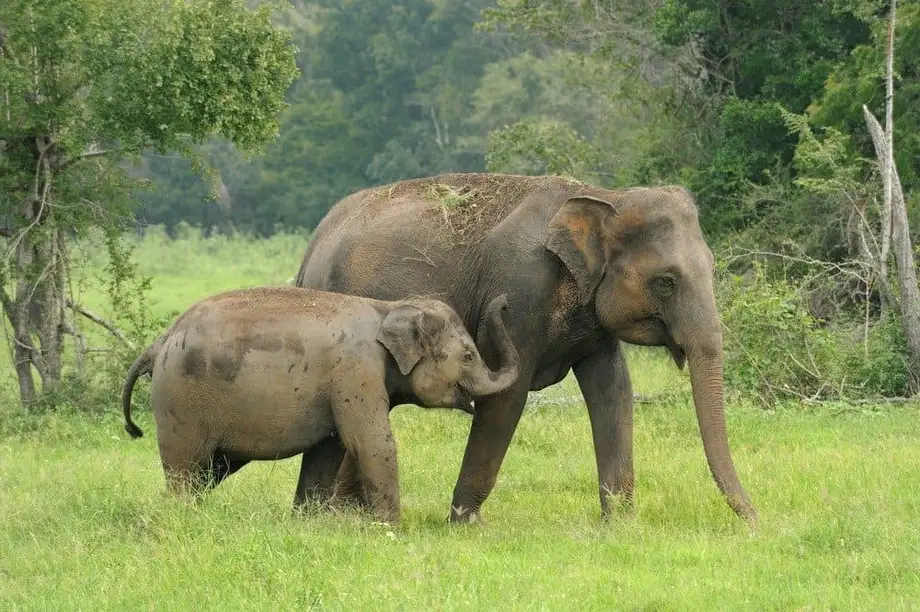
Witnesses told police that the elephant appeared to be unharmed and returned to the jungle after the collision.
The victim and the attack at Galmaduwa
Gayani Iroma Dissanayake, aged 45, lived with her daughter, aged 13, in Galmaduwa, Mahailluppallama. She was separated from her husband and worked at the Ipalogama office of the Coconut Development Board, a public body connected with Sri Lanka's coconut industry.
According to the police reconstruction, Dissanayake rose before dawn to prepare food for her daughter, who attends a private school in Anuradhapura. As she came out of the kitchen, the suspect allegedly attacked from behind after waiting at the rear of the house. The blows from the machete struck her head and neck, and she died at the scene.
The details establish a particularly vulnerable moment: a routine school morning had barely begun inside a family home. Police have not publicly described what the daughter saw or whether anyone else was nearby when the attack occurred.
Evidence, possible motives and the unfinished investigation
Police recovered a machete believed to have been used in the killing from a canal about 300 metres from Dissanayake's house. Investigators said it had been thrown away close to the route taken by the fleeing rider. The weapon is commonly called a manna knife in Sri Lanka.
The suspect was described as a resident of Kalakarambewa in Mahailluppallama who ran a pawn shop dealing in gold valuables. A pawn broker lends money with property left by the borrower as security. One police account said he had travelled from the Hingurakgoda area to Eppawala before the killing, while preliminary inquiries described him as having been closely associated with Dissanayake.
Investigators said they were examining a financial dispute as a possible motive. They also mentioned an alleged illicit relationship as another line of inquiry, but no confirmed motive has been announced. Police further said the man had allegedly threatened to kill Dissanayake on previous occasions.
Eppawala Police are continuing the investigation. Before the suspect's death, crime scene officers and the magistrate were expected to visit the house as part of that work. The suspect died before any trial. No date has been announced for the next judicial step, and postmortem findings have not been released.
A collision on a road shared with wildlife
Police gave two descriptions of the escape's abrupt end. An early account called it an elephant attack, while the more detailed sequence said the scooter collided with the animal after it stepped out of the jungle and onto the road. Both placed the crash near Mahailluppallama and the injured suspect at Eppawala hospital soon afterwards.
The elephant's departure apparently without injury distinguished the crash from the far deadlier encounters recorded elsewhere in Sri Lanka. The country has an estimated 7,000 wild elephants. They are regarded as a national treasure and protected by law, yet expanding farms and settlements increasingly overlap with the places where they feed and travel.
Encounters in which people or elephants suffer harm are commonly described as conflict between people and elephants. For villagers, the consequences can include deaths, injuries and the destruction of crops that provide food and income. Elephants can be shot, electrocuted or injured by explosive bait, while residents in remote villages sometimes retaliate against animals that raid their fields.
Anuradhapura's place in the 2026 death records
The Department of Wildlife Conservation recorded 289 wild elephant deaths between 1 January and 23 October 2026. The 289 recorded deaths included 42 from gunshot injuries, 34 from electrocution and 34 from explosive devices known as hakka patas. Those three causes accounted for 110 deaths, about 38 percent of the total.
Hakka patas are explosives concealed in food or other bait. They can detonate when bitten, causing catastrophic injuries to an elephant's mouth and jaw. Another 95 deaths in the 2026 records had no identified cause, almost one in every three cases.
The Eastern Wildlife Region recorded 60 deaths during that period, followed by Anuradhapura with 57 and Polonnaruwa with 42. Together, those regions accounted for 159 deaths, approximately 55 percent of the national figure. These are wildlife administrative regions, so the Anuradhapura total covers much more than Eppawala or the scene of the scooter collision.
The count ended on 23 October, before the death of the well known tusker Kavantissa intensified public anger. It also covers less than ten months, making it a partial record for 2026 rather than a complete annual total.
What the annual figures reveal
Recent official summaries have put Sri Lanka's losses at roughly 400 elephants and 150 people each year over a period of five years. A parliamentary document supplied a precise annual comparison: 455 elephant deaths were recorded in 2025, compared with 388 in 2024. The increase was 67 animals, or about 17.3 percent.
Environment Minister Dhammika Patabendi tabled that document in response to a question from MP L.M. Abeywickrama. It also recorded 160 people killed and 221 injured by elephants during 2025. That means 381 people were killed or injured, with injuries accounting for about 58 percent of the total.
A longer government account listed 3,477 wild elephant deaths and 1,190 human deaths connected with these encounters from 2015 through 2024. Spread across that decade, the figures average about 348 elephants and 119 people a year. They show that the danger predates the Eppawala case, even though a scooter striking an elephant during a murder suspect's escape is an extraordinary sequence of events.
The elephant army created after a tusker's death
Weeks before the Galmaduwa killing, Sri Lanka began deploying a force called Hasthi Sena, a name meaning elephant army. Its creation followed public grief and anger over Kavantissa, a male elephant whose large tusks had made him a national symbol. He was shot on 16 October and died on 30 October near Galgamuwa after weeks of illness. More than 300 activists rallied in Kandy the following day.
The elephant army brings together about 100 personnel from the armed forces, the Department of Wildlife Conservation and the Civil Security Department. Its stated duties include preventing elephant killings, investigating wildlife crime and increasing surveillance where elephants meet farms, villages and irrigation landscapes.
The Sri Lanka Army said on 3 November that it had established an operations room at Army Headquarters to coordinate the armed services, the Environment Ministry, wildlife officials and other agencies. The field operation had begun in Galgamuwa on 2 November. Its targets include illegal firearms, hakka patas, unauthorised electric fences and snares.
Sixty soldiers were assigned to ten operational teams under six groups for the first phase. That phase focuses on 17 elephants identified as being at risk, with plans to cover about 80 percent of identified jungle areas inhabited by elephants. Joint teams have also made arrests and seized an illegal firearm, trap guns, ammunition and lead pellets during operations in Meekiriyawa and Neeginiyawa.
Fences, crops and the risks facing rural families
Electric fencing forms another major part of the official response. The parliamentary document recorded 5,787.89 kilometres of fencing across Sri Lanka and spending of 618.89 million Sri Lankan rupees on fence construction during 2025. The barriers are intended to reduce encounters by keeping elephants away from cultivated land and settlements.
Government statements and wildlife research have also identified problems with unsafe private fences, where barriers are placed and how consistently they are maintained. Enforcement against weapons and traps therefore runs alongside the practical work of protecting crops and giving rural communities warning when elephants approach.
Ranjan Marasinghe, Director General of the Department of Wildlife Conservation, has connected some crop raids with dry weather and declining natural food supplies. Explaining why elephants may enter farms during drought, he said:
During prolonged droughts, elephants are more likely to raid crops as food becomes scarce in their natural habitats.
For communities around elephant habitat, the policy choices have immediate consequences. A damaged fence, an illegal trap or an unguarded field can affect a family's livelihood or an animal's survival. In Eppawala, the elephant involved in the collision walked back into the forest, while police were left investigating a woman's killing, the suspect's earlier threats and the poison that was ultimately given as the cause of his death.
Key Points
- Gayani Iroma Dissanayake, aged 45, was killed with a machete at her Galmaduwa home early on 27 November 2026.
- Police say the suspect, a pawn broker aged 49, swallowed poison and fled on a scooter before colliding with a wild elephant near Mahailluppallama.
- Witnesses said the elephant appeared unhurt and returned to the jungle.
- A machete was recovered from a canal about 300 metres from the victim's house.
- The suspect was arrested at Eppawala hospital, transferred under guard to Anuradhapura Teaching Hospital and remanded in custody.
- He died in intensive care early on 28 November, with internal organ damage from poisoning given as the cause.
- Police were examining a financial dispute and an alleged illicit relationship as possible motives, but had announced no confirmed motive.
- Sri Lanka recorded 289 elephant deaths by 23 October 2026 and 455 during the whole of 2025, alongside 160 human deaths in 2025.