How many people are building Roghun?
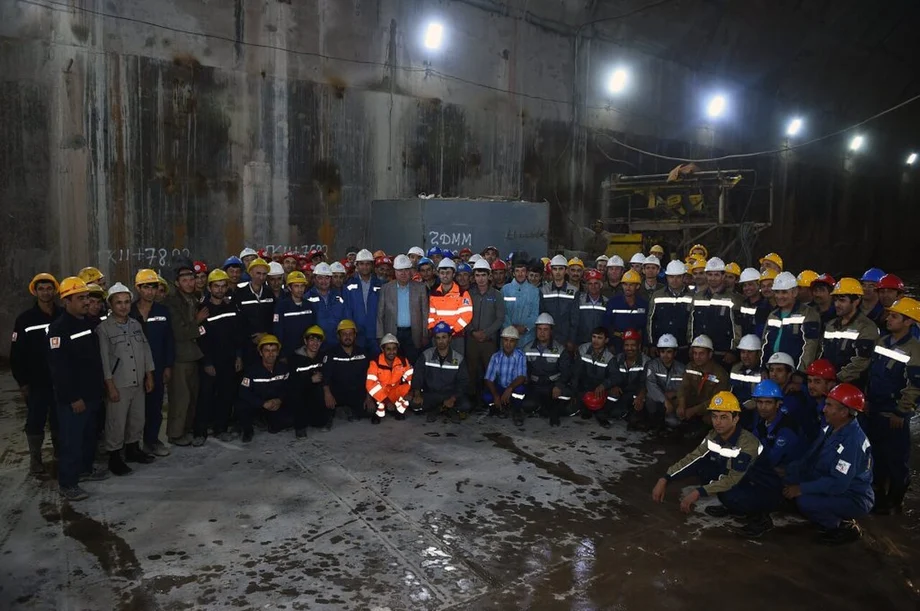
20,563 people were employed at the Roghun Hydropower Plant (HPP) construction site as of August 2026, working for 50 organizations. The figures come from an updated labor management document prepared in September 2026 by the Project Implementation Group for the Construction of Energy Facilities under the President of Tajikistan, and made public on 27 November 2026. Nearly 70% of the workforce, 14,389 people, worked for five employers.
Contents
- How many people are building Roghun?
- Which companies employ the most workers?
- What does employer concentration mean on site?
- How many foreign workers are at Roghun?
- How old are the construction workers?
- Where do women work at the site?
- How do shifts keep the project moving?
- How fast has the workforce grown?
- What are the key dates?
- What changes as construction moves toward completion?
- Key Points
Roghun is the country's largest construction site, and the count shows the scale of work behind it. The workforce includes dam and tunnel crews, plant staff, office employees, cooks, cleaners and specialists.
Which companies employ the most workers?
TGEM is the largest employer, with 8,761 people, or 42.6% of all workers at the site. The Tajik company is involved in building facilities on the right bank, including additional water discharge tunnels. These tunnels give water a controlled route past the works, a basic need when engineers reshape a river for a dam.
EMZ Norak follows with 1,564 workers. Italy's Webuild has 1,526, Tunnel Sadi Oriyono has 1,412 and Roghun HPP OJSC has 1,126. Webuild is responsible for the main dam, while Ariana and EMZ Norak are involved in preparatory work on the left bank. In river engineering, right and left banks are named by looking downstream.
The five largest employers account for 14,389 workers, about 70% of the total. Other named employers include TajikSGEM with 789, Vakhsh Sokhtmon with 750 and Tajikgidromontazh with 441. The remaining 6,174 workers are spread across the other 45 organizations, many of them small groups of several dozen people.
What does employer concentration mean on site?
TGEM's 8,761 workers are nearly three times the combined workforce of EMZ Norak and Webuild, which together have 3,090. That scale puts one company at the center of daily work for more than two in five people at Roghun. The top five's 70% share means seven in every ten workers are employed by a small group of organizations.
TGEM crews work on right bank facilities and water discharge tunnels. Webuild crews work on the main dam. EMZ Norak and Ariana teams are tied to left bank preparation. A worker's shift, tools, supervisors and safety rules depend heavily on which of these organizations pays the wages.
How many foreign workers are at Roghun?
Tajik nationals make up the overwhelming majority of the project workforce, more than 19,100 people. As of August 2026, 1,407 foreign nationals worked at the site, about 7% of the total. The document says they come mainly from Russia, Iran and Uzbekistan, and most are men aged 40 to 60.
TGEM employs 682 foreign workers, close to half of all foreign workers at the site. Tunnel Sadi Oriyono, identified in the document with Ariana, employs 271, and Webuild employs 151. Those three employers together have 1,104 foreign workers, more than 78% of the foreign workforce counted in the document.
The document records nationality and employer for Roghun's foreign workers, not their job titles. Tunnel work, concrete work, heavy machinery and electrical systems are common needs on large dam projects. The numbers still show that foreign labor is concentrated in the same companies that hold the biggest construction packages.
How old are the construction workers?
The largest age group is made up of people aged 31 to 50, nearly 10,500 workers. Younger workers aged 18 to 30 number more than 6,100, about 30% of the workforce. Another 3,300 workers are aged 51 to 63.
Nearly 400 people older than 63 also work at the site. TGEM employs 128 of them, EMZ Norak employs 94 and OJSC Roghun HPP employs 40. Those three organizations account for 262 of the older workers named in the breakdown.
Dam construction combines heavy physical work with experience gained on earlier projects. The document describes most of the workforce as construction workers without full trade qualifications, alongside skilled workers and specialists. Younger workers form a large share, while the presence of hundreds of people over 63 shows that older employees remain part of the site's daily labor force.
Where do women work at the site?
About 1,300 women work at Roghun, roughly 6% of the workforce. The document says most are employed in food preparation for construction workers, cleaning and other housekeeping duties. Shift work makes those jobs essential because crews need meals and clean facilities during long rotating schedules.
Women also work as engineers, nurses and administrative staff in human resources departments at OJSC NBO Roghun and contractor organizations. Their roles range from catering to technical and office work, but women remain a small share of the total workforce. That balance is part of the employment picture at a site dominated by construction trades.
How do shifts keep the project moving?
Nearly 87% of Roghun workers are on shifts. The document counts 17,855 people working day and night shifts, including employees on rotational schedules that alternate 15 days of work with 15 days off. A rotational schedule means a worker spends a block of days at the site and then has a block of days away, a common arrangement when a workplace runs around the clock.
Office staff number about 2,700 in the main figures, while the Russian language version of the figures uses about 2,800. Either count puts office employees at roughly one in eight of the workforce. The shift system shapes daily life for most workers: sleep, family time and travel are organized around fixed blocks rather than a standard workweek.
Shifts allow work to continue through day and night. For the 17,855 people on those schedules, the timetable is a central part of the job, not a minor detail.
How fast has the workforce grown?
The Roghun workforce stood at 14,877 at the end of 2023. By August 2026 it had reached 20,563, an increase of 5,686 people, or about 38% in less than three years. That is roughly three more workers for every ten people who were employed there at the end of 2023.
The document says staffing changes from month to month as construction stages begin and finish. The rise shows a site moving into a heavier phase of work, with more contractors and more people needed for dam, tunnel and support tasks. For local labor markets and service providers, a workforce larger by more than 5,600 people means more demand for transport, food, accommodation and everyday services.
What are the key dates?
The employment data and construction timetable stretch across several years. These dates show how the 20,563 figure fits into the wider project.
- End of 2023: 14,877 people employed at the Roghun construction site.
- August 2026: 20,563 people employed by 50 organizations.
- September 2026: updated labor management document prepared by the project implementation group.
- 27 November 2026: workforce figures made public.
- Around 2032: main dam construction expected to finish.
- By 2036: reservoir expected to reach full capacity.
What changes as construction moves toward completion?
The main dam is expected to be completed around 2032, and the reservoir is expected to reach full capacity by 2036. A main dam is the central barrier that holds back the river. A reservoir is the stored body of water created behind it, used to regulate water and, at a hydropower plant, feed turbines that generate electricity.
Webuild's dam work, TGEM's right bank facilities and tunnels, and left bank preparation by Ariana and EMZ Norak all sit on the path toward those milestones. The 17,855 shift workers and 50 organizations show that the site is still in a phase where construction activity dominates.
The document gave no hiring target for the years after the dam is finished and no date when construction staffing will start to fall. The next fixed points it gives are completion of the main dam around 2032 and full reservoir capacity by 2036.
Key Points
- 20,563 people worked at Roghun HPP as of August 2026, employed by 50 organizations.
- TGEM employed 8,761 people, or 42.6% of the workforce.
- The five largest employers accounted for 14,389 workers, about 70% of the total.
- 1,407 foreign nationals, about 7% of workers, came mainly from Russia, Iran and Uzbekistan.
- Nearly 10,500 workers were aged 31 to 50, and more than 6,100 were aged 18 to 30.
- About 1,300 women made up roughly 6% of the workforce.
- Nearly 87% worked shifts, including 17,855 on day and night schedules.
- The workforce rose from 14,877 at the end of 2023, a gain of about 38%.
- Main dam completion is expected around 2032, with full reservoir capacity by 2036.