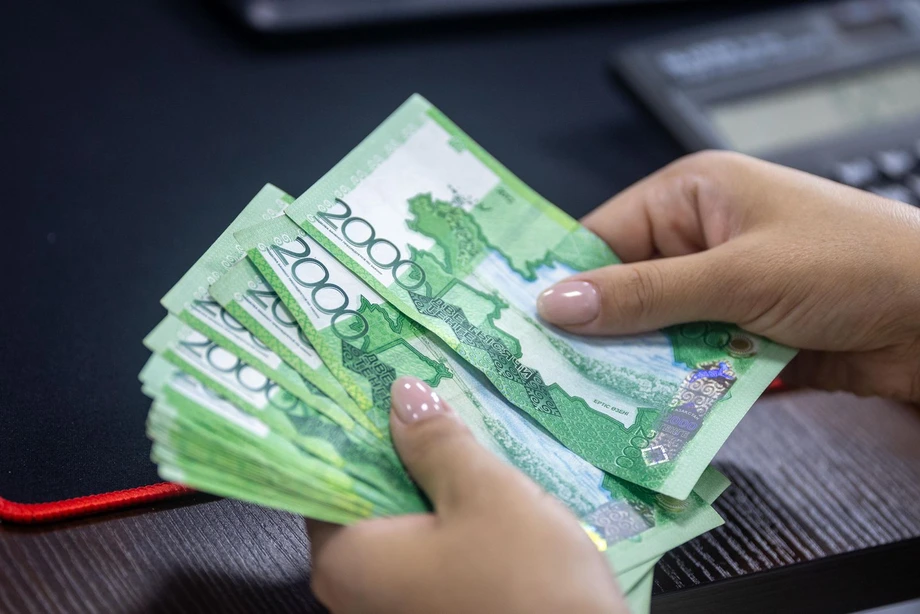
Dollar settles at 458.13 tenge before the weekend
The dollar slipped to 458.13 tenge in daytime trading on the Kazakhstan Stock Exchange (KASE) on Friday, 27 November 2026. That exchange result became the National Bank's official rate for Saturday 28 November, Sunday 29 November and Monday 30 November. The KASE session summary recorded a decline of 0.61 tenge.
Contents
- Dollar settles at 458.13 tenge before the weekend
- How a volatile week unfolded on KASE
- What cash exchange offices are charging
- How the National Bank calculates the official rate
- The daily fall within a wider currency range
- Why oil and US technology shares entered the story
- Forecasters see lower inflation and a firmer tenge
- Higher oil revenue, slower growth and a smaller trade cushion
- What the rates mean at the counter
- Key Points
The official rate comparison shows a slightly different movement: 458.13 tenge is 0.72 tenge, or 0.16%, below the official rate of 458.85 used on 27 November. Figures for 26 November had shown the dollar rising by 0.48 tenge to 458.85. For the public, the latest movement means that one dollar buys slightly fewer tenge, representing a modest strengthening of the Kazakh currency in the official daily comparison.
Other major currencies also became cheaper in the official calculations. The euro fell by 1.21 tenge, or 0.24%, to 502.29 tenge. The Russian ruble declined by 0.01 tenge to 5.58, while the Chinese yuan slipped by 0.05 tenge to 68.85. These rates apply over the same three days as the new dollar rate.
How a volatile week unfolded on KASE
Trading on Wednesday, 25 November, illustrates how quickly both prices and activity changed during the week. The weighted average dollar rate finished at 458.37 tenge after the US currency lost 1.06 tenge during the day. Deals took place between 456.92 and 460.49 tenge. Dollar turnover fell by more than half to $421.7 million after record growth in the previous session. The euro retreated by 1.60 tenge to 501.64 on KASE, while the yuan stood at 68.67 and the ruble at 5.56. The National Bank listed official rates for 25 November of 458.28 tenge per dollar and 501.45 per euro.
The Kazakhstan Financiers Association also reviewed an earlier Friday surge in which the dollar reached 455.32 tenge, 6.19 tenge above the preceding reading. Turnover hit a record $825.6 million, some $208 million more than before. The size of that session helps explain why the subsequent contraction in trading volume attracted attention even while the dollar remained close to 460 tenge.
The main dates in the run of exchange figures were:
- 21 November: The official dollar rate stood at 455 tenge.
- 25 November: KASE's weighted average was 458.37 tenge, with turnover of $421.7 million.
- 26 November: Daytime trading was listed at 458.85 tenge after a rise of 0.48 tenge.
- 27 November: The KASE daytime average reached 458.13 tenge, and the National Bank adopted that figure for the following three days.
- 28 to 30 November: The official reference rate is 458.13 tenge per dollar.
What cash exchange offices are charging
Cash exchange offices in Astana were buying dollars at 453 tenge and selling them at 460 tenge in the latest quotations. The seven tenge gap between those figures is known as the spread. The buying price is what an office pays a customer who brings in dollars; the selling price is what a customer pays to obtain dollars.
Almaty's average dollar quotations were closer together, at 457.10 tenge for buying and 458.99 for selling, a spread of 1.89 tenge. Prices for the other currencies were:
- Astana: Euro buying at 496 tenge and selling at 506; ruble buying at 5.20 and selling at 5.40; yuan buying at 67.72 and selling at 71.70.
- Almaty: Euro buying at 500.48 tenge and selling at 504.81; ruble buying at 5.24 and selling at 5.35; yuan buying at 67.21 and selling at 69.62.
Quotations from 25 November provide a nearby comparison. Almaty offices then bought dollars at an average of 455.82 tenge and sold them at 457.86, while the euro averaged 499.07 for buying and 503.54 for selling. Astana's dollar prices were unchanged from the latest figures at 453 and 460 tenge, but its average euro prices were 489.35 for buying and 505 for selling. Individual offices can still set different prices and charge commissions.
How the National Bank calculates the official rate
The National Bank bases the official dollar rate on the weighted average of dollar trades on KASE at 15:30 Astana time. Weighted means that transactions with larger volumes have greater influence on the result than smaller transactions. Rates for other currencies are calculated at 16:00 through their relationships with the dollar and other currencies, a method commonly described as using cross rates.
An official rate takes effect from the next working day. The rate calculated on Friday covers the weekend and Monday, which is why the 458.13 tenge result applies on three consecutive calendar days. It serves as a common reference for financial calculations, while banks and cash exchange offices can quote their own transaction prices.
The wider official table for 28 to 30 November put the pound sterling at 601.39 tenge, down 0.21, and the Swiss franc at 548.40, down 2.37. The UAE dirham was set at 124.74 tenge, the Turkish lira at 9.02 and the Kyrgyz som at 5.24. The rate for 100 Uzbek soums was 3.82 tenge. Each of those currencies also recorded a small decline.
The daily fall within a wider currency range
Over seven days, the dollar was still more expensive despite its decline at the end of the week. The official rate rose by 3.13 tenge, or 0.69%, from 455 tenge on 21 November. Over the month since 29 October, it gained 1.04 tenge, or 0.23%, from 457.09.
The official rate moved between 439.37 and 522.38 tenge over the preceding year. At 458.13, the dollar is 18.76 tenge above the bottom of that range and 64.25 below its peak. The full distance between those extremes is 83.01 tenge, placing the latest official movement of 0.72 tenge in perspective.
Why oil and US technology shares entered the story
Analysts at the Kazakhstan Financiers Association, an industry body representing financial market participants, examined the pressures behind the earlier weakening of the tenge. Their representatives pointed first to developments outside Kazakhstan.
External factors include the decline in oil prices during currency trading and the widespread move away from risky assets in the global market.
US stock markets supplied a vivid example of that change in mood. The association's review said the main indices fell between 1.9% and 5.3% on the Friday it examined, with technology companies under the greatest pressure. Nvidia shares lost 14%, AMD dropped more than 13% and Anthropic declined 8.5%. The review also cited information that the US Securities and Exchange Commission was examining possible violations in Nvidia's accounting, adding to pressure on the company's shares.
Investors were becoming more questioning about whether the large sums flowing into artificial intelligence would generate sufficient returns, according to the association. It said Anthropic's record share placement and Nvidia's strong financial results had failed to restore demand for technology securities. Falling prices across a broad range of assets also reflected concern about high interest rates and the durability of company valuations.
For Kazakhstan, the oil connection matters because crude exports bring foreign currency into the economy. Lower oil prices can reduce that flow, while a global retreat from investments with larger price swings can make international investors more cautious. The association's analysis addressed the earlier period of tenge weakness; the subsequent KASE movements included both sharp increases in the dollar and the smaller decline seen before the weekend.
Forecasters see lower inflation and a firmer tenge
The National Bank released its November macroeconomic survey on 26 November, one day before the latest exchange session. It collected forecasts from 15 financial, rating and research organizations between 12 and 18 November. The results describe the respondents' expectations rather than commitments by the central bank.
Inflation expectations improved for the next two years. The 2026 forecast was reduced from 9.5% to 9.1%, while the 2027 estimate fell from 8.3% to 8%. For 2028, respondents expected inflation of 7%, slightly above the earlier estimate of 6.9%.
Participants also anticipated a gradual reduction in the National Bank's base rate, the benchmark interest rate that influences borrowing costs across the economy. Their expectations were 15.8% at the end of 2026, 13.4% in 2027 and 10.8% in 2028.
Exchange rate forecasts were revised toward a stronger tenge throughout the period:
- 2026: An average of 472 tenge per dollar, compared with the previous forecast of 479.
- 2027: An average of 489.8 tenge, revised from 499.6.
- 2028: An average of 510.4 tenge, revised from 527.1.
The projected averages still rise from year to year, so respondents continued to expect a gradual nominal weakening of the tenge despite the improved revisions. These figures describe average conditions across entire years, whereas 458.13 tenge is the official rate for three specified days.
Higher oil revenue, slower growth and a smaller trade cushion
Oil forecasts moved in the opposite direction from the growth estimates. Analysts raised their expected average price for Brent crude in 2026 from $88.4 to $93.3 per barrel. Brent is an international benchmark used to price many oil transactions. Forecasts of $80 per barrel in 2027 and $75 in 2028 were left unchanged.
Economic growth for 2026 was nevertheless revised down from 4.8% to 4.6%. The 2027 projection remained at 4.7%, while the 2028 estimate rose from 4.4% to 4.5%. Taken together, the figures indicate that more expensive oil can support export earnings without producing an equivalent acceleration in economic activity.
The forecast for exports of goods and services in 2026 increased from $96 billion to $101 billion. The 2027 estimate rose from $93.9 billion to $100 billion. At the same time, the trade surplus, meaning the amount by which export earnings exceed import spending, was expected to shrink from $17.2 billion in 2026 to $11.8 billion in 2027 and $5.6 billion in 2028. Lower oil prices in later years and rising imports would leave foreign trade providing less support to the tenge.
Economic analyst Ruslan Sultanov, commenting on his Tengenomika Telegram channel, described the November results as relatively favorable for the near future. He cautioned that falling oil prices, growing imports and gradually easier monetary conditions increased the importance of productivity, a broader range of exports and domestic sources of growth. Longer term expectations remained broadly stable, with potential economic growth of 4.5% and inflation of 5.1% projected over five years, although wide ranges in forecasts for the next few years pointed to continuing uncertainty.
What the rates mean at the counter
A customer buying $100 in cash at Astana's quoted selling rate would pay 46,000 tenge before any commission. At Almaty's average selling rate, the same purchase would cost 45,899 tenge, a difference of 101 tenge. Using the quoted euro selling rates, €100 would cost 50,600 tenge in Astana and 50,481 tenge at Almaty's average price.
For 28 to 30 November, the official reference is fixed at 458.13 tenge per dollar. Cash prices can still vary by city, office and transaction size, and card or bank conversions may use different rates. The latest figures combine a small decline in the dollar before the weekend with a weekly increase, changing cash spreads and forecasts that anticipate both lower inflation and a gradually weaker tenge over the coming years.
Key Points
- KASE's daytime dollar average reached 458.13 tenge on 27 November, and that figure became the official rate for 28 to 30 November.
- The official dollar rate fell by 0.72 tenge, or 0.16%, while the exchange session summary recorded a decline of 0.61 tenge.
- The official euro rate fell to 502.29 tenge, the ruble to 5.58 and the yuan to 68.85.
- Astana cash offices quoted dollars at 453 tenge for buying and 460 for selling; Almaty's averages were 457.10 and 458.99.
- The dollar remained 3.13 tenge higher than its official rate seven days earlier.
- The National Bank's November survey showed 2026 inflation expectations falling to 9.1% and the average dollar forecast improving to 472 tenge.
- Analysts raised the 2026 export forecast to $101 billion but expected the trade surplus to narrow to $5.6 billion by 2028.