A first IMF review puts public finances under scrutiny
An International Monetary Fund mission has completed a review of how openly Tajikistan reports its public finances, drawing attention to corporate tax breaks estimated at 7 billion somoni, spending on the Rogun hydropower plant and gaps in information about government revenue.
Contents
- A first IMF review puts public finances under scrutiny
- What the IMF is examining
- Published budgets still leave gaps
- Tax breaks put revenue under the spotlight
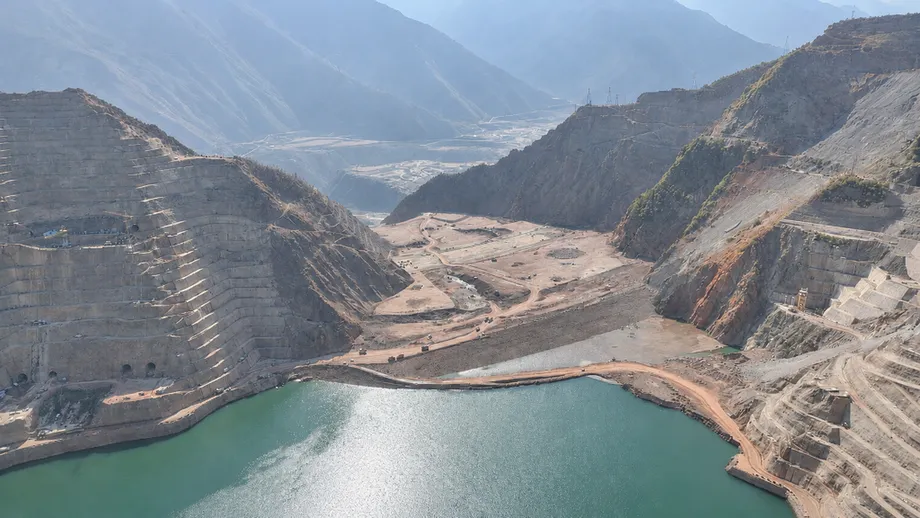
- Rogun connects budget choices with a vast building project
- A separate study asks whether people can use the data
- Local services and natural resources expose missing detail
- Past IMF dealings explain the focus on reliable figures
- Economic growth adds context to the review
- Key Points
The mission ran from October 28 to November 11 at Tajikistan's request. The Ministry of Finance described it as the IMF's first Fiscal Transparency Evaluation in the country. Its final findings and recommendations will be presented later; no publication date has been announced.
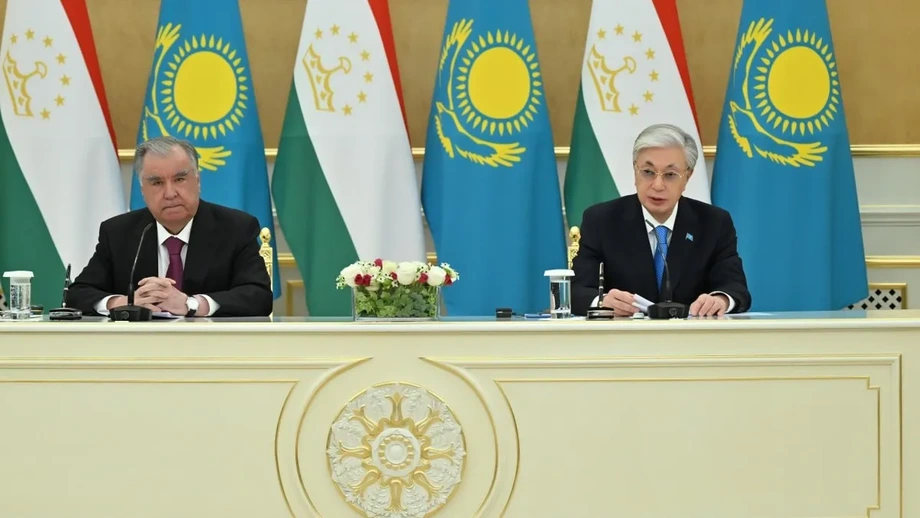
Members of the lower house of parliament's Committee on Economy and Finance met representatives of the IMF Fiscal Affairs Department on November 5. Their discussions covered the completeness of financial information, reporting quality, budget planning, financial risks and the reliability of economic forecasts.
The review comes alongside evidence of both progress and persistent gaps. Tajikistan scored 47 out of 100 in an independent budget openness review for 2025, compared with the review's threshold of 61 for sufficient transparency. That leaves a gap of 14 points.
The US State Department's 2025 Fiscal Transparency Report found that Tajikistan had made significant progress by publishing allocations to and earnings from major state enterprises. It also found that budget documents gave an incomplete picture of major revenue sources and left some significant accounts outside public view.
For residents, the practical issue is whether published figures explain where money comes from, which services receive it and what those services deliver. A national spending total offers little help to a family trying to understand whether its local school or hospital will receive promised funding.
What the IMF is examining
The IMF evaluation examines three connected areas: financial reporting, budget planning and forecasting, and the identification and management of fiscal risks. Fiscal risks are events or obligations that could put unexpected pressure on government finances.
Financial reporting describes money already received and spent. Budget planning sets out what the government intends to collect and pay. Risk analysis looks at what might upset those plans, including pressures associated with public enterprises and major construction projects.
The IMF defines fiscal transparency through public information that is comprehensive, clear, reliable, timely and relevant. Citizens and parliament need information about the government's past, present and expected future finances to judge its decisions.
Tajikistan's parliamentary statement described the November 5 discussion with the visiting delegation:
The meeting addressed issues related to the current state of financial transparency, the accessibility and accuracy of financial information, the quality of accountability, and state budget planning and forecasting processes.
The committee also discussed changes to laws and regulations. That gives the review a broader scope than checking whether documents appear online: it covers the rules governing disclosure, the quality of the numbers and the institutions responsible for examining them.
Published budgets still leave gaps
The State Department found that the government's proposed budget, enacted budget and report at the end of the year were widely and easily accessible, including online. Spending was broken down by ministry, and debt obligations were publicly disclosed, including debt associated with major state enterprises.
Budget documents, however, were not prepared according to internationally accepted principles. Some significant accounts outside the main budget were not disclosed. Military spending appeared in the budget, while the intelligence budget was excluded, although parliament reviewed it.
Tajikistan's supreme audit institution had access to the executed annual budget and published substantive findings. The State Department nevertheless found that it fell short of international standards for independence. Its recommendations included fuller reporting, adequate oversight or elimination of accounts outside the budget, and greater audit independence.
Tax breaks put revenue under the spotlight
Karimjon Ahmadov, a former deputy economy minister, estimated that exemptions granted to enterprises cost the budget about 7 billion somoni in revenue. He identified aluminium producer TALCO and electricity company Barki Tojik among the large enterprises whose concessions should be reconsidered.
A tax exemption allows a company to pay less than it would under the standard rules. Its budget effect appears as revenue the government gives up, rather than as a payment recorded in a spending programme. Understanding the cost requires information about who receives exemptions, what they cover and how much revenue is forgone.
Customs Service head Khurshed Karimzoda previously rejected allegations that concessions were reserved for companies close to the authorities. He said benefits were provided on equal terms.
Ahmadov's estimate puts a large figure on the debate over exemptions. The State Department's finding that major revenue sources were incompletely presented adds another reason for publishing detailed revenue information alongside expenditure figures.
Rogun connects budget choices with a vast building project
Ahmadov also argued that the public and international creditors lack sufficient information about spending on Rogun. Finance Minister Fayziddin Kahhorzoda said in July that international engineering company Tractebel was monitoring the project's construction and financing.
The IMF recommended in a 2025 report that average budget spending on Rogun remain within 3% to 3.5% of gross domestic product to limit pressure on public finances. GDP measures the value of goods and services produced in the economy. Expressing Rogun spending as a share of GDP relates its budget burden to the country's economic size.
The scale of the undertaking is already visible. During an October 29, 2026 visit described in coverage of Rogun's construction and relocation, officials said more than 20,000 people were working at the site. Two generating units had produced more than 11 billion kilowatt-hours of electricity, and a third was scheduled to start in September 2027. Completion was expected in 2035, while the reservoir was expected to displace more than 50,000 people.
International financing will help determine how much construction costs fall directly on the national budget. An ADB financing proposal outlined a planned $500 million contribution, comprising a $200 million grant and a $300 million concessional loan. Grants require no repayment; concessional loans carry more favourable terms than ordinary commercial borrowing but still create repayment obligations.
The proposed package would therefore consist of 40% grant funding and 60% borrowing. Discussions also covered common procedures for project assessment, contract awards and construction monitoring by participating banks. For the public, reporting on funding terms, payments and progress would help connect the financial commitments with the work being completed.
A separate study asks whether people can use the data
A separate public finance study is being conducted with Ministry of Finance cooperation and support from the World Bank and Switzerland's State Secretariat for Economic Affairs, known as SECO. It involves 50 representatives of business, civil society, the media and the research community.
Participants described improvements in access to government documents compared with earlier years. They also described delays, incomplete detail and files that are difficult to analyse. Journalists said replies to ministry requests could take two weeks, while many financial documents appeared as PDFs that made extracting and comparing figures cumbersome.
Information about the following year's budget often became available only when the lower house was already considering and adopting it, participants said. That timing leaves journalists and civil society little opportunity to examine proposed spending before decisions are made.
The study's results were scheduled for presentation on November 30. Reform proposals could cover 2027 to 2030. Participants suggested a single portal for financial documents and wider involvement of civil society organisations in budget discussions.
Local services and natural resources expose missing detail
Local budgets were a particular concern during the finance ministry discussion. Participants said information about districts, cities and regions was harder to obtain than national budget documents. Knowing how much a district receives does not tell residents which school repairs, water systems or hospital purchases have been funded.
Organisations working with people with disabilities described a similar problem within social spending. A total allocation for assistance may give little detail about whether money supports residential institutions or services that help people live independently. Participants wanted the people affected to have a voice before those spending choices were approved.
Researchers also described difficulty finding revenue figures for coal and other mineral extraction, or tracing how much resource income went toward environmental protection. A discussion of nature reserves raised another issue: some reserves generated enough income to cover costs and transfer money to the national budget, but researchers could not trace whether that money returned to conservation.
The State Department identified a related gap in resource governance. Basic information about public procurement contracts was available, but basic details of natural resource extraction awards were not published. Criteria for awarding extraction contracts and licences existed in law or regulation but did not appear to be followed in practice, according to its assessment.
Past IMF dealings explain the focus on reliable figures
Tajikistan's relationship with the IMF has previously turned on the accuracy of financial information and promises to disclose spending. The current evaluation follows several important milestones:
- 2008: The IMF required early repayment of about $47.4 million, plus interest, after finding that financing had been granted on the basis of inaccurate information, including figures on National Bank international reserves.
- 2009: The IMF approved a new programme lasting three years worth about $116 million.
- 2020: During the COVID-19 pandemic, the IMF provided $189.5 million, and Tajikistan committed to publishing quarterly reports on emergency spending.
- October 14: The Finance Ministry announced preparations for the first IMF Fiscal Transparency Evaluation mission.
- October 28 to November 11: The mission conducted its assessment, including the November 5 parliamentary committee meeting.
International reserves are foreign assets held by a central bank that can help meet external payment needs. The 2008 episode shows why accurate information about such assets matters to financing decisions. The 2020 reporting commitment addressed another practical need: allowing the public to follow exceptional expenditure during an emergency.
Economic growth adds context to the review
Tajik officials have presented a positive economic picture in their wider discussions with the IMF. Kahhorzoda and National Bank chairman Firdavs Tolibzoda met IMF Deputy Managing Director Bo Lee in Bangkok, where cooperation with the institution was discussed.
The Tajik side cited moderate inflation, stronger public finances and credit ratings of B2 from Moody's and B+ from S&P, both with stable outlooks. Credit ratings express an agency's assessment of a borrower's ability and willingness to repay debt.
The World Bank put economic growth at 8.2% in the first half of 2026, driven mainly by remittances, the money workers abroad send home. It said strong growth, higher wages and international transfers had helped reduce poverty.
Tajikistan remains vulnerable to global price pressures and changes in regional migration policy. Those exposures make reliable forecasts useful for planning spending: income linked to workers abroad can change when employment opportunities or migration rules change. The IMF mission's attention to forecasts and fiscal risks addresses that part of budget management alongside public disclosure.
Key Points
- The IMF completed its first Fiscal Transparency Evaluation mission to Tajikistan from October 28 to November 11; findings will follow later.
- A 2025 budget openness review gave Tajikistan 47 out of 100, below its sufficiency threshold of 61.
- The State Department recorded better disclosure about major state enterprises, alongside incomplete revenue reporting and undisclosed accounts.
- Former deputy economy minister Karimjon Ahmadov estimated revenue forgone through enterprise exemptions at about 7 billion somoni.
- The IMF's 2025 recommendation put average budget spending on Rogun within 3% to 3.5% of GDP.
- A separate study supported by the World Bank and SECO was scheduled to present results on November 30, with possible reforms covering 2027 to 2030.