A trade push backed by 14 cooperation documents
Kazakhstan and Tajikistan adopted a roadmap to expand trade through 2030 during presidential talks in Astana on November 7, 2026, pairing a goal of $2 billion in annual commerce with agreements covering electricity, petroleum products, agriculture, industry and digital technology.
Contents
- A trade push backed by 14 cooperation documents
- Food trade provides the strongest starting point
- Wheat deliveries show what implementation involves
- Freight growth puts transport on the agenda
- Electricity, fuel and mining receive separate agreements
- More than 700 companies already connect the economies
- Water monitoring and digital services share a practical focus
- Education, public services and diplomacy widen the package
- The next steps run from 2027 to 2030
- Key Points
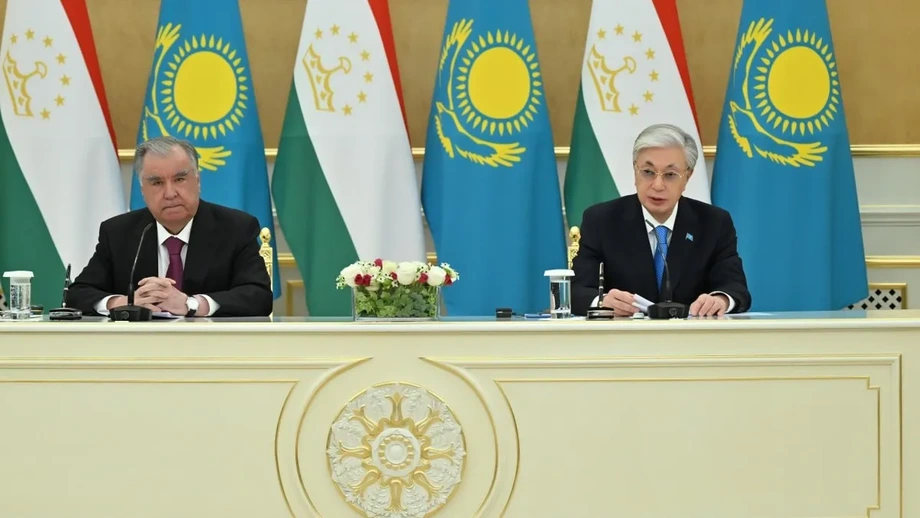
Kazakh President Kassym-Jomart Tokayev and Tajik President Emomali Rahmon adopted a joint statement, while their delegations exchanged 14 intergovernmental and interagency documents. The governments were instructed to implement the Roadmap for Increasing Trade Turnover between the Republic of Kazakhstan and the Republic of Tajikistan by 2030.
Figures presented to the bilateral intergovernmental commission in Dushanbe put trade at $1.13 billion in January through September 2026, nearly 26% above the same period a year earlier. Trade for all of 2025 was $1.2 billion. Tokayev described bilateral commerce as approaching $2 billion, while Rahmon identified that amount as the annual level the countries intend to reach.
Kazakhstan remains among Tajikistan's three largest trading partners. Reaching $2 billion would mean adding $800 million to the 2025 total, an increase of about 67%. The roadmap sets a period for cooperation through 2030, but no separate date for reaching the $2 billion level was announced.
Rahmon, Tajikistan's president, described the recent growth during the talks:
"Bilateral trade exceeded $1 billion in the first nine months of this year, up nearly 26% compared with the same period in 2025," he said.
The agreements connect that trade ambition to practical work: moving freight, supplying food and fuel, processing agricultural goods and helping companies conduct business digitally. Several sector plans have earlier deadlines than 2030.
Food trade provides the strongest starting point
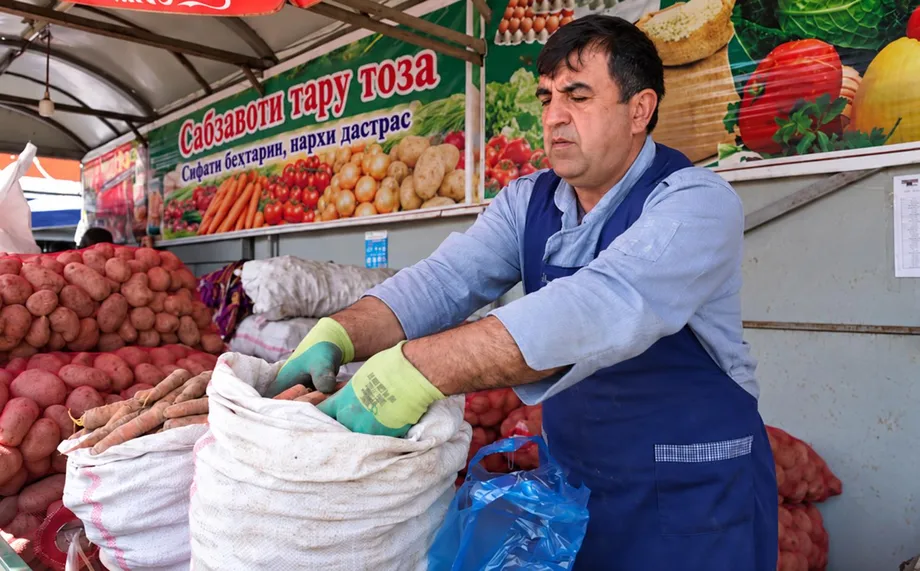
Agriculture already accounts for a large part of the relationship. Tokayev said agricultural shipments rose 11% in 2025 to around $600 million, or half of total bilateral trade. Kazakhstan's Agriculture Ministry put agricultural commerce above $564 million in January through September 2026, up 32.5% from the same period in 2025.
Kazakh agricultural exports accounted for $550.2 million of that latest total. Wheat, sunflower oil, corn and pasta are among the main products Kazakhstan supplies to Tajikistan, making the relationship important for both Kazakh producers seeking buyers and Tajik businesses securing food supplies.
Agriculture Minister Aidarbek Saparov put agriculture's share of bilateral trade at 40%, compared with Tokayev's description of half for 2025. The ministry's nine month figures of more than $564 million and the commission's total of $1.13 billion also place agricultural commerce at roughly half; the statistical basis for the minister's 40% figure was not explained.
Saparov discussed further cooperation with Rajabboy Ahmadzoda, chairman of Tajikistan's Sughd region and first deputy chairman of the Majlisi Milli, the upper chamber of parliament. Their agenda included crop production, livestock, breeding, modern farming technology and joint production projects.
The leaders also discussed complete production chains for processing agricultural goods. In practical terms, that means connecting the stages between a farm and a finished product, such as growing grain, milling it and making food for sale. Such projects could give producers more ways to earn income from the goods they already trade.
Wheat deliveries show what implementation involves
Kazakhstan reported supplying about 1.1 million tonnes of grain to Tajikistan during 2026 by the time of the visit, including around 900,000 tonnes of wheat. Wheat therefore represented roughly four fifths of those grain shipments.
A contract between Kazakhstan's Food Contract Corporation and Tajikistan's Agency for State Material Reserves provides for 100,000 tonnes of wheat. At the time of the announcement, 50,800 tonnes had been shipped, meaning just over half the contracted quantity had been dispatched.
Processed agricultural products are also growing. Kazakhstan supplied 83,000 tonnes of sunflower oil to Tajikistan in 2025, an increase of 23%. Shipments of rapeseed oil increased sixfold, soybean oil rose 35%, and oilseed meal rose 23%. Oilseed meal is the material left after extracting oil and is commonly used in animal feed.
Kazakh lamb exports to Tajikistan increased 26 times in 2025, while beef exports doubled. Those growth rates show expanding business in additional product categories, although shipment quantities for the meat exports were not given.
The agriculture roadmap for 2027 and 2028 was included in the documents exchanged during the presidential visit. Preparatory discussions described measures covering trade, seed production, plant breeding, livestock productivity, research and staff training. Veterinary and plant health measures are also part of the agenda, addressing the checks that protect animals and crops when goods cross borders.
Freight growth puts transport on the agenda
Road and rail freight between Kazakhstan and Tajikistan totalled around 7 million tonnes in 2025. Road shipments rose 8%, while rail freight increased 15%, according to Tokayev. The faster growth on rail makes cooperation between the national railway companies a practical part of the trade plan.
A bilateral working group involving those companies has been tasked with submitting specific cooperation proposals. The countries also agreed to examine priority transport and logistics projects and give particular attention to digital systems for moving freight.
For exporters, a sale depends on getting the goods to the buyer as well as signing a contract. Transport records, shipment information and coordination between carriers become more important as the volume and variety of traded products increase.
Tokayev said conditions created for carriers had helped freight growth continue in 2026. The working group's proposals are the next concrete step identified for railway cooperation, alongside the wider examination of logistics projects.
Electricity, fuel and mining receive separate agreements
The document package gives several industrial sectors their own arrangements. The governments exchanged an agreement on cooperation in electric power and another on developing lasting cooperation in mining and metallurgical projects. Metallurgy covers the work of extracting, refining and processing metals.
Kazakhstan's Energy Ministry and Tajikistan's Ministry of Energy and Water Resources also exchanged a framework agreement on petroleum product supplies. A framework agreement sets the basis for cooperation, while individual transactions can require more detailed commercial terms.
An industrial action plan covers 2027, giving the relevant ministries a nearer period for implementing their existing cooperation memorandum. Tokayev identified energy, oil and gas, mining, metallurgy and processing as promising areas for joint projects.
The business forum held ahead of Rahmon's visit showed interest among entrepreneurs in building contacts across these sectors. Tokayev also said companies were implementing commercial agreements reached through previous business forums and trade missions.
The economic approach has two connected parts: increase shipments of existing products and develop projects that can produce more goods. Food processing, industrial cooperation and reliable energy supplies all form part of that second task.
More than 700 companies already connect the economies
Rahmon said more than 130 enterprises with Kazakh capital were registered in Tajikistan, while more than 580 companies with Tajik participation operated in Kazakhstan. Of the latter group, 500 were entirely owned by Tajik investors.
Rahmon described the business presence in both countries:
"Investment cooperation is also expanding. More than 130 enterprises with Kazakh capital operate in Tajikistan, while Kazakhstan hosts more than 580 companies with Tajik participation, including 500 wholly owned by Tajik investors," Rahmon said.
Together, the figures amount to more than 710 enterprises with investment links across the two countries. They give the trade roadmap an existing network of businesses that could expand supplies, develop partnerships or participate in production projects.
Tokayev pointed to a wider range of traded goods and more active business contacts as signs of progress. The governments' implementation task now sits alongside decisions by those companies about contracts, production and transport.
Water monitoring and digital services share a practical focus
Water and energy cooperation was another part of the talks. Tokayev thanked Tajikistan for its support on the use of transboundary river resources, meaning water in rivers that cross national borders. The countries intend to introduce digital tools and jointly develop water accounting and monitoring systems.
Water accounting measures how much water is available and how it is used. Monitoring tracks changes over time. Shared measurements can give officials a more consistent basis for discussing resources needed by households, agriculture and industry.
Digital cooperation already includes the transfer of solutions from Kazakhstan's electronic government platform to Tajikistan. Tajik specialists have completed training at Kazakh IT schools, and a joint information technology faculty operates at M. Osimi Tajik Technical University with the participation of L.N. Gumilyov Eurasian National University.
The new document package adds memorandums on artificial intelligence and electronic commerce systems. Those subjects connect digital cooperation to both public administration and business activity, including the systems through which companies sell goods online.
The agenda follows Tokayev's digital economy proposals of October 28, which linked technology to rural sales, industrial production, electricity and water measurement. The Tajikistan talks extend several of those same priorities into cooperation between the two countries.
Tokayev also proposed developing a Comprehensive Plan for Cooperation between Kazakhstan and Tajikistan through 2030. That broader plan remains a proposal, while the trade roadmap was adopted during the visit.
Education, public services and diplomacy widen the package
Kazakhstan allocates up to 100 education grants each year to citizens of Tajikistan. The countries also conduct educational, academic and youth exchanges, alongside the joint IT faculty and specialist training.
A new intergovernmental agreement covers training personnel for the Border Troops of Tajikistan's State Committee for National Security. Other documents address healthcare cooperation, information exchange on pensions, cooperation between prosecutors and contacts between public service and anticorruption agencies.
The package also includes a memorandum between the Kazakh president's television and radio complex and Tajikistan's Committee on Television and Radio. Together, these arrangements spread the visit's work beyond trade ministries into public services, professional training and institutional cooperation.
Cultural ties include reciprocal Days of Culture, a bust of Abai in Dushanbe and a monument to Ibn Sina in Astana. Rahmon's visit also included the opening of a new Tajik embassy complex in the Kazakh capital.
Tokayev presented Rahmon with the Order of Khoja Ahmed Yasawi, recognising his contributions to education, science, culture and international relations. Kazakhstan also said it would support Tajikistan's candidacy for an elected seat on the United Nations Security Council for 2028 and 2029.
The next steps run from 2027 to 2030
The visit brought together agreements with different schedules. The trade roadmap runs through 2030, while agriculture and industry have more immediate planning periods. The railway working group must also turn the transport discussions into specific proposals.
The main dates and milestones are:
- 2025: Bilateral trade totalled $1.2 billion, including around $600 million in agricultural commerce.
- January through September 2026: Trade reached $1.13 billion, while agricultural commerce exceeded $564 million.
- November 7, 2026: Tokayev and Rahmon held talks in Astana, adopted a joint statement and oversaw the exchange of 14 documents.
- 2027: The industrial cooperation action plan covers implementation during the year.
- 2027 and 2028: The agriculture roadmap provides the next sector planning period.
- 2028 and 2029: Kazakhstan will support Tajikistan's candidacy for an elected UN Security Council seat for this term.
- Through 2030: The adopted trade roadmap sets the longer period for expanding bilateral commerce.
For farmers, processors, carriers and other businesses, the practical results will come through completed deliveries, new production projects and workable arrangements for moving goods. The wheat contract already being fulfilled offers a concrete example of the implementation the presidents want across more sectors.
Key Points
- Kazakhstan and Tajikistan adopted a trade roadmap through 2030 and agreed to work toward $2 billion in annual commerce.
- Trade reached $1.13 billion in the first nine months of 2026, nearly 26% above the same period in 2025.
- Agricultural commerce exceeded $564 million over those nine months, including $550.2 million in Kazakh exports.
- The delegations exchanged 14 documents covering energy, industry, agriculture, digital technology and other areas.
- Road and rail freight totalled around 7 million tonnes in 2025; a railway working group will prepare cooperation proposals.
- Industry has an action plan for 2027, and agriculture has a roadmap covering 2027 and 2028.