Seven years of financing, with conditions attached
Tajikistan could receive up to $1.8 billion in financing under the World Bank Group's partnership framework for fiscal years 2026 to 2032, with access tied to economic reforms, available funding and the country's ability to attract private investors. A major change begins in fiscal year 2027, when Tajikistan is expected to move from grants to loans from the International Development Association (IDA).
Contents
- Seven years of financing, with conditions attached
- How the $1.8 billion could be assembled
- Why the move from grants to loans matters
- Reforms must make investment workable
- Energy, skills and jobs lead the strategy
- Poverty has fallen, but exposure to shocks remains
- The Bank rates implementation risk as high
- Existing projects show what support can deliver
- Key dates and the annual review cycle
- Key Points
The World Bank Group's Country Partnership Framework, report CPF0000019, sets out a shift toward jobs created by private businesses, better education and health, and greater protection against economic shocks and natural disasters. Its financing estimates are indicative, meaning they describe potential resources rather than a fixed allocation.
Between $1 billion and $1.2 billion could come from IDA over seven years. Another potential $600 million would involve the International Finance Corporation (IFC), which supports private businesses, and the Multilateral Investment Guarantee Agency (MIGA), which provides investment guarantees.
The package matters because the World Bank accounted for 38% of Tajikistan's international donor financing in 2024 and remained its largest donor. Changes in the way it provides support therefore carry weight for public investment, government borrowing and services used by households.
The framework places energy, skills and private investment at the center of a broader economic transition. Tajikistan has reduced poverty sharply, yet its dependence on money sent home by migrants leaves families and the economy exposed to changes beyond the country's borders. The Bank wants more growth to come from businesses and employment within Tajikistan.
How the $1.8 billion could be assembled
IDA, the arm of the World Bank Group that supports poorer countries, would provide the largest portion of the potential package. Its expected contribution of $1 billion to $1.2 billion depends on the resources it has available, global economic conditions and whether individual projects meet its eligibility requirements.
IFC could support up to $500 million in investment. That includes as much as $200 million from IFC itself and up to $300 million brought in from private investors. MIGA's potential participation is estimated at another $100 million, linked to investment opportunities including partnerships between government and businesses.
At the upper end, the arithmetic is $1.2 billion from IDA plus $600 million associated with IFC and MIGA, producing the $1.8 billion headline figure. The private investment component would represent one third of that maximum. Each component depends on its own funding decisions and project conditions.
MIGA's role also differs from that of a lender. An investment guarantee protects investors against specified risks, helping make a project more attractive to finance. The proposed package therefore combines several financial tools, rather than providing the government with a single pool of money.
Why the move from grants to loans matters
Tajikistan is expected to move from IDA grants to loans starting in fiscal year 2027 because income per person has risen beyond the level associated with its previous grant financing arrangements. Grants do not require repayment; loans create repayment obligations, even when their terms are more favorable than commercial borrowing.
The change makes the government's ability to manage debt especially important. The Bank links its support to stronger public finances, sustainable borrowing and better management of the economy. Projects financed through loans will need to deliver benefits while the state plans for future repayments.
The framework identifies a high risk of debt distress and budget risks associated with the Rogun Hydropower Plant. Debt distress means a country faces serious difficulty meeting its debt payments. For Tajikistan, the financing transition puts the quality and timing of spending alongside the amount of money available.
State enterprises create another potential call on public funds. The framework highlights their contingent liabilities, obligations that could become a government expense if particular events occur, such as a company being unable to meet a guaranteed debt. Tracking those commitments helps the government understand costs that may emerge later.
Reforms must make investment workable
The World Bank expects reforms that improve transparency, public administration and conditions for private businesses. It also calls for stronger public procurement and greater capacity in government agencies to prepare, manage and oversee projects.
Public procurement is the process through which government bodies buy goods, construction work and services. Better procurement can help public money pay for the intended work at a reasonable cost. Stronger agencies are needed to write contracts, supervise delivery and respond when projects fall behind.
Private investment will depend on reducing risks and making Tajikistan a more attractive place to do business. The framework identifies a weak business environment and limited institutional transparency and accountability among the problems that need attention.
Airports, water supply and irrigation are among the infrastructure areas identified for public and private partnerships. Under such arrangements, a government and a business share responsibilities for providing infrastructure or services. Contracts determine who finances the work, who operates it and how costs are recovered.
Those arrangements connect the reform agenda directly to the financing target. The Bank expects a substantial share of private capital to come through infrastructure partnerships, making the government's ability to prepare credible projects and manage contracts central to attracting investment.
Energy, skills and jobs lead the strategy
The World Bank Group's partnership announcement names three priorities: secure, affordable and clean energy; a workforce with better skills and health; and private investment that creates more and better jobs. Protection against economic, climate and other shocks runs through all three.
Gael Raballand, the World Bank Group Country Manager for Tajikistan, described the purpose of the renewed partnership:
Tajikistan has made important progress over the past two decades. To preserve and build on these achievements, our renewed partnership aims to help the country's transition to a more sustainable economic model driven by clean energy, stronger human capital, and increased private investment for more and better jobs for people.
The strategy aligns with Tajikistan's National Development Strategy 2030. It draws on the Bank's Streamlined Country Diagnostic, Country Opinion Surveys and consultations with government, development partners, businesses, civil society and academic institutions.
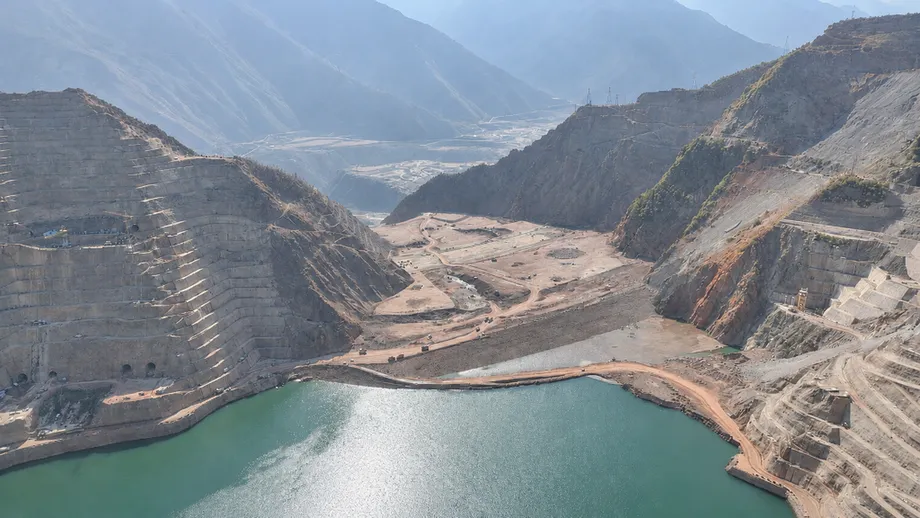
Energy work includes support for the Rogun and Nurek hydropower plants, rural electrification and regional electricity trade. Education, skills training, healthcare, water and sanitation are intended to support people's ability to learn, work and remain healthy. Human capital, a term used in the strategy, means the knowledge, skills and health people draw on throughout their lives.
Poverty has fallen, but exposure to shocks remains
Tajikistan's national poverty rate fell from 56% in 2010 to below 20% in recent years, according to the Bank. That is a decline of more than 36 percentage points, a substantial improvement in the share of people living below the national poverty line.
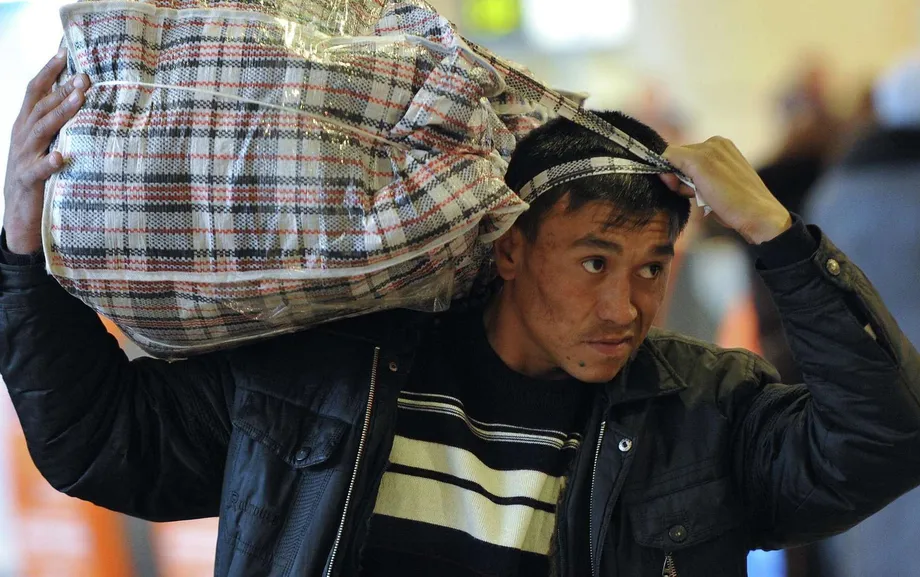
Money sent home by migrants remains a major source of economic support. Families can use those transfers for food, education, housing and other needs, but changes in employment or economic conditions abroad can affect the income arriving at home. The framework seeks a growth model with a stronger domestic base of businesses and jobs.
The project agenda extends to tax and financial sector reforms, digital infrastructure and modernization of the national statistical system. Reliable statistics help authorities measure conditions and plan spending, while financial and tax systems shape how businesses operate and how the state collects revenue.
Agriculture, irrigation, disaster preparedness and social protection also feature in the framework. For households, these priorities connect economic policy to practical needs: dependable water, farms better prepared for natural disasters and support when income or living conditions deteriorate.
The Bank rates implementation risk as high
The framework gives five of its nine risk categories a high rating, one a substantial rating and three a moderate rating. The high categories cover political and governance risks, macroeconomic conditions, institutional capacity, the management and proper use of funds, and conflict.
Rogun illustrates the balance the government must manage. The hydropower plant is included in the energy development agenda, while spending commitments associated with it are also identified as a source of budget risk. Financing energy infrastructure therefore requires attention to both electricity development and public finances.
The Bank plans to review the framework's business plan every year and adjust support to reflect Tajikistan's priorities and progress with reforms. Those reviews provide a recurring opportunity to reconsider the project mix as funding, investment opportunities and implementation conditions change.
The financing outlook consequently rests on several moving parts: IDA's available resources, the government's reforms, the readiness of individual projects and the willingness of private investors to participate. The framework connects these decisions within one strategy.
Existing projects show what support can deliver
IDA is currently financing 25 projects in Tajikistan worth $1.93 billion, according to the Bank's partnership announcement. IFC has a portfolio of $69 million supporting seven private sector clients. Those existing commitments provide the starting point for the new strategy, whose planned agenda also covers about 25 projects across multiple sectors.
Additional financing announced on October 10 illustrates the practical work involved. Agreements signed by Finance Minister Faiziddin Qahhorzoda and Raballand covered agricultural resilience and early childhood development, with a combined reported value exceeding 420 million somoni.
The agricultural component includes $7.5 million from IDA to complete construction at an agricultural logistics center in Danghara, equip a center in Dushanbe for processing and packaging farm products, and support sustainable operations at both facilities. Such centers can help farmers prepare products for sale and reach more buyers.
The childhood development component includes 30 million euros from IDA and $4.5 million from the Global Financing Facility for Women, Children and Adolescents. Plans include 300 preschool classrooms and improvements in health and child development services. The Finance Ministry identified the $4.5 million as a grant; the terms of the other amounts and the year of the October announcement were not specified in the account of those agreements.
Other financing described alongside those agreements included grants approved in July: $75 million for water supply and irrigation modernization and $100 million for economic reforms covering digital services, aviation and energy. Together, these activities show the range of services and institutions involved in the partnership.
Key dates and the annual review cycle
The framework document and the Bank's announcement give different dates for the Board discussion. The document record lists June 2, 2026, as the disclosure and Board meeting date, while the Bank's announcement says directors discussed the framework on June 3, 2026.
- May 11, 2026: Date of the final Country Partnership Framework, report CPF0000019.
- June 2, 2026: Disclosure and Board meeting date listed in the document record.
- June 3, 2026: Board discussion date stated in the Bank's partnership announcement.
- Fiscal year 2027: Expected start of Tajikistan's transition from IDA grants to loans.
- Fiscal years 2026 to 2032: Period covered by the partnership framework.
The annual business plan reviews will shape how the strategy develops during that period. For the government, the central task is to turn reforms and project preparation into financing that can be used effectively. For households, the intended results are more dependable services, better learning and health, and more opportunities to earn a living within Tajikistan.
Key Points
- Tajikistan could receive up to $1.8 billion over seven years, subject to reforms, funding availability and project conditions.
- IDA could provide $1 billion to $1.2 billion, with up to $600 million associated with IFC and MIGA.
- The expected move from IDA grants to loans begins in fiscal year 2027.
- Energy, skills, health and private investment are the strategy's main priorities.
- The Bank rates implementation risk as high and plans annual business plan reviews.
- Existing IDA financing covers 25 projects totaling $1.93 billion.