A live television marathon is coming back
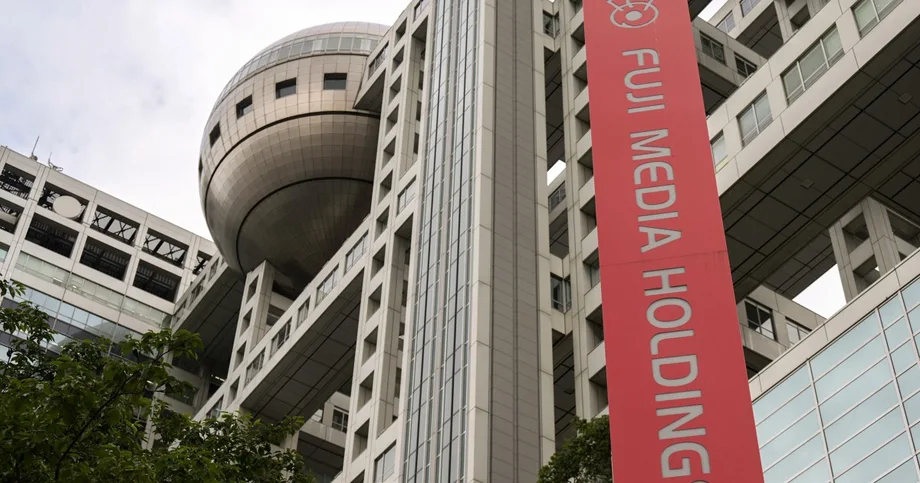
Fuji Television will broadcast FNS 27-Hour TV 2027 live in summer 2027, restoring one of its best known entertainment specials after two missed editions. President Kenji Shimizu, 65, announced the decision on November 27, 2026, during his regular monthly press conference at the broadcaster's headquarters in Odaiba, Tokyo. The last edition aired in 2024, and the special was absent in both 2025 and 2026.
Contents
- A live television marathon is coming back
- Why the revival is tied to Fuji Television's recovery
- What will be different about the 2027 edition?
- From a 19.9 percent rating to comedy television history
- A timeline of interruptions and comebacks
- How recent editions changed the formula
- What the return means for viewers and the network
- What happens next
- Key Points
All 27 stations in the FNS network are expected to pool their resources for the production. FNS is Fuji Television's network of affiliated broadcasters, giving a program developed in Tokyo a reach through stations across Japan. The title promises an event lasting 27 hours, but the broadcaster has not yet provided an exact date, broadcast window, presenting team, theme or list of segments.
Shimizu told reporters that he had been pressing production staff to restore the program since the previous year. He described the announcement as the realization of that effort.
More than anything, I have been telling the production staff since last year that I want to bring back 27-Hour TV. I have finally heard that it has been decided the show will return next summer.
Shimizu said he could not yet discuss the content. The description of the return as coming after three years counts the interval from the 2024 broadcast to 2027. Within that interval, two summer editions were missed, those of 2025 and 2026.
Why the revival is tied to Fuji Television's recovery
The program's disappearance followed the turmoil that engulfed Fuji Television after reports in late 2024 about a dispute involving former entertainer Masahiro Nakai and a woman. The resulting crisis extended beyond one personality. Sponsor numbers temporarily fell sharply, advertisers distanced themselves from the broadcaster and senior management changed. The special was not broadcast in 2025, and 2026 also passed without an edition.
Commercial sponsors matter because their advertising purchases help pay for programs on commercial television. A live event of this length also requires presenters, performers, production teams and technical coordination on a much larger scale than an ordinary weekly show. The combination of advertiser withdrawals and management upheaval formed the immediate background to the 2025 decision.
Shimizu connected the 2027 broadcast directly to the broadcaster's attempt to rebuild. He said its return could become a shared project for the entire network.
I want to make the first 27-Hour TV in three years a catalyst for Fuji Television's revival and build excitement together with our 27 affiliate stations.
His language gives the program a role beyond filling a gap in the schedule. For Fuji Television, it is a visible demonstration that a major entertainment property can return after the crisis. For the 27 network stations, it is a commitment to a national production. For viewers, it restores a summer event that had been part of Japanese television for decades, although its final shape has yet to be revealed.
What will be different about the 2027 edition?
Fuji Television's own program description says the new edition will not simply continue the show's earlier history. It presents FNS 27-Hour TV 2027 as new entertainment content built around one of the company's corporate principles. The broadcaster expresses that principle as follows.
Spreading throughout the world the passion that begins with one person's 'like'.
The Japanese idea at the center of that statement is suki, meaning to like or love something. Fuji Television says it wants to support each viewer's enthusiasm and increase that collective energy over the course of 27 hours. Its stated goal is to create positive excitement across Japan in summer 2027, with people encouraged to enjoy whatever captures their interest.
The distribution plan also reaches beyond conventional television. Terrestrial broadcasting means the traditional television signal delivered through the network, while the additional plan includes internet streaming and SNS. SNS, a term commonly used in Japan, refers to social networking services such as social media platforms. Fuji Television describes these services as different points of contact through which it can support viewers' interests.
The practical change is that online activity is being included in the concept from the start rather than treated as a separate archive of television clips. The program page is inviting messages from viewers. Fuji Television has not explained how much of the event will be streamed, whether the entire 27 hours will be available online, or how audience messages and social media activity will appear in the broadcast.
From a 19.9 percent rating to comedy television history
The original program aired in 1987 as a special marking Fuji Television's 30th anniversary. Video Research recorded an average audience rating of 19.9 percent in the Kanto region, which includes Tokyo. In simple terms, it averaged nearly 20 percent on the ratings measure used at the time, a strong beginning for an unusually long broadcast. The 2027 edition will arrive 40 years after that debut.
Tamori, Beat Takeshi and Sanma Akashiya, widely known together as the Big Three of Japanese comedy, were among the famous presenters associated with the program. Some editions brought them together. One frequently remembered live moment involved Takeshi damaging Sanma's beloved car during the broadcast. Stories of that kind helped establish the show's reputation for unpredictable comedy and events that could become talking points far beyond their original transmission.
Shimizu reflected on the 40-year milestone when discussing the revival. His response mixed enthusiasm with a sense of how much television has changed since 1987.
It was 40 years ago, wasn't it? When I think of it that way, it is deeply moving.
He also remarked with a laugh that looking back across those four decades reveals material that could not be broadcast under current standards. He did not identify particular scenes or explain whether archival material would be revisited. His comments nevertheless show the balancing task facing producers: drawing on a famous television inheritance while creating an event suitable for 2027.
A timeline of interruptions and comebacks
The coming absence is not the first interruption in the program's history. Live production, recorded editions, pandemic restrictions and the broadcaster's recent crisis have all changed its course.
- 1987: The special begins as part of Fuji Television's 30th anniversary celebrations and records a 19.9 percent average rating in Kanto.
- 2017 to 2019: The program shifts to recorded broadcasts rather than maintaining its traditional live format.
- 2020: The broadcast is cancelled during the COVID-19 pandemic.
- 2021 and 2022: Alternative programming airs while the full special remains absent.
- 2023: The program returns after four years, restoring the special to Fuji Television's schedule.
- 2024: The most recent edition airs under the title FNS 27-Hour TV: Japan's Most Fun School Festival!
- 2025 and 2026: Two consecutive summers pass without the program amid the broadcaster's crisis and its commercial and management consequences.
- November 27, 2026: Shimizu announces the revival at his regular press conference in Odaiba.
- Summer 2027: A live 27-hour edition is scheduled with resources from across the 27-station FNS network.
How recent editions changed the formula
The 2023 return used Chidori's Oni Renchan, a variety program led by the comedy duo Chidori, as its foundation. Six comedians served as principal presenters: Daigo and Nobu from Chidori, Kenji Yamauchi and Ryuichi Hamaie from Kamaitachi, and Yusuke and Atsuhiro Tsuda from Diane. That edition aired on July 22 and 23, demonstrating how a regular variety property could supply the structure and personalities for the much longer special.
Fuji Television changed the foundation again in 2024. Japan's Most Fun School Festival! was based on Atarashii Kagi, or New Key, a variety show normally broadcast on Saturdays from 8:00 to 9:00 p.m. The general presenters were the comedy groups Shimofuri Myojo, Chocolate Planet and Hanako.
The 2027 announcement does not name either variety program as its base. It also does not say whether the new edition will retain the school festival idea, bring back earlier presenters or introduce another cast. By emphasizing viewer passions and contact across television, streaming and social media instead, Fuji Television is presenting the concept before identifying the stars who will carry it.
What the return means for viewers and the network
All 27 FNS stations are expected to contribute to the production, making the revival a network commitment rather than a Tokyo announcement alone. Viewers should eventually be able to encounter the event through traditional broadcasts as well as digital services. Fuji Television has not said whether affiliates will produce regional segments or how their individual resources will be used.
Fuji Television also faces a commercial test after the sponsor departures that preceded the hiatus. No sponsor lineup or public ratings target has been announced. The first edition's 19.9 percent rating belongs to 1987 and provides a historical marker, not a forecast for an audience that now has many more viewing choices.
The clearest forthcoming signs will be practical ones: the selection of presenters, the announcement of a workable broadcast and streaming schedule, and the unveiling of segments that can sustain interest across a day and night. Viewers will not need to watch continuously for 27 hours, but producers will need reasons for people to return to the event at different points and across different services.
What happens next
The next fixed milestone is the live broadcast in summer 2027. Fuji Television has given no narrower date range and has not published a start time or an hour by hour schedule. The hosts, program theme and individual projects will be announced in stages. Details of streaming access and audience participation also remain incomplete.
Shimizu expressed confidence that production staff would devise entertaining projects, leaving the creative package in their hands. What is already settled is the season, the live format, the 27-hour concept and the involvement of the national FNS network. The announcements still to come will determine how closely that framework resembles the celebrated editions of the past.
Key Points
- Fuji Television President Kenji Shimizu announced the revival on November 27, 2026, at the broadcaster's Odaiba headquarters.
- FNS 27-Hour TV 2027 will air live in summer 2027, its first edition since 2024 after missed broadcasts in 2025 and 2026.
- All 27 stations in the FNS network are expected to pool resources for the event.
- The program began in 1987 and earned an average rating of 19.9 percent in Kanto; 2027 marks 40 years since its debut.
- The new concept centers on supporting viewers' passions and reaching them through television, streaming and social media.
- The hiatus followed Fuji Television's crisis, including sponsor withdrawals and management changes.
- The exact date, presenters, theme, individual segments and detailed streaming plan have not yet been announced.