A small star arrives in Wild Africa
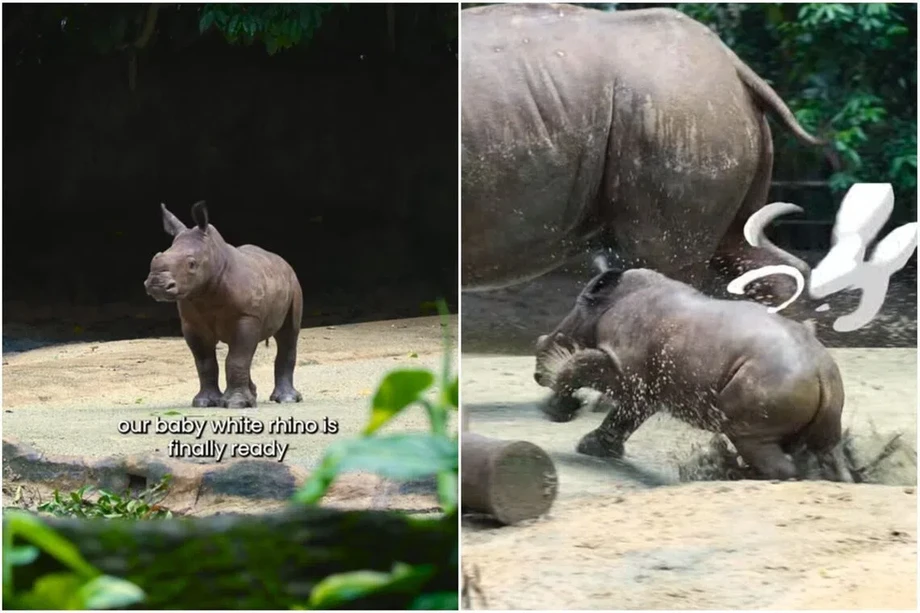
The Singapore Zoo has a new headliner, and he weighs more than most of his fans. A male white rhino calf born on Oct 22 has moved out of the den where he spent his first weeks nursing and into the zoo's Wild Africa zone, where visitors can now catch him between naps.
Contents
- A small star arrives in Wild Africa
- A birth that ends a wait of four years
- Two parents who flew in from South Africa
- What near threatened means for a calf in a zoo
- Why a Singapore calf may end up in another country
- The name is still open, and the public gets a vote
- How to see him, and what to expect
- Key Points
Mandai Wildlife Reserve, which runs the zoo, announced the debut in an Instagram post on Nov 26. The post introduced a calf with two speeds: full throttle and fast asleep.
He will have the zoomies for a few minutes... and then need a nap.
The same post described him as "a mummy's boy" who "is curious about everything". Keepers say his curiosity runs ahead of his stamina, which is why his public appearances depend on how rested he is.
A birth that ends a wait of four years
The calf is the 25th white rhino successfully raised at the Singapore Zoo and the first born there in four years, a gap that closed with his arrival. His last sibling, a sister named Nia, arrived in 2022.
He is also the 10th calf born to the same pair of parents, a record that makes Donsa and Hoepel among the zoo's most productive residents. Nia and an older sister, Dalia, born in 2019, both remain at the zoo, so the new calf has family close by as he learns the layout of the exhibit.
Numbers like these matter for a species that breeds slowly. A female white rhino carries a calf for about 16 months and typically raises one at a time, so a single birth every few years is normal for a pair, and a run of 10 calves from the same mother and father is the work of decades.
Two parents who flew in from South Africa
Donsa and Hoepel arrived at the Singapore Zoo from South Africa in 1992 and 2000 respectively, meaning the mother has been in Singapore for more than three decades. The calf's father has been at the zoo for about a quarter of a century.
The pair's long residence explains the size of their family. Their calves have been born across a stretch of years, with the newest joining sisters Dalia (2019) and Nia (2022) in the collection.
What near threatened means for a calf in a zoo
The International Union for Conservation of Nature lists the white rhino as near threatened in the wild on its Red List of Threatened Species. The Red List sorts animals and plants into categories that run from least concern through near threatened, vulnerable, endangered and critically endangered to extinct in the wild. Near threatened sits one step away from the formal threat categories, which means a species whose numbers are slipping but which is not yet in steep decline.
That status gives a zoo birth a purpose beyond the visitor queue. Calves born in managed collections act as a reserve for the species, and their genes can be moved between institutions to keep captive groups from becoming too closely related.
For the calf himself, the practical effect is simple. He has a long life of eating, growing and, eventually, fathering calves of his own ahead of him, most likely somewhere other than the exhibit where he was born.
Why a Singapore calf may end up in another country
Many white rhinos born at the Singapore Zoo are later transferred to zoos elsewhere, a step Mandai says keeps the global population healthy and genetically diverse. The animals sit within the European Association of Zoos and Aquaria's Ex-situ Programme, a breeding and care network that spans member zoos and aquariums.
Ex-situ means care outside an animal's natural habitat. Under the programme, participating institutions share records on each animal's parentage and health, and coordinators advise on which animals should pair with which, and where a young adult should move next. The aim is to avoid the genetic bottlenecks that can weaken a small captive population over generations.
Breeding advice of this kind crosses borders, so a calf born in Singapore may one day be matched with a mate in Europe, and a rhino born in Europe may take its place here.
The name is still open, and the public gets a vote
One detail is settled only in part. The calf has no name. Mandai Wildlife Reserve said the public can help choose one, with voting to run through comments on voting posts published on Mandai Wildlife Group's Instagram and Facebook pages. Supporters will pick from a shortlist of names rather than submit their own suggestions.
Details of the shortlist, the length of the voting window and the winning name have not been released. Anyone hoping to take part should watch the group's social channels for the voting posts to appear.
The calf's sisters were both given short names beginning with the same letter, Dalia and Nia, which gives name watchers a pattern to speculate about, though the zoo has not said whether the new shortlist will follow it.
How to see him, and what to expect
The calf can be found in the Wild Africa zone, the section of the Singapore Zoo built around open savannah style habitats. Visitors should expect an intermittent view. Mandai said he may not always be out because he is getting the rest he needs to grow.
A newborn white rhino gains weight quickly on its mother's milk and stays close to her for months, so the calf is likely to be seen alongside Donsa when he is awake. Early morning and the hours after a feed are the best bets for catching him on his feet, while a sleeping calf may be hard to spot against the ground.
Key Points
- A male white rhino calf was born at the Singapore Zoo on Oct 22 and has moved into the Wild Africa zone.
- Mandai Wildlife Reserve announced the debut in an Instagram post on Nov 26, describing him as "a mummy's boy" who "is curious about everything".
- The calf is the 10th born to Donsa and Hoepel and the 25th white rhino raised at the zoo, ending a gap of four years since the birth of his sister Nia in 2022.
- His parents arrived from South Africa in 1992 and 2000, and his sisters Dalia (2019) and Nia (2022) remain at the zoo.
- White rhinos are listed as near threatened on the International Union for Conservation of Nature's Red List of Threatened Species.
- Many rhinos born in Singapore are transferred to other zoos under the European Association of Zoos and Aquaria's Ex-situ Programme, which coordinates breeding to keep the global population diverse.
- The public will vote for his name from a shortlist by commenting on Mandai Wildlife Group's Instagram and Facebook posts, with details to be released later.
- Visitors may not always see him, as he spends much of his time resting while he grows.