A wider cash benefit plan takes shape
Japan's government is considering raising the income ceiling for a planned cash benefit to workers so that people earning more than 4.5 million yen a year can qualify. The floor would sit near 560,000 yen. Officials expect the expanded scheme to cover more than 30 million people, over half of all workers, with payments starting in fiscal 2027.
Contents
- A wider cash benefit plan takes shape
- The income ceiling is moving toward the average wage
- What families could receive
- Who would qualify under the official outline
- Why the food tax cut is part of the package
- The burden gap behind the 270,000 yen figure
- How opposition pressure changed the plan
- Who could miss out and why it matters
- What lawmakers still have to decide
- What changes for household budgets
- Key Points
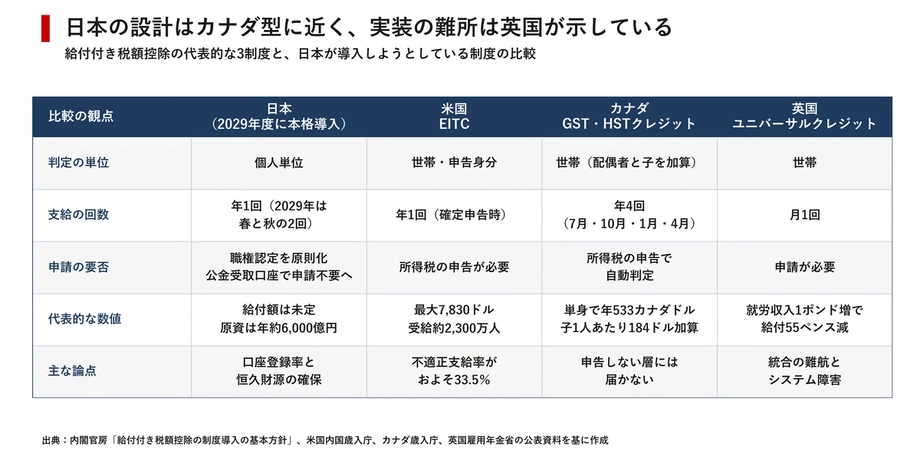
The benefit, called the worker burden reduction support payment, is meant to help people whose taxes and social insurance contributions weigh heavily on their incomes. The government is also considering a much larger version for fiscal 2029, when a temporary cut in the food consumption tax ends. For some couples with two earners and two children, officials have discussed a maximum of about 270,000 yen a year.
The income ceiling is moving toward the average wage
Government sources said the ceiling could be set near the average annual wage, 4.87 million yen in the 2025 Private Sector Salary Realities Survey. That would go beyond the earlier reference ceiling of 4.5 million yen and the original ceiling of 3.5 million yen used when the plan covered about 20 million people, or roughly 30 percent of workers.
The wider discussion follows pressure from opposition parties, including Komeito, which argued that workers on middle incomes should be included. Komeito also proposed the 560,000 yen minimum income threshold. Prime Minister Sanae Takaichi said in upper house deliberations that the program should reach at least half of active workers, a shift that would add about 10 million people and lift coverage by 50 percent.
What families could receive
The first phase is designed around individual payments. Officials have discussed a basic annual benefit of up to 25,000 yen for each eligible worker, plus about 5,000 yen for each child. A couple with two earners and two children receiving the full preliminary payment would get about 60,000 yen a year.
The amount would not be the same for everyone. A worked version discussed in government circles has four stages: a fixed payment near the 560,000 yen floor, a gradual rise beginning around 1.19 million yen where resident tax starts, a second fixed amount from about 1.69 million yen, and a gradual fall before the upper limit. Final payment tables have not been set.
The government's longer term idea is much bigger. For some two earner couples with two children, the maximum under study for full introduction is about 270,000 yen a year. Officials said the final figure would depend on wages, economic conditions and the permanent funding the government can secure.
- December 12, 2026: The government wants the tax cut and support payment bills passed before the extraordinary Diet session ends.
- April 2027: The food consumption tax is planned to fall from 8 percent to 1 percent for two years.
- Fiscal 2027 and 2028: The benefit would operate as a bridge, with about 600 billion yen a year available.
- Fiscal 2029: The tax returns to 8 percent and the government plans a larger version of the payment system.
Who would qualify under the official outline
Zeiken's benefit explainer, published on November 24, explains the cabinet decision of September 15 on the outline on the temporary reduction of the consumption tax rate on food and beverages and the introduction of the worker burden reduction support payment. It says eligibility would be based on four tests.
- Work income from wages and certain business income must be above an income floor.
- Total income must be at or below a cap that changes with the number of dependents under 19.
- A person's net tax and social insurance burden must be above a threshold.
- In the full design, a spouse's previous year income must be below a spouse income cap.
The explainer says the fiscal 2027 and 2028 bridge period uses dependents under 16, and the spouse income test does not apply then. Net burden means taxes and social insurance contributions after subtracting child allowances and other benefits. The government uses that measure because a worker earning 3 million yen can feel a heavier squeeze than a higher paid worker when fixed social insurance costs take a larger share of income.
The aim is also to ease the annual income wall, a situation where people cut back hours to avoid losing benefits or facing a sharp rise in tax and social insurance costs. Municipal mayors would certify recipients, payments would be made once a year, and eligible people would be paid within two months of certification. People already registered for the public benefit payment account could be certified automatically. Older low and middle income workers with active worker level burdens would also qualify through the net burden test.
Why the food tax cut is part of the package
The benefit is tied to a temporary cut in the consumption tax on eligible food and nonalcoholic beverages from 8 percent to 1 percent starting in April 2027. A consumption tax is a tax added to the price at the checkout. The government wants shoppers to get quick relief at supermarkets while it builds a more targeted cash system for workers.
For fiscal 2027 and 2028, the government plans to spend about 600 billion yen a year, equal to the revenue from 1 percent of the food consumption tax. Officials describe those two years as a bridge. Full introduction from fiscal 2029 is estimated at about 2.7 trillion yen a year if benefits reach the 270,000 yen level for the model household.
A 1,000 yen food purchase before tax would cost 1,080 yen at 8 percent and 1,010 yen at 1 percent if prices before tax stayed the same. That is 70 yen less at the checkout. Actual savings would depend on what households buy and how retailers adjust prices.
The burden gap behind the 270,000 yen figure
The 270,000 yen figure comes from a comparison of what households pay and receive. The government calculates net burden by taking taxes and social insurance contributions, then subtracting benefits such as child allowances. In a model of a couple with two earners and two children earning 3.75 million yen a year, Japan's net burden is about 270,000 yen higher than the average of the United States, Germany and France.
Government material also says the burden is heavier for dual income households with two children with annual income up to 5.1 million yen when compared with those three countries. The earlier plan focused on people earning about 1 million to 4.5 million yen because that group was seen as carrying much of the burden.
Yuri Oku, a senior fellow at the Japan Research Institute and chair of the government's Tax Research Council, created the 2023 graph known as the Oku curve. It shows that the tax and social insurance burden rate in Japan is especially heavy for households earning about 3 million to 4 million yen. Oku also took part in the government expert discussions and has said that expanding the target too far could move the program away from its purpose.
How opposition pressure changed the plan
The lower house approval of the 1 percent food tax bill on November 6 sent the package to the upper house, where the ruling coalition lacks a majority. Takaichi, who became prime minister and Liberal Democratic Party president in October 2025, needs opposition support to pass the bill before December 12. The current plan builds on the earlier half of workers proposal, which put roughly 30 million people in the target group.
Opposition parties said the original plan left out too many workers on middle incomes. Takaichi said the government would consider covering at least half of active workers. Finance Minister Satsuki Katayama told a special upper house committee on November 19 that closing the burden gap would need a much larger program than the first phase. She said:
If we are to close that gap, the scale would have to be considerably larger than the benefits being introduced on a preliminary basis through fiscal 2028.
The upper house timetable gives the government little room. Officials want the tax cut and benefit legislation enacted before the session ends, but no clear path to upper house passage has been set out. The coalition is four seats short of a majority there, a gap that gives opposition parties leverage.
Who could miss out and why it matters
The new ceiling would put the payment within reach of people on average wages, but it still leaves out workers above the cap and some people outside the income tests. Comments posted online after the 270,000 yen figure became public included complaints from people earning 5 million to 8 million yen who said they pay substantial taxes but would receive nothing. Some single workers argued that they also face high living costs, and others called for a flat payment to everyone.
The government has not chosen a universal payment because a permanent program for every adult would cost many trillions of yen a year. Officials are trying to keep the full scheme near 2.7 trillion yen by focusing on people with heavier net burdens. Japan's tax system asks higher earners to pay more in income tax, while social insurance contributions tend to take a bigger share of income at lower levels. The benefit is designed to soften that second pressure without extending the same payment to everyone.
Tamaki Yuichiro, leader of the Democratic Party for the People, argued on X that tax cuts and lower social insurance contributions would help more than repeated cash payments. He said relief for people on middle incomes who pay taxes remains important. Haraguchi Kazuhiro, a former lower house member, said the 270,000 yen amount is only a plan for fiscal 2029 and that the bills before Parliament do not state eligibility or payment amounts.
What lawmakers still have to decide
Final eligibility rules, payment amounts and permanent funding have not been fixed. The bills submitted to the Diet do not specify who will qualify or how much each person will receive, which opposition parties have criticised. One concern is that people who do not qualify would see no cash payment when the food tax returns to 8 percent in fiscal 2029.
The government and ruling parties have agreed to abolish three low use tax special measures in the fiscal 2027 tax revision, but the immediate revenue gain is limited. Ministries will recheck statistics and negotiate the design before final decisions. Officials also said the 270,000 yen figure is a reference point, not a fixed promise, because the burden gap may change by fiscal 2029.
Lawmakers need to settle how the payment would interact with existing benefits, how municipalities would handle certification and how to describe the line between eligible and ineligible workers. Those details matter because the payment is planned as a permanent system, not a one time emergency handout.
What changes for household budgets
For an eligible worker, the first phase would mean a payment from local government after certification, on top of a lower tax rate on food. For a family with two earners and two children, the preliminary model gives a maximum of about 60,000 yen a year. If the full version reaches 270,000 yen, the annual program cost would be about 2.7 trillion yen, or 4.5 times the 600 billion yen bridge budget.
The expansion in coverage is also large. Moving from about 20 million people to more than 30 million would raise the recipient group by about half. A worker earning 4 million yen, once outside the original 3.5 million yen ceiling, could move from no payment to some support if the ceiling reaches the average wage. A worker above the final cap would receive no benefit from this program even if grocery bills remain higher.
Key Points
- The government is considering an income ceiling near 4.87 million yen, above the earlier 4.5 million yen reference.
- The floor is expected near 560,000 yen, and more than 30 million workers could qualify.
- The fiscal 2027 and 2028 bridge would cost about 600 billion yen a year and pay up to 25,000 yen per worker plus child supplements.
- A couple with two earners and two children could receive about 60,000 yen in the first phase and as much as 270,000 yen a year in a full version from fiscal 2029.
- Final eligibility, payment amounts and permanent funding remain undecided; the government wants the bills passed by December 12.