Sand shipments return to a river that feeds 300 families
Cambodia exported more than 694,000 metric tons of natural sand to Singapore between June and September 2026, worth a reported $3.47 million, according to Cambodia's International Merchandise Trade Statistics. The shipments mark a return to a trade banned in 2017 after years of concern about damage to coastal ecosystems and fishing livelihoods.
Contents
- Sand shipments return to a river that feeds 300 families
- Fishing families face several pressures at once
- Why the riverbed matters to fish and mangroves
- Residents describe murkier water and limited consultation
- A trade with a long and disputed history
- Earlier warnings reached inside protected areas
- Missing customs records complicate scrutiny
- Singapore's demand links the river to new land
- Who is responsible for protecting the source?
- Key Points
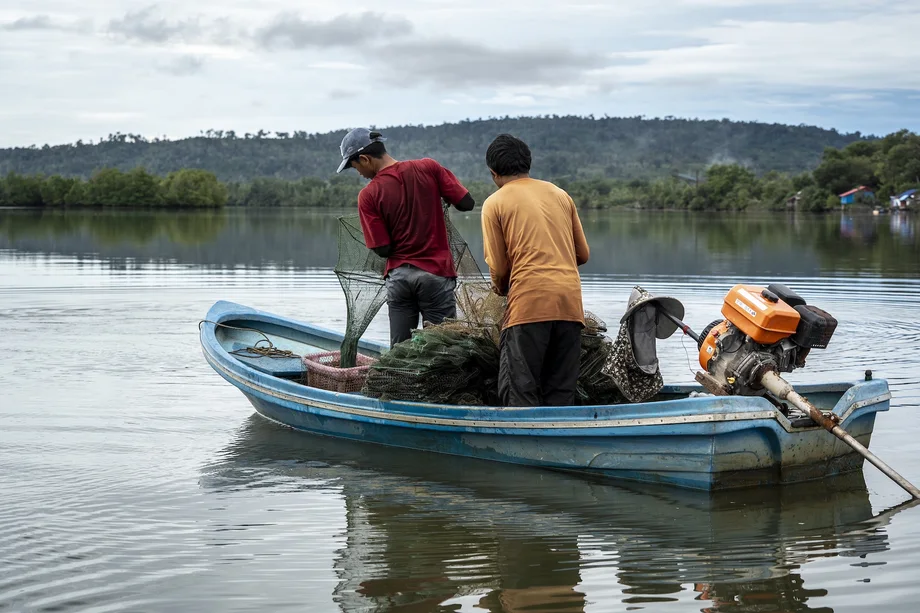
Near Koh Sralao, a fishing community in Koh Kong province, residents say sand mining vessels returned in June after an absence of about a decade. Provincial authorities say they approved an operation roughly 10 kilometers upstream on the Trapeang Rung River to extract sand for Singapore.
Around 300 families depend on crabs, fish and mollusks from the surrounding estuaries and mangroves. Residents say mining operations have blocked access to fishing grounds and reduced their catches, adding pressure to households already struggling with declining fish stocks and higher fuel prices.
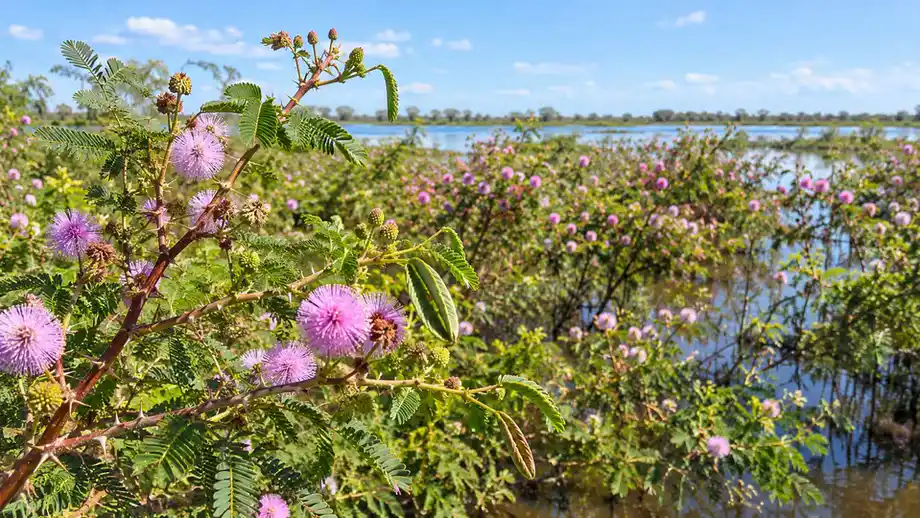
The location places the operation close to internationally recognized wetlands. The Koh Kapik Ramsar Site lies about 3 kilometers downstream, while the river passes through four protected areas in the Cardamom Mountains before reaching the coast.
The amount of Cambodia's exported sand that came from the Trapeang Rung River is unclear. Vessels were observed loading sand there, with barges carrying it to ships offshore. Ship tracking and trade records indicate that those ships continued to Singapore's Tuas Port.
Fishing families face several pressures at once
Koh Sralao residents describe a shrinking space in which to earn a living. Access to fishing grounds matters as much as the number of fish in the water: a family cannot set traps or collect shellfish where vessels and mining equipment prevent it from working.
Higher fuel costs make longer journeys to alternative grounds more expensive. Falling catches mean less income to cover those trips. The economic effects of a conflict with Thailand, including the closure of a nearby border crossing, have added another strain on the local economy.
Some residents have already migrated to find work. Fishers fear they may eventually have to leave too if accessible fishing areas continue to disappear. For households that depend on daily catches, damage to a river can quickly become a problem of paying for food and keeping a family in its village.
Why the riverbed matters to fish and mangroves
Researchers documented more than 70 fish species in local waters in 2023. A survey that year recorded more than 700 species in the wider mangrove landscape connected to the river, one of mainland Southeast Asia's largest mangrove forests.
Estuaries, where rivers meet the sea, link several habitats. Mangrove roots provide shelter, seagrass beds offer feeding areas, and sandy riverbeds support animals that fish eat. Young fish and shellfish use these places while growing, making them valuable to fisheries beyond the precise spot where a catch is taken.
A conservationist familiar with the area warned that extracting sand could damage seagrass and sandy riverbeds used as aquatic habitats and breeding grounds. Studies have linked sand mining to the loss of nursery grounds and lower survival among fish.
A 2025 review of more than 60 studies identified habitat loss, poorer water quality and changes to food webs among river responses to sand mining. A food web describes the connections between organisms that eat one another. Damage to small creatures living on the riverbed can therefore affect larger fish that depend on them.
Researchers also warn that coastal sand extraction can contribute to saltwater intrusion, when seawater moves farther into places normally containing fresher water. Changes in salinity can alter which plants and animals survive there.
The surrounding habitats support threatened wildlife, including Irrawaddy dolphins, Indo-Pacific bottlenose dolphins, fishing cats and hairy-nosed otters. Conservationists warn that dredging could damage the places these species use to feed and breed, alongside the fishing grounds supporting local households.
Residents describe murkier water and limited consultation
Koh Sralao residents say they were not informed before mining began. In nearby Koh Kong Khnong, some residents said authorities consulted them, but they did not object because they believed opposition would not change the decision.
A provincial official previously argued that dredging shallow channels could reduce flooding, improve transport and benefit aquatic species. Removing material from a channel can create more room for water and boats to pass, which helps explain why some residents may see practical benefits.
One resident said flooding had decreased after dredging, while also describing oil slicks, murkier water and dead shrimp. Another account of oil on the water raised concern about contamination that could affect fish and other organisms for an extended period.
The company reportedly promised to contribute part of its earnings to a community fund. Residents said they had received food supplies instead. Cash paid into a shared fund and occasional food deliveries offer different forms of support, particularly for families facing a continuing loss of fishing income.
The legal basis for restarting exports after the 2017 ban, the operation's extraction limits and its environmental monitoring arrangements have not been specified. Those details would help residents understand how much sand can be removed and how authorities intend to respond to damage.
A trade with a long and disputed history
Koh Kong's connection to Singapore's sand market stretches back well before the latest operation. Historical accounts describe dredging in estuaries, including protected areas, and a chain of local concessions, foreign operators, barges and ships carrying material overseas.
The main developments span nearly two decades:
- January 2007: Indonesia banned sand exports, preceding increased attention to Cambodia as a source for Singapore.
- 2008: Singapore imported a reported 14.2 million tonnes of sand worth $273 million from Vietnam, Malaysia and Cambodia.
- March 2009: Investigations described extensive dredging in Koh Kong, including operations within Peam Krasop Wildlife Sanctuary.
- January 2017: Large gaps between Cambodian export figures and importing countries' records drew renewed scrutiny.
- 2017: Cambodia banned sand exports.
- 2023: Surveys documented the area's rich fish and mangrove biodiversity.
- June to September 2026: Cambodian trade statistics recorded more than 694,000 metric tons of natural sand exported by sea to Singapore.
In March 2009, Global Witness estimated that the Koh Kong operation it examined was worth $35 million annually and removed about 60,000 tons a month. Lim Sokheang, general manager of LYP Group, gave a lower estimate of 40,000 to 50,000 tons a month.
At the time, Winton Enterprises, based in Hong Kong, was identified as an operator working under LYP's concession. Provincial mining officials named LYP Group, Udomseima, Dany Trading and Regapo Ltd as concession holders. These are historical accounts of the earlier trade; the current operation's ownership has not been identified.
Earlier warnings reached inside protected areas
The 2009 investigations described extraction at Koh Suon and Koh Smach, including within Peam Krasop Wildlife Sanctuary. Established in 1993, the sanctuary covered 25,897 hectares and was intended to protect a coastal mangrove ecosystem.
Fisheries Administration director Nao Thuok warned that dredging could destroy seagrass and spawning grounds. Chea Hean, president of the Cambodian Natural Resource Protection Organization, cited complaints from 1,500 fishers. Today's concerns about breeding habitats and lost catches therefore echo warnings raised during the previous period of extraction.
In another investigation into the earlier trade, Global Witness said its investigators saw nine dredgers in a single day inside the Peam Krasop Wildlife Sanctuary and Koh Kapik Ramsar Site. It estimated Koh Kong's annual sand trade with Singapore at $248 million. That estimate concerned a different investigation from its March 2009 valuation.
Global Witness also described a large difference between extraction costs and sale prices: about $3 to extract a tonne of sand in Cambodia, compared with a sale price of $26 in Singapore. Shipping, handling and other costs sit between those figures, while the amount returned to communities through taxes was unclear.
Local communities reported falling fish stocks and crab harvests during that earlier period. The Cambodian government denied a connection with dredging. The return of vessels now brings those longstanding concerns back to communities whose earnings remain closely tied to the same waterways.
Missing customs records complicate scrutiny
Cambodia's earlier sand trade also attracted attention because the records kept by exporting and importing countries did not match. Indian customs data recorded more than 108,000 tonnes of Cambodian sand arriving in 36 shipments between 2013 and 2015, while Cambodian customs recorded no sand exports to India.
Singapore recorded almost 70 million tonnes of sand imports from Cambodia between 2007 and 2015 for which Cambodia had no corresponding record. Such gaps made it difficult to track the volume leaving Cambodian waterways and the money associated with it.
Alex Gonzalez-Davidson, a founder of the environmental group Mother Nature, alleged in January 2017 that the discrepancies pointed to smuggling involving people in government, forged documents, corruption and abuse of power. His comments were allegations about the earlier trade.
The renewed exports create a fresh need for records connecting each shipment to its extraction site. A national total shows how much sand crossed a border. Records identifying the river, permit holder, vessel and buyer would make it possible to trace where that sand came from and which community experienced the extraction.
Singapore's demand links the river to new land
Singapore uses imported sand for construction and land reclamation, the process of creating usable land by placing material in coastal waters. Its land area grew from 582 square kilometers in the 1960s to 710 square kilometers in 2008, an increase of 128 square kilometers, or about 22%.
The country's demand has drawn sand from several neighbors. The reported 14.2 million tonnes imported in 2008 from Vietnam, Malaysia and Cambodia show the scale of this regional supply chain. Restrictions in exporting countries have repeatedly affected where buyers seek material.
Earlier reporting traced Cambodian sand toward a major reclamation project in Singapore. For the latest shipments, the documented shipping route leads to Tuas Port, connecting extraction in Cambodian waterways with Singapore's demand for imported material.
The reported 2026 trade figures imply an average declared value of about $5 per metric ton: $3.47 million divided by 694,000 metric tons. That is the value recorded in the export statistics; transport, handling and subsequent transactions involve further costs.
For Koh Sralao families, the immediate economic calculation is different. Sand exports generate recorded trade revenue, while households face the cost of fuel, reduced access to fishing grounds and the possibility of having to seek work elsewhere.
Who is responsible for protecting the source?
Singaporean lawmakers have asked the government to disclose data on Cambodian sand imports and explain how it prevents environmental harm in countries supplying the material. The government replied that exporters must comply with the laws and regulations of their source countries.
Singapore's Ministry of National Development expressed a similar division of responsibility during the earlier controversy, placing enforcement of extraction licenses with the exporting country:
The policing and enforcement of sand extraction licences is ultimately the responsibility of the source country. However, Singapore will continue to play its part to ensure that sand is extracted in a legal and environmentally responsible manner,
Environmental advocates say limited supply chain information makes scrutiny difficult. Cambodian authorities oversee extraction permits and local environmental protection, while Singapore's import requirements govern entry into its market. Public records connecting those two ends would allow communities to follow the trade more closely.
A researcher has called for an international body to designate areas where sand extraction would cause serious harm as off limits, pointing to comparable protections for other resources. For Koh Sralao, the immediate concerns remain local and concrete: access to fishing grounds, the condition of the water and whether promised community benefits arrive.
Key Points
- Cambodian statistics recorded more than 694,000 metric tons of natural sand exported to Singapore from June to September 2026, worth $3.47 million.
- Mining resumed near Koh Sralao, where around 300 families depend on fishing and collecting shellfish.
- Residents report blocked fishing access, reduced catches and concerns about oil slicks and murkier water.
- The Koh Kapik Ramsar Site lies about 3 kilometers downstream from the mining site.
- Historical investigations documented dredging in protected areas and large gaps between Cambodian export records and importing countries' figures.
- The share of current exports coming from the Trapeang Rung River and the legal basis for restarting the trade remain unclear.