Haze Bill Targets Company Finances and Overseas Fires
Singapore is proposing to raise the maximum fine for the main transboundary haze offence from S$2 million to S$20 million, while giving authorities powers to restrict business dealings with designated companies and act against overseas fires before their smoke reaches the country.
Contents
- Haze Bill Targets Company Finances and Overseas Fires
- From October Notices to the November Debate
- How the Larger Penalties Would Work
- A Civil Route Alongside Criminal Prosecution
- Restrictions Could Reach Buyers, Suppliers and Lenders
- Supply Chains Would Face New Duties
- Independent Assessors Would Examine Corporate Links
- Acting Before Smoke Arrives
- MP Challenges Information Penalties and Calls for Regional Action
- Key Points
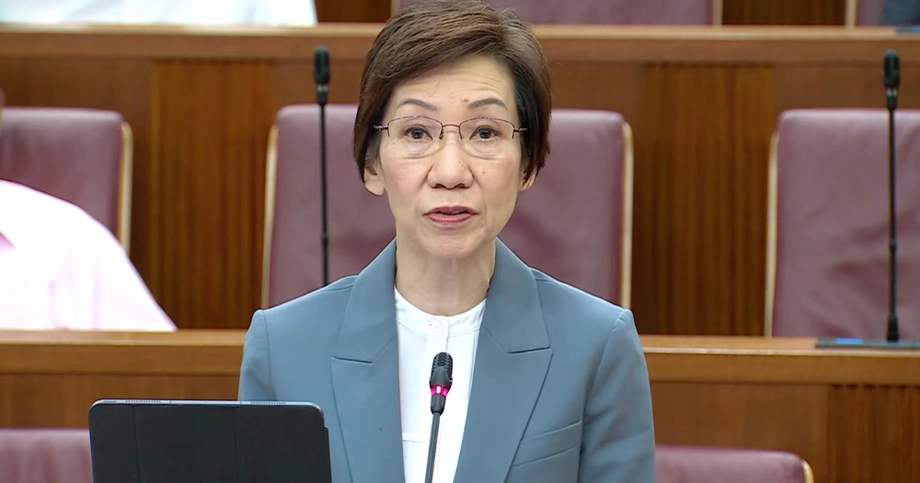
Minister for Sustainability and the Environment Grace Fu outlined the proposed amendments to the Transboundary Haze Pollution Act (THPA) in Parliament on November 4, 2026. They follow the September to October haze episode, described as Singapore's most severe since 2015, which remained under investigation.
The maximum daily fine for the main offence would rise from S$100,000 to S$1 million. Both the daily maximum and the total cap would therefore increase tenfold. Courts could also impose additional penalties reflecting profits gained or losses avoided through an offence.
The proposals reach beyond larger fines. They would give the National Environment Agency (NEA) stronger access to corporate information, create an alternative route through civil courts and allow restrictions on purchases, supplies and financial support involving designated entities.
Fu said authorities needed better ways to obtain and verify information, trace complicated corporate relationships and impose meaningful consequences, including when criminal prosecution was difficult. She also described the need for preventive action:
We also need to be able to intervene earlier before haze pollution reaches Singapore,
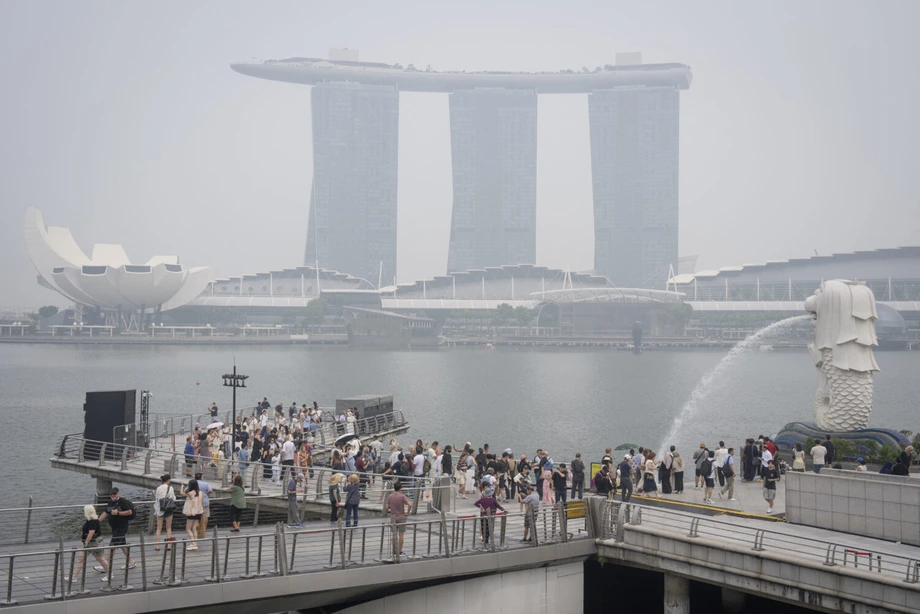
For residents, the immediate concern is exposure to polluted air. Air quality reached very unhealthy levels in October, with particular risks for children, older people, pregnant women and people with chronic heart or lung conditions. The proposed law seeks to address the business decisions and burning practices behind that exposure.
From October Notices to the November Debate
NEA began using its existing information gathering powers before the parliamentary debate. On October 23, it issued statutory notices under Section 10 of the THPA to 10 companies based in Singapore, seeking information about their links to businesses in Indonesia that might be contributing to the haze.
Five days later, Deputy Prime Minister Gan Kim Yong, Senior Minister K Shanmugam and Fu met senior company representatives. The meeting brought together political leaders, enforcement officials and corporate executives as the government prepared stronger investigative powers.
- September to October 2026: Singapore experienced its most severe haze episode since 2015.
- October 23: NEA issued Section 10 notices to 10 companies, and the government announced plans for a specialist investigation panel.
- October 28: Senior ministers met representatives of the companies to set out expectations for cooperation.
- November 3: Parliament's sitting began, and Workers' Party MP He Ting Ru raised a motion on Singapore's role in regional clean air.
- November 4: Fu outlined the proposed THPA changes, and MPs debated their reach and penalties.
The measures were presented as proposed amendments. A commencement date was not specified, and investigations into responsibility for the haze were continuing.
How the Larger Penalties Would Work
The proposed S$20 million cap applies to the main offence of causing or contributing to haze. The amendments would also expand the law to cover conduct contributing to overseas land or forest fires that pose a risk of haze pollution in Singapore.
Fu said the larger penalties had been set with the size of the businesses in mind:
This increase was calibrated with reference to existing legislation and the financial scale of the companies involved,
Courts would gain a further tool: penalties based on the financial benefit of an offence. A profit gained is money earned through the conduct; a loss avoided is a cost the offender escaped. Linking a penalty to those amounts would allow the court to address the economic benefit as well as impose the main fine.
Other penalties would rise proportionately. During the debate, He cited a proposed maximum of S$500,000 for each day an entity failed to comply with a preventive measures notice. Such a notice requires action intended to prevent or reduce the pollution risk.
A Civil Route Alongside Criminal Prosecution
NEA would also be able to seek penalties of up to S$10 million through civil court proceedings, with the Public Prosecutor's consent. This would provide an alternative to pursuing a criminal prosecution.
Fu said the civil framework would give the agency more flexibility in dealing with breaches and with entities seeking to avoid Singapore's criminal jurisdiction. An entity could not receive both civil and criminal penalties for the same case.
The distinction matters because the two routes give authorities different ways to bring a case before a court. Under the proposal, NEA would still need to pursue the civil penalty through court proceedings and obtain the prosecutor's consent to use that route.
Restrictions Could Reach Buyers, Suppliers and Lenders
The government is also proposing powers to designate errant entities and restrict business dealings with them. Restrictions could cover the supply or purchase of goods and services, loans and other forms of financial support.
Entities or individuals breaching those restrictions could face a maximum fine of S$1 million for each contravention, plus up to S$100,000 for every day it continued. The potential consequences would therefore extend to businesses that continued prohibited dealings with a designated entity.
The Monetary Authority of Singapore (MAS) would determine and administer relevant orders involving services provided by financial institutions. That would give the financial regulator a direct role where restrictions concerned banking or other regulated financial services.
Fu explained that the prohibitions were intended to reach dealings routed through complicated company structures:
At the same time, the prohibitions ensure that others do not deal with such designated entities, including through complex business arrangements or corporate structures.
For a buyer or lender, the practical task would be to identify who sits behind a transaction. A contract may be signed with one company while operations, ownership or financing connect it to another. The proposed restrictions are designed to reach those connections.
Supply Chains Would Face New Duties
Large forestry and agriculture corporations could also receive notices requiring them to ensure that their supply chains and business arrangements exclude designated entities. The government said identifying every business involved in burning or every connection in a supply chain might be impractical.
A supply chain is the network of producers, contractors, suppliers and buyers involved in bringing a product to market. Requiring connected companies to examine that network would place part of the checking responsibility on businesses with access to their own contracts and commercial relationships.
Failure to comply with a notice without a reasonable excuse would be an offence. NEA would also gain powers to publish lists of entities that had failed to comply with notices or directions, as well as entities directed to appoint an assessor.
Fu described the intended standard for companies receiving these obligations:
The objective is not to impose an impossible guarantee that no risk will ever arise, but to ensure that companies do not turn a blind eye to irresponsible forestry and agricultural practices.
The combined approach would make checking suppliers, contractors and business partners part of compliance with the haze law. Companies would need to act on relevant connections rather than rely solely on the identity of the business signing a contract.
Independent Assessors Would Examine Corporate Links
The Director-General of Environmental Protection would be able to require entities with suspected links to haze pollution in Singapore to appoint independent assessors at their own expense. The proposed framework would give those assessors access to relevant corporate information, premises, operations and supply chains.
A specialist panel of legal, audit and investigation firms was planned, coordinated by Davinder Singh Chambers. Assessors would examine corporate relationships and operations, then submit evaluation reports to NEA. Investigations could also draw on specialists examining satellite imagery and fire hotspot data.
The October meeting included representatives of Bumitama Agri, First Resources, Golden Agri-Resources, Indofood Agri Resources, Kencana Agri, TSH Resources, Wilmar International and Sinar Mas Group, along with two Asia Pulp & Paper entities. Golden Agri-Resources chairman and chief executive Franky Oesman Widjaja represented his company and the two Asia Pulp & Paper entities.
Other representatives included Bumitama's Lim Gunawan Hariyanto, First Resources' Ciliandra Fangiono, Indofood Agri's Mark Julian Wakeford, Kencana Agri's Albert Maknawi, TSH's Kelvin Tan Aik Pen, Wilmar's Kuok Khoon Hong and Sinar Mas senior adviser Bernard Tan.
Shanmugam said the companies had indicated they would cooperate. Speaking as chairman of the Homefront Crisis Ministerial Committee, he stressed that the existing Section 10 notices required full, accurate and prompt responses. Under the existing provisions described at the meeting, noncompliance could bring a fine of up to S$5,000, imprisonment of up to one month, or both, for company representatives.
Acting Before Smoke Arrives
NEA would assess whether overseas fires posed a risk to Singapore by considering their distance from the country, how long and how widely they were burning, and prevailing wind and weather conditions.
Those factors connect a fire on the ground with the chance that its smoke will travel to Singapore. A fire's location alone gives only part of that picture: the extent of burning and the direction of the wind also matter when deciding whether preventive action is needed.
The proposed expansion would allow authorities to act while the risk was developing overseas, rather than waiting for haze to reach Singapore. Combined with the assessor framework, it would connect information about fires with information about the companies, contractors and supply chains associated with them.
MP Challenges Information Penalties and Calls for Regional Action
He Ting Ru, the Workers' Party MP for Sengkang, questioned whether a proposed one time fine of S$50,000 for individuals failing to provide requested information was sufficient. She proposed S$200,000 for intentional suppression of information and cited annual executive pay above S$1 million at several of the 10 companies.
He described the proposed S$50,000 penalty this way:
A S$50,000 fine is little more than a tap on the wrist
Fu replied that the information provision could apply to anyone, including third parties unconnected to the burning, so culpability could be low. More serious offences carried higher penalties, including up to S$20 million for certain directors and officers who failed to comply with assessors' directions.
He also urged stronger information sharing through Singapore's ASEAN chairmanship in 2027. She questioned the legal powers of the recently established ASEAN Coordinating Centre for Transboundary Haze Pollution Control in Indonesia and called for shared data, financing support and assistance for farmers.
Europe's Convention on Long Range Transboundary Air Pollution provided one comparison in her argument. He cited reductions of 30 to 80 per cent in particulate and sulphur emissions, using the example to advocate cooperation and shared surveillance between neighbouring countries.
Banks were another focus. He called for scrutiny of entire corporate groups, including contractors and subcontractors, and urged banks to publish aggregate information on how many clients linked to haze they had reviewed and what follow up action they took.
She pointed to sustainability lending frameworks at DBS, OCBC and UOB as systems that could be used to check whether borrowers controlled fire risks. Her proposals would connect the new legal powers with financial checks and regional cooperation, while the government's bill concentrates on investigation, penalties, preventive action and restrictions on business dealings.
Key Points
- The proposed maximum fine for the main haze offence would rise tenfold, from S$2 million to S$20 million.
- NEA could seek civil penalties of up to S$10 million with the Public Prosecutor's consent, as an alternative to criminal penalties for the same case.
- Designated entities could face restrictions involving goods, services, loans and other financial support.
- Companies could be required to appoint independent assessors and examine connections across their supply chains.
- Authorities would be able to act against overseas fires posing a haze risk before smoke reached Singapore.
- Investigations into the September to October 2026 haze episode were continuing.