A Return to Tokyo, Two Titles at Stake
Tokyo's EBARA Wave Arena in Ota ward became a place of settled arguments on 26 November. Masamichi Yabuki kept the IBF flyweight world title against Miel Fajardo by unanimous decision, with scores of 118-110, 118-110 and 116-112. Takeshi Ishii kept the WBA minimumweight world title against Zyvyr Medecilo by unanimous decision in the second world title bout. Two Filipino challengers had arrived in Japan hoping to leave with belts. They left with record changes and a reminder of how narrow world title boxing can be.
Contents
- A Return to Tokyo, Two Titles at Stake
- Why These Two Challengers Mattered
- Getting Used to Japan's Cold
- The Open Workout in Yokohama
- Fair Officiating Became a Public Issue
- The Champions Set the Tone at the News Conference
- Yabuki's Jab Took Away Fajardo's Power
- Ishii's First Defense Ended Medecilo's Record Bid
- What the Night Changed for Both Boxing Camps
- From Iwaki to Nagasaki, the Memory of Boxing and Loss
- Yabuki's Next Road Is Still Open
- What to Know
The stakes had been clear before the opening bell. Fajardo, 26, was the IBF flyweight mandatory challenger, ranked first in the division, with 14 wins, 12 knockouts, three losses and two draws. Medecilo, 21, was 9-0-0 with five knockouts and ranked 11th by the WBA at minimumweight. Both were making first world title attempts. The card was streamed on Lemino Premium and built around two weight classes where a small difference in size changes everything: flyweight has a 50.8 kilogram limit, while minimumweight is capped at 47.6 kilograms. Boxers must weigh in at or below those limits, so making weight is part of the job.
For the writer whose reflections began this story, the trip was also a return to a country full of sporting and personal memory. Around November 1995, he was in his twenties on assignment in Iwaki, Fukushima Prefecture, for a world lightweight title fight. Filipino challenger Dindo Canoy of Negros faced Orzubek Nazarov of Uzbekistan, who was based in Japan and making the fourth defense of the WBA crown. Nazarov kept the title with lopsided scores, and Canoy's party went home sad. The journey to Iwaki took a local train ride lasting two hours over 200 kilometres.
That older trip stayed close because Iwaki later suffered a March 2011 earthquake and tsunami that killed 468 people in the city. The writer had not gone back but had been told the city recovered. The new Tokyo assignment offered a chance to replace an old boxing sadness with something brighter, especially after a manager based in Hong Kong had spoken about 'double happiness' for the two Filipinos.
Why These Two Challengers Mattered
Fajardo's route to the title was direct and violent. In April, he knocked out Argentina's Tobias Reyes in 65 seconds in Galvez, Argentina, earning the IBF flyweight challenge. He had also sparred with Rex Tso during preparation. His nickname was the Silent Assassin, and the power was real: 12 of his 14 wins were by knockout, seven of them in the first round. A mandatory challenger is the boxer a champion is normally required to face, so Fajardo's ranking gave him a formal claim on Yabuki.
Medecilo's case rested on an unbeaten record and a possible piece of Philippine history. A victory in his 10th professional bout would have made him the fastest Filipino to win a world title, beating Malcolm Tunacao, who won his belt in his 11th fight. At that moment, the Philippines had only one reigning world champion, Pedro Taduran. Medecilo and Fajardo were the last two Filipino boxers seeking world titles that year.
The champions were difficult tests. Yabuki, 34, went in with a 20-4-0 record and 18 knockouts. He had recovered from an Achilles tendon rupture, won the IBF light flyweight title, then moved up in March 2025 to beat Mexico's Angel Ayala by TKO in round 12 and become the first Japanese man to hold two world titles at the same time. He defended the flyweight belt by knocking out Felix Albarado in round 12 in December 2025 and by decision over Rene Calistro in June 2026.
Ishii, 27, held a 12-1-0 record with nine knockouts. He won the WBA belt in September by knocking out Puerto Rico's Wilfredo Mendez in the first round. His only loss had been to Filipino Lito Dante three years earlier. Ishii's first defense came just 85 days after he won the title, a short turnaround for a champion still building his career at the top.
Getting Used to Japan's Cold
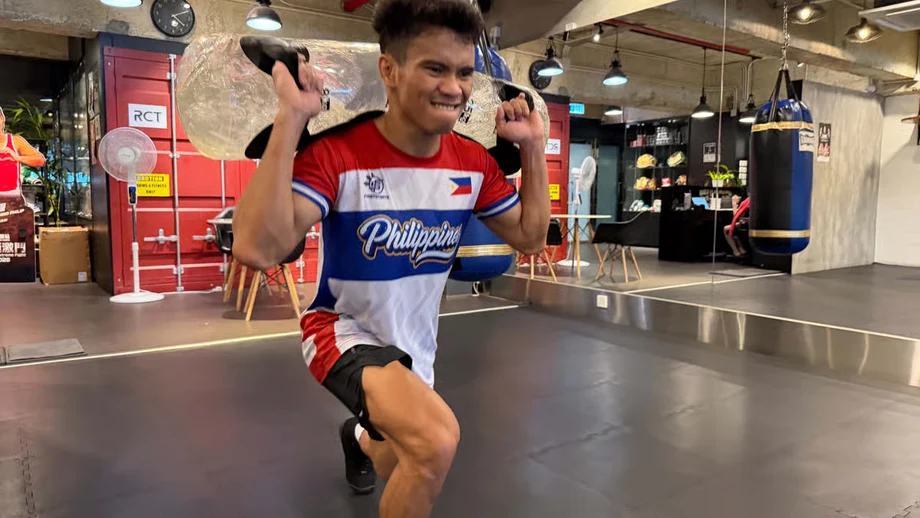
Fajardo and Medecilo arrived at Haneda Airport on 20 November under RCT Promotion, a company based in Hong Kong. Fajardo wore black and Medecilo wore white. Trainer Jericho Asilo, trainer Ericxon Asilo, matchmaker Anthony Arieta and manager Lennon Tsoi met them. Tsoi had flown in from Hong Kong. Ohashi Promotions housed the team at the Sheraton at Yokohama Bay and Mets Yokohama before the fighters settled into training.
The weather was part of the plan. Medecilo, the unbeaten challenger, said at a news conference in Makati that cold air had once made his nose bleed during a visit to Hong Kong. He had turned his home air conditioning to its maximum setting to get used to the cold. He described the challenge in plain terms.
The difficult thing for us and Kuya Miel is the climate. That is already an advantage for them. We still have to adapt, while they already have.
Fajardo, the mandatory challenger, agreed that adjustment came first. He had already fought hometown boxers overseas, including Tobias Reyes in Argentina, but Japan's cool air still mattered.
The first thing is for us to adjust to the climate there because we know it is cold. That is the most important thing for us.
Their arrival was followed by a public workout at Ohashi Gym in Yokohama, the home gym of Naoya Inoue, one of the best boxers in the world. The fighters trained outdoors no more after that session, as both camps sought controlled conditions before fight night.
The Open Workout in Yokohama
On 21 November, Fajardo and Medecilo held an unusually long open workout at Ohashi Gym. They jumped rope, shadow boxed, hit mitts and worked the heavy bag for more than 30 minutes, with about 10 rounds of work. Yabuki's camp did not send observers. Ohashi Gym president Hideyuki Ohashi, 61, watched, along with Ishii's trainer Higashi Yaegashi, 43, a former champion in three weight divisions.
Fajardo, the IBF challenger, spoke quietly but with confidence. He had trained in Japan before as a sparring partner for Hiroto Kyoguchi, a former champion in two divisions, and others, and he returned with a specific goal.
Becoming world champion is my dream, and this is also a big fight for the Philippines. I am very happy to have this chance.
Fajardo called Yabuki a fighter and a skilled boxer. He said he respected the champion and had worked on answers to Yabuki's jab and right counter. He also wanted a long fight if the knockout did not come early. During the workout, he spotted Naoya Inoue and asked for a photograph, smiling beside the unified super bantamweight champion.
Medecilo, the challenger, 21, spoke about history and the belt. Standing 1.63 metres, he was seven centimetres taller than Ishii, who measured 1.56 metres. He saw his height and power as his best weapons.
I am very excited about this historic fight. If I win, it will have great meaning in Philippine boxing history. I definitely, definitely want to take the champion belt. I have that confidence.
Ohashi, the gym president and event promoter, saw why the Filipinos had been given the calls. He said Fajardo had real punching power and described Medecilo with one word: scary. He expected fierce exchanges from the first round, even in the lighter divisions, because both champions also had high knockout rates.
Fair Officiating Became a Public Issue
Before the bout, both camps wanted reassurance about judging in a fight in Japan involving two Filipino challengers. Tsuyoshi Yasukochi, secretary general and executive director of the Japan Boxing Commission, was named fight supervisor for Fajardo against Yabuki. He addressed the concern directly.
The better man will win the fight. No worries.
Anthony Arieta, Fajardo's matchmaker with RCT Stable in Hong Kong, met Yasukochi on Tuesday at the Hyatt with promoter Cucuy Elorde. Arieta relayed what he had been told.
I was given the assurance that the officiating is going to be fair in this fight.
Francisco Rivera, head of the Philippines' Games and Amusements Board, also met the Japan Boxing Commission the previous week and expected Fajardo to receive a fair shake. A referee enforces the rules inside the ring, while judges score the bout. The IBF appointed Koji Tanaka, described as Japan's leading ring official, as referee. The judges were Takeru Okaniwa of Japan, Carl Zappia of Australia and Gil Co of the Philippines.
For readers unfamiliar with boxing, a title fight can be decided by judges if all 12 rounds are completed. Judges score who wins each round, and the three scores determine the result. That is why the identities of the referee and judges matter before a single punch is thrown.
A separate decision had shortened other title fights in Japan. After Shigetoshi Kotari and Hiromasa Urakawa died from injuries sustained in separate bouts on the same card at Tokyo's Korakuen Hall on 2 August 2025, the Japan Boxing Commission announced that Oriental and Pacific Boxing Federation (OPBF) and WBO Asia Pacific title fights in Japan would be reduced from 12 to 10 rounds. That measure applied to those regional titles, not the IBF and WBA world titles at stake on this card.
The Champions Set the Tone at the News Conference
The official news conference took place on 24 November in Yokohama. Yabuki, preparing for his third defense, called Fajardo dangerous and pointed to the challenger's high knockout rate. He promised an early attack, saying viewers should watch from round one because he would not be timid.
I am in good shape as always. I am excited. He is a wonderful fighter and a dangerous fighter. I am looking forward to it. I will not be timid from round one. Watch from the first round.
Yabuki, the IBF champion, said he wanted to beat power with skill. His gym president, Matsuo, described the matchup as a chance to see the essence of boxing. Yabuki accepted that description and gave his own plan.
I want to show a win where technique beats power.
Yabuki also knew the wider flyweight map. WBO champion Anthony Olascuaga was active in the United States, and a former WBA light flyweight champion, 23, was set to move up for a WBA flyweight title bout on New Year's Eve. Yabuki pushed that talk aside before the fight, saying the dangerous opponent in front of him came first.
Ishii, making his first defense, met Medecilo for the first time. The WBA champion said the change from winning the belt to defending it had taken time, but he welcomed the test. Medecilo had said he was stronger than the champion, and Ishii answered without anger.
If he is going to challenge, that is normal. Let him come at me hard. That is how I will prepare to stop him.
Ishii described Medecilo as daring and a fighter with a wide range of skills. The words set up a bout between a new titleholder and an unbeaten challenger who believed his moment had arrived.
Yabuki's Jab Took Away Fajardo's Power
The main event began with a consistent pattern. Fajardo moved forward looking for big hooks, the kind that had ended so many of his fights early. Yabuki used angles, quick feet, a fast jab and right counters. A jab is a straight lead punch used to measure distance and interrupt an opponent; in Yabuki's hands it also became the main scoring weapon.
Fajardo kept his power late, but Yabuki rarely traded freely. The champion landed left jabs, right counters, body shots and uppercuts while stepping away from the hook. In round nine, Yabuki hurt Fajardo with a left to the body followed by a left hook and a burst of punches. His corner shouted for him to stay defensively instead of chasing the knockout. The two judges who scored it 118-110 gave him a margin of eight points. The third had it 116-112.
Yabuki had promised a knockout. Afterward, the champion apologized for protecting his lead, using the phrase safe driving, and admitted that he missed the finish.
I missed the knockout.
His trainer, Takizawa, saw the fight differently. He said everything went according to plan: make Fajardo miss with the jab, take single scoring punches and leave the challenger without a clear answer. Fajardo, the losing challenger, said Yabuki's jab speed stopped him from getting close and that he could not do what he wanted in the ring.
Preparation had included an unusual detail. In the week before making weight, Yabuki's camp used an interactive AI tool to review meals, part of the careful work needed to reach a weight limit. AI means artificial intelligence software, which can answer questions and suggest adjustments. Yabuki said his condition on the morning when he weighed in was the best it had been. Tokyo also marked his first fight in the capital in about seven years and seven months, after six straight bouts in his home prefecture of Aichi.
Yabuki's record moved to 21 wins, 18 by knockout, and four losses. Fajardo fell to 14 wins, 12 by knockout, four losses and two draws. Yabuki's run of consecutive knockouts, which had reached six before the Calistro fight, ended in June and remained at six after Tokyo; he had now won two straight title fights by decision.
Ishii's First Defense Ended Medecilo's Record Bid
The second world title bout also went the distance. Ishii won by unanimous decision and made the first defense of the WBA minimumweight belt. No exact scores were given. Medecilo's unbeaten run ended, and his chance to become the fastest Filipino world champion in his 10th professional bout passed.
Ishii, trained in the Ohashi Gym system, had won the title only 85 days earlier with a first round knockout of Wilfredo Mendez. The WBA minimumweight division is for fighters weighing no more than 105 pounds, or 47.6 kilograms. Medecilo, who had arrived in Japan believing he could handle the champion's pressure, found that Ishii had enough experience to slow the fight down.
The result preserved a Japanese night. Both local champions retained their belts, and the two Filipino visitors did not add a world title to the country's list. Pedro Taduran remained the Philippines' only reigning world champion at that point.
Supporting bouts added family and gym storylines. Yabuki's younger brother, ranked fourth by the WBA at super featherweight, stopped a Filipino opponent in round three, the first time the brothers had fought on the same card in nine years. Yabuki's daughter, Yuzuki Sato, won her opening bout at the All Japan Women's Junior Championships in Miyazaki by RSC in the second round. RSC means the referee stopped the contest, a protection used when a fighter cannot safely continue.
What the Night Changed for Both Boxing Camps
Before the fights, manager Lennon Tsoi of RCT Promotions had spoken about a rare double. He runs the Hong Kong company that signed both Filipinos, and he understood the size of the opportunity.
If two fighters become world champions in one night, it will be a first in Philippine history.
That outcome did not happen. Fajardo's loss to Yabuki and Medecilo's loss to Ishii kept the belts in Japan and left the Philippine tally unchanged. Reaching the fights still gave both men a world title platform. The results mean Fajardo must rebuild from a first world title defeat, and Medecilo must wait for another chance after his first loss.
For Yabuki, the decision win kept the IBF belt and strengthened his case as one of Japan's leading active champions. For Ishii, the defense validated a rapid rise from title winner to titleholder under pressure. For the Philippines, the night ended with one reigning world champion and two fighters who had come close.
From Iwaki to Nagasaki, the Memory of Boxing and Loss
The writer's Japan memories stretched far beyond one fight in Iwaki. After that 1995 assignment, he made many trips to Japan as a sports writer and as a traveller with family and friends. Tokyo was the frequent stop, but he also spent time in Osaka, Fukuoka, Kobe, Nagoya, Gifu, Kumamoto, Yokohama and Nagasaki.
Nagasaki left the deepest image. He wrote that the devastation there continued to follow him, not as something he enjoyed, but as a reminder of what people can endure. He hoped to visit Hiroshima one day and place it beside other unforgettable sites in his memory: Pompeii, Auschwitz-Birkenau and Choeung Ek, known as the Killing Fields.
Quinito, later the writer's wedding godfather, was already covering the sport for a newspaper during the Iwaki trip. Garren, then five or six, was also in the group. The writer was the youngest apart from Garren, while Canoy was almost a year older. He has never hidden his age and sees more birthdays as a blessing. In Tokyo decades later, gray haired and wrinkled but close to the same weight, he found himself looking at another pair of Filipino boxers chasing a happier result.
Yabuki's Next Road Is Still Open
No next fight had been set for Yabuki after the Fajardo bout. The IBF champion said he wanted either a unification bout with another belt holder or a move to super flyweight in search of titles in three divisions. When asked which route he preferred, he chose whichever chance arrived first.
He named WBO flyweight champion Anthony Olascuaga and WBA and WBC unified champion Sergio Mendoza as possible opponents. A unification bout means champions recognised by different sanctioning bodies meet so one fighter can hold more than one version of the world title. Olascuaga had made six defenses, including a 14 November decision over Colombia's Yuberjen Martinez in the United States. Mendoza took the WBA and WBC belts in October with a fifth round TKO of Ricardo Sandoval.
A move to super flyweight would be the other path. Yabuki had spoken about it after the Calistro fight in June and turned 35 the following July. His win over Fajardo kept both doors open, but the choice and the date remained undecided.
What to Know
- Masamichi Yabuki retained the IBF flyweight title with scores of 118-110, 118-110 and 116-112 against Miel Fajardo in Ota ward on 26 November.
- Takeshi Ishii retained the WBA minimumweight title by unanimous decision against Zyvyr Medecilo in the second world title bout.
- Fajardo, the IBF mandatory challenger, had reached the fight with 14 wins and 12 knockouts, seven of them in the first round.
- Medecilo, unbeaten in nine fights, would have become the fastest Filipino world champion if he had won in his 10th bout.
- The Japan Boxing Commission appointed Koji Tanaka as referee and named judges from Japan, Australia and the Philippines.
- Yabuki said he wanted technique to beat power, then apologized after the fight for missing a knockout.
- No next fight has been set for Yabuki, who mentioned unification or a move to super flyweight.
- The night echoed an older Japan boxing memory for the writer, who covered Dindo Canoy against Orzubek Nazarov in Iwaki in 1995.