Solar overtakes nuclear with a fifth of Pakistan's electricity
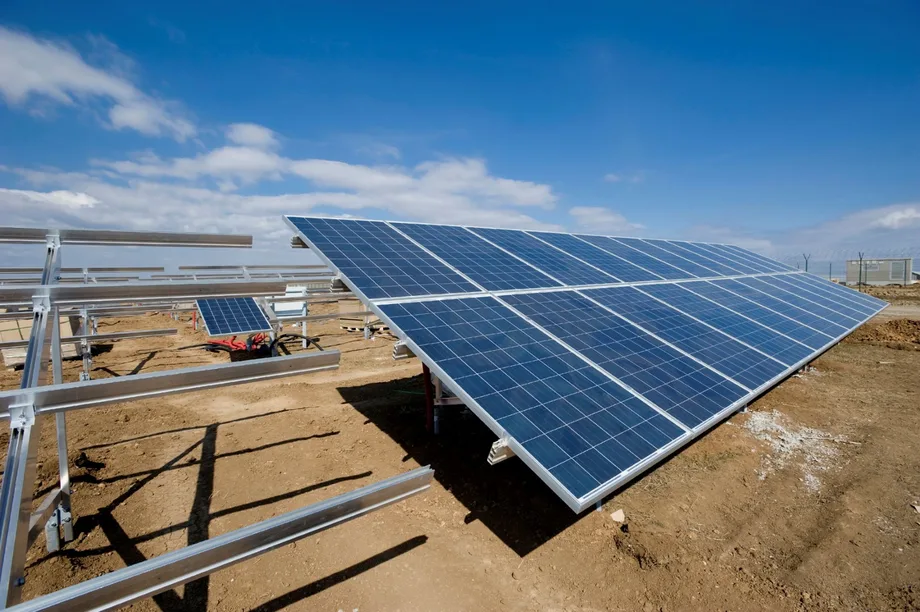
Solar generated 21.6 percent of Pakistan's electricity in 2025, an estimated 36.3 terawatt hours, and overtook nuclear for the first time after output rose 85 percent in a single year, according to the World Nuclear Industry Status Report 2026. The power came mostly from panels bought by families, shopkeepers and farmers rather than from a state building programme.
Contents
- Solar overtakes nuclear with a fifth of Pakistan's electricity
- Why a panel on the roof made sense to millions
- The import ledger shows how large the build out became
- The grid sells less power but carries the same bills
- A peak that lasts 31 hours sets the bill for the year
- Why the system operator wants fewer new plants
- Who pays when wealthier homes leave the grid
- Solar as a shield against an oil shock
- What the sun over Cholistan could cost
- Batteries move the problem to the evening
- What is not settled yet
- Key Points
Pakistan has become the second biggest market among individual countries for Chinese solar panels, taking shipments with more than 58 gigawatts of production capacity between early 2017 and mid 2026. A gigawatt is roughly the output of a large power station running at full tilt, which gives a sense of the volume arriving in a country that spent years struggling to finance conventional plants.
Prime Minister Shehbaz Sharif put the two year figure at nearly 22 gigawatts of rooftop solar when he addressed a high level dialogue on electrification at the COP31 climate summit. He said the panels amounted to a change nobody in government had drawn up.
An extraordinary transition has already taken place. It is a quiet revolution by ordinary citizens seeking affordable power and a cleaner, more predictable future.
Why a panel on the roof made sense to millions
Household electricity bills more than doubled in three years. Base tariffs doubled between fiscal 2022 and fiscal 2025, the period in which the government ended the practice of hiding the true cost of power behind subsidies under its International Monetary Fund programme. Chinese panels became cheap at the same moment, so the arithmetic changed faster than any policy could follow.
Supply was unreliable as well. Average daily outages ran to 10.25 hours at one electricity distribution company and eight hours at another, according to the fiscal year 2024 to 2025 performance report of the National Electric Power Regulatory Authority, the country's electricity regulator, known as NEPRA.
A household that could raise the cash for a small system could recover the upfront cost within a few years and then keep the electricity. That combination of high bills and long blackouts pushed the market well beyond the wealthy neighbourhoods where it began.
Two kinds of buyers emerged. Better off households and businesses with steady supply registered for net metering, which lets them send surplus electricity into the grid and draw power back. Households in areas with weaker service increasingly put up panels without registering them at all, which means their output never appears in utility records.
The import ledger shows how large the build out became
By the end of fiscal 2025, cumulative panel imports stood at about 47 gigawatts, against officially net metered capacity of roughly 6.5 gigawatts. Cumulative imports reached about 58 gigawatts by the end of fiscal 2026.
The money came from private pockets. Roughly $14 billion was invested in distributed solar, and banks financed less than 5 percent of it, most households paying cash or borrowing informally. On farms, solar now runs 52 percent of the country's 1.83 million irrigation pumps, almost entirely without state help.
Electric two wheelers are following the same path. More than one in 10 motorcycles sold this year was electric, a share that reached 13 percent of sales by August and is running ahead of the schedule in the New Energy Vehicles Policy, which puts the 30 percent target at 2030.
The grid sells less power but carries the same bills
Every unit a rooftop system produces during daylight is a unit the national grid does not sell. Grid based generation fell nearly 13 percent, from 154 terawatt hours in fiscal 2022 to about 134 terawatt hours in fiscal 2026, while peak demand kept climbing.
Fixed costs did not move. In fiscal 2024 to 2025, 61 percent of what Pakistan paid for electricity went to plants for being available rather than for producing, a charge of Rs14.3 a unit, according to NEPRA. That payment for keeping capacity ready is higher than the entire delivered cost of power from a desert solar park.
An analysis by the Independent System and Market Operator, the body that plans the national system, traced the effect on the shape of demand. Installed capacity stood at 38,941 megawatts in June 2026. Peak demand reached 27,169 megawatts in fiscal 2026, about 40 percent above the peak a decade earlier.
The system load factor, which measures how evenly demand is spread across the year, fell from 67 percent in fiscal 2016 to 58 percent in fiscal 2026. A lower load factor means the country keeps expensive plant idle for most of the year and recovers its cost from fewer units sold, which raises the price of each unit.
A peak that lasts 31 hours sets the bill for the year
Demand within 1,000 megawatts of the annual peak lasted only 31 hours in fiscal 2026, about 0.35 percent of the year. Demand within 2,000 megawatts of the peak lasted 159 hours. The same narrow band covered eight hours in fiscal 2024, then 23 hours in fiscal 2025.
Summer cooling drives the spike, and the system operator links it to buildings that waste electricity and to consumption crammed into a few afternoon and evening hours. Solar does nothing for that window, because panels stop producing when the air conditioners are still running.
The Independent System and Market Operator argues that time of use tariffs, better efficiency and demand response would be cheaper than building peaking plants for a few dozen hours a year. Its Integrated System Plan 2026 to 2036, a 166 page document prepared with the National Grid Company of Pakistan, projects gross electricity demand rising 3 percent a year, while electricity actually supplied through the grid rises only 1.75 percent a year as distributed solar absorbs the rest.
Why the system operator wants fewer new plants
The plan warns the government against committing to unnecessary new generation over the next decade, because plants built for demand that solar has already met would sit idle and push capacity charges onto consumers. Installed capacity is projected to grow from 39,141 megawatts in fiscal 2026 to 52,527 megawatts in fiscal 2036, including 8,664 megawatts already committed and 7,942 megawatts chosen through optimisation, against retirement of 3,219 megawatts.
The optimisation exercise selected no new plant running on fossil fuel or imported fuel under any of its three demand scenarios. It favours hydropower, nuclear, solar, wind and battery storage. The present value of expansion costs is estimated at $44.2 billion in the reference case, $41.6 billion if demand is low and $50.7 billion if it is high. The 1,200 megawatt Chashma-5 nuclear plant appears in every scenario, and the 4,500 megawatt Diamer Bhasha hydropower project is included with a $3.91 billion least cost violation that would fall on its sponsor.
Renewables including hydropower would climb from about 36 percent of generation in fiscal 2027 to 62 percent in fiscal 2036, with thermal falling to roughly 15 percent. Battery storage of 1,740 megawatts is proposed by fiscal 2036, including 1,000 megawatts with 2,000 megawatt hours of capacity for the National Grid to be commissioned by March 2029. Transfer capability from the National Grid to K-Electric, the Karachi utility, would rise from 2,050 megawatts to 3,263 megawatts.
Who pays when wealthier homes leave the grid
NEPRA's tariff design already asks richer consumers to carry poorer ones. A protected household using 101 to 200 units a month pays Rs13.01 a unit before tax and fixed charges. Above 200 units, the rate runs from Rs22 to Rs48. The regulator added a cross subsidy of Rs6.2 to Rs9.1 a unit to its grid charges on 7 September 2026.
On 9 February 2026, NEPRA notified the Prosumer Regulations, 2026, replacing rules from 2015 and moving new solar owners onto net billing, under which exported power is credited at the national average energy purchase price while power bought from the grid is charged at the consumer tariff. Households and businesses that installed panels expecting the older terms have objected, and qualifying existing agreements were protected.
Energy Minister Awais Ahmad Leghari has said the shift has cost other consumers more than $500 million a year over the past two years, a figure that tracks the earlier warning about how the grid spreads its costs.
The government's response to the boom has run in the other direction from its climate rhetoric: a sales tax on panels and cuts to net metering. Both raise the cost of the very equipment that has been shielding households from tariffs.
Solar as a shield against an oil shock
When war broke out in Iran in late February 2026, traffic through the Strait of Hormuz was disrupted, and the Bank for International Settlements calculated that the initial loss of crude flows equaled roughly 13 percent of normal global supply. Pakistan imports most of its oil and a large share of its gas, and had only recently stabilised its balance of payments.
The economy slowed without collapsing. The IMF estimates growth at 3.6 percent for fiscal 2026, and State Bank reserves reached a record $21.4 billion in September 2026. Power Minister Leghari said in March that about 74 percent of the country's electricity generation came from domestic sources.
State Bank analysis puts gross energy import savings from solar at about $5.9 billion to $6.9 billion in fiscal 2026, and net savings of $4.5 billion to $5.5 billion after the cost of imported panels, batteries and inverters is subtracted. Estimates by the research groups Ember, CREA and Renewables First put avoided oil and gas imports above $12 billion by February 2026, with $6.3 billion more expected this year, and about 35 million tonnes of carbon dioxide avoided in fiscal 2025. Counting grid losses, the panels supply roughly a third of the country's electricity.
Pakistan took the chair of the G-24 group of developing countries on 1 November 2026, a platform it can use to argue that distributed renewable energy protects an economy's external accounts as well as its climate.
What the sun over Cholistan could cost
The panels have so far gone where people live, not where the sun is strongest. Cholistan alone holds about 16,000 square kilometres of flat, empty ground that passes tests for slope, distance from villages, patch size and road access. Power from that land costs about Rs10 to Rs11 a unit to make, and Rs10 to Rs12.6 delivered once a new transmission line is added.
That undercuts the protected tariff of Rs13.01 and sits far below the Rs22 to Rs48 paid by larger users. A scheme that lets households own a slice of a desert park has been modelled on those figures. A prepaid share costs Rs281,529 and delivers 300 units a month for 25 years. The alternative is a bond bought for the same amount, paying about 12 percent, or roughly Rs34,000 a year, at the State Bank's policy rate.
The spread between winners and losers is wide. A Lahore household paying about Rs31 a unit earns 25 percent to 42 percent a year on a park share. A protected household in Bahawalpur paying Rs13 earns 2 percent to 10 percent, and the wires charge of Rs3.6 to Rs4.0 a unit decides whether it beats the bond at all.
Scale is the other constraint. A 1,000 megawatt park would cost about Rs139 billion, more than four times the Rs31.98 billion of green sukuk the state has already sold. Cholistan's best month also gets about twice the sunlight of its worst, so a park there would need storage or another supply source in winter.
Batteries move the problem to the evening
Solar owners already consume about 60 percent of what their panels produce and export the rest, credited at about Rs11 a unit. The evening peak is untouched by any of it, which is why batteries have become the next purchase. Lithium-ion battery imports passed $1 billion in fiscal 2026.
Those batteries protect the household that owns them. A national strategy would set standards for safety, recycling and financing and would support storage at the scale of the grid rather than behind individual meters, which is the direction the system operator's 1,740 megawatt plan points to.
The returns on the current path are still large. Adding 3 gigawatts of distributed solar a year would lift avoided emissions to about 50 million tonnes by 2030, more than the power sector emits now, and push annual fuel import savings toward $25 billion, by estimates from Renewables First.
What is not settled yet
Several questions have no answer in the documents published so far. No one has shown whether NEPRA's cross subsidy charge of Rs6.2 to Rs9.1 a unit matches what the grid actually loses when a large consumer stops buying from it. If the charge falls short, protected households carry the gap.
The desert mapping that produced the 16,000 square kilometres has not yet been screened for land tenure, protected areas or canal command areas, so the buildable total could shrink. The system operator's plan is indicative and creates no obligation to buy power from any project it lists. Procurement, tariffs and dispatch remain with the regulator and the government.
A sales tax on panels and the net billing rules will decide whether the boom continues at its current pace or shifts toward larger, better financed installations. Two reviews of Pakistan's IMF programme remain in 2027, and the Fund's $1.4 billion Resilience and Sustainability Facility already lists irrigation water pricing among its conditions, a lever that could reach the farm pumps the panels now power.
Key Points
- Solar supplied 21.6 percent of Pakistan's electricity in 2025, about 36.3 terawatt hours, overtaking nuclear after an 85 percent rise in output.
- Base tariffs doubled between fiscal 2022 and fiscal 2025, and daily outages ran to 10.25 hours at one distribution company.
- Cumulative solar panel imports reached about 58 gigawatts by the end of fiscal 2026, against 6.5 gigawatts of net metered capacity at the end of fiscal 2025.
- Grid generation fell from 154 to about 134 terawatt hours between fiscal 2022 and fiscal 2026, while peak demand reached 27,169 megawatts.
- In fiscal 2024 to 2025, 61 percent of electricity payments covered plant availability, at Rs14.3 a unit.
- NEPRA moved new solar owners to net billing on 9 February 2026, and a cross subsidy of Rs6.2 to Rs9.1 a unit was added to grid charges.
- The system operator's plan to 2036 selects no new fossil fuel plant and proposes 1,740 megawatts of battery storage.
- Private investors put in about $14 billion, with banks financing less than 5 percent of it.