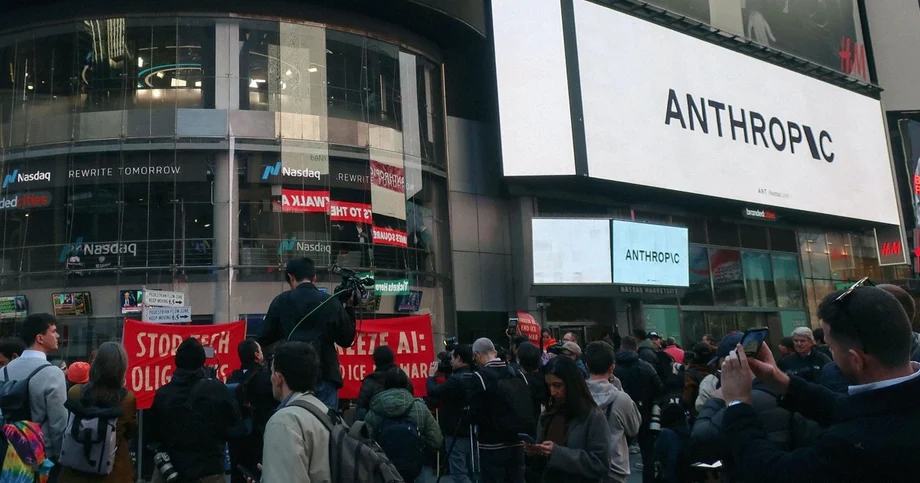
A fortune booked in a single day of trading
Nanamori, the former leader and producer of the Japanese idol group Strawberry Prince (Sutopuri), used his X account on November 26 to report a result few individual investors ever see. He had sold almost all of a stake in Anthropic, the American company behind the Claude chatbot, on the first day the shares traded, and the trade produced 'a bit over 1.1 billion yen', roughly $6.9 million at the exchange rate of 159.59 yen to the dollar that he cited in an earlier post.
Contents
- A fortune booked in a single day of trading
- What he posted, and when
- Selling on day one beat holding on
- The largest listing in market history
- Japan's 1.5 trillion yen of demand
- Why the lock-up calendar runs to 23 dates
- Five percent for a public benefit fund
- Dario Amodei's promise on listing day
- From idol group leader to producer and investor
- What is still unclear
- Key Points
The position was built before a single share changed hands on the open market. Nanamori, whose real name is Masato Kashiwabara, won 240,000 shares in the initial public offering allocation at $83 each, a commitment of $19.92 million, or about 3.18 billion yen. A second allocation of 22,500 shares through SBI Securities, which he reported late on November 19, lifted the total to 262,500 shares. At the same price that came to $21.79 million, about 3.48 billion yen.
Anthropic priced its offering at $83 on November 18 and opened on Nasdaq the next day at $111.50, a gain of 34.3% from the offer price. Nanamori's shares were worth far more than he paid within minutes of the opening bell.
The difference between his result and a paper gain is the difference between realised and unrealised profit. A realised gain is locked in once the shares are sold. An unrealised one exists only on a screen and moves with every trade. Nanamori sold, so the 1.1 billion yen stopped being exposed to the stock.
What he posted, and when
His posts, all on X, trace the trade from the hours before the listing to the disclosure a week later.
- November 19, 11:55 a.m. Japan time: Nanamori announces '240,000 shares acquired!' with a screenshot of a brokerage account showing a purchase price of $83 a share and a total of $19.92 million, and adds 'the night should be fun'.
- November 19, afternoon: he replies to a post that compares him to the 'shoeshine boy', an old saying in American investing that when the shoeshine boy starts offering stock tips, the market is close to its peak.
- November 19, 10:16 p.m.: he reports the SBI Securities allocation of 22,500 shares, bringing the holding to 262,500.
- November 20, 1:52 a.m.: he posts a price screen showing $112.38 and the words 'BIG LOVE'.
- November 26: he writes 'just to put it on the record' and confirms 'I sold pretty much everything on the first day and made a bit over 1.1 billion yen', attaching screenshots of the trades.
Selling on day one beat holding on
Keeping the shares would have produced a smaller gain. On a holding of 262,500 shares, the paper profit at the intraday high of $115.10 would have reached about 1.345 billion yen, and at the closing price of $97.17 about 594 million yen. The $17.93 slide from the high to the close alone cut that paper gain by about 75.1 million yen.
His realised figure of about 1.1 billion yen implies an average sale price of roughly $109 a share, worked back from the exchange rate of 159.59 yen he used. That is about 32% above the $83 he paid, comfortably above the $97.17 close and below the $115.10 high of the session.
Anthropic's first session followed the arc many large listings take. The shares jumped from the offer price at the opening trade, climbed to $115.10 during the day, then gave back part of the advance to finish 17.1% above the offer price and 12.9% below the opening trade. Nanamori sold into the strength, near the top of the range rather than the bottom.
The largest listing in market history
Anthropic offered 980 million Class A shares at $83, a price set on November 18, and the sale raised $79.4 billion, the biggest initial public offering ever recorded. It passed the $75 billion that SpaceX raised in June, which had been the previous record. Counting shares sold by existing holders as well as new stock, the total offering came to $81.34 billion.
The company's market value stood at about $1.76 trillion after the close on November 19. At the $111.50 opening trade it was about $2 trillion. Anthropic, founded in 2021 and the developer of the Claude series of conversational AI tools, confidentially filed for the listing on June 1, 2026, and the order book was said to be multiple times oversubscribed.
The debut landed at a moment when global markets are asking whether future AI revenue will justify the huge sums spent on the technology and the infrastructure needed to run it. Anthropic's sales have grown quickly, but the cost of building data centres to run its models has kept the company from turning a consistent profit.
Japan's 1.5 trillion yen of demand
Japanese investors had their own route into the deal. On November 2, 2026, Anthropic filed a securities registration statement in Japan for an offering of Class A shares worth up to an estimated $3.5 billion, or 552.9 billion yen, covering only the Japanese portion of the wider listing. The shares were distributed through six firms: Mizuho Securities, Goldman Sachs Japan, Mitsubishi UFJ Morgan Stanley Securities, Morgan Stanley MUFG Securities, Rakuten Securities and SBI Securities.
The filing said approval for the Nasdaq listing was still pending, that no listing on a Japanese exchange was planned, and that proceeds would fund working capital, operating expenses and capital expenditure. Demand ran well ahead of supply. Against a domestic offering of about 470 billion yen, orders exceeded 1.5 trillion yen, and about $3 billion of the whole IPO came from investors in Japan.
Allocations were decided by lottery, which is how an individual buyer could end up with hundreds of thousands of shares despite overwhelming demand. Nanamori drew 240,000 shares in the main allocation and 22,500 more through SBI Securities, both at the $83 offer price rather than at the market price that followed.
Why the lock-up calendar runs to 23 dates
Anthropic's lock-up arrangements are unusually complicated. Insiders' shares become available for sale at 23 different points during the year after the listing. Some stockholders were allowed to sell 10% of their holdings immediately. At the other end of the schedule, the founders may sell 29% of their shares after 180 days, with the remainder freed at the end of the first year, when every lock-up ends.
A lock-up is a promise by company insiders and early backers not to sell for a set period, so that a wave of selling does not hit a newly listed stock. On this timetable the founders' first window falls in mid-May 2027, and the last restrictions lapse around November 2027. Nanamori's shares were not subject to those insider limits, which is why he could sell on the first morning.
Five percent for a public benefit fund
On October 18, 2026, Anthropic said it would commit 5% of its shares to the Anthropic Public Benefit Fund, a new fund inside the company. The pledge sat alongside a private placement that ran with the IPO: Google LLC and chipmaker Nvidia bought $26 billion of Anthropic shares outside the public offering.
Those two buyers put more money into the company than the entire Japanese portion of the listing drew from investors, a measure of how concentrated the demand was among large technology firms as well as funds and individuals.
Dario Amodei's promise on listing day
Chief executive Dario Amodei spoke at a ceremony before trading began. He said the company would pace the training and deployment of its AI systems until it was confident they are safe and stay under human control.
Anthropic would pace the training and deployment of AI systems until the company has confidence that they are safe and will remain under human control.
Pacing, in this context, means slowing the release of new models rather than shipping them as fast as the technology allows. The remark set the tone for a listing in which the main argument among investors is not whether the technology works but how quickly it can be sold at a profit.
From idol group leader to producer and investor
Nanamori founded STPR, the company that runs Sutopuri, in June 2018. He stepped down as its president in June 2026, when the group marked its 10th anniversary, and became a director and producer responsible for content. Kenji Akita, previously vice president, took over as president.
On October 18 he graduated from Sutopuri together with Satomi, about a month before the Anthropic listing. STPR has said he remains a director of the company. His investing posts now reach the same audience that followed him as a performer, and the sums involved are far from those of a hobby account: the 3.48 billion yen committed to Anthropic is roughly the price of a large apartment building in central Tokyo.
What is still unclear
Nanamori has not said whether his 1.1 billion yen figure is before or after tax, or exactly when in the session each block of shares was sold. He also has not said what he plans to do with the proceeds. The stock's path after listing will be shaped partly by the insider selling dates spread across the coming year, beginning with the founders' window in mid-May 2027.
Key Points
- Nanamori, former leader of the idol group Sutopuri, told followers on November 26 that he sold almost all his Anthropic shares on the first day of trading for a profit of a bit over 1.1 billion yen.
- He bought 262,500 shares at the $83 offer price through the IPO lottery, a total of about $21.79 million, or roughly 3.48 billion yen.
- Anthropic offered 980 million Class A shares at $83 on November 18, raised $79.4 billion and listed on Nasdaq on November 19, the largest IPO on record ahead of SpaceX's $75 billion in June.
- The shares opened at $111.50, peaked at $115.10 and closed at $97.17, giving the company a market value of about $1.76 trillion.
- Holding the full stake would have produced a paper gain of about 594 million yen at the close, against the roughly 1.1 billion yen he realised by selling.
- The Japanese portion of the offering was filed on November 2 at up to about $3.5 billion, distributed through six securities firms, and drew orders above 1.5 trillion yen against about 470 billion yen on offer.
- Anthropic committed 5% of its shares to an internal public benefit fund, and Google and Nvidia bought $26 billion of stock in a private placement alongside the IPO.
- Insider lock-ups end at 23 different dates over the coming year, with the founders' first window in mid-May 2027.