An Endorsement in Principle, Not Yet a Policy
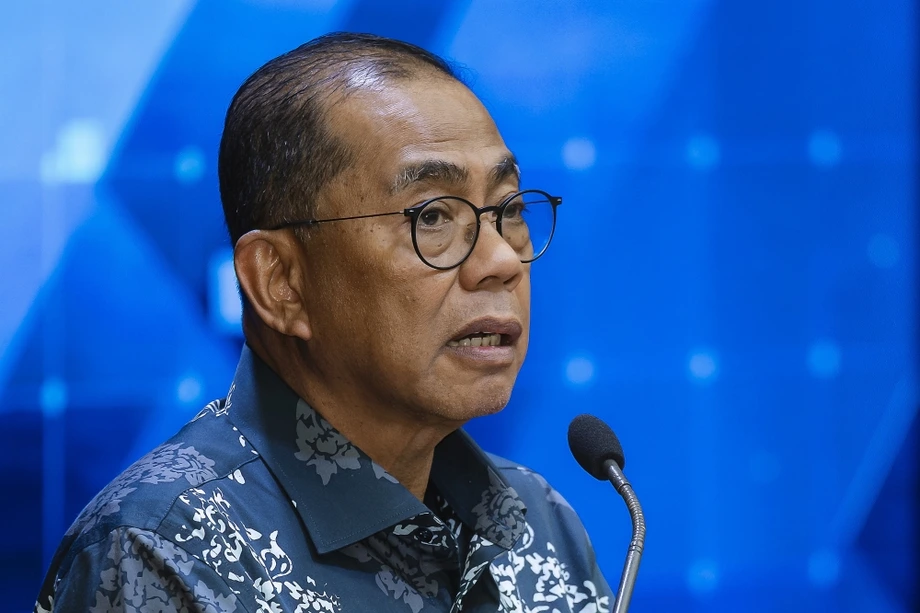
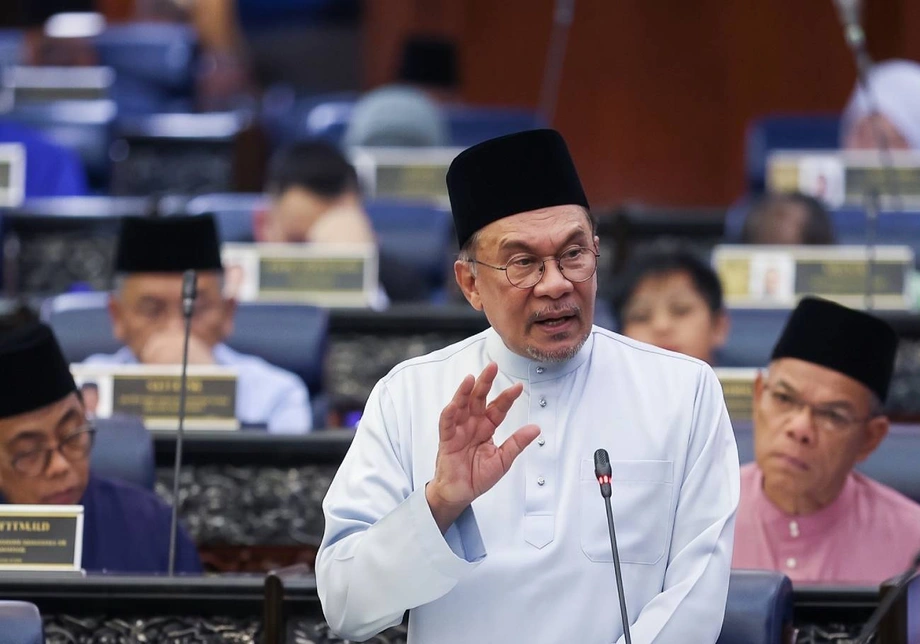
Malaysia will study whether to create an artificial intelligence wealth fund that would pay citizens a share of the gains the technology produces, Prime Minister Anwar Ibrahim said on the night of Wednesday, 25 November 2026, opening a debate over who should collect the profits from a boom that is already changing how people work.
Contents
- An Endorsement in Principle, Not Yet a Policy
- What a Wealth Fund Would Actually Do
- The Minimum Wage Argument Anwar Reached For
- Google's Bill: RM600 Million for Water in Negeri Sembilan
- The Warning About Conditions That Are Too Tight
- Why AI Has the Government Worried About Jobs
- The Room Anwar Was Speaking To
- What Is Still Unknown
- Key Points
Anwar said he had asked the Communications Ministry and the Digital Ministry to carry out a detailed study of the options, including a proposal by US Senator Bernie Sanders to legislate a fund that would pay dividends to Americans. He was answering Jason Wee, founder of Architects of Diversity (AOD) Malaysia, on RTM's Dialog Negara programme, a special episode titled Di Sebalik Keputusan, or Behind the Decision, recorded at Angkasapuri in Kuala Lumpur.
The prime minister said he agreed with the idea in principle and saw no reason to wait for a law to be drafted before work on it began.
I agree in principle. We can start engaging now, even before legislation is in place.
The episode aired live on TV1 and RTMKlik and ran at the same time on Bernama TV, Astro AWANI, TV3, TV AlHijrah and TVS, with RTM presenter Ismail Adnan hosting. Eight other panellists joined the prime minister around the table, among them entrepreneurs, a medical officer who is also a social media influencer, an independent preacher and a student union president.
What a Wealth Fund Would Actually Do
A wealth fund is a pool of money that a government invests, in shares, bonds or property, and draws on to pay for public programmes or to send money directly to households. Anwar's government has not decided what a Malaysian version would hold, who would pay into it, or how a dividend would be worked out and handed out.
The model he pointed to is American. Sanders has proposed legislation that would establish a fund built from the gains of the AI industry and pay dividends to US citizens. Anwar described the Malaysian exercise as a study of that proposal and of other approaches, with the two ministries asked to examine which mechanisms could work in Malaysia.
Nothing in the announcement commits the government to a payout. The instruction to the ministries covers options rather than a decision, and no figure has been attached to what a fund might be worth or what an individual dividend might come to.
The Minimum Wage Argument Anwar Reached For
For a precedent, Anwar went to labour law rather than to finance. Malaysia raised its minimum wage, he said, and multinational companies had to comply even though some objected at first, arguing that they had come to the country because wages were low.
That may have been true 30 years ago. They now have to accept that living standards have risen.
The parallel is about how a condition that investors resist becomes part of doing business. A minimum wage is enforced by statute, while an AI fund exists so far only as an instruction to two ministries. Anwar's point was that the conversation can start before the legal machinery is finished, and that foreign companies have adapted to Malaysian rules before.
Google's Bill: RM600 Million for Water in Negeri Sembilan
The clearest example Anwar gave of how his government already extracts commitments from AI investors is Google. He described a US$15 billion (RM61.7 billion) investment by the company over two years and listed the conditions attached to it: RM600 million, or about US$146 million, to build water supply infrastructure in Negeri Sembilan, and advanced AI training for 1,000 young Malaysians.
Universiti Malaya was named as an example of a possible training partner. Anwar stressed that the requirement went beyond an introduction to the technology and was meant to give trainees a higher level of mastery. The water spending works out at roughly 1% of the US$15 billion package, a small slice of the total that lands in one state's pipes rather than in data centres and servers.
Water supply and artificial intelligence have travelled together in Anwar's diplomacy as well. Both were discussed when he met President Xi Jinping in Shenzhen on 20 November 2026, five days before the television appearance, alongside a project to pipe water from the Perak River to Penang.
The Warning About Conditions That Are Too Tight
Anwar did not present the conditions as costless. Set them too high, he said, and the investment goes elsewhere.
If the conditions are too onerous, investors may stay away. We should make clear that we welcome investment while taking firm steps to keep inequality from widening.
The balance he described runs through the fund proposal too. Malaysia wants the data centres, the capital and the jobs that come with AI investment, and it wants a mechanism that spreads the returns beyond the companies and the regions where they build. How a fund would be financed without making the country a less attractive place to invest is the question the ministries have been asked to work through.
Why AI Has the Government Worried About Jobs
Anwar framed the fund as one answer to a larger worry. The gap between rich and poor, he said, is not an AI problem alone: growth across the whole economy widens disparities without intervention and political direction. The spread of AI, in his account, produces especially sharp inequality that has to be curbed.
On employment, he said rapid technological change and sudden shocks in what he called the postnormal era, a phrase for a period of overlapping and unpredictable change, could bring difficulties, including financial pressure on households and on the state. Human judgement, he argued, allows a government to anticipate such problems and identify solutions before they harden.
The practical step he named was support for government departments and private companies so they can create new jobs as technology changes. He did not say which sectors would absorb displaced workers, or how many roles AI might remove from the economy.
The Room Anwar Was Speaking To
Dialog Negara put the prime minister in front of a panel chosen to reflect different parts of Malaysian public life, and the questions came from them rather than from a studio audience. The panellists were:
- Datuk Ahyat Ishak, founder of Komuniti Pejuang Hartanah
- Amir Fareed Rahim, group strategy director at KRA group
- Dr Malar Santhi Santherasegapan, medical officer and social media influencer
- Adam Shamil, entrepreneur and digital content creator
- Dr Madiha Fuad, founder and chief executive of PlusVibes Group
- Azmi Zainal, group chief operating officer of Farm Fresh Berhad
- Izzhar Nazri, independent preacher
- Jason Wee, founder of Architects of Diversity Malaysia
- Mohamad Adib Hazim Mohamad Razali, president of the Universiti Teknologi MARA student representative council
Wee's question produced the evening's most concrete policy commitment. He asked whether Malaysia would consider a fund along the lines of the one Sanders has proposed, carrying an idea from American politics into a television studio in Kuala Lumpur.
What Is Still Unknown
No deadline was given for the ministries' study, no draft legislation is in preparation and no cost has been attached to a fund. Whether Malaysians would receive a cash dividend, a credit, a stake in an investment vehicle or something else has not been settled, and neither has the source of the money. Asking two ministries to examine mechanisms leaves the design entirely open, from the legal vehicle that would hold the assets to the rules that would govern how it invests them.
The Google conditions are firmer, but the prime minister gave no timetable for the water works in Negeri Sembilan or for the training programme, and he did not say how the 1,000 places would be allocated.
Fiscal arithmetic sits behind the caution. Federal debt and liabilities reached RM1,763.3 billion, or 80.7% of gross domestic product, at the end of June 2026, and the government aims to bring the debt ratio to 60% by 2030. A fund paying out to citizens would sit alongside that consolidation effort. The model under study draws on the gains of an industry rather than on general revenue, though how a Malaysian version would be funded remains undecided.
Key Points
- Prime Minister Anwar Ibrahim said on 25 November 2026 that the government will study an AI wealth fund to share technology gains with Malaysians.
- The Communications and Digital ministries were asked to examine options, including US Senator Bernie Sanders' proposal for a fund that pays dividends to citizens.
- Anwar said he agrees in principle and does not want to wait for legislation before starting the discussion.
- He cited conditions placed on Google's US$15 billion investment: RM600 million for water infrastructure in Negeri Sembilan and advanced AI training for 1,000 young Malaysians, with Universiti Malaya as a possible partner.
- He warned that conditions which are too onerous could drive investors away, and said AI risks widening inequality.
- No deadline, funding source, dividend size or draft law has been announced.