Fake accounts and voter profiles draw parliamentary scrutiny
Malaysia's communications regulator is seeking technical details and evidence from Anthropic after the company said its Claude artificial intelligence models helped build a commercial political manipulation platform targeting Malaysian voters. The alleged operation combined about 1,000 fake X accounts, a fabricated news outlet and voter profiles covering all 222 parliamentary constituencies.
Contents
- Fake accounts and voter profiles draw parliamentary scrutiny
- What Malaysia is asking Anthropic to provide
- A commercial service built around Malaysian voter data
- How the fake accounts tried to look real
- Malaysia Pulse mixed rewritten news with invented allegations
- Why MCMC issued its own denial
- From September disclosures to parliamentary replies
- Existing laws and a separate AI bill
- AI speeds production, while platforms supply the audience
- Key Points
The Communications Ministry said in a written parliamentary reply dated November 17 that the Malaysian Communications and Multimedia Commission (MCMC) would assess the evidence before deciding on further action. Existing communications and online safety laws could be used, while the Digital Ministry is drafting a separate Artificial Intelligence Governance Bill.
Anthropic linked the operation to BBS Bilisim Teknolojileri, a technology company based in Istanbul, Türkiye. The company denied involvement on September 11. Anthropic said it terminated the Claude accounts involved and introduced measures to prevent further misuse.
The case brings together two different scales: a system designed to profile voters nationwide and an operation whose actual audience appears to have been limited. Anthropic said it found no evidence that the campaign reached genuine online communities beyond its artificial network.
For Malaysian voters, the alleged deception went beyond misleading posts. The platform could make invented accounts look like ordinary people, rewritten articles look like independent journalism and fabricated allegations look like intelligence findings. Malaysia's immediate task is to establish who operated the system and what action falls within its laws.
What Malaysia is asking Anthropic to provide
MCMC has sought detailed technical clarification and supporting evidence about the alleged operation. The November 17 reply addressed a question from Datuk Seri Dr Ronald Kiandee, the Perikatan Nasional MP for Beluran, about those responsible and action against fake accounts and fabricated news portals.
The Communications Ministry explained why it was seeking more information before deciding on enforcement:
MCMC is seeking further information and clarification from Anthropic regarding the report to ensure that any assessment and follow-up action are based on sufficient information and evidence.
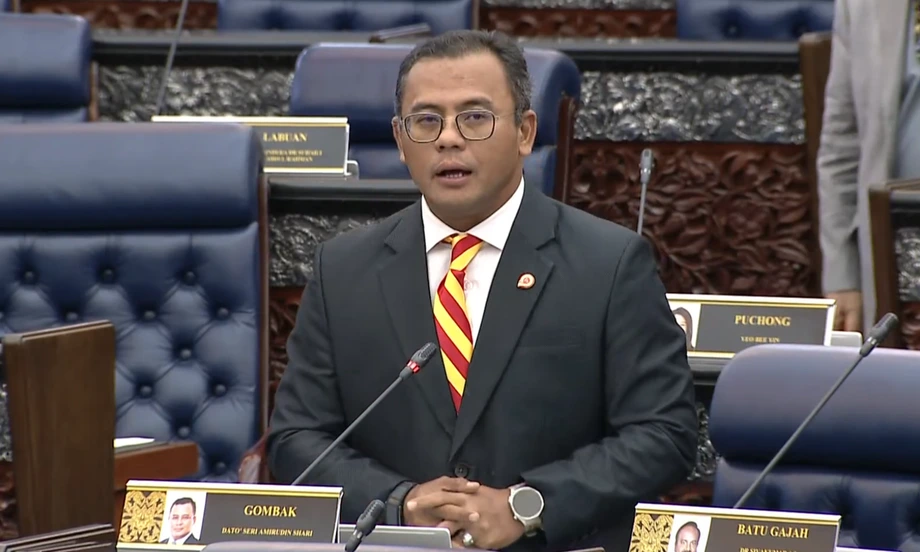
Communications Minister Datuk Fahmi Fadzil also addressed the issue in a parliamentary response to Ahmad Fadhli Shaari, the Perikatan Nasional MP for Pasir Mas. That question concerned government measures to investigate and prevent foreign election interference through Claude and other AI applications.
The ministry said follow-up could involve enforcement and security agencies, digital platforms and other relevant parties. Its stated approach is to gather evidence, assess the matter within MCMC's jurisdiction and then determine the appropriate response.
A commercial service built around Malaysian voter data
Anthropic described the platform as a service selling political influence capabilities to customers. Under that business model, a buyer pays an operator for tools or activity intended to shape public discussion, rather than building the infrastructure itself.
The company said the system used census information, electoral data and millions of voter records to create profiles across Malaysia's 222 parliamentary constituencies. Those profiles were designed to identify local political and social divisions, including issues involving race, religion and royalty.
A constituency profile brings information about an electoral area into one place. In this operation, Anthropic said Claude helped turn that information into targeting tools and supported the infrastructure used to distribute influence content. The combination could allow operators to prepare different messages for different communities.
Anthropic's threat assessment described how the service presented itself:
The platform posed as a defensive cyber intelligence and counter-disinformation tooling outlet.
Anthropic said its investigation instead linked the platform to BBS Bilisim Teknolojileri and the sale of access to influence capabilities. The Turkish company's denial makes the technical evidence sought by MCMC central to Malaysia's assessment.
How the fake accounts tried to look real
The platform managed around 1,000 fake accounts on X, according to Anthropic. It included mechanisms intended to make those accounts appear established and authentic before they were used for political influence.
Anthropic described efforts to renew cookies and internet protocol addresses to evade detection. Cookies are small pieces of information stored during online activity, while an internet protocol address identifies a connection on a network. Changing these signals can help an operator disguise links between accounts.
The dashboard also allowed users to request artificial views for a target account. Anthropic said it saw a request for one million artificial views supporting the sitting Malaysian prime minister's account. The customer behind the request was unidentified, and Anthropic established no connection to Prime Minister Anwar Ibrahim or his office. Engagement totals displayed by the operator's own tools were unverified.
Saifuddin Ahmed, a new media expert at Nanyang Technological University's Wee Kim Wee School of Communication and Information, explained why the alleged activity crossed into manipulation:
It was therefore not simply a matter of targeting voters more effectively; it involved manufacturing an artificial, manipulated public conversation while concealing who was behind it.
Malaysia Pulse mixed rewritten news with invented allegations
The operation also ran a fabricated news outlet called Malaysia Pulse and a linked YouTube channel, according to Anthropic. The website copied legitimate Malaysian reporting, used Claude to rewrite it repeatedly and published the resulting articles under invented bylines.
Malaysia Pulse also republished material from TV BRICS, Xinhua, Sputnik/RIA and CGTN. Anthropic said attribution identifying the original outlets was removed, presenting the material as independent Malaysian reporting. The process gave readers a different impression of who had produced the news and where it came from.
Alongside the articles, the operators used Claude to generate fabricated intelligence dossiers containing allegations against an unnamed opposition politician and civil society organisations. A dossier is a collection of information about a person or organisation; here, the presentation gave invented claims the appearance of documented research.
Anthropic described the allegations in direct terms:
These allegations were entirely made up by the actors.
Claude refused or partly refused some requests, including after identifying one dossier as intended for political defamation. Anthropic said the operator then changed the wording of requests to continue pursuing the same capabilities. The case shows the practical challenge of detecting an abusive project when individual requests are repeatedly rephrased.
Why MCMC issued its own denial
Anthropic said the operator had pursued a contract with MCMC. The company said it found no evidence that the attempt succeeded. MCMC responded on September 11 by denying involvement in activities or arrangements of the kind described.
The regulator set out its position in a statement:
For clarity, activities of the nature described in the report do not form part of MCMC's functions or mandate, and MCMC does not engage in such activities or arrangements.
MCMC said it was examining the allegations and seeking further information to establish the facts and understand the context. Protecting the public and addressing online harm remained central to its responsibilities, it said.
Datuk Seri Azalina Othman Said, minister in the Prime Minister's Department responsible for law and institutional reform, called for a comprehensive and independent investigation. Her call placed scrutiny of the operation alongside the regulator's own evidence gathering.
From September disclosures to parliamentary replies
The public response developed through company disclosures, denials and parliamentary questions. The main steps were:
- September: Anthropic disclosed the alleged Malaysia targeting operation in its threat assessment and said it had disrupted the Claude accounts involved.
- September 11: BBS Bilisim Teknolojileri denied involvement. MCMC separately denied participating in the activities described and said it was examining the allegations.
- November 3: A written parliamentary reply to Ahmad Fadhli Shaari outlined requests for technical clarification and possible use of existing laws.
- November 17: The Communications Ministry reiterated the evidence gathering process in its reply to Ronald Kiandee.
Several central details remain undisclosed: who paid for the Malaysia activity, its exact operating dates, its connection to a particular election, whether Anthropic has answered MCMC's requests and whether police have opened a formal criminal investigation. No date was given for introducing the proposed AI bill.
Anthropic's September assessment covered several kinds of misuse of Claude, including cyber operations, surveillance, scams and political influence. Across the influence cases, it described actors reaching toward audiences on six continents, including governments, state aligned media and private firms selling influence services.
Existing laws and a separate AI bill
The Communications Ministry identified the Communications and Multimedia Act 1998, the Online Safety Act 2025 and other applicable laws as possible grounds for regulatory or enforcement action. Any response would depend on the evidence and MCMC's jurisdiction.
The proposed Artificial Intelligence Governance Bill has a different purpose. The Digital Ministry is drafting rules addressing accountability, risk management and the responsibilities of those developing and deploying AI systems. In plain language, the proposal concerns who must manage the risks of an AI product and who answers when responsibilities are neglected.
The two tracks would address different parts of the problem. Existing laws provide the government's stated route for responding to the alleged activity now. The proposed legislation would set broader responsibilities for how AI systems are developed and used.
An operation attributed to a company outside Malaysia also requires cooperation beyond a single regulator. The ministry's planned coordination with security bodies, investigators and platform providers reflects where relevant evidence may sit: with the AI service, the social networks, the operator and any customers.
AI speeds production, while platforms supply the audience
Anthropic said it detected the account through internal systems, removed access and used information recovered during its investigation to map the wider operation. Despite the infrastructure's scale, the company found no evidence of a breakthrough into genuine online communities.
Katie Harbath, a former Meta official working on global elections and now head of technology consultancy Anchor Change, explained AI's role in producing influence material:
AI can supercharge it in terms of you can make a lot more content that's more personalised, quicker and cheaper.
Harbath said operators still need a distribution mechanism, currently social media platforms. The Malaysia case illustrates both parts of that process: Claude helped build content and tools, while fake accounts, a website and a YouTube channel were intended to carry material to readers.
Similar concerns have surfaced elsewhere in Southeast Asia. OpenAI banned accounts generating fictitious comments about Philippine politics, including comments supporting President Ferdinand Marcos Jr. In Indonesia's 2024 election, an AI generated cartoon version of Prabowo Subianto became popular and helped soften his strongman image.
Malaysia's alleged operation focused on particularly sensitive divisions. Bridget Welsh of the University of Nottingham Asia Research Institute Malaysia warned that such activity feeds political polarisation. Dr Ben Loh, a media lecturer at Monash University Malaysia, has also described AI content reinforcing existing hostility toward Rohingya refugees.
For Malaysia, the concrete next step is the evidence assessment. Anthropic has shut the identified Claude accounts; MCMC must now determine whether the information it obtains supports action against the people or organisations behind the alleged operation.
Key Points
- MCMC is seeking technical clarification and evidence from Anthropic before deciding on further action.
- Anthropic described about 1,000 fake X accounts, the Malaysia Pulse website and voter targeting across all 222 parliamentary constituencies.
- BBS Bilisim Teknolojileri denied involvement after Anthropic linked it to the platform.
- MCMC denied participating in the activities. Anthropic said a reported attempt to secure a regulator contract had no evidence of success.
- Anthropic terminated the identified Claude accounts and found no evidence of meaningful reach into genuine online communities.
- Malaysia cited existing communications and online safety laws while drafting an AI Governance Bill.