Flood protection moves to the front of state spending
Selangor has proposed RM36.45 million for 47 flood mitigation projects in 2027 as part of a RM3.3 billion state budget, pairing construction spending with faster approvals and a promised public dashboard showing residents how work is progressing.
Contents
- Flood protection moves to the front of state spending
- Where the flood money will go
- Faster approvals, with progress visible to residents
- Maintenance and assistance address the immediate burden
- Water spending targets more than 6,000km of ageing pipes
- RM30 transport support and better routes to stations
- Revenue plans leave a RM450 million spending gap
- Economic ambitions and payments to public servants
- The dates that frame delivery
- Key Points
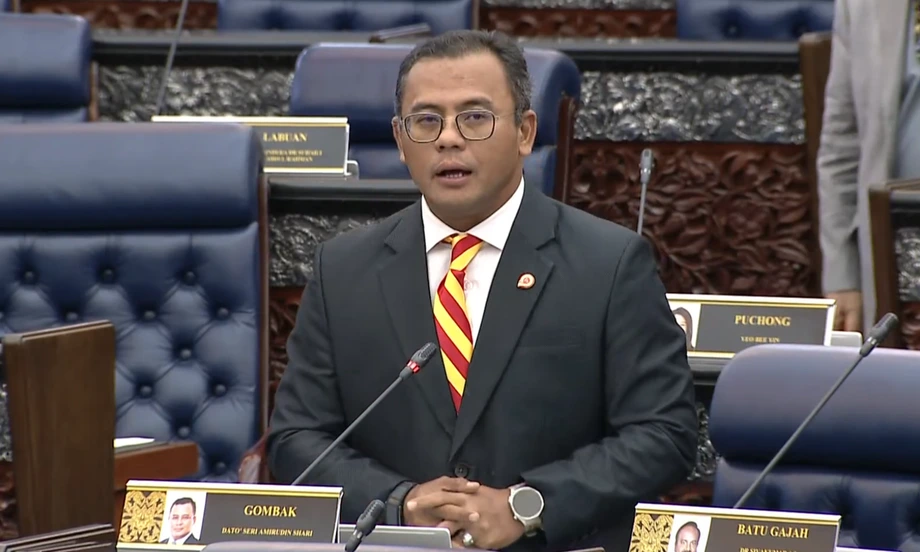
Menteri Besar Amirudin Shari tabled the budget in the Selangor State Legislative Assembly in Shah Alam on 13 November 2026. The package is RM70 million larger than the 2026 budget, an increase of about 2.2%, and also sets out spending on ageing water pipes, public transport and public services.
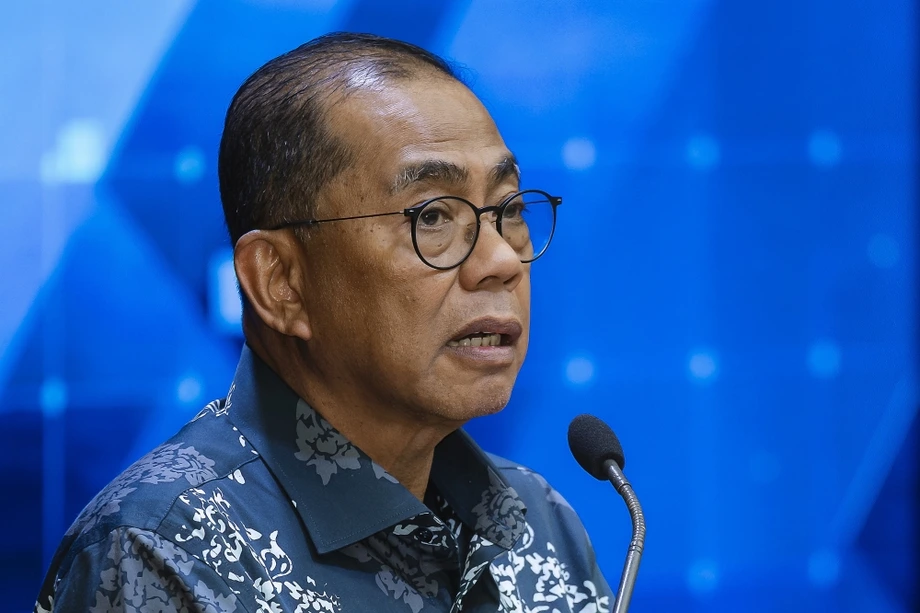
Flooding brought particular urgency to the announcement. Prime Minister Anwar Ibrahim, speaking after Friday prayers in Brickfields the same day, instructed Selangor, the Irrigation and Drainage Department and other agencies to speed up mitigation and increase drain maintenance following a special meeting on 12 November.
Anwar said flooding four to five times a year imposed repeated burdens on residents, even when water levels were relatively low. Amirudin, meanwhile, pledged to address delays involving technical reviews, land matters and decisions shared between agencies.
The proposed budget divides spending between RM1.9 billion for operating expenditure, or 57.6%, and RM1.4 billion for development, or 42.4%. Operating expenditure pays for the running of government and its services, while development spending supports projects and infrastructure.
The central challenge is turning those allocations into working protection. Some flood projects are complete but still require their accounts to be finalised; others remain at the design stage. Residents will need to know which works can protect them during the next heavy rainfall and which require more time.
Where the flood money will go
The RM36.45 million flood mitigation allocation covers 30 continuation projects and 17 new initiatives introduced through the Second Selangor Plan, known as RS-2, which was tabled on 7 August.
Of the 30 continuation projects, 13 have been completed and are undergoing final account preparation, nine are being implemented, two are at the stage before tendering and six remain under design. The total of 47 therefore covers projects at several stages, including completed construction awaiting financial closure.
The Sungai Klang basin will receive RM9.15 million and the Sungai Langat basin RM7.35 million. Together, their RM16.5 million allocation accounts for about 45.3% of the RM36.45 million programme. The balance covers the Sungai Buloh, Sungai Selangor, Sungai Bernam and Sungai Kapar Besar basins, alongside surveying, design and land matters.
Amirudin also announced RM19.38 million for 25 drainage projects, RM17.90 million for 16 river basin development and management projects, and RM6.63 million for nine environmentally friendly drainage projects.
Under the Selangor Maritime Gateway Economic Development Zone, the government proposed another RM25 million to continue increasing river capacity and improving water flow. Amirudin put physical progress on that project at 71.43% and said affected residents should be told what work remains and when protection is expected to become operational.
In Klang, the RM26 million Sungai Jati flood retention pond is still being designed. A retention pond temporarily stores some rainwater, giving downstream drains and rivers more time to carry it away. In Hulu Langat, a drainage master plan will help match development with the capacity of the drainage network.
Faster approvals, with progress visible to residents
Amirudin wants the Public Works Department, local authorities and the Irrigation and Drainage Department to prioritise flood works, from culverts and local drains to bridges and river projects. Decisions requiring several agencies would be referred early to officials able to resolve them.
The Menteri Besar said faster handling would still carry existing safeguards:
Every project must still comply with safety and environmental requirements, as well as procurement procedures.
Early assessments would examine how embankments, retention ponds and spaces for river overflow work together, including their effects downstream. This matters because water directed away from one neighbourhood must still have somewhere safe to go.
The planned public dashboard would show project locations, responsible agencies and progress from appointing design consultants to engaging contractors and carrying out construction. Before the monsoon season, the state also plans to update residents on areas at risk, project appointments and work expected to be completed. Amirudin gave no launch date for the dashboard or completion dates for individual projects.
The state also intends to improve warning messages between state and district disaster operations centres and agencies working on the ground while construction continues.
Maintenance and assistance address the immediate burden
Anwar instructed local councils to begin more frequent drain maintenance immediately, saying he had been told that Selangor had allocated additional funding for the work. He cited Kuala Lumpur, where drains are cleaned six times a year, as an example of maintenance helping reduce flooding.
The prime minister described the repeated disruption faced by Selangor residents:
When floods occur four to five times a year in Selangor, it burdens the people. Though the floodwaters do not rise high, it remains a burden when they happen five times a year. I cannot accept it.
Anwar also said federal assistance for flood victims had increased from RM1,000 to RM2,500, while Selangor assistance had risen from RM500 to RM3,000. Each increase helps households facing replacement costs after floods, alongside the state's efforts to reduce recurring damage.
The financial stakes extend beyond damaged furniture or vehicles. Amirudin, citing Department of Statistics Malaysia figures, put Selangor's flood losses in 2025 at RM52.9 million. He said flooding in late 2021 and early 2022 caused about RM3.1 billion in losses.
Within that earlier disaster total, Klang recorded about RM1.2 billion in losses, Petaling RM1.1 billion and Hulu Langat RM400 million. Business premises suffered RM396.4 million in losses, while manufacturing losses reached RM884.5 million.
Amirudin pointed to the time needed for families and businesses to resume work: shops lose sales while closed, workers paid by the day lose earnings, and factories face damaged machinery and delayed deliveries. The benefit of flood protection therefore includes keeping schools, workplaces and transport routes accessible.
Water spending targets more than 6,000km of ageing pipes
Selangor announced RM559 million for replacing ageing water pipes in 2027, with more than 6,000km needing replacement. The annual replacement target doubled from 150km to 300km starting in 2024, and 1,231.01km had been replaced by August 2026.
At 300km a year, replacing 6,000km would take 20 years. That comparison shows the scale of the task, with the reported requirement exceeding 6,000km.
Another RM120.8 million is allocated to the Non-Revenue Water Reduction Programme. Non-revenue water is water entering the supply network that does not generate billed revenue, including losses through leaks. The programme includes equipment to detect leaks and manage pressure.
The state aims to reduce the non-revenue water rate from 26.8% in 2025 to 26.3% in 2026 and 25.8% in 2027. The planned improvement is half a percentage point each year, following targets set by Air Selangor and submitted to the National Water Services Commission.
A further RM101 million supports clean water supply measures, including the Raw Water Guarantee Scheme, which aims to protect treatment plant operations from pollution disruptions.
Selangor also allocated RM3.5 million for the Selangor Water Master Plan 2025-2050 study, expected to finish in 2028. It will coordinate raw water, treated water and wastewater management with flood management, connecting the need for reliable supply with the need to handle excess rainfall.
RM30 transport support and better routes to stations
The new SEL 30 programme will provide a monthly public transport subsidy of RM30, backed by RM5 million and expected to benefit 13,000 users. A similar incentive launched under the Selangor Resilience Enhancement Package on 15 June covered 50,000 commuters for six months through December 2026.
Selangor has allocated RM24 million for connections between homes, workplaces and main transport services. These journeys, often called the first and last mile, can determine whether a bus or train is practical for a commuter.
Under RS-2, the state aims to increase the public transport ridership rate from 40% to 60%. Amirudin said Selangor, with nearly 7.5 million people, would complement federal transport responsibilities by improving the connections people use to reach stations.
Local authorities plan 35km of new pedestrian walkways, while a pedestrian audit is due by the end of 2026. The audit will guide work on walking routes, including access to public transport hubs.
The Smart Selangor Bus service will be renamed Bas Kita Selangor, supported by RM12 million for routes, frequency and links to rail stations. Rantaian Mesra Sdn Bhd will also develop the RM1.5 million Selangor Mobility Nexus, bringing together journey planning, bus information, complaints and route mapping that are currently spread across different systems.
Revenue plans leave a RM450 million spending gap
Selangor projects RM2.85 billion in revenue for 2027 against proposed expenditure of RM3.3 billion, leaving a RM450 million gap. The budget announcements did not specify how that gap would be financed.
Land premiums are expected to contribute RM1.112 billion, or 39% of projected revenue. Land tax is projected at RM653.82 million, about 23%, and federal grants at RM292.70 million, about 10%. Together, land premiums and land tax would supply roughly 62% of estimated revenue, making land receipts central to the spending plan.
Amirudin said Consolidated Fund reserves stood at RM5.121 billion on 11 November 2026, compared with RM4.736 billion on 31 December 2025. The latest figure comprises RM1.713 billion in the Consolidated Revenue Account and RM3.408 billion in the Consolidated Trust Account. Trust accounts hold money for particular purposes, so their uses depend on the relevant account rules.
The state reported a financial surplus of RM422.40 million as of 11 November. Revenue collected by that date had exceeded the annual target, reaching RM2.957 billion: RM767.30 million in tax revenue, RM1.912 billion in non-tax revenue and RM277.34 million in non-revenue receipts.
Economic ambitions and payments to public servants
Amirudin projected Selangor's gross domestic product at RM489 billion in 2026 and said it could exceed RM500 billion in 2027. GDP measures the value of goods and services produced in an economy; it is separate from the revenue the state government collects.
Selangor's GDP reached RM460.1 billion in 2025, accounting for 26.5% of Malaysia's total, compared with RM432.1 billion in 2024. Amirudin said the economy expanded by 33.94% during the First Selangor Plan period, from RM343.5 billion to RM460.1 billion.
The 2027 budget has five pillars: climate response and infrastructure, public welfare, artificial intelligence and the state economy, lifelong education, and public services. The emphasis on flood protection and reliable water supply connects those economic ambitions with the practical needs of businesses and workers.
For state public servants, the government announced the 2026 Kita Selangor special financial assistance payment equivalent to two months of salary or allowance, with a minimum of RM1,000. The RM100.31 million allocation is scheduled to begin reaching recipients on 21 December 2026.
The dates that frame delivery
The budget links programmes already underway with spending proposed for 2027 and planning extending to 2028. The main dates are:
- 15 June 2026: The earlier transport subsidy began, covering six months through December.
- 7 August 2026: The Second Selangor Plan was tabled, including 17 new flood mitigation initiatives.
- 11 November 2026: The reporting date for the state's latest revenue, surplus and reserve figures.
- 12 November 2026: A special meeting considered flood mitigation and maintenance.
- 13 November 2026: Amirudin tabled the budget, and Anwar called for faster flood measures.
- 21 December 2026: Special financial assistance payments to state public servants are scheduled to begin.
- End of 2026: The pedestrian audit is due for completion.
- 2028: The Selangor Water Master Plan study is expected to be completed.
For residents in areas that flood repeatedly, the promised project updates will be a practical test of delivery: which agency is responsible, how far work has progressed and what protection is expected before the rains. For water users and commuters, progress will be measured in pipes replaced, more dependable services and easier journeys to stations.
Key Points
- Selangor proposed a RM3.3 billion budget for 2027, RM70 million above 2026.
- RM36.45 million covers 47 flood mitigation projects at different stages, alongside other drainage and river allocations.
- Flood works will receive priority handling, with a public progress dashboard promised.
- RM559 million is allocated to ageing pipe replacement; more than 6,000km needs replacing.
- SEL 30 will provide a RM30 monthly transport subsidy for an expected 13,000 users.
- Projected revenue of RM2.85 billion leaves a RM450 million gap against proposed spending.
- State public servants' special financial assistance payments are scheduled to begin on 21 December 2026.