A fictional hero becomes a security talking point
For weeks, viewers in India have been gathering in cafes and drawing rooms to watch Dar-e-Nijaat, a Pakistani television drama whose gentle male lead has built a following that crosses the border. The argument that followed started with a single post on X. A user named Aujas Bhandari published a set of claims about Abu Bakar, the character played by Sheheryar Munawar, and tied the drama's story to what the post described as a cultural and political offensive. Pakistani users read the thread and called its details baseless and invented.
Contents
- A fictional hero becomes a security talking point
- What Dar-e-Nijaat is, and why it travels
- Delhi screenings, paid entry and a call with the director
- Why the screenings angered Indian viewers
- The Pahalgam attack and the May 8 advisory
- Netflix's first Pakistani series faces a ban call
- Two dramas, two directions
- How the dispute built, date by date
- What is still open
- Key Points
The answer came back as mockery. One user wrote that Abu Bakar had now been declared a threat to national security. Another joked that the ending had been ruined, because Abu Bakar would bomb India in the final episode. A third asked why a television serial could leave anyone feeling that unsafe. A character written to be liked had become, within days, a talking point about patriotism.
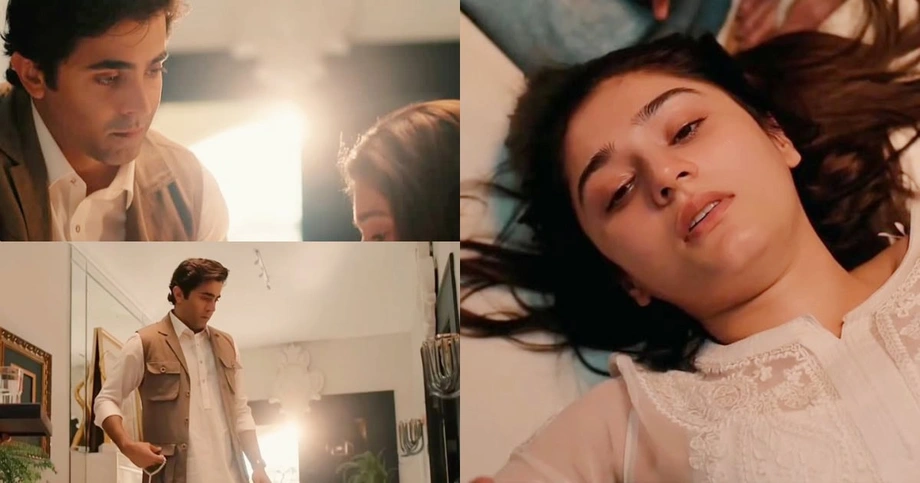
What makes the joke land is how little Abu Bakar does. He is courteous, devout and softly spoken. In the story he enters the life of Zaryab, a young woman recovering from heartbreak, and offers steadiness rather than drama. Fans in Pakistan made him a favourite within weeks of the first episode, and Indian viewers responded the same way, which is why the claim that he is somehow dangerous reads to them as absurd.
What Dar-e-Nijaat is, and why it travels
Dar-e-Nijaat is an ARY Digital production that premiered on August 1, with new episodes every Friday and Saturday at 8 pm. The serial also runs on YouTube, which is how many Indian viewers reach it, since Indian television does not carry it. Durefishan Saleem plays Zaryab, whose life turns after betrayal by her former lover Zamil, played by Nameer Khan. She begins a new chapter with Abu Bakar, and the choices she made earlier, along with complicated family relations, come back to press on her.
The show's songs trend online and its dialogue circulates in short clips, which is how a serial broadcast in Karachi ends up discussed in Delhi drawing rooms. Fans describe the writing as the reason. The plot is not complicated: a woman recovers from one relationship and tries to build another, while relatives and old decisions get in the way.
Delhi screenings, paid entry and a call with the director
Fans have organised watch parties in Delhi, Bengaluru, Hyderabad and Lucknow. The best documented gathering took place on November 21 at Cafe Otenga in Delhi, hosted by a group that calls itself Walk With Hamza, Aeshal & Fadiya. The evening covered episode 33 and included a video call with the show's director, Saqib Khan, who answered questions about the storyline and the characters. Attendees paid to attend.
Earlier gatherings in the capital were hosted by Tales of City Official, which organised the first Delhi screening for the drama. Similar events have been held in Bengaluru and Hyderabad, with small groups watching together and splitting the cost of a room and a screen.
Astha Singh, a social media user who attended the Delhi screening, said the organisers were startled by how far the event travelled on Instagram.
None of us expected that the event would blow up on Instagram. It was a surprise, and we also got to interact with the show's director. We got to learn a lot of insights about the show. The reason the event blew up might be because the show itself is very nice. The show's story is something that many people connect with. The show was already very popular, the dialogues and storytelling are great. The songs from the show are also trending on the internet. I hope these watch parties continue because art has no nationality. We should appreciate the art.
Why the screenings angered Indian viewers
Videos from the Delhi gathering prompted a second round of argument. Critics asked how audiences could celebrate Pakistani entertainment weeks after an attack in Kashmir killed 27 people and while New Delhi has asked streaming platforms to drop Pakistani content. Supporters answered that they were watching a story, not a state.
One Indian user framed the objection around reciprocity rather than taste, arguing that Pakistan blocks Indian channels and that India should respond in kind.
My objection is not even about obsession. It is more about reciprocation. Pakistan has banned all channels and movies. We should do the same till they allow us to stream Ramayan and Mahabharat on Star Plus.
Others simply cheered the screenings, writing that the enthusiasm in Delhi was beyond words. The result is two audiences in the same country reading the same evening very differently: a night out for one group, soft power for another.
The Pahalgam attack and the May 8 advisory
The dispute sits inside a year of strain. On April 22, 2025, an attack near the Baisaran Valley in Pahalgam, Kashmir, killed 27 people, among them 26 tourists and one local Kashmiri resident. India responded with military action under Operation Sindoor, and anger toward Pakistani artists and Pakistani content hardened afterward.
On May 8, 2025, the Ministry of Information and Broadcasting issued an advisory directing streaming platforms to remove Pakistani films, series, music and podcasts and to keep their distance from such content. The advisory is the reference point for almost every argument in the current row, including the campaign against the Netflix series. It applies to streaming services in India, while the drama under discussion reaches viewers through YouTube.
Netflix's first Pakistani series faces a ban call
Netflix has announced that Jo Bachay Hain Sang Samait Lo, its first Pakistani original series, will premiere globally on December 4, 2026. The cast includes Fawad Khan, Mahira Khan and Hania Aamir, with Ahad Raza Mir, Iqra Aziz, Sanam Saeed, Hamza Ali Abbasi, Maya Ali, Bilal Ashraf and Khushhal Khan also in lead roles. The platform has not said whether Indian subscribers will be able to watch it.
The All India Cine Workers Association has urged Prime Minister Narendra Modi to block an Indian release and has called for a law barring Pakistani entertainment. The association argues that a release would go "directly against the spirit of that advisory and against the sentiments of the nation." Its president, Suresh Shyamlal Gupta, objected to remarks made by some cast members during the fighting between the two countries.
These are people of a terrorist country, and they will never wish well for India.
Remarks by two of the series' stars are cited by users demanding a boycott: Fawad Khan called the Indian military action shameful, and Mahira Khan described it as a cowardly attack. Users warn Netflix India that bringing the show to the country will invite a boycott, and argue that Pakistani productions should not earn revenue from Indian viewers.
Two dramas, two directions
Two Pakistani productions now sit at opposite ends of one argument. Jo Bachay Hain Sang Samait Lo is being attacked before anyone in India has seen it, on the strength of its cast, its platform and statements made off screen. Dar-e-Nijaat is drawing paying customers to a Delhi cafe for episode 33, in a city where the same viewers are being told to look away.
Both cases test the same rule. The advisory covers streaming platforms, so a drama on YouTube and a series on Netflix occupy different legal ground even when the audience is identical. Neither company has said how it will treat Indian viewers in the coming months, and the campaign against the Netflix series is aimed at a date 12 months away.
How the dispute built, date by date
- August 1: Dar-e-Nijaat premieres on ARY Digital, with episodes on Fridays and Saturdays at 8 pm.
- April 22, 2025: An attack near Baisaran Valley in Pahalgam, Kashmir, kills 27 people.
- May 8, 2025: The Ministry of Information and Broadcasting tells streaming platforms to remove Pakistani films, series, music and podcasts.
- November 21: A paid screening of episode 33 is held at Cafe Otenga in Delhi, with a video call to director Saqib Khan.
- December 4, 2026: Announced global premiere of Jo Bachay Hain Sang Samait Lo on Netflix.
What is still open
Netflix has made no statement on Indian availability for its Pakistani series, and the All India Cine Workers Association has not said which law it wants or when it expects an answer from the prime minister's office. The organisers of the Delhi cafe screening have not responded publicly to the criticism. No count of how many watch parties have been held across India has been published, and the year of the November 21 gathering was not specified in accounts of the event. The next fixed date in the story is the Netflix premiere, set for December 4, 2026.
Key Points
- Dar-e-Nijaat, an ARY Digital drama that premiered on August 1, has built an audience in India that holds watch parties in Delhi, Bengaluru, Hyderabad and Lucknow.
- A post on X by user Aujas Bhandari described the character Abu Bakar, played by Sheheryar Munawar, as part of a cultural and political offensive; Pakistani users called the claims invented and answered with jokes.
- A paid screening on November 21 at Cafe Otenga in Delhi, hosted by Walk With Hamza, Aeshal & Fadiya, showed episode 33 and included a video call with director Saqib Khan.
- India's Ministry of Information and Broadcasting issued an advisory on May 8, 2025 telling streaming platforms to remove Pakistani content, after an April 22, 2025 attack in Pahalgam killed 27 people.
- Netflix has set a global premiere of December 4, 2026 for Jo Bachay Hain Sang Samait Lo, its first Pakistani original, without confirming Indian availability.
- The All India Cine Workers Association has asked Prime Minister Narendra Modi to block the series in India and wants a law barring Pakistani entertainment.